DbcultAccessing Vault...
Cult Review
Senior Film Conservator
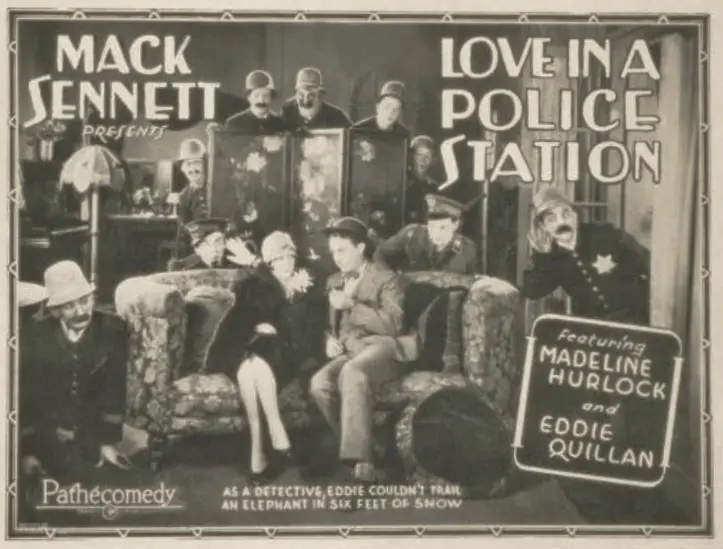
Is Love in a Police Station worth dusting off? For silent comedy enthusiasts and film historians, absolutely. For casual viewers expecting modern comedic sensibilities, its charms might prove too quaint, even jarring.
This film works because it is a prime example of early slapstick executed with an infectious, if unsophisticated, energy. It showcases the foundational elements of physical comedy that would influence generations of filmmakers, delivering a rapid-fire series of gags that keep the screen busy.
This film fails because its narrative is thin, serving merely as a flimsy scaffold for its comedic set pieces. The emotional stakes are almost non-existent, and character development is an afterthought, leaving little beyond surface-level amusement.
You should watch it if you appreciate the raw, unrefined energy of early cinema, particularly silent comedies that prioritize visual gags over intricate plots. It's a fascinating look at the building blocks of a genre.
Love in a Police Station, a 1920s comedy from writers Phil Whitman and Harry McCoy, throws us into the chaotic world of Officer Sniffles, played with a relentless, rubber-limbed enthusiasm by Tiny Ward. His character is a walking disaster, a magnet for mishap, all in the name of winning the affection of Daisy (Alice Ward), a young woman whose presence at the precinct seems to be a constant, if charming, catalyst for Sniffles’ woes. The film doesn't waste time on exposition; it plunges directly into the escalating absurdity, treating the police station less like a bastion of law and order and more like a playground for pratfalls and miscommunications.
Tiny Ward’s performance anchors the film’s comedic engine. He’s not a nuanced actor, nor does the material demand it. Instead, Ward embodies the archetype of the well-meaning but utterly inept protagonist with a commitment that is admirable. His physical comedy, whether tripping over a bucket or accidentally handcuffing himself to a suspect, is broad and effective. There’s a particular scene where he attempts to discreetly deliver a bouquet to Daisy, only to stumble over a strategically placed spittoon, sending flowers, water, and his dignity flying across the station floor. It's a classic bit, delivered with genuine gusto, and it perfectly encapsulates the film's comedic philosophy: more is always better.
The direction, credited to a team including Phil Whitman and Harry McCoy, prioritizes kinetic energy above all else. The camera work is functional, mostly employing medium shots to capture the full scope of the physical gags. There’s little in the way of visual artistry here; the focus remains squarely on the escalating chaos. Transitions between scenes are often abrupt, pushing the narrative forward at a breakneck pace, which, for a film of this era, works to its advantage. It prevents the audience from dwelling too long on the plot's deficiencies, instead sweeping them along on a tide of visual jokes. This isn't a film designed for quiet contemplation; it's designed to make you laugh with its sheer audacity.
Bobby Dunn, as Sniffles' often bewildered colleague, provides a solid comedic foil. His reactions to Ward's antics are priceless, a blend of exasperation and disbelief that grounds some of the more outlandish moments. Alice Ward, as Daisy, brings a necessary charm and sweetness to the proceedings, acting as the calm center around which all the male-driven chaos swirls. While foundational to the genre, the film's reliance on escalating physical gags occasionally feels more like a formulaic exercise than genuine comedic invention. It’s a lot of running.
One debatable aspect is the film’s tonal consistency. While largely a lighthearted farce, there are moments where the sheer volume of accidents could, in a more self-aware film, border on tragic. Here, however, the tone remains resolutely cheerful, never allowing the audience to feel genuine concern for Sniffles’ predicament. This unwavering commitment to silliness is both its strength and, arguably, its limitation. Alice Ward, though perfectly cast as the object of affection, isn't given much beyond a reactive role, a missed opportunity to inject more dynamism into the romantic core. Watching Sniffles' repeated failures, one almost feels a pang of pity before the next pratfall reminds you this is pure, unadulterated silliness.
The film's pacing is relentless. Gag follows gag with little breathing room, creating a sense of controlled anarchy within the station. This rapid-fire approach ensures that even if one joke doesn't land, another is right around the corner. It's an early example of how silent cinema mastered the art of visual storytelling without the need for dialogue, relying entirely on exaggerated movements, facial expressions, and clever staging. The sheer amount of paperwork visible on the desks, even amidst the chaos, offers a strangely mundane counterpoint to the absurd antics, grounding the farce in a recognizable, if exaggerated, reality.
Compared to more polished works of the era, such as the early shorts of Laurel and Hardy or Buster Keaton’s tightly choreographed masterpieces like The Dangerous Dub, Love in a Police Station feels a bit rough around the edges. It’s less about intricate timing and more about sheer volume. Yet, this rawness is part of its appeal. It feels immediate, a direct blast from a bygone era of filmmaking where the rules were still being written, and experimentation was the order of the day. It doesn't aim for the emotional depth found in some later silent dramas like Two Women, but rather revels in its own brand of unpretentious fun.
Love in a Police Station is not a profound cinematic statement, nor does it pretend to be. It’s a boisterous, unpretentious silent comedy that delivers exactly what it promises: a flurry of gags centered around a hapless officer and his romantic pursuits. While its narrative simplicity and reliance on broad humor might not appeal to everyone, its historical significance as an example of early slapstick is undeniable. For those with a taste for the foundational elements of screen comedy, it’s a delightful, if somewhat primitive, diversion. It won't change your life, but it might make you smile.
IMDb —
1920
Community
Log in to comment.