DbcultAccessing Vault...
5.6/10
Senior Film Conservator
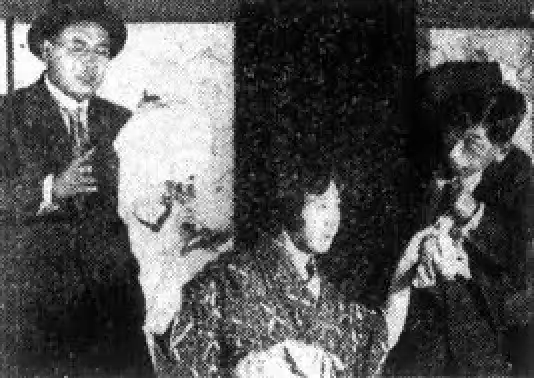
A definitive 5.6/10 rating for a film that redefined the boundaries of cult cinema. Couple on the Move remains a cornerstone of transgressive art.
If you have an afternoon to kill and you don’t mind a movie that feels like it was edited with a pair of garden shears, Couple on the Move is worth a look. It’s for people who like seeing the domestic clutter of 1930s Japan—the cramped kitchens, the slightly ill-fitting suits, and the way people act when they’re trying to impress neighbors they don’t even like yet. If you’re looking for a polished, sweeping epic, you’re going to hate this. It’s small, it’s twitchy, and it ends almost before it starts.
There is something inherently funny about the way the husband, played by a very young Chishū Ryū, carries himself. We’re so used to seeing him as the dignified, stationary grandfather in Ozu films, but here he’s got this nervous, kinetic energy. He’s constantly adjusting his sleeves or looking like he’s about to trip over a floor mat. There’s a scene early on where they are moving their stuff into the new house, and the way he handles a stack of bowls is genuinely stressful to watch. You can tell he’s trying to look like the man of the house, but he just looks like a guy who is terrified of breaking a plate.
The house itself feels like a character, mostly because the camera doesn't seem to know where to go in such a small space. There are these weirdly tight shots where the actors' heads are almost cut off at the top of the frame. It makes the whole movie feel a bit claustrophobic, which I think is accidental, but it works for the story. You really get the sense that these two are trapped in this new life they’ve built for themselves. The walls look thin enough that you could poke a finger through them, and the way the neighbors just sort of appear in the background of shots makes the whole neighborhood feel like a panopticon of judgmental housewives.
I noticed this one extra in a street scene—about fifteen minutes in—who just stops and stares directly at the camera for a solid three seconds before remembering he’s supposed to be walking. It’s the kind of thing that would be polished out of a 'prestige' movie, but here it just adds to the vibe. It feels like we’re watching a real street, not a set. It’s much more grounded than something like The Country Boy, which feels a bit more staged in its rural charm.
The dialogue, or at least the intertitles and the way the actors mouth the words, feels incredibly repetitive. There’s a lot of 'Yes, yes' and 'I understand,' which captures that specific type of fake politeness you use when you're moving into a new social circle. Tomoko Naniwa is great at this—she has this fake smile that she drops the second her back is turned to the neighbors. It’s a very specific kind of exhaustion. You see her shoulders slump about two inches the moment the door closes.
There is a sequence involving a workplace dinner that drags on way too long. It’s supposed to be building tension about the husband’s status, but the editing is so sluggish that I found myself looking at the background details instead. There’s a calendar on the wall that looks like it’s from the wrong month, and the way one of the coworkers eats his rice is oddly distracting. It’s not that the scene is bad, it’s just that it doesn't know when to quit. It’s a common problem with these early 30s comedies; they find a bit and they just ride it into the ground.
I also couldn't stop looking at the costumes. The mix of traditional Japanese clothing and these very stiff, Western-style business suits is always jarring in this era of film. The husband’s suit looks like it’s made of cardboard. It doesn't move when he moves. It gives him this robotic silhouette that makes his nervous gesturing look even more frantic. Meanwhile, the wife is in these beautifully draped layers that make her look like she belongs to a completely different movie. It’s a visual mess, but it perfectly captures that weird transitional period in urban Japan.
The ending is… abrupt. It’s like the film ran out of physical reel and they just decided that where they stopped was good enough. There isn't a big emotional payoff or a grand realization. They just sort of continue being a couple on the move. It reminded me a bit of the pacing in It's a Bear, where the internal logic of the scenes matters way more than the actual structure of the plot.
It’s not a movie that’s going to change your life. It’s not even a movie you’ll probably remember the specific plot of in three weeks. But there’s a shot of the wife looking out the window at a stray dog that feels so lonely and specific that it stuck with me. Those little moments—the ones that don't move the plot forward—are the only reason to watch this. It’s a collection of tiny, awkward human observations wrapped in a very flimsy 1932 comedy. And honestly, that’s enough for me.
IMDb —
1924
Community
Log in to comment.