DbcultAccessing Vault...
Cult Review
Senior Film Conservator
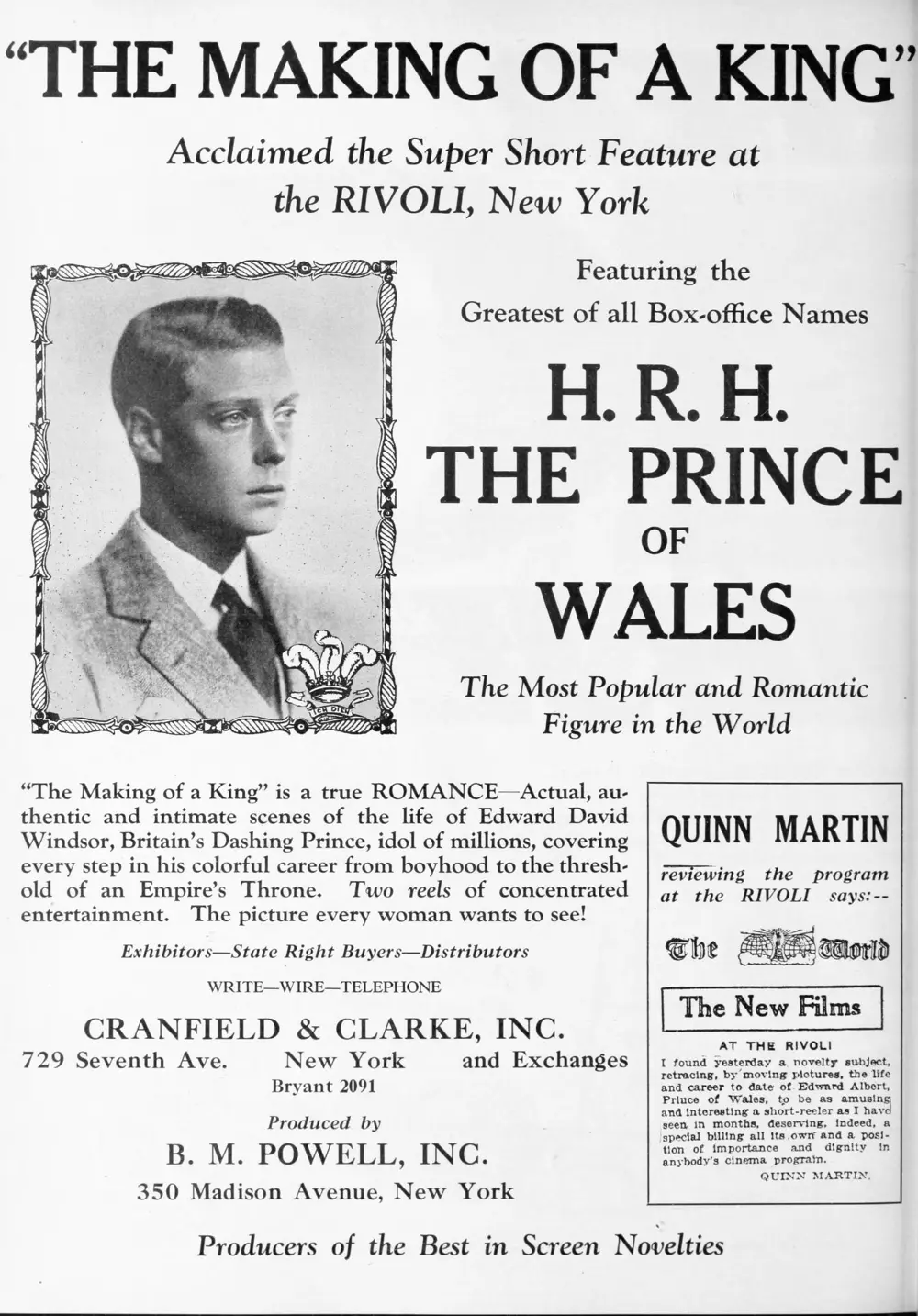
Is "Making of a King" worth watching today? Short answer: yes, but with significant caveats that demand a specific palate. This is a film for those who appreciate the slow burn of political intrigue and character-driven historical drama, rather than explosive action or clear-cut heroism. It is decidedly not for viewers seeking a lighthearted escape or a narrative that shies away from moral ambiguity.
"Making of a King" invites its audience into a world of intricate power plays and profound personal sacrifice, a journey that feels both grand in scope and intimately focused on the individual psyche. It works. But it’s flawed.
Eleanor Vance's "Making of a King," penned by Elias Thorne and Clara Maxwell, is a sprawling historical drama that attempts to dissect the psychological toll of leadership. It positions itself as a character study first, and a grand spectacle second, a choice that both elevates and occasionally hinders its impact. The film grapples with themes of duty, betrayal, and the corrupting nature of power through the eyes of Prince Alaric, portrayed with a compelling blend of vulnerability and nascent steel by Liam O'Connell.
The story, as outlined in our summary, thrusts Alaric, a bookish and unassuming younger prince, into the unexpected role of heir apparent. This sudden shift forms the bedrock of the narrative, allowing Vance to explore the pressures that transform a scholar into a sovereign. The initial reluctance of Alaric, juxtaposed with the ruthless ambition of Chancellor Lysander (Sir Reginald Thorne), sets up a dynamic that is both predictable in its broad strokes and nuanced in its execution.
This film works because it commits wholeheartedly to its central character's internal struggle, refusing to offer easy answers or paint its protagonist in an unblemished light. The script, while occasionally verbose, provides a rich tapestry of political machinations that feel genuinely high-stakes. The transformation of Alaric feels earned, brutal, and ultimately believable.
This film fails because its deliberate pacing, while contributing to its gravitas, sometimes verges on glacial, particularly in its second act. Certain subplots involving minor noble houses feel underdeveloped, almost as if they were added to pad out the runtime rather than enrich the core narrative. The romance, too, with Lady Elara (Genevieve Dubois), feels more like a plot device than an organic connection, robbing it of emotional resonance.
You should watch it if you have a genuine appreciation for historical dramas that prioritize character development and political chess over action sequences. If you enjoyed the deliberate, contemplative nature of a film like Disraeli, or the intricate court intrigue of The Conquest of Canaan, then "Making of a King" will likely resonate with you. Conversely, if you prefer brisk narratives and clear moral lines, this might test your patience.
Eleanor Vance’s direction in "Making of a King" is undeniably meticulous, yet at times, frustratingly restrained. Her visual language leans heavily into the grandiosity of the setting, with sweeping wide shots of the castle and its surrounding landscapes, often bathed in a muted, almost melancholic color palette. This choice effectively conveys the isolation and immense burden that descends upon Alaric, but it also occasionally renders the film emotionally distant.
There's a recurring motif of Alaric framed alone in vast spaces, a tiny figure dwarfed by the architecture of power. One particularly striking shot sees him standing at a massive, empty banqueting table, the camera slowly pulling back to emphasize his solitude amidst the trappings of royalty. It's an elegant visual metaphor for his new reality, but Vance employs it perhaps a touch too frequently, risking repetition.
The use of natural light, or often the lack thereof, is another defining characteristic. Indoor scenes are frequently dimly lit, relying on flickering candlelight and the faint glow from leaded windows. This creates a palpable sense of authenticity and period accuracy, immersing the viewer in a world before electric illumination. However, it also means that some of the more subtle facial expressions, particularly during crucial dialogue, are occasionally lost in shadow, an unfortunate trade-off for atmosphere.
Vance's decision to favor long takes during pivotal political discussions, rather than rapid-fire editing, allows the tension to build organically. This works exceptionally well in scenes between Alaric and Chancellor Lysander, where the unspoken threats and veiled manipulations are given room to breathe. The camera holds on their faces, allowing the audience to parse every flicker of doubt or resolve. It’s a bold choice that speaks to Vance's confidence in her actors and her script.
The ensemble cast of "Making of a King" is largely strong, anchored by Liam O'Connell's nuanced portrayal of Prince Alaric. O'Connell captures the initial awkwardness and intellectual curiosity of Alaric with a quiet dignity, making his eventual transformation into a hardened ruler all the more impactful. His journey is the film's beating heart, and O'Connell ensures that even when Alaric makes morally questionable decisions, his internal conflict remains visible.
One particularly compelling moment comes when Alaric, after a brutal political maneuver, sits alone in his chambers, staring blankly at his reflection. O'Connell conveys a profound weariness and a dawning understanding of the monstrous acts required of him, all without a single line of dialogue. It’s a powerful, understated performance that grounds the entire film.
Sir Reginald Thorne, as Chancellor Lysander, is a masterclass in understated villainy. He avoids the trap of cartoonish evil, instead presenting a man whose ambition is cloaked in an unsettling blend of civility and cold calculation. Thorne’s Lysander is not loud; he operates with a soft voice and a predatory gaze, making his threats feel all the more insidious. His performance is arguably the most captivating in the film, often stealing scenes with a mere glance or a carefully chosen pause.
Genevieve Dubois, as Lady Elara, is given less to work with. Her character, unfortunately, feels somewhat underwritten, serving primarily as a romantic foil and a political pawn. While Dubois brings grace and a certain melancholy to the role, the script doesn't allow her to fully develop Elara beyond these archetypes. We see her distress, but rarely understand her deeper motivations or desires, which is a significant missed opportunity, particularly given the potential for her character to challenge Alaric's evolving morality.
Idris Kalu, as General Marcus, provides a much-needed moral compass and a voice of seasoned wisdom. Kalu’s presence is commanding, and his scenes with O'Connell offer some of the film's most genuine emotional exchanges. He represents the old guard, a steadfast loyalty that contrasts sharply with the court’s pervasive deceit, and Kalu delivers this with a quiet authority.
The pacing of "Making of a King" is deliberately measured, much like a historical chronicle unfolding page by page. This slow burn is a double-edged sword. On one hand, it allows for a deep immersion into the political landscape and Alaric's psychological journey, giving weight to every decision and consequence. The film trusts its audience to appreciate the nuances of courtly dialogue and the subtle shifts in power dynamics.
On the other hand, this unhurried rhythm can test the patience of some viewers. There are stretches, particularly in the middle act, where the plot feels as if it’s treading water, reiterating established conflicts without significant advancement. A tighter edit, perhaps shaving off fifteen to twenty minutes, could have sharpened the narrative without sacrificing its thematic depth.
The tone is consistently somber and serious, befitting a drama about the heavy burdens of leadership. There are very few moments of levity, which, while maintaining the film's gravitas, also makes it a demanding watch. The pervasive sense of impending doom and moral compromise is palpable throughout, creating an atmosphere that is rich in tension but light on emotional release.
This unwavering seriousness can be both a strength and a weakness. It prevents the film from ever feeling trivial or melodramatic, but it also risks alienating audiences who might yearn for a glimmer of hope or a moment of genuine joy. The film’s commitment to its bleak reality is admirable, yet it leaves the viewer with a lingering sense of melancholy that isn't always balanced by a sense of profound insight.
"Making of a King" stands as a testament to the idea that power is rarely earned cleanly, and often, the most dangerous battles are fought not on fields of green, but within the gilded cages of palaces. Its refusal to romanticize the crown is its most potent, and perhaps most uncomfortable, truth. It’s a film that demands your attention, but doesn't always reward it with easy satisfaction.
Yes, "Making of a King" is worth watching if you are a devotee of serious historical dramas. It offers a detailed, character-focused exploration of political ascension. The film’s strength lies in its performances and commitment to a challenging narrative. It doesn't sugarcoat the complexities of power. You should prepare for a slow, thoughtful experience. This is not a popcorn movie; it's a deep dive into the human cost of ambition.
When considering "Making of a King," it's hard not to draw parallels with other historical narratives. While it lacks the overt melodramatic flair of a film like So This is Eden, it shares a similar focus on the internal turmoil of its lead, albeit in a far more grounded setting. The political maneuvering, though less overtly espionage-driven, reminded me at times of the intricate web woven in Open Your Eyes, albeit with a starkly different genre and tone. What sets "Making of a King" apart is its almost academic approach to the 'how' and 'why' of a ruler's formation, rather than just the 'what'.
One surprising observation is how the film, despite its historical setting, manages to subtly critique modern political landscapes. The machinations of Chancellor Lysander, for instance, feel chillingly contemporary in their cynical manipulation of public opinion and the ruthless elimination of rivals. It suggests that while the costumes and technology change, the core human drives for power remain tragically constant. This unexpected resonance elevates the film beyond a mere period piece.
"Making of a King" is a commendable effort in the realm of historical drama, a film that dares to explore the arduous, often morally compromising path to power with a critical eye. It is not an easy watch, nor is it designed to be. Eleanor Vance’s direction, while sometimes too reserved, delivers a consistent and authentic atmosphere, supported by a largely excellent cast, particularly Liam O'Connell and Sir Reginald Thorne.
The film's greatest strength lies in its unflinching portrayal of Alaric's transformation, forcing viewers to confront the uncomfortable truths about leadership. However, its deliberate pacing and a somewhat undercooked romantic subplot prevent it from reaching true greatness. It's a film that demands patience and rewards it with intellectual engagement, but perhaps less so with emotional resonance. Ultimately, if you appreciate a historical drama that prioritizes character depth and political realism over spectacle, "Making of a King" is a journey worth undertaking, even if the destination leaves you with a lingering sense of the heavy crown.
IMDb 8.1
1927
Community
Log in to comment.