DbcultAccessing Vault...
Cult Review
Senior Film Conservator
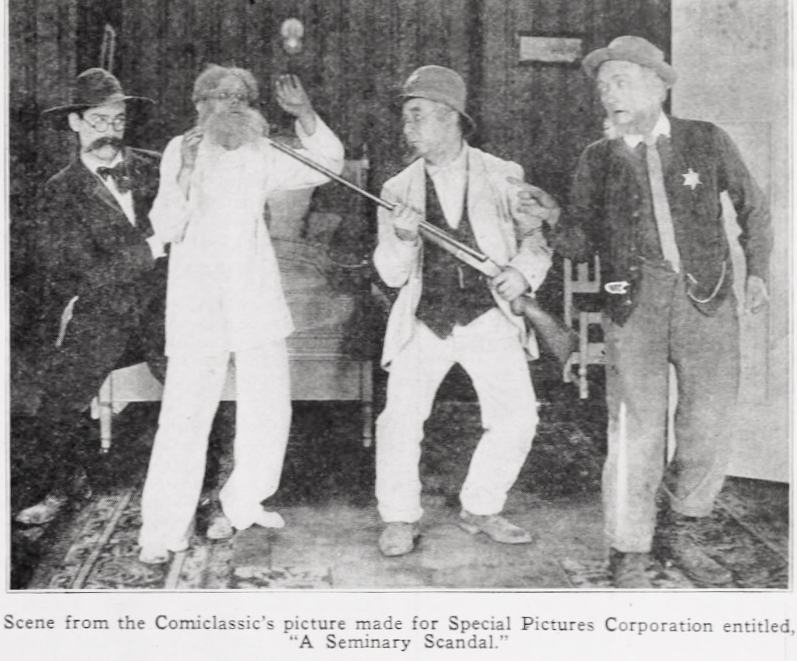
Imagine, if you will, a cloister where incense can’t quite mask the musk of desire—where every footstep on cold flagstone echoes like a jury verdict. A Seminary Scandal doesn’t merely lift the veil on ecclesiastical hypocrisy; it flays the entire altar cloth, revealing termite-riddled scaffolding beneath.
Director William W. Pratt—previously known for pastoral melodramas—here swaps shepherds for wolves. The film’s very title card, trembling into frame with organ chords that sound like a death rattle, promises salaciousness, yet the picture delivers something nastier: a forensic autopsy of institutional guilt.
Shot on location at a deconsecrated monastery in Vermont, the cinematographer Philip Armand exploits chiaroscuro like a reformed Caravaggio. Daylight rarely intrudes; instead, tapers and moonbeams carve faces into gargoyles. Notice the sequence where Merriam tiptoes through the crypt: the camera tilts thirty degrees, transforming stalwart pillars into guillotines. It’s a trick borrowed from German silents, yet the context—seminary as panopticon—renders it freshly unnerving.
The tinting schema deserves cinephile applause. Interiors flicker in septic amber, signaling rot, while the exterior flashback vignettes—shot in two-strip Technicolor tests—glow with a lurid teal that feels eerily predictive of From Dusk to Dawn’s neon purgatory.
Charlotte Merriam’s wide-eyed ingenue could have slid into saccharine piety. Instead, she weaponizes tremulous innocence—her quivering lip in the confession booth registers less as contrition than as ticking dynamite. Watch her pupils dilate when she deciphers the initials on a monogrammed handkerchief: the moment is silent, yet you hear the click of a moral safe-cracking.
Neely Edwards, chiefly remembered for slapstick two-reelers, surprises by channeling a jittery objet d’art photographer whose conscience erodes faster than his magnesium flash powder. His stoop-shouldered gait conveys a man forever smelling the sulfur of his own guilt.
Ford Sterling, the Mack Sennett alumnus, jettisons derby and pratfalls for a brocade waistcoat and ledger-book menace. His benefactor Brother Aldrich is less human than corporation—imagine if Wall Street wore a clerical collar. Every time he drums fingers on the pew, dollar-sign shadows ripple across the screen, courtesy of a shutter effect so simple it’s ingenious.
Intertitles, often the Achilles heel of silent dramas, here function like poison-pen letters. One card reads: “Chastity is easiest preached from a full purse.” The aphorism stings because the screenplay—credited to the elusive trio Julian LaManche, Cora Maxwell, and Everett B. Winter—refuses tidy redemption. Unlike God and the Man, where piety triumphs via last-reel miracle, this narrative spirals into Nietzschean abyss.
There’s also a proto-feminist sting: the women—maid, student, and governess—form an impromptu tribunal, trading testimonies over candle stubs. Their whispered pact prefigures the collectivist solidarity later celebrated in Salt of the Earth, albeit without union songs.
Though released sans synchronized score, archival cue sheets suggest an organ arrangement heavy on diminished chords. Modern screenings with live accompaniment reveal how dissonant drones amplify the dread. One motif—a tritone-laden lullaby—recurs whenever the camera lingers on the baptismal font, conditioning the viewer Pavlovian-style to expect fresh corpses.
Place A Seminary Scandal beside Bolshevism on Trial and you’ll detect parallel paranoias: both pictures fear ideological contagion. Where the latter externalizes the threat as Red boogeymen, the former locates contagion inside the sanctuary, arguing that repression germinates perversion. It’s Pinko-phobia vs. Pulpit-phobia—pick your poison.
Meanwhile, fans of The Enchanted Barn’s rustic uplift may find this seminary’s Gothic bleakness a bracing counterpoint. Imagine Shirley Temple wandering into The Cabinet of Dr. Caligari—that’s the tonal whiplash.
State boards excised nearly twelve minutes, including a tableau where the dean’s blood mingles with communion wine—too Catholic for Protestant precincts, too sacrilegious for Catholic ones. Surviving prints jump awkwardly, yet the redacted gaps themselves become Brechtian wounds, forcing viewers to imagine atrocities far worse than what any camera could conjure.
Post-#MeToo, the film’s inquiry into institutional cover-ups feels nauseatingly predictive. Replace seminary with college campus, or scout troop, or Olympic gym—same architecture of silence, different vestments. The picture’s final close-up on Merriam’s tear-streaked defiance anticipates courtroom selfies that now ricochet across social media.
A 4K restoration, synthesized from two incomplete nitrate prints—one rescued from a flooded Quebec basement—premiered at Il Cinema Ritrovato. The new edition restores the lavender tint of the night sequences, allowing Sterling’s greenish pallor to radiate like oxidized copper. Streaming rights remain tangled in ecclesiastical estate litigation, making regional repertory screenings your best bet. Keep an eye on Kino’s Silent Avant-Garde box; whispers suggest a 2025 Blu-ray.
Is it entertaining? Absolutely—like watching a cathedral implode in slow motion. Is it moralizing? Inquisitively so; the film brandishes a mirror so smeared with beeswax and brimstone you can’t tell sinner from savior. And is it essential? For anyone mapping the genealogy of American independent nerve—beginning with My Four Years in Germany and culminating in neo-noir—this is a missing link, bristling with teeth marks.
Score: 9/10 heretical hymnals. Bring smelling salts; you’ll need them when the final organ chord detonates.
IMDb —
1917
Community
Log in to comment.