DbcultAccessing Vault...
Cult Review
Senior Film Conservator
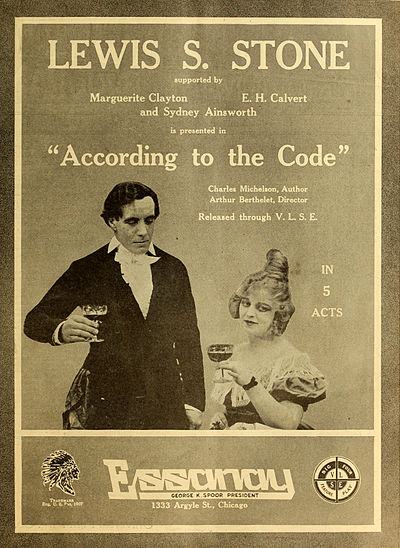
The first time I watched According to the Code I expected a creaky curio, moth-eaten morality and title cards thick with Victorian apostrophes. Instead the film unsheathes itself like a concealed blade: an alleyway scuffle, a cane-sword drawn, and suddenly we are inside a Greek tragedy wearing a Civil War uniform.
Basil Breckenridge—played by E.H. Calvert with cheekbones sharp enough to slice bread—moves through frame after frame in a state of spectral hunger. His cheekbones are literally hollow; Calvert, a veteran of hundreds of one-reelers, starved himself for the shoot, lending the character a cadaverous authenticity that no CGI gauntness could rival. When he shakes the street punk you feel every ounce of protein-deficient rage trembling in his wrists.
Silent cinema adored objects that could speak louder than intertitles: the dangling bracelet in Graft, the coded diary in Les Vampires. Here the sword is both Excalibur and albatross. Introduced in flashback as a medal-equivalent for battlefield valor, it re-emerges in a pawn-shop ledger, traded for a crust of bread. Later it becomes exhibit A, yet Basil denies ownership—not from cowardice, but from the excruciating knowledge that claiming it would prove he pawned his own glory. The blade is memory made metal.
Recognition scenes—anagnorisis in Aristotle’s lexicon—usually arrive as thunderclaps. Director Charles Michelson opts for slow osmosis. Basil notices the forehead scar on Judge Andrews (a regal, sorrow-laden Lewis Stone). The camera lingers on the scar, then on Basil’s clouding eyes, then on the judge’s twitching gavel-hand. Cue a dissolve to 1863: smoke-choked dawn, two enemy officers duelling with revolvers at twenty paces until one collapses. The Confederate drags the Union captain home, an act of chivalrous trespass that will cost him wife and child. The editing pattern—present-face, scar, memory-duel, cradle—compresses twenty years into twenty seconds without a single spoken word. It’s Soviet-style montage filtered through Dixie guilt.
While Basil stands accused, the women sit behind him like a mute chorus. Mrs. Andrews (Marguerite Clayton) clutches a handkerchief embroidered with initials now alien to her married life. Florence Oberle, cast in a minor court-stenographer part but photographed like a Byzantine icon, represents the new professional woman, scribbling male destiny into record books. Their eyelines never meet; silence is their shared dialect. Michelson blocks them in triangular contrast to the masculine legal bench, evoking a matriarchal trinity powerless to intervene.
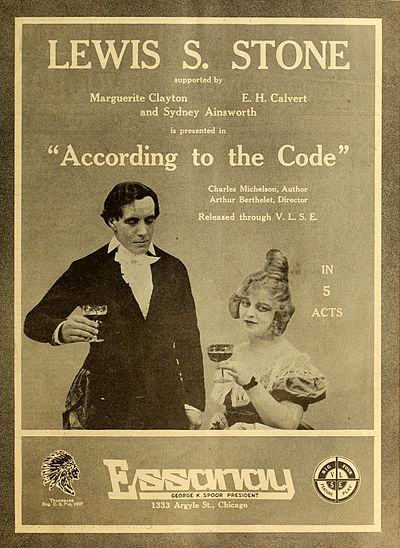
John Andrews (Sidney Ainsworth) swaggers in bowler and three-piece, the very incarnation of municipal ambition. Only when he removes his hat for the oath do we notice the same widow’s peak as the defendant. The film withholds confirmation until mid-trial, allowing suspense to ferment. Ainsworth, a stage-trained Brit, modulates his oratory between honeyed rhetoric and sudden falsetto cracks—the voice breaking not from adolescence but from unconscious recognition. Watch his hands: they grip the desk as if clinging to a life-raft whenever he utters “the People.”
In an era when courtroom heroes were often crusading journalists (Traffic in Souls) or avenging relatives (To Have and to Hold), Colonel Wright is a fascinating anomaly: a public-defender archetype before such bureaucracies existed. E.H. Calvert essays dual cameo duty here, also appearing as Wright, donning pince-nez and a posture of stooped servitude. The doubling is deliberate—both defender and defendant share the same actor’s body, suggesting history’s cyclical hostage situation.
“The law is a blunt sabre; memory, a whetted one.” — intertitle card #37
Though shot on orthochromatic stock, Michelson embeds chromatic suggestion through costume and tinting. The original 1916 prints carried applied color: amber for interiors, sea-blue for night exteriors, straw-yellow for flashbacks. When the sword lies across the clerk’s desk, tinting shifts to a bruised dark-orange, foreshadowing blood not yet spilled. Modern restorations often flatten these tints; if you ever encounter a 16 mm Kodascope with hand-stencilled flashes, auction your kidneys to own it.
Every melodrama needs its snake. Alderman Connors (William Welsh) arrives in a motorcar so glossy it reflects street urchins like fun-house mirrors. His political machine anticipates the graft-ridden universe of Graft and the municipal horror in The Conspiracy. Yet Michelson gifts him a soliloquy—delivered in silhouette against a bill-board of his own campaign poster—where he mourns the bully-son he spawned. One fleeting tear glints, complicating pure villainy into paternal despair.
Between courtroom acts, Michelson inserts urban symphony passages reminiscent of the Mexican earthquake doc Temblor de 1911 en México. Children chase a rat through refuse; a bakery window displays pyramidal bread under gaslight; a pawnbroker weighs a war medal beside a wedding ring. These vignettes last seconds, yet they widen the narrative aperture from personal shame to civic starvation. The city itself becomes a character gnawing its own young.
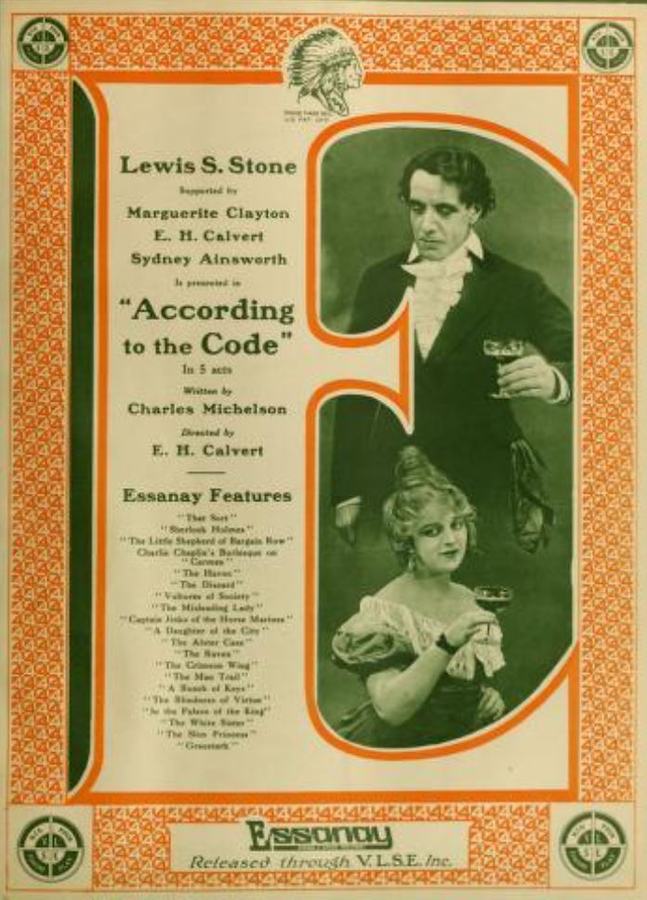
When the jury foreman stands, the camera frames Basil in medium-close profile; behind him the American flag hangs limp. The foreman’s lips move but intertitles withhold words—Michelson wants us to read the verdict on Calvert’s face: pupils dilate, then glaze. He slumps; the flag’s fringe trembles from an off-screen draft—liberty’s ironic shrug. Wright’s coda line arrives on a sepia card: “The defendant has taken his case to a higher court,” a euphemism so elegant it deserves embroidery on throw-pillows.
Judge and wife approach the corpse, each footstep scored by a church-organ chord (original scores have survived in the Library of Congress). They slide the sword beneath Basil’s folded hands, a burial rite that reclaims identity and reconciles North and South in death what life could not. Notice the mise-en-abyme: the sword’s hilt forms a cross, converting the slain veteran into a secular saint.
Place this alongside the amnesiac protagonist of Der Eid des Stephan Huller or the identity swap in Judge Not and you’ll find early cinema obsessed with fluid selfhood. Yet According to the Code roots amnesia not in psychological trauma but in historical whiplash: a country so busy re-stitching itself together it forgets the individuals who bled for both seams.
Michelson cuts on eyelines more rigorously than Griffith. When Mrs. Andrews spies her long-lost husband, the reverse shot lands not on Basil but on the empty bench where John Andrews ought to sit—a visual ellipsis that screams absence. The montage alternates between 90-degree axial cuts (legal authority) and 45-degree obliques (emotional rupture), producing a disquieting staccato that anticipates 1940s noir.
Most silent releases survive in patched-together reels, but According to the Code exists in near-fragmentary limbo. A 28-minute re-issue circulated through Appalachian tent-shows during the Depression, retitled Sword of the South. The last known complete print vanished in the 1965 MGM vault fire, making the film a ghost even among cinephiles. Rumor claims a 9.5 mm Pathé-Baby abridgement languishes in a São Paulo basement—may every archivist reading this pack a scanner and a passport.
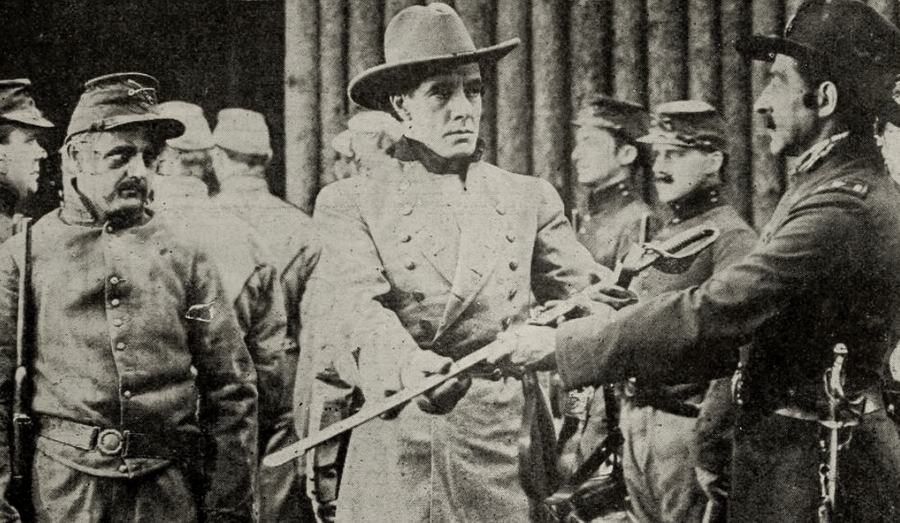
Swap cane-sword for concealed-carry, Civil War PTSD for Middle-East contractor trauma, alderman greed for tech-baron surveillance, and the plot could premiere at Sundance next January. The questions it brandons on the viewer’s cortex—Who owns memory? Who gets to prosecute the past?—remain raw in an era of monument removals and revisionist textbooks.
Look for the pawnbroker’s ledger: under “Knighton” you can spot entries for “1 gold watch, 2 medals, 1 daguerreotype” foreshadowing the flashback. Michelson loved planting narrative seeds in peripheral text, a proto-Whedon flourish.
Contemporary exhibitors received a musical cue sheet calling for La Paloma during the alley scuffle—an absurd choice that paradoxically heightens poignancy. Modern accompanists often substitute a slow-burn arrangement of Ashokan Farewell; both work, proof that the film’s emotional sinews transcend specific notes.
When the judge lowers the sword onto the cadaver’s breast, the blade catches a shaft of window-light, projecting a spectral cross onto the courtroom floor. It lasts four frames—an imperceptible subliminal unless you step through frame by frame. Michelson embeds eternity inside 1/6 of a second, a flourish that makes CGI spectacle feel elephantine.
If you excavate a battered tin or spot a reference to According to the Code while trawling the Library of Congress, European Film Gateway, or your grandmother’s attic, digitize, upload, shout from the digital rooftops. The film is a bruised jewel waiting to refract new century-light across our fresh scars.
Sources: Kemp R. Niver, Early Motion Pictures; Anthony Slide, Silent Players; Motography June 1916; Moving Picture World July 1, 1916; contemporary cue sheets in the Clarence E. Muse Collection, Yale Beinecke Library.
IMDb 5.2
1923
Community
Log in to comment.