DbcultAccessing Vault...
Cult Review
Senior Film Conservator
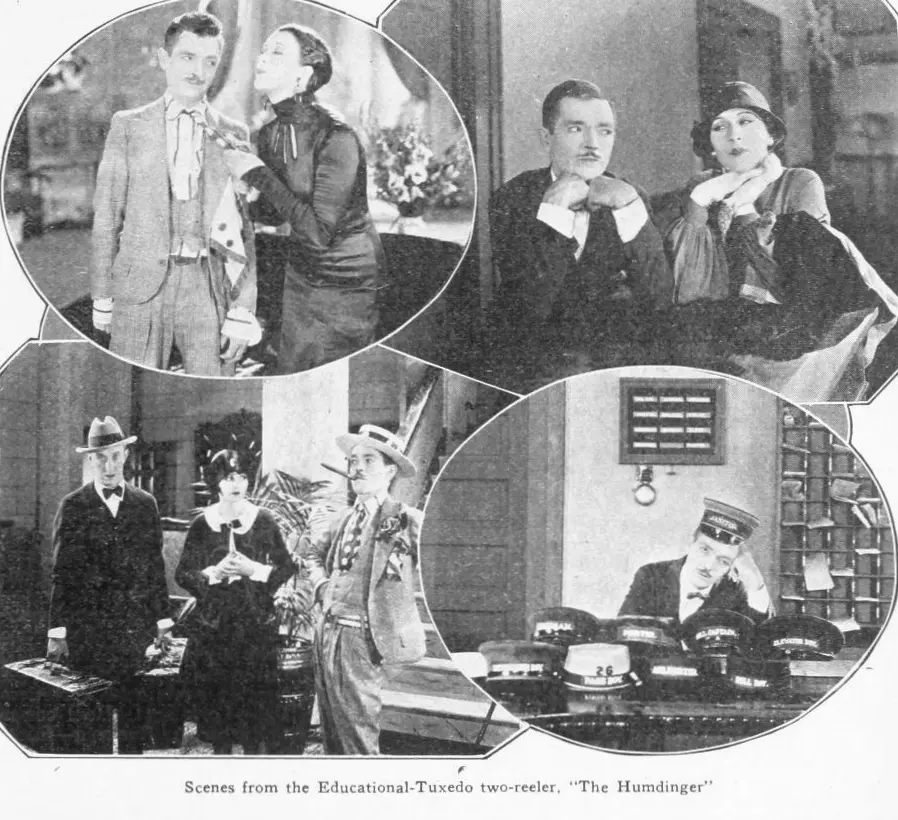
Is The Humdinger worth watching in the modern era? Short answer: yes, but only if you have a deep-seated appreciation for the frantic, mechanical rhythms of silent-era slapstick and the early developmental stages of Norman Taurog’s directorial career.
This film is specifically for cinema historians and fans of 1920s physical comedy who enjoy seeing the 'small man against the world' archetype. It is absolutely not for viewers who require narrative complexity, nuanced character arcs, or the high-speed editing of contemporary humor.
This film works because it captures the genuine anxiety of the service industry through a heightened, slapstick lens that remains relatable despite its age.
This film fails because its secondary plot involving the 'vamp' character feels like a hollow retread of better-executed tropes seen in films like Eve's Lover.
You should watch it if you want to witness the comedic origins of Johnny Arthur, whose nervous energy provides a fascinating contrast to the more stoic heroes of the time.
If you are looking for a quick, 20-minute burst of historical context and physical agility, then yes, The Humdinger is worth your time. It represents a specific moment in 1926 where the 'hotel comedy' was a refined subgenre. However, if you are looking for a definitive masterpiece of the silent era, this is not it. It is a functional, entertaining piece of craft that serves its purpose without breaking new ground.
Johnny Arthur’s performance in The Humdinger is a masterclass in high-stress physicality. Unlike the deadpan delivery of Buster Keaton or the athletic grace of Douglas Fairbanks, Arthur’s comedy is rooted in a sense of impending collapse. In the opening sequence, where he attempts to manage the front desk while simultaneously hauling luggage for a group of impatient arrivals, his movements are jittery and frantic.
Every time he rings the bell or adjusts his cap, there is a palpable sense of a man stretched too thin. This 'nervous' style of comedy was Arthur’s trademark, and here it finds its perfect setting. A hotel is a place of constant motion, and Taurog uses the geography of the lobby to maximize the comedic potential of Arthur’s exhaustion. It is a proto-sitcom setup that feels surprisingly modern in its depiction of workplace burnout.
Compare this to his work in The Applicant, and you see a performer who was deeply comfortable in roles that required him to be the underdog. He doesn't just play a bellhop; he plays the very concept of being overworked. It works. But it’s flawed.
The introduction of Anita Garvin as the 'vamp' from New York City brings an interesting, if predictable, dynamic to the story. In the 1920s, the vamp was a standard cinematic figure—a woman of dangerous allure who threatened the domestic stability of the male lead. Garvin plays the role with a heavy-lidded intensity that contrasts sharply with Lucille Hutton’s more wholesome, girl-next-door persona.
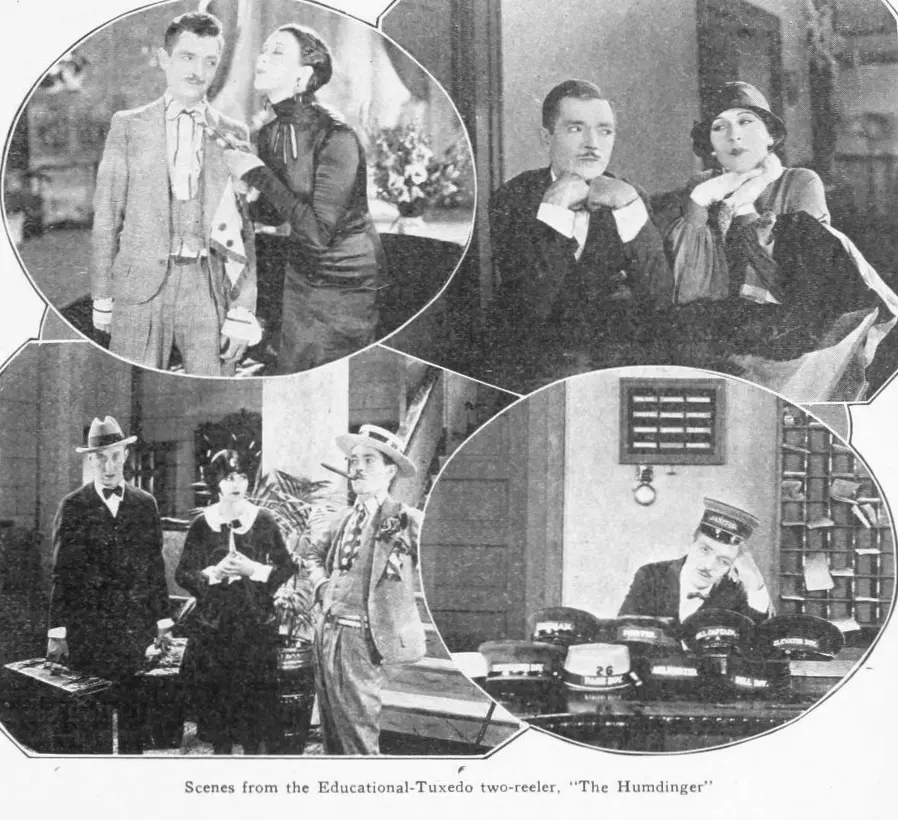
There is a specific scene in the hotel dining room where Garvin’s Anita attempts to seduce Johnny. The way she uses her cigarette holder as a prop to intimidate him is a classic silent film maneuver. However, when compared to the more dramatic 'vamp' roles in The Soul of Buddha, the character in The Humdinger feels somewhat neutered for the sake of comedy. She isn't a threat; she's a punchline.
The romantic rivalry with George, the traveling salesman, is equally formulaic. George Davis plays the 'city slicker' with just enough charm to make Lucille’s interest believable. This trope of the small-town girl being dazzled by the sophisticated outsider was already well-worn by 1926, having been explored in various ways in films like Just Suppose. Here, it serves mainly as a ticking clock to force Johnny into action.
Before he became the director who would helm Elvis Presley musicals and win an Oscar for Skippy, Norman Taurog was a prolific director of shorts. In The Humdinger, you can see his burgeoning talent for visual timing. He understands that slapstick is about the relationship between the actor and the frame. There is a recurring gag involving a revolving door that requires precise synchronization, and Taurog nails it every time.
The pacing is relentless. Taurog doesn't allow the sentimentality of the romance to bog down the comedy. When Johnny and Lucille have a quiet moment, it is almost immediately interrupted by a ringing bell or a falling suitcase. This refusal to linger on emotion is what keeps the film from feeling dated in its sentiment, even if it feels dated in its gender politics. It lacks the raw power of The Tornado, but it replaces that intensity with a light, airy professionalism.
The cinematography is functional rather than expressive. We don't see the experimental lighting found in Madonnas and Men. Instead, the camera remains static, acting as a stage for the performers. This was standard for the 'Educational Pictures' brand, which prioritized clear, legible action over artistic flourishes. It is a meat-and-potatoes approach to filmmaking that prioritizes the laugh above all else.
One of the most striking things about The Humdinger is how it inadvertently serves as a documentary of 1920s labor. While the film is a comedy, the sheer volume of tasks Johnny is expected to perform is staggering. He is a clerk, a messenger, a porter, and a bellhop. In an era before labor unions were widespread in the service industry, the film’s humor relies on the audience’s recognition of this exploitation. It’s a comedy of survival.
This theme of the overworked individual is something Taurog would return to in different ways throughout his career. While films like High Power dealt with more traditional heroic labor, The Humdinger finds the heroism in the mundane. Johnny isn't saving the world; he's just trying to keep his job and get the girl. There is something profoundly human in that simplicity.
Anita Garvin is often the secret weapon of these comedies. Known for her later work with Laurel and Hardy, her ability to play the 'straight woman' to Johnny Arthur’s madness is essential. She doesn't have to do much to be funny; she simply has to exist in the same frame as him. Her stillness makes his movement seem even more erratic. This contrast is a fundamental principle of comedy that many modern directors forget.
Lucille Hutton, as the proprietor’s daughter, has less to do. She is the 'prize' at the end of the narrative, a role that was unfortunately common for women in silent shorts like Just Cowboys or Tire Trouble. However, she manages to imbue the character with a certain level of agency, particularly in the way she toys with the affections of George the salesman.
The Humdinger is a fascinating, if lightweight, entry in the silent comedy canon. It doesn't possess the emotional depth of a Chaplin film or the technical audacity of a Keaton feature, but it offers a polished, professional, and genuinely funny look at 1920s life. Johnny Arthur is a talent who deserves more modern recognition, and Norman Taurog’s direction here proves that he was a craftsman of the highest order even in his early years. It is a minor work, but a charming one nonetheless.
IMDb 5.3
1918
Community
Log in to comment.