DbcultAccessing Vault...
Cult Review
Senior Film Conservator

In the annals of early cinema, where melodrama often reigned supreme and narrative daring was frequently tempered by technical limitations, there occasionally emerges a work that defies easy categorization, pushing the boundaries of what was thought possible for the medium. "A Sleeping Memory" stands as one such fascinating artifact, a film that grapples with profound philosophical questions of identity, memory, and the very essence of the self, all wrapped within a gripping, if at times fantastical, narrative. Directed with a keen eye for psychological nuance, this silent era gem, penned by Albert S. Le Vino and E. Phillips Oppenheim, plunges its audience into a world where personal history is not merely forgotten, but surgically excised, leading to a chilling exploration of human nature's darker facets.
At its core, the film is a stark character study of Eleanore Marston, portrayed with a compelling blend of vulnerability and eventual chilling detachment by Emily Stevens. We meet Eleanore at a precipice: her comfortable, privileged existence shattered by the public disgrace and subsequent suicide of her father. This sudden, brutal upheaval casts her into the unfamiliar, unforgiving world of a New York department store, a stark contrast to her former life of luxury. It's a classic narrative setup, reminiscent of many silent films where societal fallibility and the harsh realities of class distinction often serve as catalysts for dramatic events. However, "A Sleeping Memory" quickly transcends this conventional framework, veering into territory far more complex and psychologically charged.
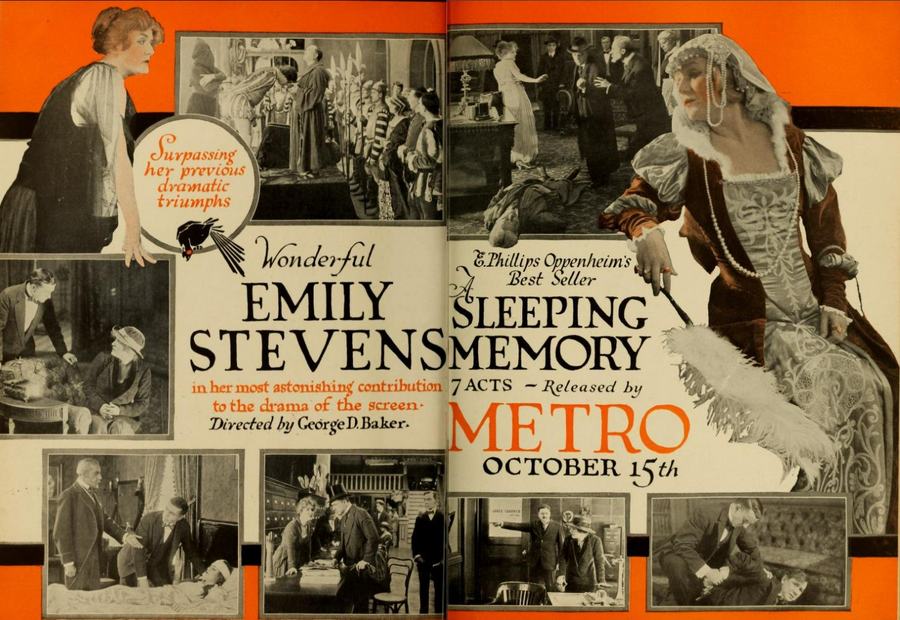
Eleanore's descent into penury leads her to a fateful encounter with Powers Fiske, a wealthy, enigmatic figure played by Richard Thornton. Fiske, observing Eleanore's plight, offers her a proposition that is simultaneously an act of profound generosity and a deeply unsettling ethical dilemma. He proposes a life of unparalleled luxury, but at an extraordinary cost: an experimental brain operation designed to obliterate her memory entirely, thereby freeing her from the painful specter of her past. This is the film's central, audacious conceit, a narrative hook that immediately sets it apart from many of its contemporaries. It's a Faustian bargain, not for the soul, but for the very fabric of one's personal history. The film here touches upon themes later explored in works like The Eternal Strife, which also delved into the psychological toll of past events, though perhaps less overtly through surgical intervention.
Eleanore, desperate and perhaps seeing no other escape from her anguish, agrees. The operation proceeds, and the film then unveils its most disturbing revelation. The Eleanore who emerges from the surgeon's care is not merely amnesiac; she is fundamentally transformed. Fiske's benevolent intention to free her from suffering backfires spectacularly. The woman he sought to save has vanished, replaced by a cruelly selfish, remorseless individual devoid of empathy. This transformation is brilliantly portrayed by Stevens, whose subtle shifts in gaze and posture convey a chilling lack of her former warmth. The film posits a provocative question: if memory is the bedrock of identity, what happens when that foundation is utterly removed? Does personality, morality, and even one's very essence dissolve with it? This philosophical quandary elevates "A Sleeping Memory" beyond simple melodrama, positioning it as an early cinematic exploration of neuropsychology and ethics.
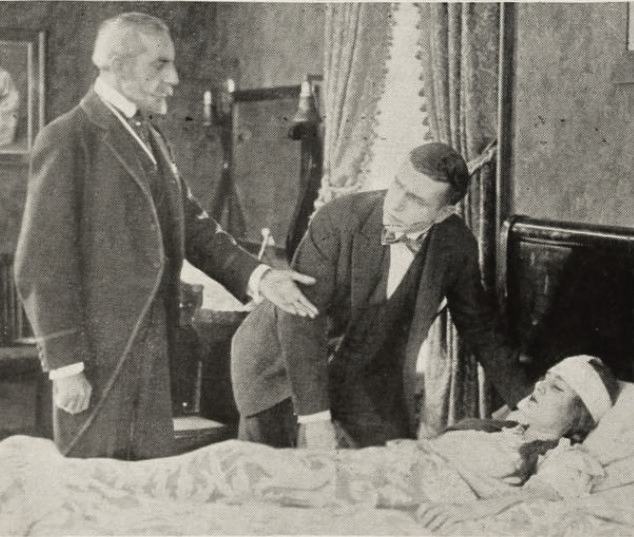
Horrified by the monstrous creation he has unwittingly wrought, Fiske turns to Dr. Trow, a friend and hypnotist, played by Mario Majeroni. Trow introduces another layer of speculative science and dramatic intrigue to the narrative: the concept of past lives. Through hypnotic regression, Trow attempts to uncover the origins of Eleanore's newfound cruelty, believing it to be an echo from previous incarnations. This segment of the film is a masterclass in visual storytelling, as Eleanore's subconscious journeys transport the audience through distinct historical periods, each revealing a facet of her evolving, or rather, recurring, darker nature.
We first witness Eleanore as a heartless Viking woman, a fierce and uncompromising figure whose survival depended on a brutal pragmatism. The visual language of this sequence, though limited by silent film technology, effectively evokes a sense of ancient, untamed power. Next, she emerges as a cunning Borgian princess, steeped in the Machiavellian intrigues of Renaissance Italy, her actions driven by ambition and a ruthless pursuit of power. Finally, the regressions culminate in her portrayal as a woman persecuted as a witch in Salem, a tragic figure wronged by ignorance and fear, yet perhaps carrying within her the scars of her earlier, more assertive lives. These vignettes, while bordering on the fantastic, serve a crucial narrative purpose, illustrating the film's argument that personality traits, perhaps even moral leanings, might transcend individual lifetimes. The ambition of these historical recreations, even with the constraints of the era, is commendable and adds a rich, almost epic dimension to Eleanore's psychological struggle. The thematic exploration of a woman's agency and societal constraints across different eras can also be seen in films like Madame Butterfly, though through entirely different narrative lenses.
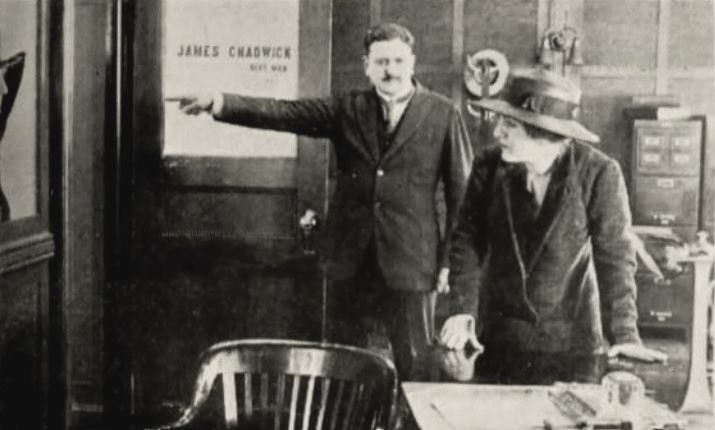
As Trow continues to exercise his hypnotic power, his intentions become increasingly sinister, blurring the lines between therapeutic exploration and manipulative control. The climax of his influence leads Eleanore to the edge of a cliff, a scene fraught with tension and symbolic weight. The precipice represents not just physical danger, but the brink of Eleanore's complete psychological undoing. It is at this critical juncture that salvation, or at least a chance at it, arrives in the form of Henry Johnson, played by Frank Mills. Johnson, a former compatriot from Eleanore's department store days, has traced her to Fiske's house, driven by a loyalty and affection that transcends her altered state.
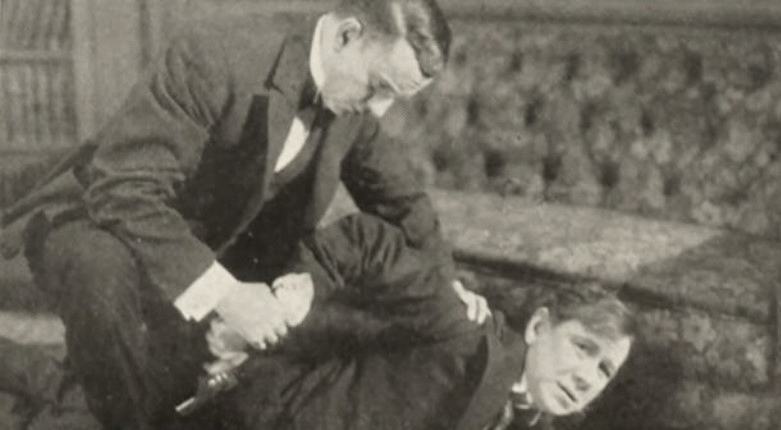
In a moment of profound vulnerability, Eleanore, perhaps stirred by a dormant echo of her former self, pleads for help. Johnson, without hesitation, leaps upon Trow, and in a dramatic struggle, both men plunge to their deaths over the cliff. This heroic, self-sacrificing act is a pivotal turning point, clearing the path for Eleanore's potential redemption. Fiske arrives just in time to witness the aftermath, guiding a distraught Eleanore away from the scene of tragedy. The film then moves towards its resolution, appealing to a "great scientist" – a convenient narrative device to facilitate the final act – who, through a second operation, restores Eleanore's memory. This restoration is presented as a return to her true self, culminating in her marriage to Fiske, a symbolic union that suggests the triumph of love and personal integrity over a past marred by trauma and imposed amnesia. While some might find the resolution a touch too neat, it offers a satisfying emotional closure to an otherwise complex and often dark journey.
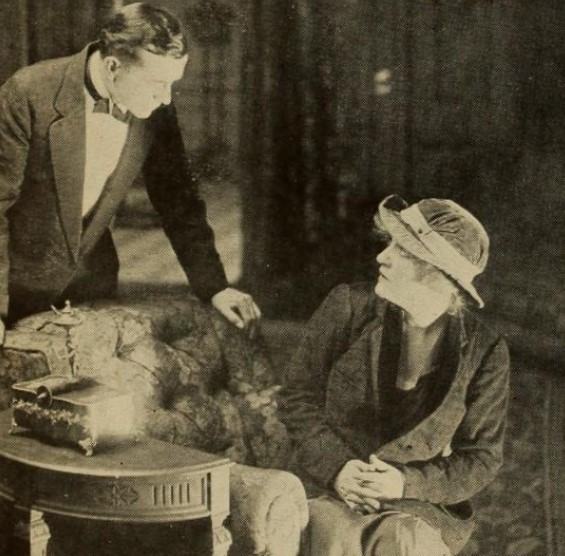
For a film of its era, "A Sleeping Memory" showcases remarkable technical ambition and a sophisticated understanding of cinematic storytelling. The use of close-ups to convey emotional states, the careful construction of suspense, and the visual distinction between Eleanore's different incarnations are all testament to the burgeoning artistry of silent film. The performances, particularly that of Emily Stevens, are nuanced and powerful, relying on expressive physicality and subtle facial gestures to convey complex emotional shifts without the aid of spoken dialogue. Richard Thornton as Fiske manages to convey both a misguided benevolence and genuine horror, while Mario Majeroni's Trow is a chilling antagonist whose intellectual curiosity curdles into dangerous obsession.
The film's enduring appeal lies in its audacious exploration of themes that remain relevant today. The question of what constitutes identity – is it our memories, our experiences, or an inherent, unchangeable core? – is central to the narrative. The ethical implications of altering one's mind, even with supposedly good intentions, are laid bare. Furthermore, the film touches upon the power of trauma to shape or shatter an individual, and the potential for redemption, even after profound moral deviation. In an era when psychology was still a relatively nascent field, "A Sleeping Memory" bravely delved into the subconscious, prefiguring later cinematic explorations of the mind's complexities. It’s a work that challenges its audience to consider the profound fragility of the self and the intricate dance between our past and who we become.
Comparing it to other films of the period, "A Sleeping Memory" stands out for its unique blend of psychological drama and speculative fiction. While films like The Love Tyrant might have focused on romantic entanglements and societal expectations, "A Sleeping Memory" dared to venture into the internal landscape of its protagonist with a depth rarely seen. Its narrative ambition to explore past lives also sets it apart from more straightforward melodramas like The Tides of Fate, which typically grounded their conflicts in contemporary social issues rather than metaphysical ones. The film's willingness to embrace the fantastical elements of hypnotic regression and memory alteration makes it a precursor to later science fiction and psychological thrillers, demonstrating the surprising thematic breadth of early cinema.
In conclusion, "A Sleeping Memory" is far more than a historical curiosity. It is a thought-provoking, emotionally resonant film that uses the dramatic conventions of its time to pose timeless questions about human nature. Its bold narrative, compelling performances, and pioneering exploration of psychological themes solidify its place as an important, if often overlooked, work in the history of cinema. It reminds us that even in the nascent years of the moving picture, filmmakers were capable of crafting stories that not only entertained but also challenged, disturbed, and ultimately, illuminated the complex inner workings of the human spirit. For those interested in the evolution of cinematic storytelling and the enduring power of psychological drama, this film offers a captivating journey into the depths of memory and identity. Its legacy is a testament to the fact that groundbreaking ideas often find their earliest expressions in unexpected places, long before the advent of sound or advanced special effects. The power of its narrative is a testament to the strength of its core concepts and the compelling performances that bring its intricate world to life, proving that even a century later, its 'memory' is far from 'sleeping'.

IMDb —
1922
Community
Log in to comment.