DbcultAccessing Vault...
6.6/10
Senior Film Conservator
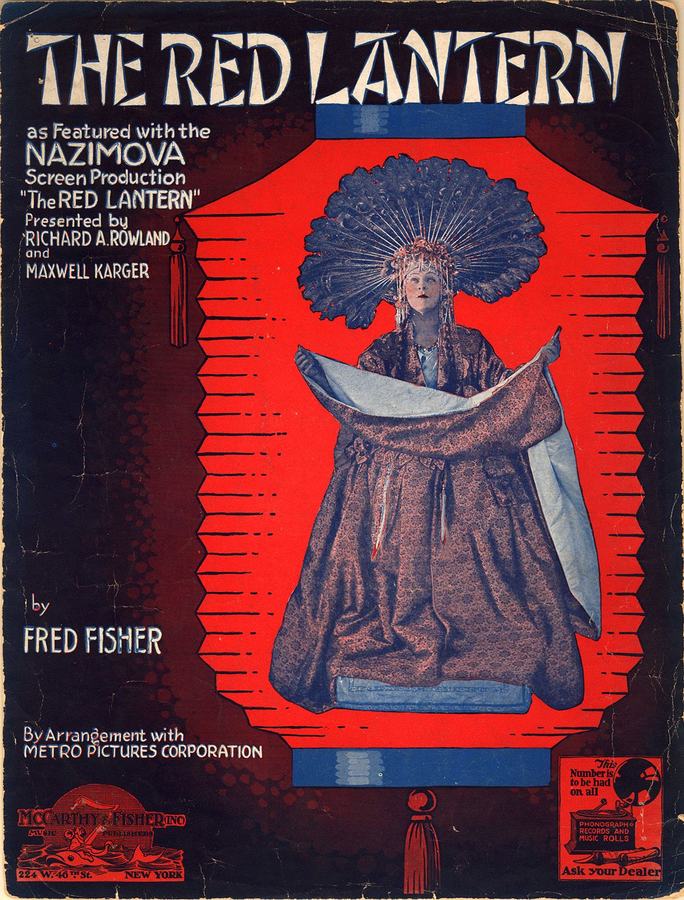
A definitive 6.6/10 rating for a film that redefined the boundaries of cult cinema. The Red Lantern remains a cornerstone of transgressive art.
Emerging from the turbulent early days of Hollywood, The Red Lantern (1920) stands as a complex, visually opulent, and profoundly melancholic artifact. More than just a historical melodrama set against the backdrop of the Boxer Rebellion, it plunges the viewer into the fractured psyche of Mahlee, a woman perpetually caught 'twixt heaven and earth, belonging wholly to neither the world of her grandmother nor the world of her father, rejected by the man she loves for the blood she cannot deny. Directed by Albert Capellani and adapted by the formidable June Mathis from Edith Wherry's novel, it’s a film obsessed with duality, betrayal, and the devastating cost of cultural collision, anchored by a performance from Anna May Wong that simmers with intelligence and wounded pride long before her official star billing.

The very premise hinges on Mahlee’s physical and symbolic difference: her unbound feet. In a society where bound feet were the ultimate mark of feminine conformity and status, Mahlee’s natural gait brands her “devil feet,” a constant, visible reminder of her liminal status as Eurasian. This physical freedom becomes a metaphor for her inability to fit into prescribed roles, a freedom that is paradoxically her greatest burden. Her grandmother’s avarice feels rooted in a resentment towards this tangible symbol of impurity within her household. Mahlee’s subsequent journey – seeking solace in Christian faith and the love of Andrew Templeton – is a desperate grasp at assimilation into the perceived purity and power of the Western world offered by the American mission. The discovery of her English father, Sir Philip Sackville, and half-sister Blanche initially seems like a potential resolution, a key to unlocking acceptance. Yet, this revelation only deepens the abyss. Sir Philip represents the cold detachment of colonial privilege; his acknowledgment is devoid of paternal warmth. Blanche embodies the effortless entitlement Mahlee can never attain. And Andrew’s swift, visceral rejection upon learning of Mahlee’s Chinese heritage is the ultimate betrayal, a brutal confirmation that her very essence is unacceptable to the world she sought to join. His pivot towards Blanche is a masterclass in casual colonial racism, exposing the missionary zeal as a veneer over deeply ingrained prejudice.

Mahlee’s alliance with the Boxer Rebellion isn’t born of genuine ideological fervor for expelling foreigners; it’s the scorched-earth reaction of a soul pushed beyond endurance. Collaborating with Sam Wang, another figure adrift in the Eurasian no-man's-land, represents a turn towards a different kind of belonging: the belonging of the scorned and the vengeful. The Rebellion offers a perverse kind of power, a chance to wield the very identity used against her as a weapon. The film’s visual and narrative apex is the Feast of the Red Lantern sequence. Here, Mahlee transcends her status as victim or pawn. Costumed as a celestial goddess, bathed in the fiery glow of countless lanterns, elevated on a litter borne through the seething, torch-lit streets of Peking, she becomes an icon. Her transformation is breathtaking and terrifying. She isn’t just participating; she is blessing the uprising, her presence sanctifying the violence to come. It’s a moment of terrifying agency, where her mixed heritage is weaponized for maximum symbolic impact on the superstitious populace. The sequence resonates with a primal energy, reminiscent of the ritualistic fervor found in Shadows of the Moulin Rouge, though here it fuels nationalism rather than bohemian decadence. Capellani’s direction captures the chaotic grandeur, the interplay of light and shadow, the mass hysteria channeled through Mahlee’s imposing figure. She commands the screen, finally seen and revered, yet it’s a power inextricably linked to destruction.

This apotheosis is tragically fleeting. The core tension of Mahlee’s character – the pull between her Chinese roots and her Western connections, however frayed – resurfaces with devastating consequences. Learning of the Boxers' planned attack on the mission housing Andrew and Blanche triggers an instinctual reaction that transcends her newfound revolutionary zeal. Is it residual love for Andrew? A flicker of Christian mercy? A deeper, unshakeable connection to her half-sister? Or simply a fundamental human recoil from the barbarity she now enables? The film wisely avoids easy answers. Her warning is an act of profound courage and contradiction, instantly making her an outcast to the cause she championed moments before. Sir Philip’s cold refusal to take her with them in their escape is the final, crushing blow, a stark illustration that no bridge exists for her. She is expendable to both sides. Wang’s sacrificial death protecting her underscores the cost of her divided loyalties and leaves her utterly isolated, adrift in the hell she helped unleash.

While Virginia Ross receives top billing as Mahlee, it is Anna May Wong, in the supporting role of the ancillary Eurasian girl (often listed as Mei Fei), who foreshadows the magnetic screen presence that would soon make her a legend. Though her role is smaller, Wong possesses an extraordinary ability to convey volumes with a glance, a tilt of the head, a subtle shift in posture. Her performance, existing in the same fraught space as Mahlee, offers a poignant counterpoint, hinting at the shared experience of marginalization. Wong’s scenes crackle with an intelligence and contained emotion that cuts through the heightened melodrama, grounding the film’s themes in a palpable human reality. Her presence alone elevates the film, acting as a silent testament to the complex identities the narrative explores. Ross, as the central Mahlee, carries the heavy burden of the character’s emotional extremes – from vulnerable hope to vengeful fury to shattered despair. Her performance leans into the grand gestures typical of silent era emoting, particularly in the climactic sequences, effectively conveying Mahlee’s operatic downfall. Noah Beery embodies the entitled callousness of Sir Philip, while Winter Hall’s Reverend Templeton represents well-meaning but ultimately ineffectual Western paternalism. Frank Currier's portrayal of the avaricious grandmother is suitably grotesque, a symbol of the rigid traditions that first confined Mahlee.
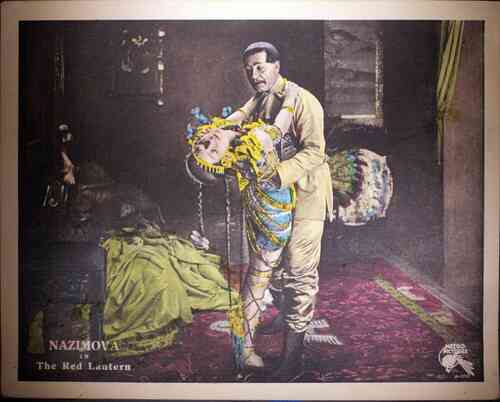
Capellani’s direction, honed by years of European experience before Hollywood, brings a sophisticated visual sensibility. The Peking sets, while obviously studio-bound, strive for an evocative authenticity. The use of light is particularly noteworthy – the harsh sunlight of the mission compound contrasting with the shadowy intrigue of the Chinese household, the ethereal glow of lanterns during the festival, the stark darkness that envelops Mahlee in her final moments. The composition often frames Mahlee amidst doorways, arches, or lattices, visually reinforcing her state of being caught between worlds. The costume design is sumptuous, particularly Mahlee’s transformation into the celestial goddess, a breathtaking fusion of traditional elements and theatrical spectacle designed for maximum symbolic impact. The film’s pacing, while deliberate by modern standards, allows the tragic weight of Mahlee’s choices to accumulate relentlessly.
The Red Lantern cannot be divorced from its historical context – the lingering trauma of the Boxer Rebellion for Western audiences and the pervasive anxieties about racial mixing and colonial control. The film walks a precarious line. On one hand, it exhibits undeniable Yellow Peril tropes, depicting the Boxer rebels as a savage, superstitious mob, particularly in the attack sequences. The Western characters, even the flawed Andrew and the cold Sir Philip, are ultimately positioned as the civilized counterpoint, their rescue by Allied forces framed as a restoration of order. This reflects the dominant Western narrative of the time. Yet, simultaneously, the film possesses a surprising degree of empathy for its central Eurasian character. Mahlee’s rage and subsequent actions are presented not as inherent evil, but as the tragic, understandable consequences of relentless rejection and hypocrisy from *both* sides. Her internal conflict is the film’s true heart.
This focus on the Eurasian experience was relatively rare and complex for mainstream Hollywood in 1920. While films like A Magdalene of the Hills or Joan of the Woods dealt with outcasts, they rarely grappled with racial identity as the core fracture. Mahlee's tragedy stems directly from the impossibility of existing in a world demanding singular, pure allegiances her very being defies. The film exposes the hollowness of the missionary endeavor through Andrew’s racism and the Templetons' inability to offer Mahlee true sanctuary beyond conversion. Sir Philip represents the exploitative indifference of colonial power. The Boxers, while portrayed as brutal, are also shown as reacting to genuine oppression and foreign encroachment. This nuanced, albeit problematic, perspective gives The Red Lantern a texture often missing from more straightforward colonial adventure tales of the era, like some found in serials such as Beatrice Fairfax. Its closest thematic kin might be later, more mature explorations of doomed love and cultural barriers, though it predates them.
The film’s ending is uncompromisingly bleak. Having lost the trust of the Boxers, witnessed Wang’s death, been denied escape by her own father, and seeing the rebellion crushed by the Western powers she both rejected and was rejected by, Mahlee chooses annihilation. Her suicide is not a gesture of weakness, but the final, definitive act of control left to her. It’s a refusal to continue living in a world that offers her no place, no peace, no identity she can claim without shame or violence. This tragic denouement echoes the fatalism found in pieces like The Bells or The Crucible, where societal forces inexorably crush the individual, but here the societal force is the very definition of belonging based on race and lineage. There is no redemption, no last-minute rescue, only the bitter taste of poison and the extinguishing of a light that burned too brightly between two worlds.
The Red Lantern remains a fascinating, deeply flawed, yet ultimately powerful piece of early cinema. Its portrayal of the Boxer Rebellion is filtered through a distinctly Western lens, laden with period prejudices. Its melodramatic conventions occasionally creak. Yet, its central exploration of Mahlee’s fractured identity, the devastating impact of racial and cultural rejection from all sides, and her tragic quest for belonging resonates with a startling modernity. Anna May Wong’s incandescent presence, even in a supporting role, hints at the star power soon to reshape Hollywood's perception of Asian actors. Capellani’s visual craftsmanship provides a rich, atmospheric backdrop for the unfolding tragedy. While not as formally innovative as some avant-garde works of its time like Me und Gott, or as charmingly comedic as The Essanay-Chaplin Revue, The Red Lantern possesses a unique, sorrowful grandeur. It stands as a stark reminder of the human cost of colonialism and racism, a visually opulent tapestry woven with threads of betrayal, impossible love, and the desperate, destructive search for a self that the world refuses to see. Mahlee’s journey, culminating in her silent, defiant death amidst the ruins of rebellion and rejected hope, leaves an indelible, haunting impression.
IMDb 5.8
1928
Community
Log in to comment.