DbcultAccessing Vault...
Cult Review
Senior Film Conservator
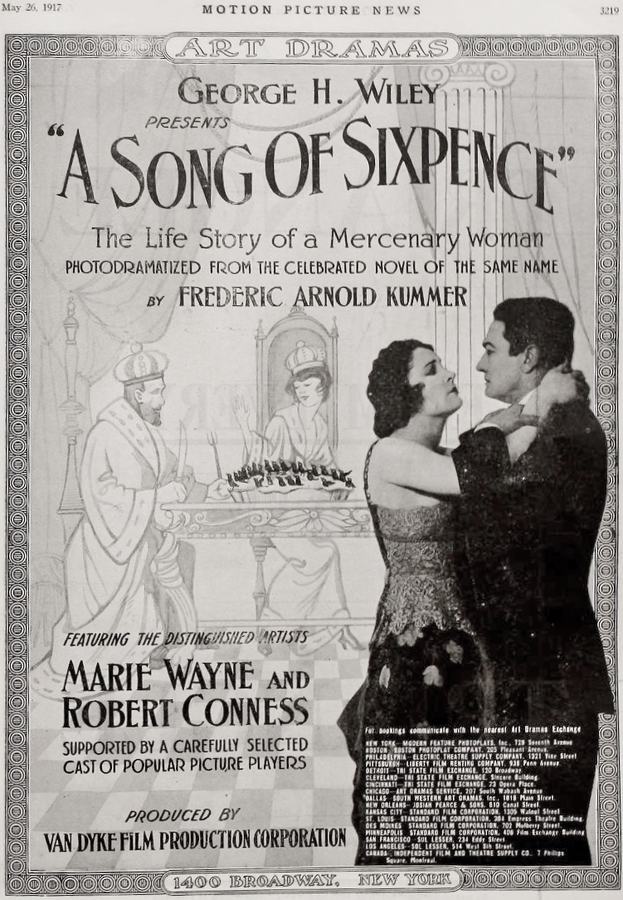
Stepping back into the nascent days of cinematic storytelling, one encounters A Song of Sixpence, a film that, despite its vintage, resonates with a profound and timeless moral quandary. This silent era drama, a fascinating artifact from a bygone epoch, delves into the treacherous currents of ambition, the deceptive allure of material wealth, and the often-unseen cost of sacrificing genuine affection at the altar of societal aspiration. It's a narrative that, even without spoken dialogue, articulates a universal human struggle, inviting viewers to ponder the true meaning of contentment and the enduring value of love over lucre.
At its core, the film introduces us to Emmy Morgan, portrayed with a compelling mix of youthful naiveté and burgeoning calculation by Nell Pemberton. Emmy’s world begins in the tranquil, unassuming embrace of rural life, a stark contrast to the glittering urban landscape she so desperately covets. Her existence, shared with her parents and a sister content with the simple virtues of their humble surroundings, serves as a backdrop against which Emmy's burgeoning discontent and singular ambition are cast into sharp relief. While her sister finds solace in the promise of a modest, loving union, Emmy's gaze is fixed firmly on a horizon shimmering with luxury, convinced that a propitious marriage is the only key capable of unlocking such a destiny. This foundational contrast immediately establishes the central conflict, not just external, but deeply internal to Emmy herself, setting the stage for a dramatic journey into the heart of human desire.
A seismic shift in Emmy’s world occurs with the unfortunate passing of her father. This tragic event, while undoubtedly a source of grief, also presents a grim opportunity. The insurance money, a modest sum, becomes the catalyst for Emmy’s long-cherished dream of escaping the provincial confines. With persuasive determination, she steers her family towards the bustling, incandescent energy of the city. Here, amidst the clamor and anonymity, she encounters Chanler, an author, brought to life with understated charm by Robert Conness. Their connection is swift and seemingly profound, a burgeoning romance rooted in mutual admiration and a shared intellectual curiosity. Chanler, a man of letters and evidently of genuine sentiment, offers Emmy a love that transcends the material, a companionship built on understanding and shared experience. For a fleeting period, it appears Emmy might indeed find her happiness in this unexpected emotional windfall, a prize far more precious than any bauble.
However, the narrative takes a pivotal turn, revealing the true depth of Emmy's ingrained materialism. When Chanler, having completed his literary endeavors, departs for Virginia seeking respite, Emmy remains in the city. This separation becomes a crucible for her values. Instead of nurturing the nascent affection with Chanler, she succumbs to the relentless siren song of wealth. She orchestrates a marriage with an elderly, affluent gentleman, a decision driven by pure calculation rather than genuine feeling. This act marks a critical juncture, sealing her fate and setting her on a path of gilded isolation. The sumptuous gowns, the grand estates, the endless comforts she had yearned for are now hers, yet the film deftly portrays the hollowness that accompanies such acquisition when love is absent. This theme, of course, is not unique to A Song of Sixpence; one can see echoes in other dramas of the era, where the perils of marrying for status rather than affection were frequently explored. Think of the societal critiques embedded in works like Caste, which similarly dissected the rigid social structures and their impact on personal happiness.
The film then navigates Emmy’s life within this luxurious, yet emotionally barren, existence. The initial thrill of opulence inevitably fades, leaving behind a gnawing emptiness. The visual language of silent cinema, relying heavily on expressive acting and carefully crafted mise-en-scène, would have been crucial here in conveying Emmy’s internal struggles. Nell Pemberton's performance, through subtle gestures and facial expressions, would need to communicate the growing disillusionment despite the outward display of prosperity. The audience is meant to witness the slow, agonizing realization that her hard-won luxuries cannot fill the void left by genuine human connection. This segment serves as a powerful testament to the film's moral core: that true wealth resides not in material possessions, but in the richness of one's emotional life.
The narrative arc of Emmy Morgan shares thematic resonance with other cinematic explorations of ambition and its discontents. One might draw parallels with the cautionary tales found in films like Ready Money, which, though perhaps focusing on different facets of financial ambition, nevertheless explored the complexities and often corrupting influence of wealth. Here, however, the focus remains squarely on the personal, emotional cost. Emmy's journey is a stark reminder that choices, particularly those made from a place of expediency rather than integrity, carry long-term consequences that often outweigh any immediate gratification.
The wheel of fortune, as it often does in such narratives, eventually turns. Following the death of her elderly husband, Emmy finds herself a wealthy widow, ostensibly free to pursue her heart's desire. And, as if summoned by fate, Chanler returns. This reunion is fraught with dramatic tension. Emmy, perhaps hoping to rekindle the flame she so carelessly extinguished, confronts a man irrevocably changed by her past actions. Chanler, having matured and undoubtedly gained perspective, has discerned the true nature of Emmy's character. He sees beyond the veneer of wealth and recognizes the shallow values and profound disloyalty that defined her choices. His rejection of her is not merely an act of personal hurt but a moral judgment, a powerful indictment of her mercenary soul. This scene, likely a masterclass in silent film acting, would have relied on the raw emotional power conveyed through the performers' eyes and body language. The devastation on Emmy's face, the firm resolve on Chanler's, would communicate volumes without a single uttered word.

The impact of this rejection is profound. Stripped of the illusion that wealth could somehow buy back her lost chances at love, Emmy embarks on a desperate, almost frantic, quest to reclaim what she forfeited. Her subsequent pursuit of a succession of wealthy men is a tragic spectacle, a futile attempt to fill an unfillable void. Each encounter, each failed endeavor, only serves to deepen her understanding of her monumental error. Margaret Townsend, Jean La Motte, Marie Wayne, Rowdon Hall, and Alfred Hemming, presumably playing various characters in Emmy's life, including these subsequent suitors or perhaps members of her social circle, would have contributed to the tapestry of her declining fortunes and growing despair. Their interactions, however brief, would underscore the superficiality of the world Emmy had chosen and the isolation she now faced.
The climax of Emmy’s tragic arc arrives with a somber, agonizing realization: she has lost the greatest prize of all – love. This is not merely the love of one man, Chanler, but the capacity for true, selfless affection, perhaps even self-respect. The film’s title, A Song of Sixpence, itself evokes a sense of childhood innocence and a nursery rhyme, perhaps hinting at a lost simplicity or a cautionary tale sung to children. The irony is palpable; she achieved her material dreams, but at an unbearable spiritual cost. Her life, once brimming with potential for genuine connection, is now a desolate landscape of regret, paved with gold but devoid of warmth. This ultimate epiphany is the film’s most poignant message, a stark warning against the seductions of avarice and the folly of prioritizing superficial gain over profound human bonds.
The themes explored in A Song of Sixpence are remarkably enduring. They speak to universal human experiences: the tension between ambition and contentment, the corrupting influence of unchecked desire, and the ultimate supremacy of love and genuine connection. In an age often characterized by rapid industrialization and burgeoning materialism, such narratives served as important moral compasses. One can observe similar ethical explorations in other films of the period, such as The Evil Thereof, which undoubtedly grappled with the moral complexities of human actions and their repercussions. Even Broken Fetters, while perhaps addressing different forms of entrapment, would have contributed to the broader cinematic conversation about societal constraints and personal liberation, or lack thereof.
For a silent film, the success of A Song of Sixpence would have rested heavily on the shoulders of its cast. Nell Pemberton, as Emmy, would have been tasked with conveying a vast spectrum of emotions – from youthful yearning to calculating ambition, from fleeting triumph to profound despair – all through physical performance and subtle expressions. The nuances of her character's transformation, from a hopeful country girl to a jaded, regretful woman, would have required exceptional skill in a medium devoid of spoken dialogue. Robert Conness, as Chanler, would need to embody integrity and quiet strength, serving as the moral anchor against Emmy's escalating materialism. The supporting cast, including Margaret Townsend, Jean La Motte, Marie Wayne, Rowdon Hall, and Alfred Hemming, would have contributed to the film’s atmosphere and the plausibility of Emmy’s world, whether as family members, city dwellers, or her subsequent unfortunate romantic prospects. Their collective efforts, orchestrated by the director, would have been crucial in etching this cautionary tale into the audience's consciousness.
The cinematic techniques of the era, while rudimentary by today's standards, were incredibly effective in their time. Intertitles would have provided crucial dialogue and exposition, guiding the audience through the narrative beats. Close-ups would have emphasized emotional moments, allowing the audience to connect directly with the characters' internal states. The use of lighting and set design would have further enhanced the thematic contrasts – perhaps brighter, softer lighting for Emmy’s rural beginnings, transitioning to sharper, more opulent but ultimately colder aesthetics in her city life. Such visual storytelling, when executed with finesse, could create an immersive and emotionally resonant experience, proving that even without sound, cinema possessed a potent ability to explore the human condition.
A Song of Sixpence stands as more than just a historical curiosity; it is a testament to the enduring power of narrative to explore complex moral questions. While silent films might seem distant to modern audiences, their thematic concerns often remain strikingly relevant. Emmy Morgan's journey, her misguided pursuit of external validation, and her ultimate realization of profound loss, speaks to an eternal human struggle. It reminds us that the pursuit of happiness through material gain is often a mirage, leading to an arid emotional landscape rather than a fulfilling existence. This film, like many of its contemporaries, serves as a valuable window into the societal values and anxieties of its time, reflecting a burgeoning consumer culture and the moral debates it ignited.
Comparing A Song of Sixpence to other works of its period further illuminates its place within the cinematic landscape. Films such as Whoso Findeth a Wife or My Lady's Slipper, while distinct in their specific plots, often shared this underlying preoccupation with marriage, societal expectations, and the choices women made in a world offering limited avenues for independence. The societal pressures on women to marry well, to secure their future through a husband's status, were pervasive, and silent cinema frequently served as a platform to examine the consequences of such pressures. The film, therefore, is not just a standalone story but part of a larger cinematic conversation about gender roles, class, and morality in the early 20th century.
In conclusion, A Song of Sixpence, with its poignant narrative and compelling portrayal of human frailty, offers a rich viewing experience for anyone interested in classic cinema or timeless moral dramas. It’s a film that quietly, yet powerfully, asserts that some treasures, like genuine love and self-respect, are beyond any price, and their loss leaves an indelible mark far deeper than any material gain could ever compensate for. The film's message, delivered through the evocative artistry of the silent screen, remains as relevant today as it was in its own time, urging us to look beyond the superficial and cherish the true, intangible riches of life. It serves as a stark reminder that while money can buy many things, it cannot purchase happiness, nor can it resurrect a heart once hardened by ambition.
IMDb —
1918
Community
Log in to comment.