DbcultAccessing Vault...
3.4/10
Senior Film Conservator
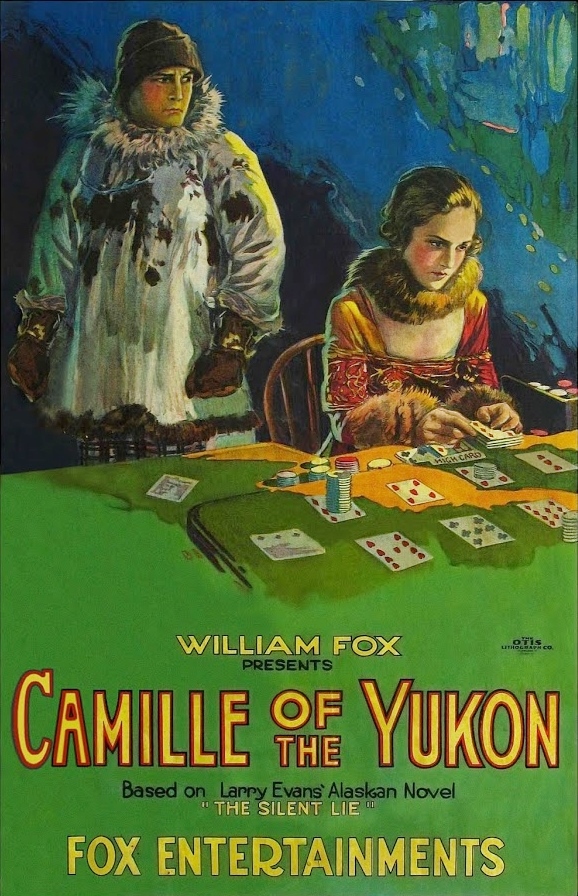
A definitive 3.4/10 rating for a film that redefined the boundaries of cult cinema. The Silent Lie remains a cornerstone of transgressive art.
Ah, the silent era! A time when emotions were writ large across faces, when gestures spoke volumes, and when the stark realities of human existence were often magnified through the lens of melodrama. 'The Silent Lie' (1917), a film that might otherwise be relegated to the dusty archives of forgotten cinema, emerges as a compelling example of its period's narrative prowess, a poignant exploration of societal judgment, coerced innocence, and the redemptive power of truth. Helmed by the writing talents of Larry Evans and Chester B. Clapp, this picture, starring the evocative Miriam Cooper, Ralph Lewis, and Monroe Salisbury, among others, crafts a narrative that, despite its age, still resonates with surprising emotional depth and complexity.
The film plunges us headfirst into a brutal lumber camp, a setting that instantly establishes the harsh, unforgiving world Lady Lou inhabits. Here, she is not merely a young woman but a pawn in the cruel game of Hatfield, her foster father. Ralph Lewis, as Hatfield, embodies the kind of villainy that was a staple of early cinema – an almost cartoonish malevolence that serves to underscore Lou's profound vulnerability. He forces her into the dance hall life, a fate that, in the moralistic context of the era, was tantamount to social damnation. This initial setup is crucial; it paints Lou's circumstances not as a choice but as a brutal imposition, a vital distinction that the film hinges upon for its later dramatic turns. Miriam Cooper, as Lady Lou, delivers a performance that, even through the veil of time and the limitations of silent film acting, conveys a palpable sense of trapped despair. Her eyes, her slumped posture, her tentative movements – all articulate the crushing weight of her predicament without a single spoken word. It’s a testament to Cooper’s skill that she can evoke such profound sympathy from the audience.
Enter the stranger, played with understated intensity by Monroe Salisbury. His character is perhaps the most intriguing and, in many ways, the most modern in its psychological nuance. He is a silent guardian, a man whose love for Lou is so profound and selfless that it transcends the need for reciprocation or even acknowledgement. His efforts to spirit Lou away from Hatfield’s clutches are not driven by a desire for possession, but by a pure, almost spiritual, need to see her free and safe. This selfless act of intervention sets the entire second act in motion. It's a trope that appears in various forms across cinematic history, a guardian angel figure, but here, in the stark, rough-hewn world of the lumber camps, it feels particularly potent. One might draw parallels to the quiet heroism seen in films like The Love Thief, where characters often operate from the shadows, their true motivations gradually unveiled. The stranger’s journey, culminating in his solitary walk into the snow, is a powerful visual metaphor for unrequited love and the quiet dignity of sacrifice, a motif that elevates 'The Silent Lie' beyond simple melodrama.
Lou's escape leads her to a neighboring camp, a new beginning where she meets Conahan, a lumberjack portrayed by Henry A. Barrows. Barrows brings a grounded, honest masculinity to the role, making Conahan’s subsequent disillusionment all the more heartbreaking. Their courtship and marriage, depicted with a certain rustic charm, are shadowed by Lou’s unspoken past. This 'silent lie' forms the crux of the film's dramatic tension. The audience, privy to Lou's history, watches with bated breath, knowing that this fragile happiness is built on a precarious foundation. The film masterfully builds this suspense, relying on the audience's understanding of the social mores of the time. A woman with a 'past,' especially one involving dance halls, was often deemed irredeemable, her chances at respectable happiness all but nonexistent. This societal condemnation is a driving force, much like the rigid class structures explored in As in a Looking Glass, where reputation could make or break a person.
The narrative's central conflict erupts with Hatfield’s reappearance. His confrontation with Lou, revealing her past to Conahan, is the film’s emotional fulcrum. Ralph Lewis's Hatfield, with his sneering triumph, is a truly loathsome figure, embodying the destructive power of malicious gossip and vengeful cruelty. Conahan’s reaction – his turning from Lou in disgust – is entirely understandable within the context of the period. His love, though genuine, is tested by the societal prejudices and moral expectations of his time. This moment of profound betrayal and shame for Lou is expertly handled by Cooper, whose portrayal of utter devastation is heart-wrenching. The scene is a stark reminder of how easily a person's reputation, even one unjustly earned, could shatter their life. It echoes the dramatic revelations and subsequent social ostracization seen in other period dramas, where secrets, once unearthed, could unravel entire existences.
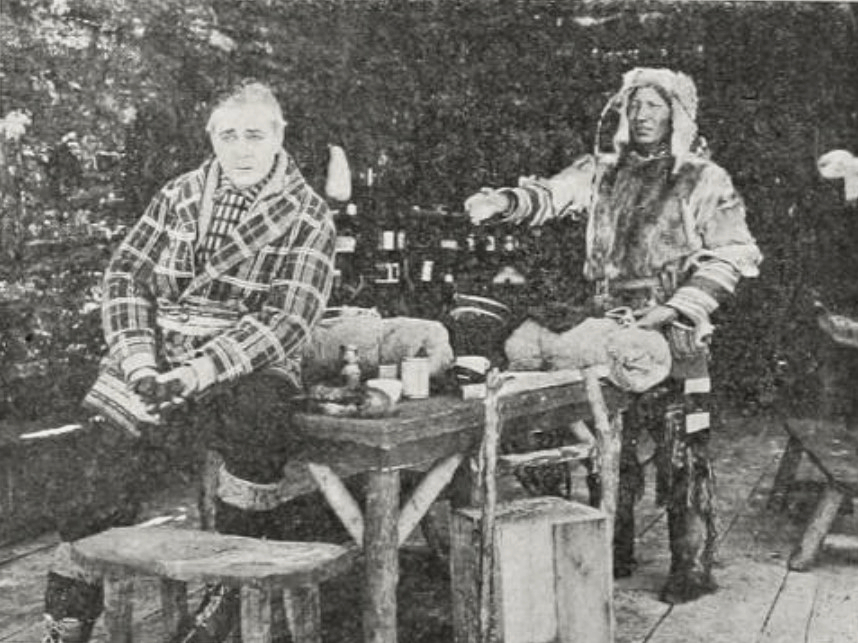
Once again, it is the stranger who steps into the breach, not with a flourish, but with quiet determination. His intervention, where he explains the truth of Lou’s coerced past to Conahan, is the catalyst for reconciliation. This scene is pivotal. It’s not just about revealing facts; it’s about challenging prejudice and fostering understanding. The stranger doesn’t just tell Conahan 'what happened,' but 'why' it happened, emphasizing Lou's lack of agency and the brutality she endured. This act of clarification and advocacy is where the film transcends simple melodrama, delving into themes of empathy and the true nature of innocence. Conahan's subsequent understanding and reconciliation with Lou are earned, not merely given, and are deeply satisfying. The stranger’s subsequent departure, alone into the snow, is perhaps the film’s most enduring image. It’s a powerful, almost spiritual moment of self-abnegation. He saves Lou, not for himself, but for her own happiness, and then quietly recedes, his mission complete. This poignant farewell leaves a lasting impression, a subtle counterpoint to the more overt emotional displays. It speaks to a deeper, more profound form of love, one that asks for nothing in return. One might even compare the stoic, self-sacrificing nature of this character to the thematic undercurrents in films like David Harum, where quiet acts of kindness often have the most profound impact.
Miriam Cooper's performance as Lady Lou is the beating heart of 'The Silent Lie.' Her ability to convey profound emotion without dialogue is remarkable. She navigates Lou's journey from victimized despair to cautious hope, and then to renewed devastation before finally finding peace, with an authenticity that defies the theatrical conventions of the era. Her eyes, in particular, are incredibly expressive, communicating fear, love, shame, and relief with equal measure. Ralph Lewis, as Hatfield, is suitably despicable, providing the necessary antagonistic force to drive the plot. His portrayal is broad, as was common for villains of the time, but effective. Henry A. Barrows as Conahan is a sturdy, earnest presence, his transformation from loving husband to disgusted stranger and back again is handled with believable emotional shifts. But it is Monroe Salisbury's stranger who truly elevates the film. His quiet intensity, his watchful gaze, and his ultimate act of selfless love make him a character that lingers long after the credits roll. His performance is a masterclass in subtlety for the silent screen, a stark contrast to the more overt theatrics of some of his contemporaries. The supporting cast, including William Eagle Shirt, Charles Clary, and Howard Davies, contribute to the rugged atmosphere of the lumber camps, adding texture and depth to the setting.
The direction, though uncredited in some records, effectively uses the visual language of silent cinema to tell its story. The stark landscapes of the lumber camps are not merely backdrops but active participants in the narrative, reflecting the harshness of Lou's life and the isolation of the characters. The use of close-ups to capture facial expressions, and wider shots to establish the oppressive environment, are all employed with a keen understanding of cinematic storytelling. The pacing, while deliberate by modern standards, allows the emotional beats to land with maximum impact. The intertitles, which serve as the film's dialogue and exposition, are used judiciously, complementing rather than overwhelming the visual narrative. This careful balance between visual and textual storytelling is a hallmark of well-crafted silent films, allowing the audience to immerse themselves fully in the emotional journey. While we may not have the vibrant colors or intricate special effects of today, the artistry in films like 'The Silent Lie' lies in their ability to communicate universal human experiences through pure visual narrative, a skill that some modern films could learn from.
'The Silent Lie' tackles themes that remain relevant even today: the power of social judgment, the vulnerability of the innocent, the complexities of love and sacrifice, and the enduring quest for redemption. Lou's struggle to overcome a past that was forced upon her speaks to broader issues of victim-blaming and the challenges individuals face in escaping cycles of abuse. The film also subtly explores the nature of true love – distinguishing between the possessive, destructive 'love' of Hatfield (if it can even be called that) and the selfless, protective love of the stranger. This dichotomy is a powerful commentary on human relationships. In an era when films like Home, Sweet Home often championed domestic bliss, 'The Silent Lie' dared to explore the darker undercurrents that could threaten such ideals. Its exploration of a woman's precarious position in society, subject to the whims of men and the judgment of communities, places it within a tradition of social commentary cinema, albeit one wrapped in a dramatic package. It's not as overtly political as something like Uncle Tom's Cabin, but its empathy for Lou's plight is clear.
When considering 'The Silent Lie' in the broader context of silent cinema, one can find echoes and contrasts with many of its contemporaries. Its melodramatic core might remind one of the emotional intensity found in films like Sweet Kitty Bellairs, though 'The Silent Lie' often delves into grittier realities. The theme of a woman escaping a troubled past to find new love, only to have it threatened by revelation, is a recurring narrative device. We see variations of this in countless films, highlighting the societal anxieties around female reputation and independence. The raw, almost brutal setting of the lumber camp provides a stark realism that contrasts with the more genteel, urban dramas of the period, or even the grand historical epics like Life and Passion of Christ. The film's focus on personal struggle and moral redemption aligns it with the character-driven dramas that began to dominate the burgeoning film industry, moving beyond mere spectacle. Its narrative structure, building to a dramatic revelation and subsequent resolution, is a classic template, one that filmmakers continued to refine throughout the silent era and into the sound age. While perhaps not as widely known as some blockbusters of its time, 'The Silent Lie' holds its own as a compelling piece of early American cinema, offering a window into the narrative concerns and emotional sensibilities of its period. It’s a film that quietly asserts its place, much like a hidden gem waiting to be discovered amidst the more famous titles. Its exploration of moral ambiguity and the complexities of human motivation is a testament to the sophistication of storytelling even in cinema's nascent years. Films like Kick In or When a Man Sees Red often explored similar themes of justice and redemption, but 'The Silent Lie' brings a unique blend of pathos and quiet heroism to the table. Even in a landscape dotted with tales of grand adventure or slapstick comedy, this film dares to delve into the quiet suffering and eventual triumph of the human spirit, making it a noteworthy contribution to the cinematic tapestry of its time. Its ability to evoke such strong emotional responses without dialogue is a true hallmark of the era's artistry, and a reminder of the power of visual storytelling. It’s a compelling argument for revisiting these often-overlooked treasures, as they frequently contain narratives and performances that speak to timeless truths with remarkable clarity and impact.
'The Silent Lie' is more than just a historical artifact; it is a resonant human drama. It reminds us that truth, however painful its revelation, often paves the way for genuine understanding and healing. The film's enduring power lies in its portrayal of selfless love and the quiet dignity of a person fighting against unjust circumstances. Miriam Cooper's portrayal of Lou is a testament to the resilience of the human spirit, while Monroe Salisbury's stranger embodies an ideal of pure, unadulterated devotion. For those willing to delve into the rich tapestry of early cinema, 'The Silent Lie' offers a deeply moving experience, a compelling narrative that, despite its century-old origins, continues to speak to the heart. It’s a powerful argument for the enduring relevance of silent film, a medium that, when executed with such skill and emotional intelligence, transcends its lack of spoken dialogue to communicate profound truths about the human condition. It stands as a testament to the early film pioneers' ability to craft compelling narratives that still captivate and move audiences today. This film, in its quiet power, truly demonstrates that some stories are best told not with words, but with the profound, silent language of the soul.
IMDb —
1917
Community
Log in to comment.