DbcultAccessing Vault...
Cult Review
Senior Film Conservator
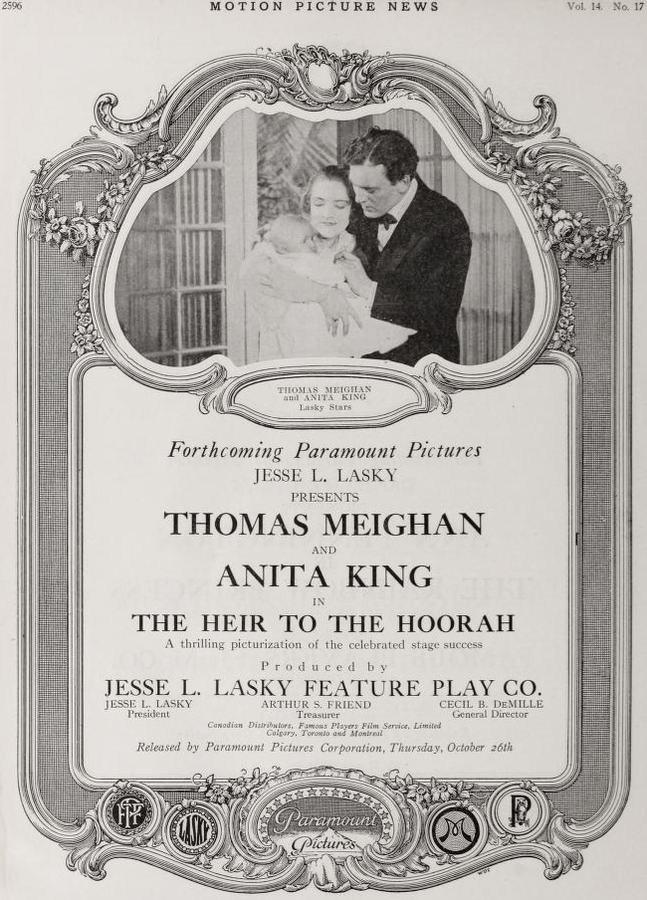
In the grand tapestry of early American cinema, where narratives often mirrored the burgeoning nation's own aspirations and anxieties, few films capture the intricate dance between wealth, societal expectation, and genuine affection quite like 1917's 'The Heir to the Hoorah'. This silent era drama, penned by the collaborative talents of Beatrice DeMille, Paul Armstrong, and Leighton Osmun, offers more than just a glimpse into a bygone cinematic style; it provides a surprisingly nuanced exploration of human motivations, the often-absurd machinations of social climbing, and the profound, if sometimes circuitous, path to true contentment. As a film critic with a penchant for uncovering the enduring relevance of vintage pictures, I find 'The Heir to the Hoorah' to be a particularly compelling artifact, a story that, despite its century-old origins, still speaks volumes about the timeless dilemmas of the human heart and the sometimes-blinding allure of prosperity.
The film's premise is delightfully period-specific yet universally resonant. Imagine the California gold rush era, but with a refined, if still rugged, edge. We are introduced to the Hoorah, a mine so rich it has transformed its three bachelor owners—Joe, Bud, and Dill—into millionaires. This isn't just about striking it rich; it's about establishing a legacy, a dynastic ambition that feels both quaint and profoundly human. Bud and Dill, perhaps more concerned with the practicalities of inheritance than the romantic ideals of marriage, hit upon a rather ingenious, albeit entirely self-serving, plan: Joe, the most eligible and least encumbered of the trio, must marry and produce an heir. This isn't merely for Joe's happiness; it's to ensure their collective wealth, the fruit of years of arduous labor and sacrifice, doesn't, upon their demise, simply revert to strangers. It's a pragmatic, almost corporate approach to matrimony, highlighting the era's intertwining of personal life with economic imperatives. Joe, however, proves to be a man of independent spirit, stubbornly resisting their well-intentioned, if somewhat overbearing, attempts at matchmaking. His ultimate departure from town, driven by sheer disgust, sets the stage for a narrative that veers delightfully off the predictable path.
The narrative truly ignites with the introduction of Geraldine Kent and her indomitable, socially ambitious mother. Geraldine, though undeniably beautiful, hails from a family struggling to maintain appearances, a common predicament in an era where social standing was often precariously linked to financial stability. Her mother, a character who embodies the era's relentless pursuit of societal elevation, sees every interaction as a potential strategic advantage. When a friend extends an invitation for a Western trip, Mrs. Kent, ever the opportunist, ensures her own inclusion. This isn't a vacation; it's a scouting mission, a carefully orchestrated foray into new social waters. Their arrival at the hotel presents a pivotal, almost comedic, scene: Joe, the reluctant millionaire, discovered in an utterly undignified position on the floor, playfully engaged with a five-year-old. Mrs. Kent's initial shock, a testament to her rigid social decorum, quickly dissipates upon the revelation of Joe's immense wealth. It's a swift, almost cynical, transformation from scandalized observer to attentive matchmaker, underscoring the transactional nature of marriage in certain societal strata of the time. She wastes no time in maneuvering Geraldine into accepting Joe's proposal, a union forged not in the fires of passion, but on the cold anvil of financial necessity. This segment of the film, in its subtle critique of societal pressures, echoes themes found in other contemporary works like Her Great Match, where personal desires often collide with the expectations of family and fortune.
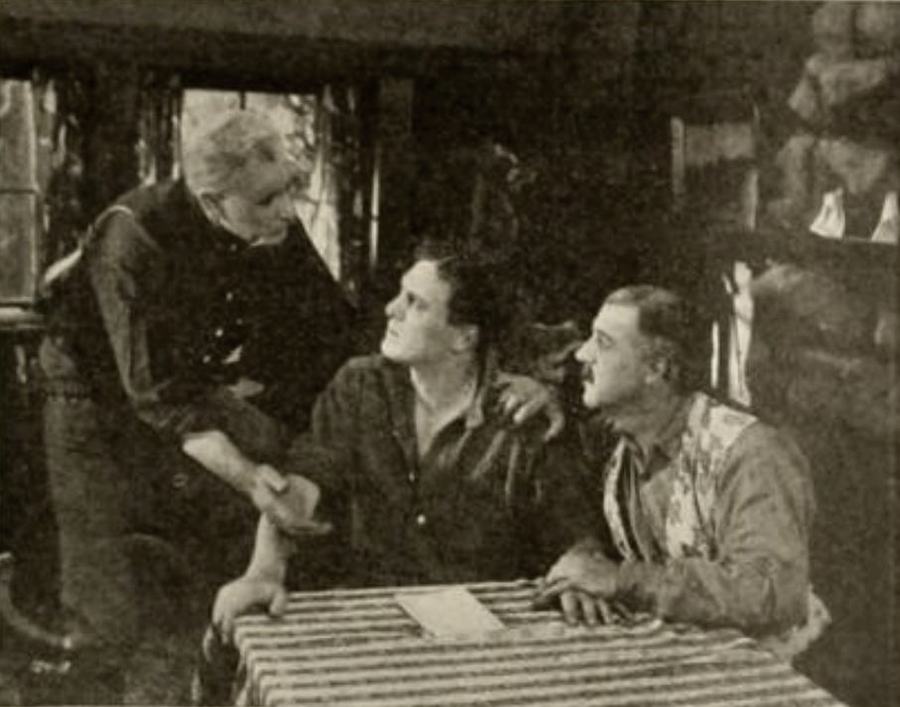
The ensuing marriage between Joe and Geraldine is, predictably, a study in misalignment. Joe’s lack of “polish”—his rugged, unrefined demeanor—becomes a constant source of mortification for Geraldine, who, having been pushed into this union, is acutely aware of the social scrutiny they face. His suggestion that they simply 'run away from it all' is met with an eagerness that speaks volumes about her unhappiness and her desperate desire to escape the suffocating expectations imposed upon her. It’s a moment of shared vulnerability, a flicker of genuine connection beneath the layers of societal artifice. However, their nascent escape is brutally interrupted by the unexpected appearance of Mrs. Kent. In a scene of exquisite dramatic irony, Joe overhears Mrs. Kent lamenting her forced hand in Geraldine's marriage, driven by their dire financial straits. This accidental revelation shatters Joe’s world, exposing the manipulative undercurrents of his union. His heartbreak is palpable, a silent scream against the betrayal. In a gesture of profound disillusionment, he provides them with the much-needed money and retreats, leaving behind the wreckage of a marriage built on false pretenses. This moment is a stark reminder of the emotional toll exacted by such arrangements, a theme often explored in the melodramas of the era.
A year passes, marked by Geraldine's move to sue for divorce, a formal dissolution of their ill-fated union. Meanwhile, Bud and Dill, ever pragmatic and still fixated on their dynastic aspirations, decide to embark on a journey to see Joe's 'baby,' unaware of the true circumstances. Concurrently, Joe, through the impersonal medium of a newspaper account detailing the divorce proceedings, discovers the existence of his son. The synchronicity of these events brings the three men together, setting the stage for a delightful comedic turn. Bud and Dill, with their boisterous claims to 'partnership baby' namesake rights, are momentarily deflated, then utterly charmed, upon learning the infant is, in fact, a girl. Their immediate pivot from disappointed patriarchs to doting uncles, ordering baby wardrobes by the carload, is a heartwarming testament to the unexpected joys of family, regardless of gender. This shift in focus, from a calculated 'heir' to a beloved 'child,' marks a significant thematic turning point in the film.
With the dust settling, Joe, now enlightened about his mother-in-law's culpability in his unhappiness, takes decisive action, dispatching Mrs. Kent back East on the first available train. This act, while perhaps harsh by modern standards, represents Joe's reclaiming of agency and a symbolic severance from the manipulative forces that shaped his life. The climactic confrontation between Joe and Geraldine is a masterclass in silent film emotional intensity. Joe, still smarting from the perceived betrayal, accuses Geraldine of marrying him solely for his money. Her response, however, is a revelation: she asserts that he married her for the baby. This exchange cuts through the superficiality, exposing their shared, albeit misunderstood, desires. He suggests a division – she takes the money, he takes the baby. But as the little one begins to cry, Joe, momentarily flustered by the raw reality of parenthood, hands her back to Geraldine. In that shared moment, as they look at their child and then at each other, the layers of resentment and misunderstanding peel away. They realize the foolishness of their past grievances, and Joe, finally embracing both mother and child, completes the circle of their unconventional romance. It’s a resolution that champions genuine connection over material wealth, a poignant reminder that true riches lie in family and affection, a narrative thread beautifully explored in films like The Child of Paris, which often grappled with the profound impact of children on adult relationships.
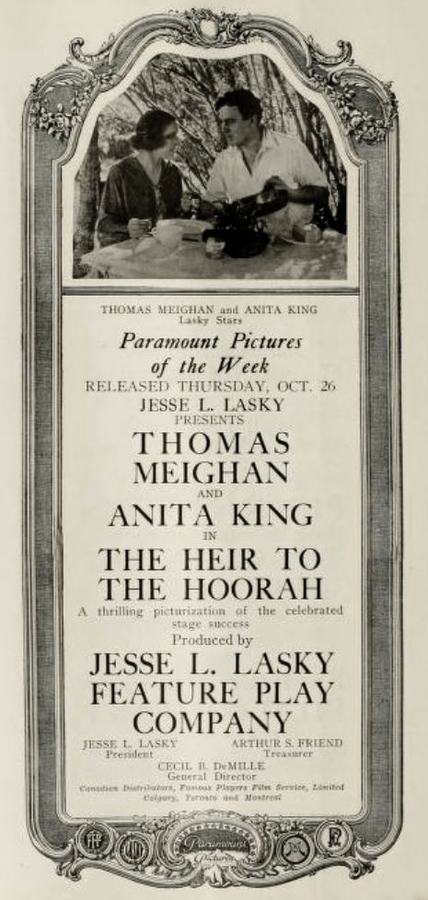
The success of 'The Heir to the Hoorah' hinges largely on the nuanced performances of its cast, a testament to the unique demands of silent cinema. Charles Ogle, as Joe, masterfully conveys his character's journey from a rugged, reluctant bachelor to a heartbroken husband, and finally, a loving father. His expressions, often subtle yet profoundly emotive, speak volumes without a single spoken word. Jean Woodbury, as Geraldine Kent, navigates the complexities of a woman caught between societal expectations and burgeoning personal desires with grace and conviction. Her silent portrayal of embarrassment, longing, and eventual love is compelling. Anita King, likely in the pivotal role of Mrs. Kent, delivers a memorable performance as the manipulative matriarch, her gestures and facial expressions perfectly capturing the character's calculating nature. Thomas Meighan, if indeed in a supporting role as one of the bachelor partners (the cast list provided is somewhat general), would have brought his characteristic charm and presence, adding depth to the camaraderie. The direction, while not explicitly detailed, effectively uses visual storytelling, intertitles, and the expressive capabilities of its actors to build tension, convey emotion, and deliver comedic relief. The film's reliance on visual cues, exaggerated expressions, and body language is a hallmark of the era, requiring a different kind of acting prowess that often goes unappreciated by modern audiences accustomed to dialogue-driven narratives. The skill with which these actors communicate complex emotional states, from Joe’s initial disgust to his eventual tenderness, is truly remarkable and speaks to the artistry inherent in early filmmaking.
In terms of its thematic resonance, 'The Heir to the Hoorah' is a rich tapestry. It critiques the commodification of marriage, where unions are forged for financial gain rather than genuine affection, a theme that remains pertinent even today. It explores the tension between material wealth and emotional fulfillment, ultimately championing the latter. The film also delves into the evolving definitions of family and legacy, moving from a rigid, patriarchal demand for a male heir to the joyous acceptance of a daughter, highlighting a subtle shift in societal values. The writers—Beatrice DeMille, Paul Armstrong, and Leighton Osmun—crafted a narrative that, while rooted in the melodramatic conventions of its time, manages to transcend them with its insightful characterizations and ultimately uplifting message. The journey of Joe and Geraldine, from a forced union to a genuine partnership, underscores the idea that love, though sometimes found in the most unexpected circumstances, requires honesty, vulnerability, and a willingness to see beyond superficialities. This film, though a product of its time, offers a timeless reflection on the pursuit of happiness and the true meaning of a 'hoorah'—not merely wealth, but a joyful, loving family.
As an artifact of early cinema, 'The Heir to the Hoorah' provides invaluable insight into the storytelling techniques, social mores, and entertainment values of the 1910s. It’s more than just a historical curiosity; it’s a vibrant, engaging film that holds up surprisingly well, offering both a window into the past and a mirror to enduring human concerns. The film’s ability to weave together elements of romantic comedy, social drama, and poignant family dynamics speaks to its narrative ambition and the skill of its creators. Its ultimate message—that genuine connection and love are far more valuable than inherited wealth or societal status—is one that resonates across generations. For those interested in the evolution of cinematic narrative, the power of silent acting, or simply a charming story of redemption and love, 'The Heir to the Hoorah' is an essential viewing experience. It reminds us that even in the absence of spoken dialogue, the human heart's complexities can be conveyed with profound clarity, leaving a lasting impression long after the final frame.
IMDb —
1916
Community
Log in to comment.