DbcultAccessing Vault...
6.1/10
Senior Film Conservator
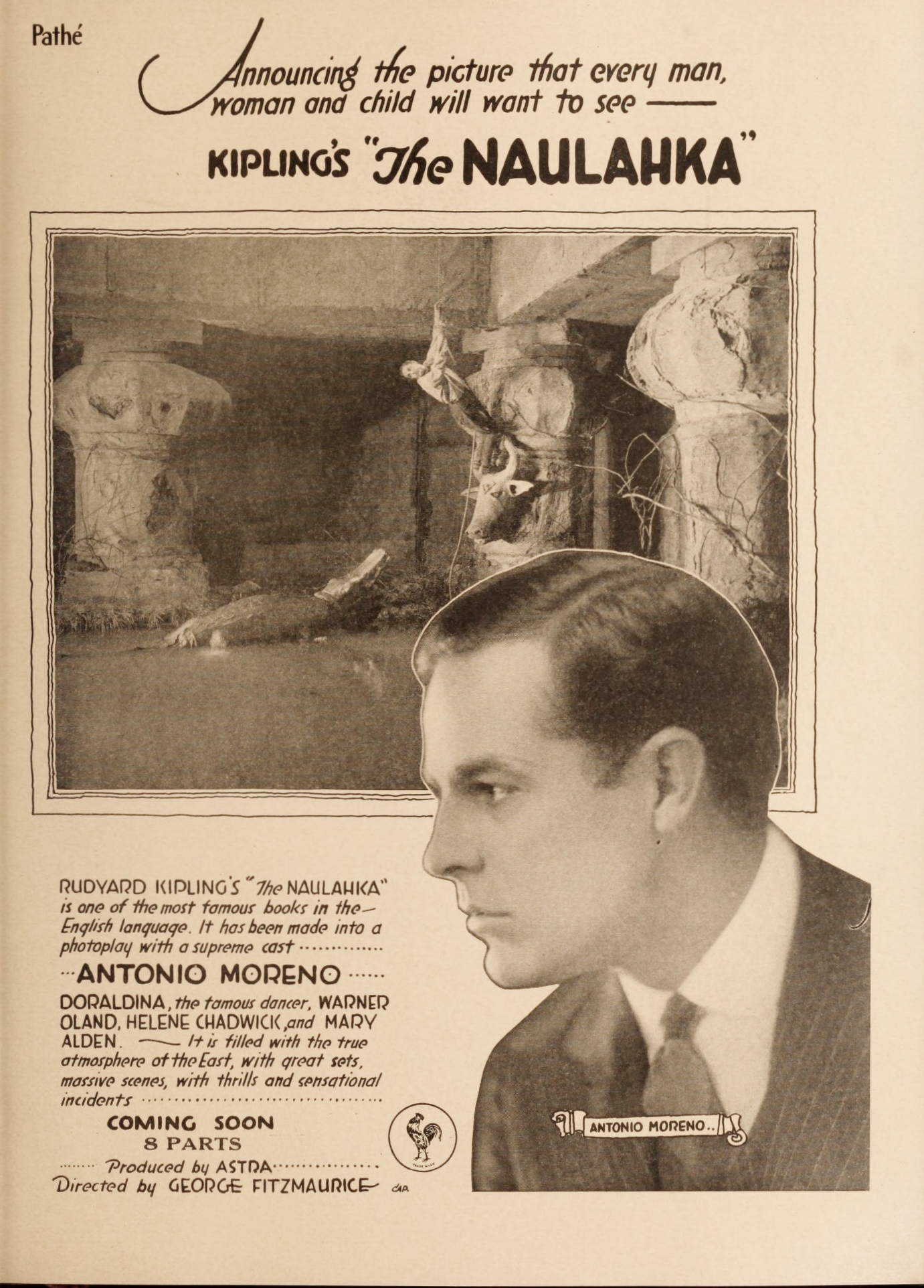
A definitive 6.1/10 rating for a film that redefined the boundaries of cult cinema. The Naulahka remains a cornerstone of transgressive art.
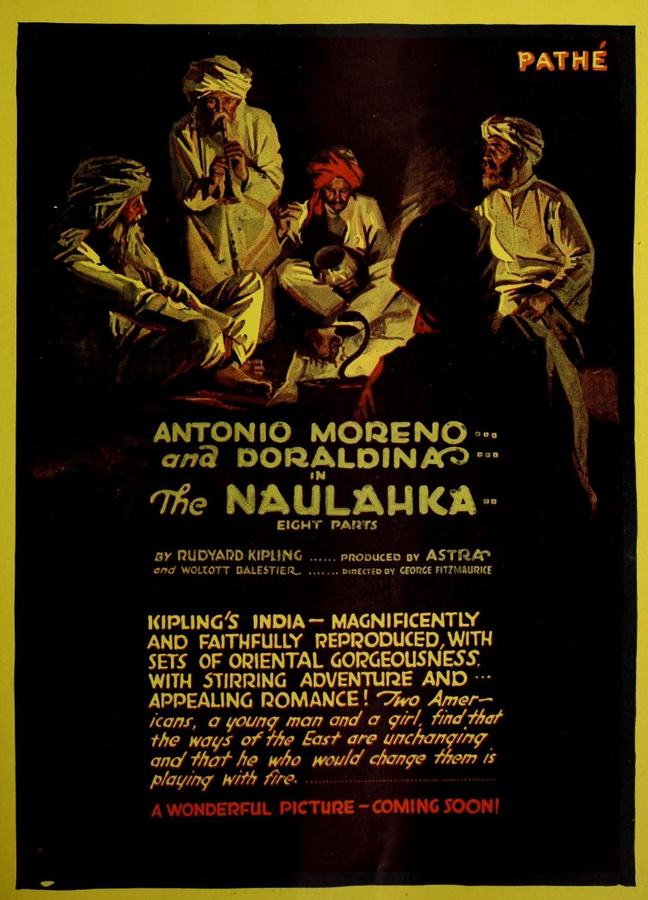
In the pantheon of early silent cinema, few works attempt the thematic breadth found in George B. Seitz’s 1918 production of The Naulahka. Based on the collaborative novel by Rudyard Kipling and Wolcott Balestier, the film serves as a fascinating specimen of the era's fascination with the 'exotic' East, juxtaposed against the burgeoning industrial identity of the American frontier. Unlike the domestic intimacy of His Wife's Good Name, The Naulahka demands a global stage. The narrative begins in Topaz, Colorado, a town whose very existence hinges on the iron whims of the railroad. Here, Nicholas Tarvin (portrayed with a rugged, kinetic energy by Antonio Moreno) emerges as the quintessential American go-getter, a man whose morality is inextricably tied to the prosperity of his community. His mission to India is a desperate gambit, a pursuit of a legendary necklace that functions as both a MacGuffin and a symbol of colonial rapacity.
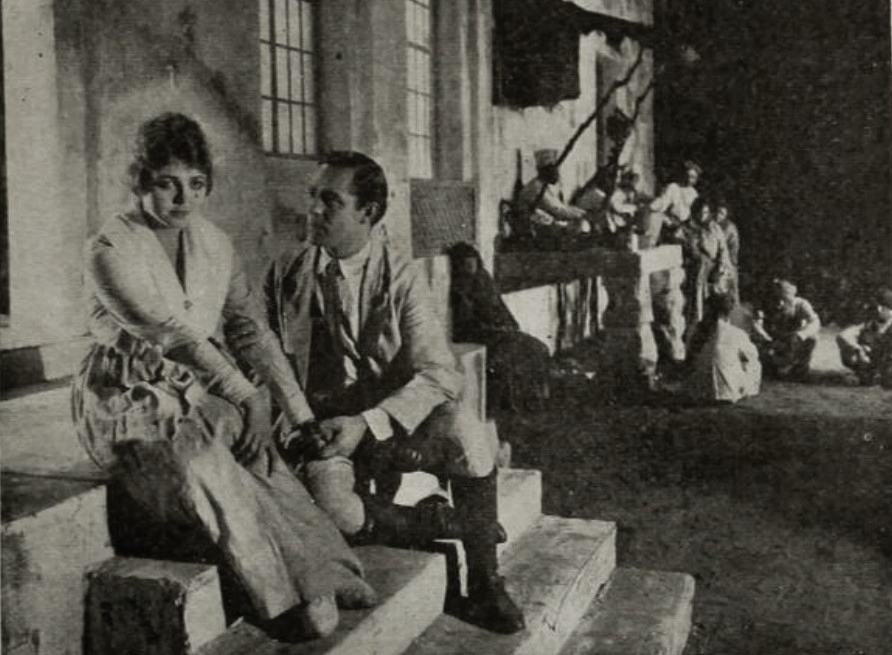
Antonio Moreno’s performance is a masterclass in silent-era charisma. He navigates the transition from the dusty streets of Colorado to the opalescent halls of the Maharajah’s palace with a seamlessness that anchors the film’s more fantastical elements. While contemporary audiences might find the colonial undertones problematic, Moreno imbues Tarvin with a frantic sincerity that transcends simple greed. He is not merely a thief; he is a man burdened by the survival of his town. This level of character depth is reminiscent of the psychological weight seen in The Weakness of Strength, where the protagonist's external struggle is mirrored by internal ethical decay. Tarvin’s journey is one of constant improvisation, dodging the lethal traps of an environment that views him as a crude interloper.
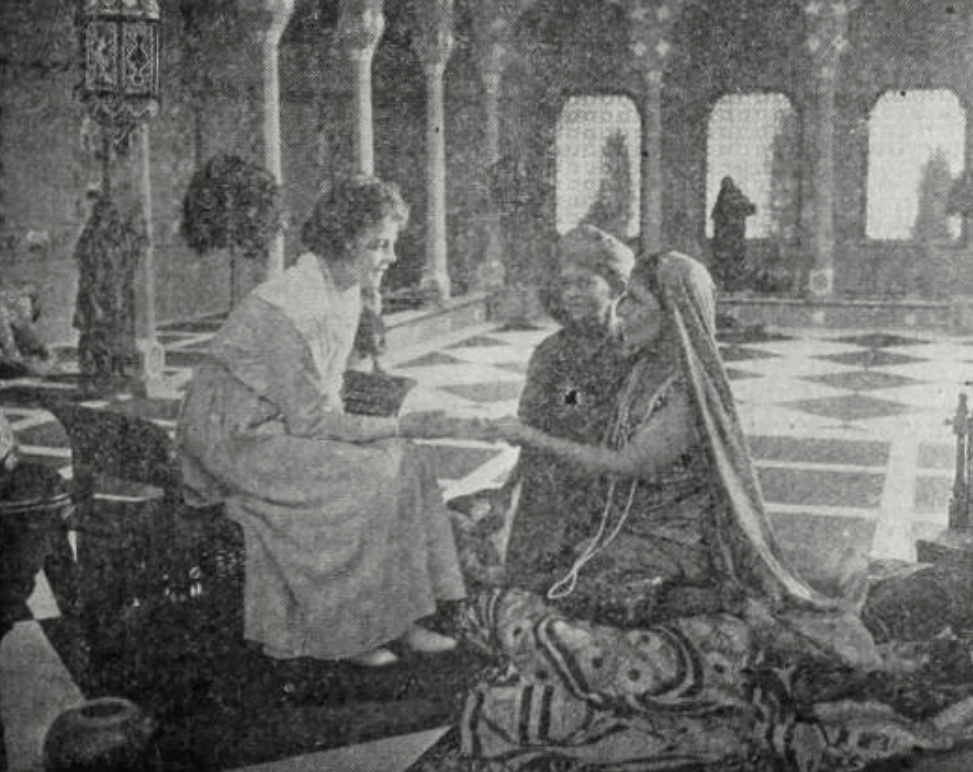
Contrasting Tarvin’s mercantile motivations is Kate Sheriff, played by Helene Chadwick. Her presence in India is born of a nascent professional feminism; as a medical graduate, she seeks to alleviate suffering in a land she perceives as desperately needing modern intervention. This ideological clash—Tarvin’s desire to take versus Kate’s desire to give—forms the emotional core of the film. Their relationship is not a simple romance but a collision of two different modes of Western expansionism. Kate’s character arc is particularly poignant as she realizes that her medical science is often powerless against the entrenched social hierarchies and palace intrigues of the Maharajah’s court. Her resolve, much like the fortitude displayed in The Crucible, is tested by the harsh realities of a culture that does not necessarily wish to be 'saved' by her standards.
The film’s primary antagonist, Sitahbai, is brought to life with a chilling, serpentine grace by Doraldina. As the Maharajah’s second wife, her ambition is a dark reflection of Tarvin’s own drive. She seeks to secure the throne for her son by eliminating the rightful heir, a young prince. This subplot introduces a level of suspense that rivals the high-stakes tension of Manden med Staalnerverne. The sequence where Tarvin repeatedly saves the young prince from Sitahbai’s attempts—ranging from poison to more overt violence—showcases Seitz’s ability to choreograph action within confined, ornate spaces. Warner Oland, who would later find fame as Charlie Chan, provides a nuanced performance as the Maharajah, capturing a man caught between the traditions of his ancestors and the encroaching influence of the British Raj and American opportunism.
Visually, The Naulahka is a feast of silent-era art direction. The sets, though undoubtedly studio-bound, evoke a sense of claustrophobic grandeur. The use of shadow and light within the palace corridors suggests a world where danger is omnipresent. Seitz’s direction is surprisingly modern, utilizing close-ups to heighten the psychological stakes and wide shots to emphasize the isolation of the American protagonists in this vast, ancient landscape. The film shares a certain visual ambition with Tigre reale, where the environment itself becomes a character in the drama. The Naulahka jewel itself is treated with a reverent cinematography, its facets catching the light in a way that suggests a supernatural influence, driving men to madness much like the central mysteries in Wenn Tote sprechen.
The climax of the film is not a battle of brawn, but of ethical negotiation. When Tarvin finally corners Sitahbai and secures the Naulahka, the victory is hollowed by Kate’s intervention. She recognizes that for Sitahbai, the loss of the jewel is a death sentence within the court's brutal economy of power. This moment of empathy represents a significant departure from the typical 'hero takes the treasure' trope. Tarvin’s decision to return the jewel, prompted by Kate’s moral clarity, elevates the film from a simple adventure story to a nuanced exploration of human value. It echoes the themes of sacrifice and redemption found in Great Expectations, where the ultimate prize is not material wealth but the preservation of one’s soul. The return to Colorado, jewel-less, serves as a sobering reminder that the world moves forward regardless of our individual conquests.
Released in 1918, The Naulahka arrived at a time when the world was reeling from the Great War and looking toward a new era of global connectivity. Its portrayal of India is undoubtedly filtered through a colonial lens, yet it possesses a complexity that distinguishes it from more simplistic fare like Zigeuneren Raphael. There is a palpable sense of respect for the lethality and intelligence of the Indian characters, particularly Sitahbai. The film’s pacing, while deliberate, builds toward a satisfyingly ironic conclusion. When Nick and Kate return to Topaz only to find the railroad tracks already laid, the irony is devastating. The 'Naulahka' was never the key to their future; the future had already arrived without it. This existential twist is as jarring as the sudden shifts in Der Weg des Todes.
The Naulahka remains a vital piece of cinema history, illustrating the early industry's ability to tackle complex literary adaptations with visual flair and thematic maturity. It is a film about the limits of ambition and the unexpected ways in which we find our purpose. While it lacks the sheer spectacle of The Explosion of Fort B 2 or the raw survivalism of Dr. Mawson in the Antarctic, it compensates with a rich, character-driven narrative that explores the very heart of the American spirit in a global context. For those interested in the evolution of the adventure genre and the subtle ways early filmmakers navigated cultural intersections, Seitz’s work is indispensable. It is a reminder that even in the silent era, cinema was capable of asking profound questions about what we are willing to trade for progress, and what we must leave behind to remain human.
IMDb —
1918
Community
Log in to comment.