DbcultAccessing Vault...
Cult Review
Senior Film Conservator
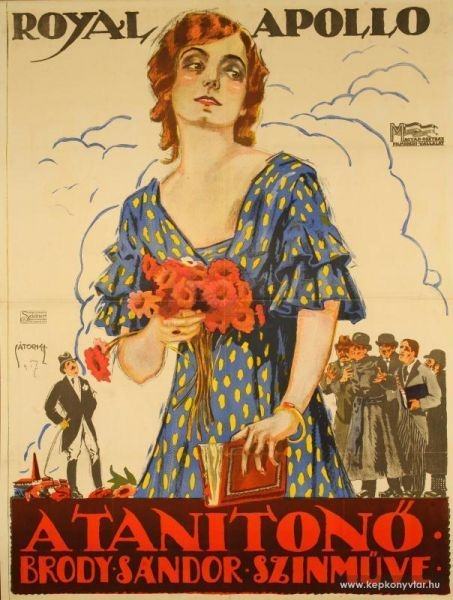
In the nascent years of the twentieth century, the cinematic landscape of Eastern Europe was undergoing a radical transformation, and at the heart of this metamorphosis was the Kolozsvár studio under the visionary guidance of Jenő Janovics. A tanítónő (The Village Teacher), released in 1917, stands as a monolith of this era, a film that transcends its silent medium to deliver a thunderous critique of social stratification and gendered violence. Based on the celebrated play by Sándor Bródy, the film is not merely a period piece; it is a visceral exploration of the friction between urban progressive values and the calcified traditions of the rural gentry.
To understand the gravity of this work, one must look at it through the lens of its contemporaries. While films like The Undesirable explored the plight of the marginalized with a certain romanticized pathos, A tanítónő adopts a more clinical, almost brutalist approach to its social commentary. It eschews the whimsical innocence found in Jewel, opting instead for a narrative structure that emphasizes the systemic nature of oppression. This is not a story of a single villain, but of a collective failure of morality within a community.
Lili Berky’s performance as Flóra is nothing short of revolutionary for the 1917 screen. In an era where silent acting often drifted into the realm of the histrionic, Berky maintains a grounded, luminous interiority. Her Flóra is not a weeping willow but a resilient intellectual. When she enters the village, her very posture—upright, dignified, and unyielding—serves as a visual antithesis to the slouching, alcohol-soaked corruption of the village elders. The camera lingers on her face, capturing the gradual erosion of her idealism as she realizes that her pedagogical mission is secondary to her role as a target of unwanted desire.
The chemistry, or rather the tense dynamic, between Berky and Victor Varconi (credited here as Mihály Várkonyi) provides the film’s emotional fulcrum. Varconi, who would later find fame in Hollywood, portrays István with a nuanced blend of aristocratic entitlement and burgeoning self-awareness. His character arc mirrors the audience's own journey: from viewing Flóra as an object of conquest to recognizing her as a human being of superior moral fiber. This thematic depth is far more sophisticated than the binary morality found in Destiny's Toy, where character motivations often felt dictated by plot necessity rather than psychological realism.
Visually, A tanítónő utilizes the Transylvanian landscape not as a picturesque backdrop, but as a psychological prison. The wide-angle shots of the puszta (the great Hungarian plain) emphasize Flóra’s isolation, while the interior shots of the village tavern and the council room are characterized by a claustrophobic density. The lighting, though limited by the technology of 1917, manages to create a chiaroscuro effect that highlights the duality of the village: the public face of piety and the private face of vice.
Compare this visual language to the more sprawling, adventurous aesthetic of De Voortrekkers or the rugged naturalism of Glacier National Park. While those films look outward toward the horizon, A tanítónő looks inward, dissecting the rot within the domestic sphere. The direction by Mihály Fekete (who also co-wrote the script) demonstrates a keen understanding of spatial politics—how the positioning of men around Flóra in a room can communicate more about power and threat than any intertitle could.
The script, penned by the legendary Sándor Bródy, is the film's most potent weapon. Bródy was a master of exposing the hypocrisies of the Hungarian middle and upper classes, and A tanítónő is perhaps his most enduring indictment. The village council—the doctor, the magistrate, the priest, and the wealthy landowners—represents a microcosm of a failing state. Their collective attempt to seduce and subsequently defame Flóra is a chilling depiction of how institutional power is used to crush dissent and maintain the status quo.
"The film posits that the true 'savagery' is not found in the uneducated masses, but in the sophisticated elite who weaponize their social standing to satisfy their basest instincts."
This thematic preoccupation with the 'fallen woman' and social justice echoes the concerns of The House of Bondage, yet Bródy’s work feels more personal and less didactic. There is a specific Hungarian flavor to the melancholy here—a sense of historical weight and the crushing burden of tradition that is absent from the more optimistic American social dramas of the time, such as A Man's Making.
When placed alongside other 1917 releases, A tanítónő appears remarkably modern. While Mrs. Wiggs of the Cabbage Patch offered audiences a comforting, sentimental view of poverty, and The New Adventures of J. Rufus Wallingford provided escapist comedy, the Hungarian production refused to grant such easy catharsis. Even in the realm of mystery and crime, such as The Murdoch Trial, the stakes often felt theatrical. In contrast, the stakes in A tanítónő are existential. Flóra’s struggle is a fight for the right to exist as an autonomous being in a world that only recognizes her as a commodity.
The film’s exploration of the female experience also invites comparison with Her Life for Liberty. However, where that film focuses on the overt political struggle, A tanítónő focuses on the quiet, daily heroism of maintaining one’s integrity in the face of pervasive moral rot. It shares a certain spiritual kinship with 'Neath Austral Skies in its depiction of the harsh realities of life far from the civilizing influence of the city, yet it remains uniquely European in its fixation on class and ancestral baggage.
The technical execution of the film, considering the limitations of the era, is commendable. The editing by Mihály Fekete ensures a rhythmic flow that keeps the tension palpable, particularly during the climactic council scene where the accusations against Flóra reach a fever pitch. The use of intertitles is sparse but effective, allowing the visual performances of the ensemble cast—including the wonderfully grostesque village types played by Gyula Dezséri and Alajos Mészáros—to carry the narrative weight. This ensemble work creates a vivid, albeit repulsive, tapestry of rural life that rivals the character depth seen in The Squatter's Daughter.
Furthermore, the film’s legacy is intertwined with the tragic history of the Hungarian film industry, much of which was lost during the world wars. The survival of A tanítónő is a gift to film historians, offering a window into a sophisticated cinematic culture that was exploring complex themes of female agency and social corruption long before these became staples of the medium. It possesses a psychological depth that would not be seen again in such a raw form until the works of the 1950s and 60s, or perhaps in the haunting explorations of the past found in Hans hustrus förflutna.
Ultimately, A tanítónő is a film about the discomfort of being seen. Flóra arrives in the village and acts as a mirror, reflecting the ugliness of the inhabitants back at them. They cannot endure her gaze, her education, or her virtue, and so they attempt to shatter the mirror. The film’s conclusion, while offering a semblance of a traditional ending, leaves the viewer with a lingering sense of unease. The victory is a personal one for Flóra and István, but the village—and by extension, the society it represents—remains unchanged, unrepentant, and stagnant.
In the grand pantheon of silent cinema, A tanítónő deserves a place alongside the most daring works of the era. It is a film that refuses to blink, a work of art that challenges its audience to confront the darker aspects of human nature and social organization. It is as relevant today as it was in 1917, serving as a timeless reminder that the fight for enlightenment is often met with the fiercest resistance from those who benefit most from the darkness. For those interested in the evolution of cinematic social critique, or for those who simply appreciate a masterfully told story of defiance, this film is an essential viewing experience. It is a haunting, beautiful, and deeply necessary piece of film history that continues to resonate across the century, much like the hypnotic pull of Ipnosi, but with a far more grounded and devastating human impact.
IMDb 6.1
1933
Community
Log in to comment.