DbcultAccessing Vault...
Cult Review
Senior Film Conservator
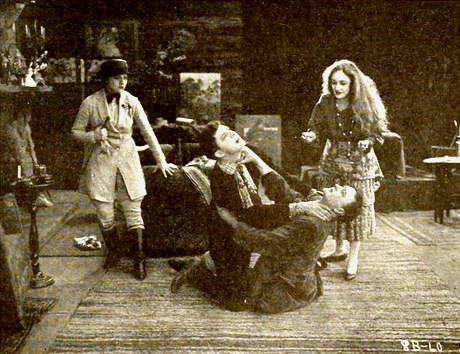
The flickering shadows and resonant piano scores of the silent era gifted us with a treasure trove of narratives, each striving to capture the human condition without the crutch of spoken dialogue. Among these, the 1918 production, The Sneak, emerges as a compelling example of dramatic storytelling, weaving a complex tapestry of love, betrayal, and familial honor within the vibrant, often misunderstood, world of a gypsy community. Directed with a keen eye for visual storytelling and penned by the collaborative talents of J. Grubb Alexander and Ruth Ann Baldwin, this film transcends its historical context to deliver a narrative that still resonates with its exploration of passion and prejudice.
At the heart of The Sneak lies Rhona, portrayed with captivating intensity by Irene Rich. As the daughter of the gypsy king and the designated heir to his leadership, Rhona embodies a unique blend of strength and vulnerability. Her pivotal decision to choose Wester Churen (William Scott) as her husband, a choice made perhaps for love or for the stability he represents, immediately disrupts the delicate power dynamics within her community. This decision, seemingly a personal one, carries significant tribal weight, directly challenging the ambitions and inflamed passions of Francisco Buckley (Gladys Brockwell, in a role that hints at the fluidity of gender portrayal or the compelling nature of villainy in silent film, often played by women to heighten dramatic tension), her spurned suitor. Francisco's rejection sets the stage for a malevolent scheme, demonstrating how personal slight can fester into destructive vengeance, a theme not dissimilar to the intricate betrayals explored in films like A gyanú, where suspicion and manipulation unravel relationships.
The narrative takes an intriguing turn with the introduction of Roger Barrington (Gerard Alexander), an artist whose presence near the gypsy encampment serves as a catalyst for Rhona's predicament. Barrington, immediately captivated by Rhona's striking beauty and exotic allure, requests her to pose for a portrait. This artistic encounter, seemingly innocuous, becomes the perfect leverage for Francisco. Exploiting Rhona's sense of duty or perhaps her inherent vulnerability, Francisco manipulates her into a shameful act: stealing Barrington's valuables. This moment of transgression is crucial, highlighting the external pressures and internal conflicts Rhona faces. When Roger catches her, the ensuing shame and humiliation compel Rhona to agree to pose for him, not out of artistic inclination, but as a form of penance. This forced intimacy, born of deceit, sets the stage for the dramatic climax. The portrayal of a woman caught between societal expectations and personal integrity, often exploited or misunderstood, echoes the struggles depicted in films like A Daughter of the City or Her Price, where female protagonists navigate complex moral landscapes.
Francisco, relentless in his pursuit of vengeance, ensures that Wester is informed of Rhona's presence at Roger's home. The ensuing scene is a masterclass in silent film drama: Wester, consumed by a furious jealousy, confronts Rhona, leading to her immediate and devastating expulsion from the gypsy camp. This act of ostracism, a severe punishment within a close-knit community, underscores the rigid social codes and the immense pressure on Rhona to uphold her honor, or at least its perception. The visual language of silent cinema, relying heavily on exaggerated gestures, facial expressions, and symbolic staging, would have amplified the emotional impact of Rhona's banishment, painting a vivid picture of her isolation and despair. Such themes of community judgment and the pain of being cast out resonate with narratives like Children of the Feud, where tribal loyalties and ancient grievances dictate individual fates, or even The Homesteader, which explores societal prejudice and the struggle for acceptance.
The narrative then pivots towards a glimmer of hope and eventual redemption. The dying gypsy king, portrayed with gravitas by Alfred Hollingsworth, undergoes a change of heart. Perhaps his impending mortality grants him a clearer vision, or perhaps he discerns the malicious hand of Francisco in Rhona's plight. He sends Wester to retrieve his daughter, an act of faith and forgiveness that begins to mend the fractured family. Rhona's return to the encampment is timed with dramatic precision, arriving just as her father is on the brink of death. This poignant reunion is a powerful moment, symbolizing the reconciliation of tradition and individual truth, and the enduring bond between parent and child. It's a testament to the power of belief and the often-late recognition of innocence, themes that find parallels in other early cinematic explorations of familial strife and forgiveness, such as A Mother's Sin or Beloved Jim.
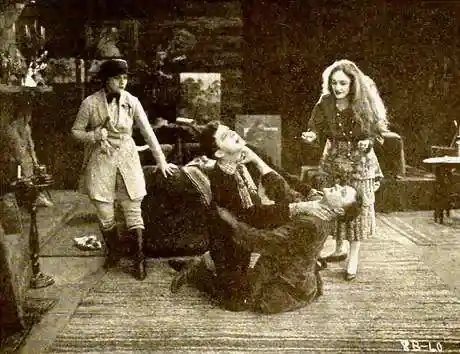
The film's climax is a breathtaking sequence of high drama and raw emotion. Francisco, unable to relinquish his malevolent grip, delivers a fatal stab to Wester. This act of ultimate betrayal and violence propels Rhona into a new, fierce iteration of her character. Shedding any lingering vulnerability, she challenges Francisco to a knife duel, a visceral and symbolic confrontation for honor, love, and justice. This scene, particularly striking for its depiction of a female protagonist engaging in direct physical combat, would have been revolutionary for its time, showcasing Rhona's strength and agency. The poetic justice of Francisco falling on his own knife, a victim of his own malice, provides a satisfying, albeit tragic, resolution to his reign of terror. This kind of dramatic, almost theatrical, confrontation and the villain's self-destruction are tropes found across many early action and drama films, including those focused on justice like The Man from Mexico or Mister 44, where heroes often face insurmountable odds to restore order.
In the aftermath of the duel, the dying king bestows his final blessing upon Rhona and the recovering Wester. This act solidifies Rhona's position as the rightful successor, not just by birthright, but by her proven strength, resilience, and unwavering spirit. The blessing also validates her choice of Wester, affirming their love against all odds. The ending, while tinged with the sadness of the king's death, offers a sense of renewal and hope for the gypsy community under Rhona's leadership. It's a powerful statement on the cyclical nature of life, death, and succession, and the enduring power of love and forgiveness. The narrative arc, from initial choice to profound conflict and eventual, hard-won peace, demonstrates a sophisticated understanding of dramatic structure, making The Sneak a memorable entry in the silent film canon.
Irene Rich, as Rhona, delivers a performance that is both nuanced and commanding. Her ability to convey a wide spectrum of emotions – from initial joy and defiance to shame, despair, and ultimately, fierce resolve – without uttering a single word is a testament to her skill as a silent film actress. Her physical presence and expressive face carry the weight of the narrative, making Rhona a truly empathetic and compelling protagonist. Alfred Hollingsworth, as the wise and ultimately forgiving king, provides a grounding presence, his character's journey from strict adherence to tradition to paternal understanding being crucial for the film's emotional resolution. William Scott, as Wester, effectively portrays the jealousy and eventual loyalty of a man deeply in love, while Gladys Brockwell's portrayal of Francisco is chillingly effective, embodying pure, unadulterated malice. The ensemble cast, including Harry Hilliard and John Oaker in supporting roles, collectively contributes to the film's rich atmosphere and emotional depth, each actor understanding the unique demands of silent cinematic expression. The dramatic intensity and clear character motivations are hallmarks of well-crafted silent cinema, similar to the poignant portrayals seen in M'Liss or The Hater of Men, where expressive acting was paramount.
J. Grubb Alexander and Ruth Ann Baldwin's screenplay for The Sneak is a masterclass in crafting a compelling narrative through visual cues and succinct intertitles. They skillfully build tension, develop complex characters, and drive the plot forward with a series of dramatic reversals. The film’s direction, while uncredited in the provided information, clearly understands how to leverage the visual medium. The use of close-ups to emphasize emotional states, wide shots to establish the gypsy camp's atmosphere, and dynamic editing to heighten action sequences would have been critical in conveying the story's depth. The contrast between the free-spirited gypsy lifestyle and the rigid societal expectations, or the clash between artistic pursuit and tribal law, is vividly depicted through careful staging and symbolic imagery. The effectiveness of a narrative driven by character choices and their dramatic consequences is a timeless aspect of cinema, evident in various forms, from the dramatic tension of A Strange Transgressor to the compelling human stories in The Risky Road.
In conclusion, The Sneak stands as a testament to the power and artistry of silent cinema. It offers a rich, emotionally charged narrative that explores universal themes of love, jealousy, honor, and redemption, all filtered through the unique cultural lens of a gypsy community. Irene Rich's performance is particularly noteworthy, cementing her status as a formidable actress of her era. For enthusiasts of early cinema, and indeed for anyone interested in the evolution of storytelling, this film provides a fascinating glimpse into a period when visual narrative was paramount. Its intricate plot, compelling characters, and dramatic climax ensure its place as a significant, albeit often overlooked, piece of cinematic history. While not as widely known as some of its contemporaries, films like Ferravilla nelle sue più caratteristiche interpretazioni or Mascamor might offer different cultural perspectives, but The Sneak provides a truly American silent drama experience, rich in its portrayal of human passion and resilience.
IMDb 6.4
1932
Community
Log in to comment.