DbcultAccessing Vault...
Cult Review
Senior Film Conservator
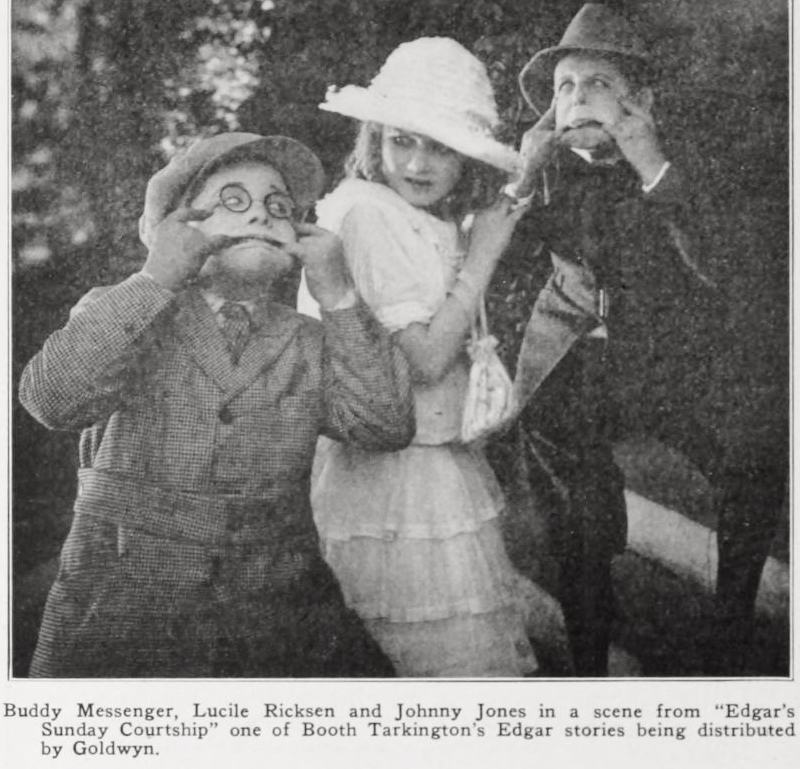
There are silents that whisper, and silents that trumpet; Edgar's Sunday Courtship does both in the span of a church bell’s echo.
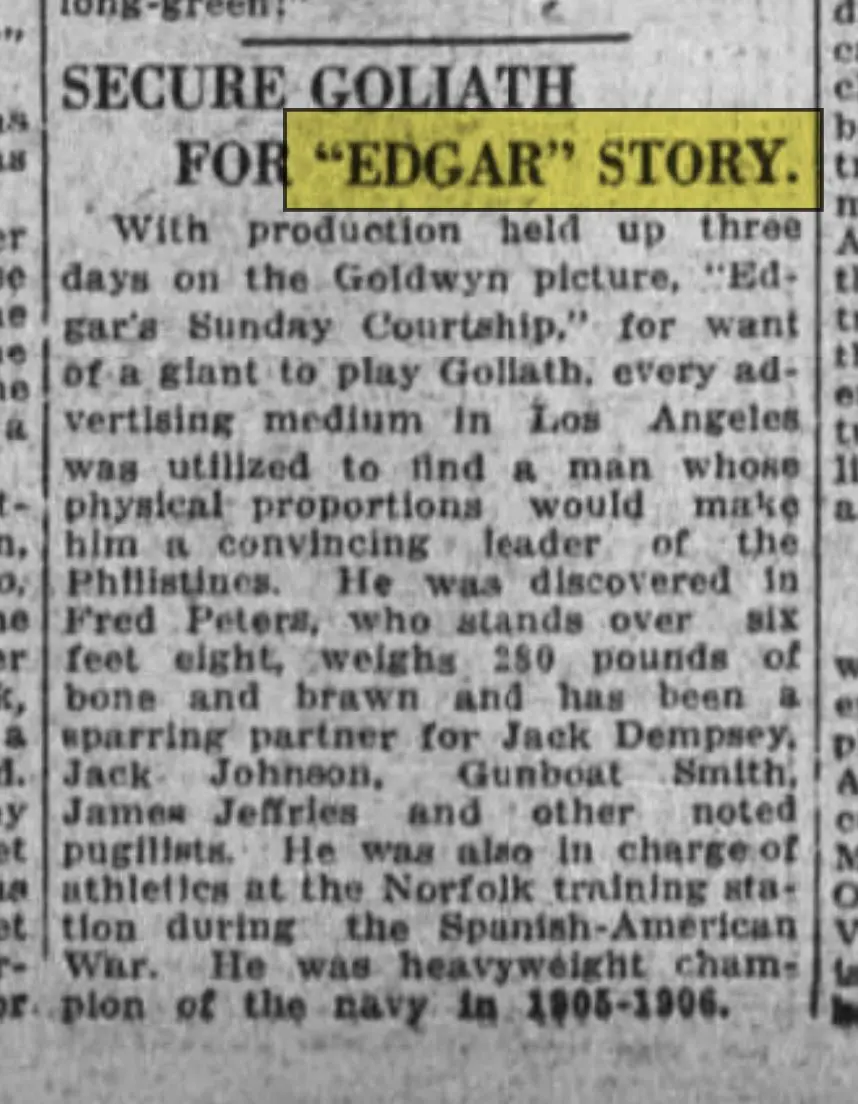
Shot in the honey-gold twilight of 1924, this one-reel marvel—scarcely fifteen minutes yet denser than a Dickens installment—plays like a stained-glass kaleidoscope: childhood’s primary colors fractured through the prism of adult memory. Booth Tarkington, the sardonic bard of American adolescence, supplies the scenario; director James C. McKay distills it into visual shorthand so brisk you could miss a miracle between blinks.
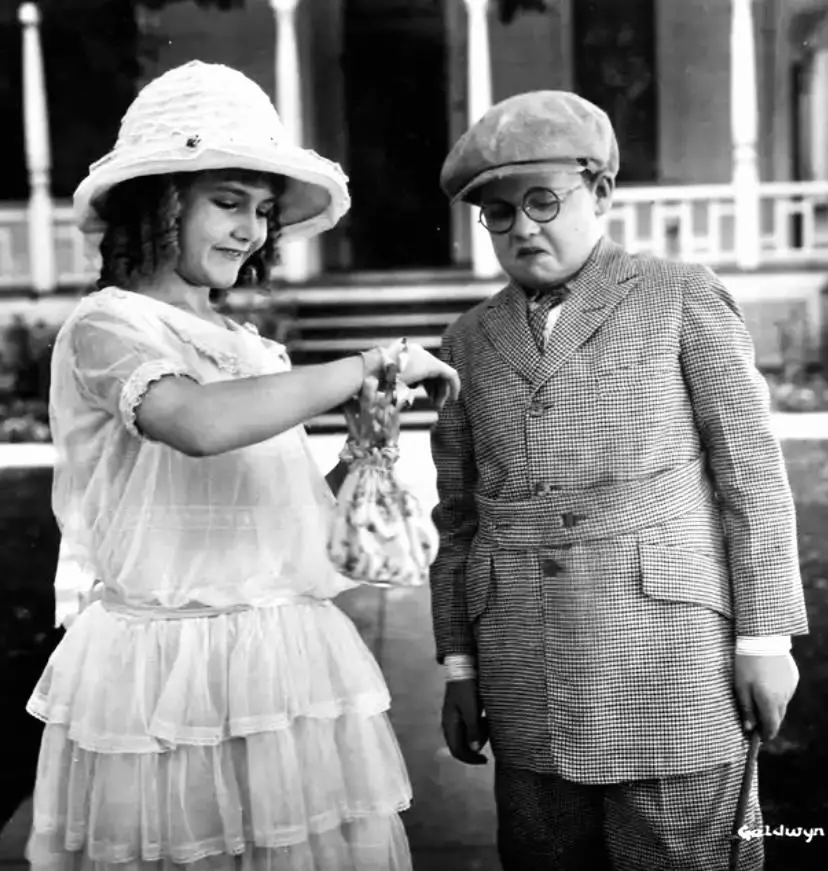
Edgar’s universe is sketched in three chalk strokes: the dusty lane, the clapboard school, and the promise of pie. Within that triptych, the film stages nothing less than the birth of moral consciousness. When our pint-sized protagonist misquotes Scripture, he is not mouthing ignorance; he is translating cosmic terror into playground vernacular. The teacher’s gaze turns him to stone, yet the camera—peeking through the balustrade—grants us the omniscient perch denied to him. We become co-conspirators in his guilt, co-authors of his absolution.
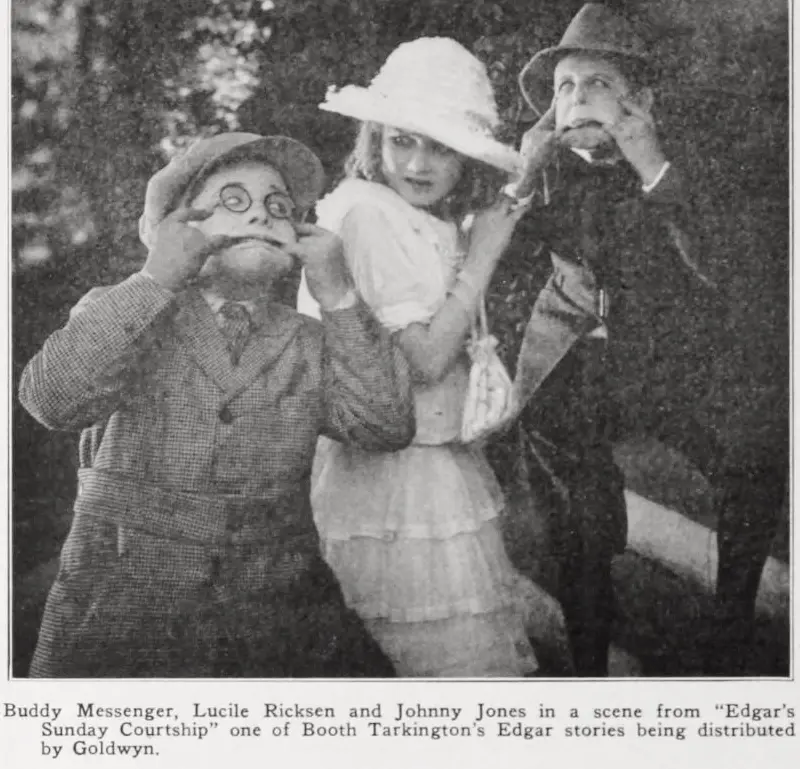
Edward Peil Jr., barely ten, toggles between swagger and mortification with the finesse of a seasoned tragedian. Watch the tremor in his lower lip when the word Philistine escapes him—an entire stanza of Ovid’s Metamorphoses compressed into a 16-frame stutter. Opposite him, Marie Dunn’s sweetheart never dissolves into mere ingénue; her sideways glance at the rival carries the same erotic static that Garbo would electrify theaters with five years later. And then there is Nick Cogley’s rival—part faun, part seraph—who twirls his cap like a rapier, proving that villainy can be winsome when viewed through the rear-view mirror of nostalgia.

Cinematographer Philip Tannura, later heralded for his chiaroscuro in The Unbeliever, here experiments with under-exposure to sculpt pew-shaped shadows across Edgar’s cheeks. When the boy imagines himself descending to the “lower regions,” the iris-in closes like the mouth of Hades, then blossoms open onto a cardboard hell drenched in umber tint. It is a gambit as expressionistic as anything in Lucciola, yet laced with Midwestern practicality: the demons are merely older boys wearing moustaches of coal dust.
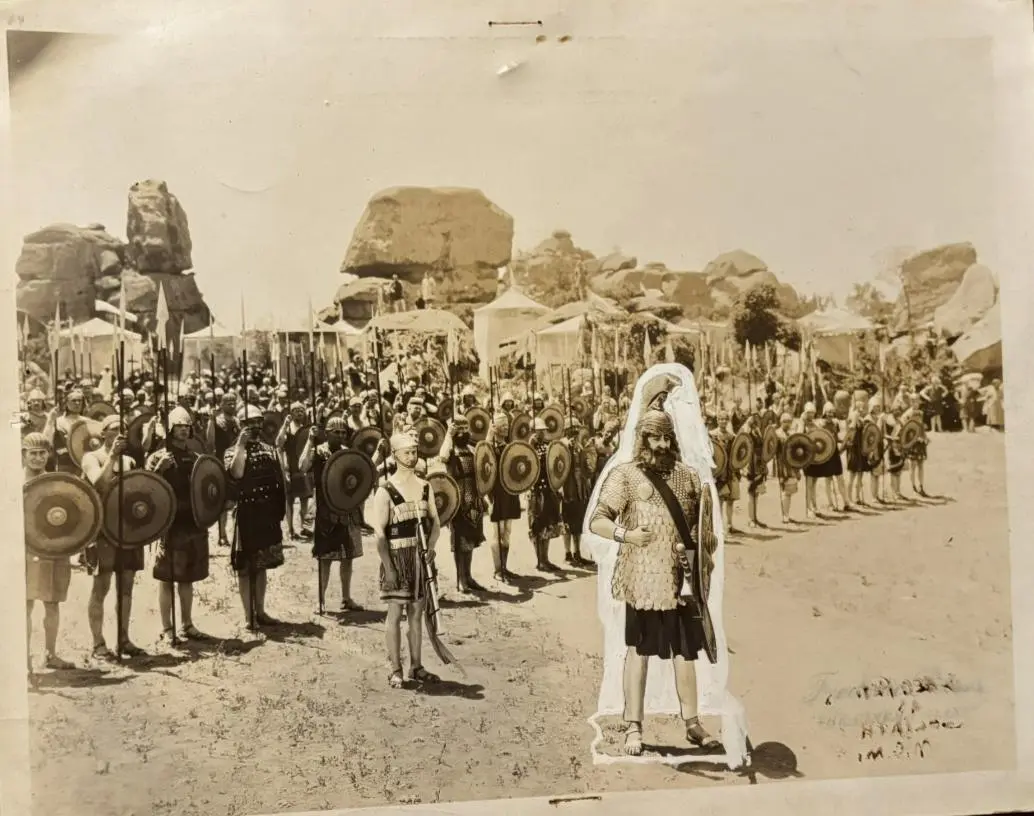
Though the original accompaniment is lost, contemporary screenings favor a cue-sheet cobbled from Mendelssohn’s Scottish Symphony and folk hymns like “Sweet Hour of Prayer.” The juxtaposition is revelatory: Romantic yearning braided with revival-tune austerity, mirroring Edgar’s oscillation between earthbound appetite and heavenward aspiration. One suspects that even in 1924, the house organist improvised contrapuntally, underscoring the gag of pie consumption with a trilled Amen cadence.
Let us not tiptoe around the final sacrament. Two wedges of pie—likely molasses, possibly shoofly—serve as edible absolution. The first bite still trembles with residual guilt; the second lands like benediction. Tarkington, who would later skewer Midwestern gluttony in Alice Adams, here treats dessert as covenant. The camera lingers on the crust’s flake, the syrupy drip, with the same rapt piety that Dreyer would reserve for Joan’s tears. In a cinematic epoch obsessed with resurrection (see The Seventh Noon), Edgar’s resurrection is gastric and therefore democratic.
Place Edgar's Sunday Courtship beside the juvenile cruelty of Children of the Feud or the dime-novel heroics of Cyclone Smith Plays Trumps, and its quiet radicalism snaps into focus. There are no fisticuffs, no last-minute railroad rescues—only the skirmish of a soul negotiating grace under the surveillance of small-town jurisprudence. Its closest spiritual kin might be Pennington's Choice, yet where that film moralizes, this one metabolizes.
For decades the sole print languished in a Warsaw archive, mislabeled as “Szkolna Nedzla.” A 2019 4K restoration by EYE Filmmuseum salvaged the amber tinting, revealing facial freckles once swallowed by fungal decay. Streaming rights currently shuttle between Criterion Channel and The Valley of the Moon’s boutique Blu-ray label; check rotation schedules lest you miss the ephemeral window.
Great cinema teaches us to see our former selves without condescension; Edgar's Sunday Courtship achieves that in quarter of an hour. It knows that every child is a theologian improvising doctrine with hopscotch chalk, that damnation can taste of cinnamon, and that redemption sometimes arrives on a fork. Watch it once for historical curiosity, twice for aesthetic vertigo, thrice for the sudden, pie-shaped hole it leaves in your own memory of what Sunday used to mean.
Verdict: A pocket-sized miracle, equal parts brimstone and butter crust—essential viewing for anyone who suspects that growing up is the first, funniest Fall.
IMDb 6.6
1922
Community
Log in to comment.