DbcultAccessing Vault...
Cult Review
Senior Film Conservator
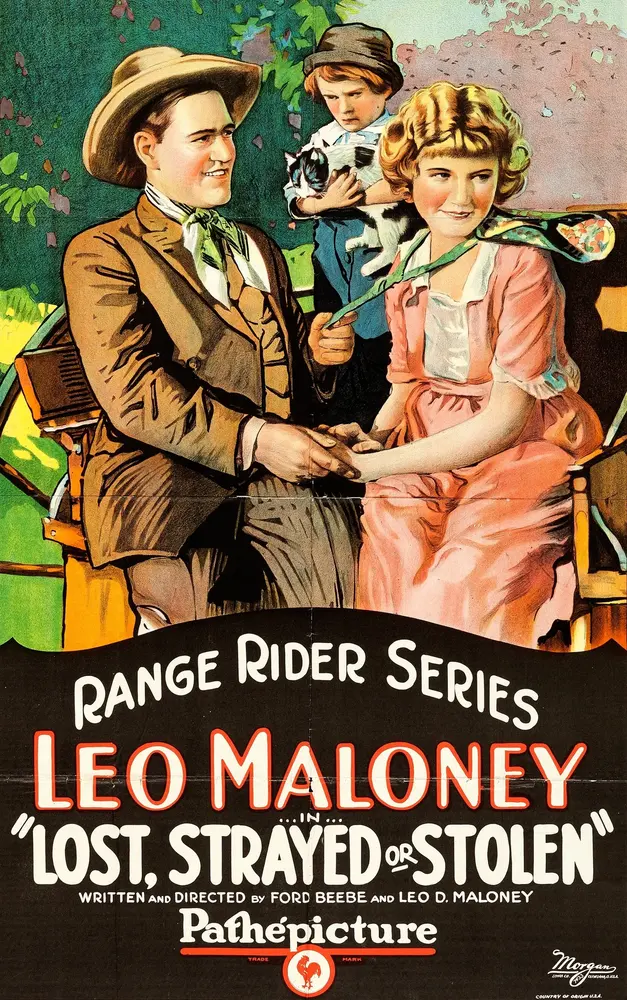
The cinematic landscape of Lost, Strayed or Stolen is a tapestry woven with intricate threads of deception, loyalty, and the unrelenting pursuit of truth. Against the backdrop of a sprawling ranch, the story unfolds with the young grandson of Jones at its epicenter, a character whose innocence and vulnerability serve as the catalyst for a chain of events that would test the mettle of all involved. The cinematography, with its use of sea blue hues during the scenes of the open range, contrasts starkly with the dark orange tones that dominate the moments of tension and conflict, visually representing the dichotomy between freedom and confinement.
At the heart of the narrative is David Phillips, a character whose recent expulsion from Jones' ranch sets the stage for a complex dance of intentions and actions. His decision to leave the young boy at another ranch, complete with a note, is an act of kindness that quickly becomes a point of contention. The alteration of the note by Jones' foreman, suggesting a kidnapping, injects a sense of urgency and raises the stakes, transforming the story into a race against time to uncover the truth and ensure the safe return of the boy.
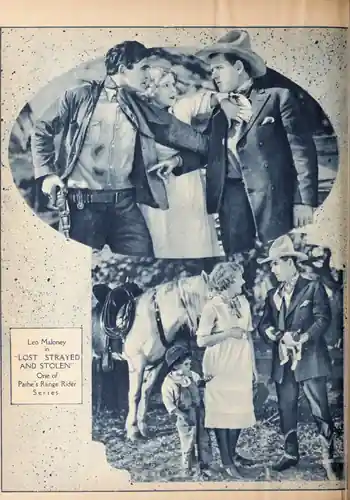
The character development in Lost, Strayed or Stolen is multifaceted, with each character bringing their own set of motivations and conflicts to the table. Tom Grimes, as part of the cast, delivers a performance that underscores the gravity of the situation, while Bud Osborne and Leo D. Maloney contribute to the richness of the narrative with their portrayals. Pauline Curley's presence adds a touch of elegance and refinement, juxtaposing the ruggedness of the ranch life. The writers, Ford Beebe and Leo D. Maloney, have woven a story that is as engaging as it is thought-provoking, inviting the audience to ponder the complexities of human nature and the consequences of one's actions.
In comparison to other films of the era, such as Gigolette and Boomerang Bill, Lost, Strayed or Stolen stands out for its nuanced exploration of themes that were less commonly addressed in cinema at the time. The film's ability to balance action, suspense, and emotional depth is a testament to the storytelling prowess of its creators. Similarly, films like The Little Clown and The Betrayer offer insights into the human condition, albeit through different lenses, highlighting the diversity and richness of cinematic expression during this period.
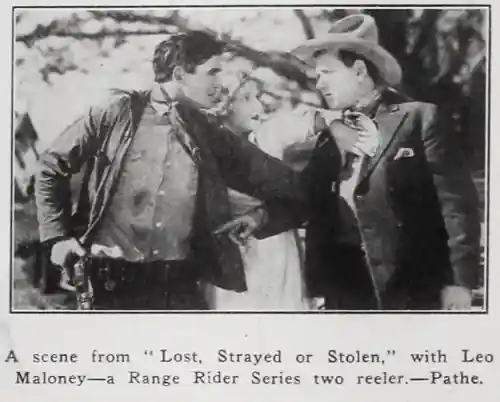
The pacing of Lost, Strayed or Stolen is well-balanced, with moments of high tension interspersed with periods of contemplative calm. This balance is crucial in maintaining the audience's engagement, as it allows for a full immersion into the world of the film. The use of sea blue in the cinematography during these calmer moments serves as a visual cue, signaling to the audience a temporary reprieve from the intensity of the plot, while the dark orange tones that emerge during the more suspenseful scenes heighten the sense of urgency and danger.
In conclusion, Lost, Strayed or Stolen is a film that encapsulates the essence of cinematic storytelling. With its intricate plot, multifaceted characters, and the use of color to evoke emotion, it stands as a testament to the power of film to captivate, to inspire, and to challenge our perceptions. For those who appreciate the art of storytelling and are keen to explore the depths of human nature, this film is a must-see. Its themes and messages, though presented in the context of a bygone era, remain remarkably relevant, inviting viewers to reflect on the timeless questions of loyalty, deception, and the pursuit of truth.
The legacy of Lost, Strayed or Stolen can be seen in the way it influences contemporary cinema, with its exploration of complex moral themes and its use of visual elements to convey emotion. Films like Fine Feathers and The Chalice of Courage demonstrate a similar depth in storytelling, underscoring the enduring impact of Lost, Strayed or Stolen on the cinematic landscape. As we continue to navigate the vast expanse of film history, Lost, Strayed or Stolen remains a significant milestone, a film that not only reflects the era in which it was made but also transcends time, offering insights into the human experience that are as pertinent today as they were upon its release.
IMDb 7.2
1923
Community
Log in to comment.