DbcultAccessing Vault...
6.8/10
Senior Film Conservator
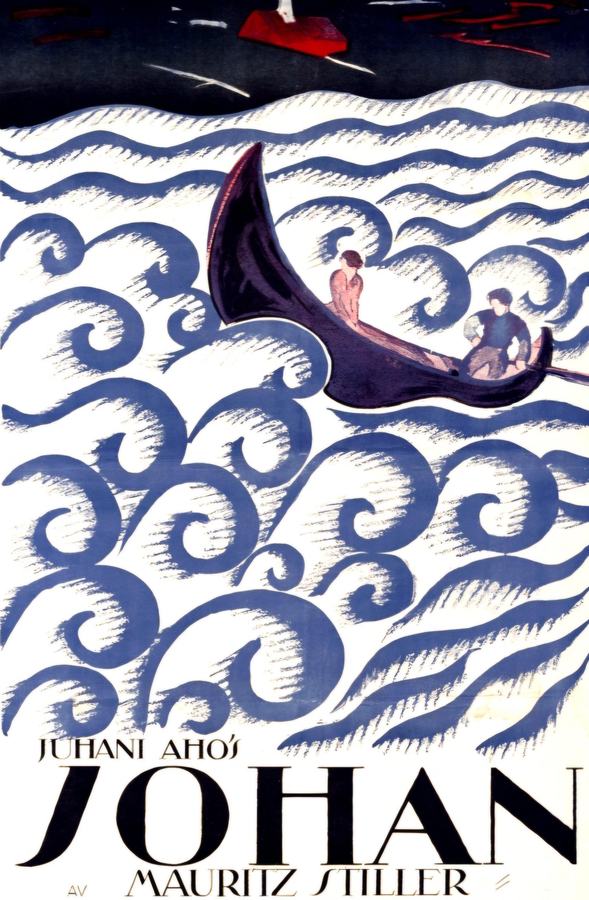
A definitive 6.8/10 rating for a film that redefined the boundaries of cult cinema. Johan remains a cornerstone of transgressive art.
Snow-smothered fields become a moral chessboard in Mauritz Stiller’s smoldering pastoral parable, where every rut in the thawing earth looks like a wound longing to be reopened.
Johan arrives without fanfare—no title card trumpets his provenance—yet the camera lavishes on him the kind of heroic dolly usually reserved for Viking funerals. Mathias Taube’s physiognomy is carved from birch and bronze: cheekbones that could slice communion bread, eyes holding a perpetual sunset. Stiller counterposes this beauty against the lumpen stoicism of Urho Somersalmi’s cuckolded husband, whose spine seems hammered from the same iron that pins the barn together. The dialectic is instant: flux versus stasis, urban pheromones versus psalmic guilt.
Jenny Hasselqvist, as the farmer’s wife, oscillates between porcelain reserve and molten surrender. Watch the sequence where she milks a cow at dawn: Stiller intercuts her trembling fingers with close-ups of milk hitting the pail—an audacious visual metaphor for orgasm under the regime of censorship. The eroticism is never declarative; it trembles in the cut, in the rustle of apron against udder, in the way morning light pools like spilled desire across the barn floor.
The film’s grammar predates Soviet montage yet rivals it for kinetic psychology. Axial cuts compress a season into a heartbeat; a single fade dissolves the Lutheran hymnal into a midsummer maypole, suggesting that piety and phallic abandon share the same neurotic root.

Stiller’s writers—Arthur Nordén adapting Juhani Aho—refuse to caricature the village as rubes. Instead they grant every tormentor interior weather: the pastor who scourges his own thigh with nettles, the spinster who catalogues sins in a ledger tinted with saffron ink. Even the children seem complicit in the adult theater of surveillance, their snow-angels becoming forensic maps of trespass.
Compare Johan’s seductive ethos to The Devil’s Prize, where temptation arrives swaddled in urban cosmopolitan swagger; Stiller’s villain is more terrifying because he offers not jewels but ontology—an invitation to become real.
The color palette—grayscale flecked with hand-tinted amber during hearth scenes—anticipates the Expressionist interiors of Why Not Marry, yet Stiller’s amber pulses like a warning rather than a comfort. It is as though the film itself blushes, caught in the act of witnessing.
Listen to the sound of silence: title cards appear sparingly, allowing ambient textures—the creak of frostbitten timber, the hiss of kerosene—to articulate repression. When the stranger finally speaks, the intertitle burns white-on-black like a brand: “You have built your paradise on the bones of women.” The line detonates across the narrative, implicating not just the husband but the entire agrarian patriarchy.

There is a moment—impossible to shake—when the wife, caught in a thunderstorm, strips to her chemise and dances in the mud. Rain smears her face into a Cubist crucifixion; lightning flickers like newsreel paparazzi. Stiller withholds judgment: is this liberation or hysteria? The ambiguity coils tighter than any dramaturgical noose.
Critics who pigeonhole Johan as Scandinavian verismo miss its baroque undercurrents. Note the recurring mirror motif: every reflective surface—ice puddle, milk pail, axe blade—fractures the protagonist’s visage, hinting that identity here is a kaleidoscope of borrowed longings. The film anticipates Lacan’s mirror stage by half a decade, proving that cinema can theorize the psyche before psychology coins the jargon.
Unlike Ma Hoggan’s New Boarder, which domesticates transgression into slapstick, Johan insists that erotic awakening is inseparable from metaphysical dread. The wife’s post-coital face is lit like a cathedral at dusk—exalted, condemned, already mourning the innocence she never actually possessed.
The climax—an ice-hole baptism turned potential drowning—stages salvation and annihilation as conjoined twins. Villagers form a tableau vivant around the frozen lake, their breath condensing into collective accusation. Stiller’s camera glides overhead, transforming the scene into a living fresco titled “The Martyrdom of Desire.” You half expect wings to sprout from the stranger’s shoulder blades, though what emerges is more unsettling: he laughs, a soundless rictus that implies hell is not other people but the absence of yearning.
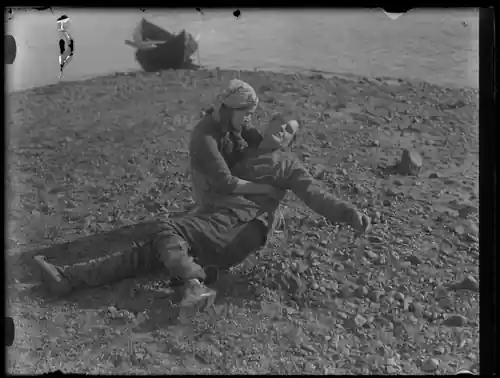
Cinematographer Julius Jaenzon shoots winter not as wonderland but as verdict: every snowflake a juror, every icicle a gavel. The whiteness is so oppressive it feels purple, bruised by the things it refuses to reveal.
Compare the ending’s cyclical trauma to Jack Spurlock, Prodigal: both films exile their iconoclasts, yet Johan’s final shot—the empty chair, the unseen rocking—implies the stranger is a virus now resident in the community’s bloodstream. The village will wake tomorrow, sow spring rye, and pretend normalcy, but every creaking door will resurrect him.
Scholarship often cites Johan as a stepping-stone to Stiller’s later Gösta Berlings saga, yet this film’s raw nerve is sharper precisely because of its intimacy. There are no baronial estates, no carnival of stars—only the scalding confrontation between flesh and decree, performed on a stage the size of a hayloft.
Performances operate at frequencies modern cinema rarely dares. Hasselqvist’s micro-gestures—an eyelid fluttering like a trapped moth—carry erotic voltage that renders dialogue superfluous. Taube, meanwhile, modulates magnetism with proto-Brando minimalism: a shrug that topples dynasties.

There is political resonance: released in 1921, the film peers into the chasm between agrarian conservatism and the urban modernism soon to electrify Sweden. The stranger’s cigarette, exotic in a pipe-smoking hamlet, is more than prop; it is the spark of industrial cosmopolitanism about to incinerate peasant tradition.
Yet Johan transcends sociological allegory because Stiller’s true quarry is epistemological: how do we know what we want when desire is taught to us in the language of prohibition? The film answers with a question: the wife’s gaze into the camera—direct, unashamed—collapsing the fourth wall, forcing the viewer to occupy the stranger’s vacant chair.
Restoration efforts by Svenska Filminstitutet in 2014 unearthed an alternate take: the stranger’s silhouette receding into a blizzard, footprints erased in real time—a metaphor for cultural amnesia so perfect it feels staged by fate itself.
Viewers weaned on the kinetic gabfests of All Wrong may find Johan’s reticence alien. But surrender to its glacial cadence and you’ll discover a film that speaks in aftershocks, whose most volatile scene is a close-up of a hand hesitating over a doorknob—an epochal battle condensed into four seconds of celluloid.

The score, reconstructed by Matti Bye, layers Nyckelharpa and breathy flute, evoking both psalm and pagan spell. When the music drops out entirely, the vacuum sucks you into the characters’ thoracic cavities; you hear your own pulse syncing with their terror.
Gender dynamics reverberate outward. The husband’s humiliation is staged not as comedic comeuppance but as tragedy of ownership: he is dispossessed of property that was never property to begin with. The film thus anticipates feminist critique decades before second-wave theory named the problem.
In the age of algorithmic romance, Johan feels like an ice pick to the artificial heart. It argues that seduction is first and foremost an epistemological rupture: the stranger unmakes the world by revealing that its rules are optional. Once you’ve glimpsed that abyss, even the Lord’s Prayer sounds like double-speak.
Stiller, who fled Sweden for Hollywood within five years, perhaps understood exile better than any director of his era. Johan is his cinematic valentine to displacement—an artifact that itself drifts, unmoored, across film history, seducing each new generation of viewers who fancy themselves immune to its antique allure.
To watch Johan is to confront the unnerving possibility that civilization is just a barn awaiting the match, that morality is a corral erected by those too timid to gallop into the storm of their own wanting. And when the lights rise, you may find the chair beside you rocking, ever so faintly, as if some invisible drifter has risen from the screen to settle, like frost, upon your life.
Johan is not a relic—it is a prophecy wearing last century’s clothes, a confession that some silences echo louder than any confession.
IMDb 6.5
1922
Community
Log in to comment.