DbcultAccessing Vault...
Cult Review
Senior Film Conservator
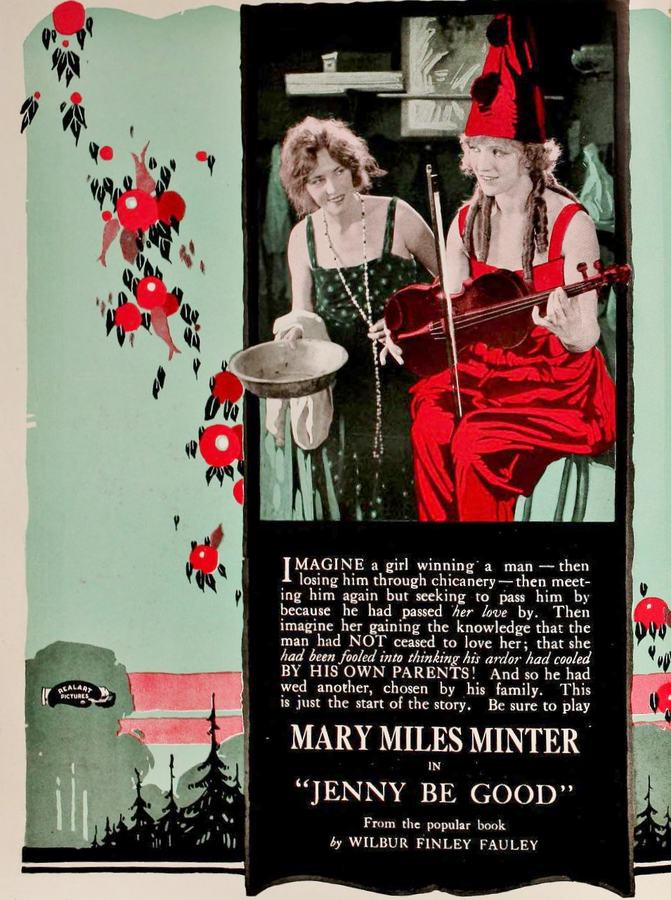
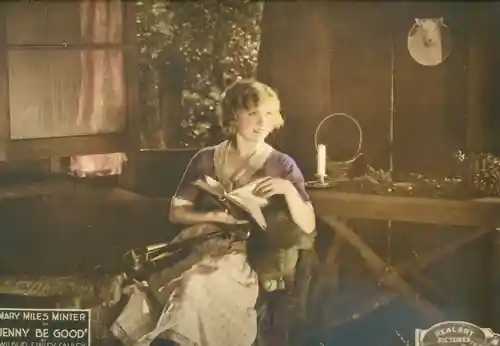
In the annals of silent cinema, where emotions were writ large across faces and narratives unfolded with a heightened sense of melodrama, 'Jenny Be Good' emerges as a compelling study of a woman caught between the irresistible forces of love and artistic ambition. This cinematic gem, brought to life through the collaborative vision of writers Wilbur Finley Fauley and Julia Crawford Ivers, and an ensemble cast led by the luminous Mary Miles Minter, delves into themes that remain remarkably resonant, even a century after its initial release. It’s a narrative that speaks to the perennial struggle for self-determination against the backdrop of societal expectations and the often-unyielding influence of family.
At the core of 'Jenny Be Good' is the titular character, portrayed with exquisite sensitivity by Mary Miles Minter. Jenny is not merely a young woman in love; she is a burgeoning talent, a violinist whose soul finds its truest expression through the strings of her instrument. Her initial happiness is inextricably linked to her passionate romance, a connection that promises a future filled with shared dreams and mutual affection. Minter, a star of the era known for her delicate beauty and expressive eyes, imbues Jenny with a vulnerability that quickly garners audience empathy. Her portrayal transcends simple prettiness, revealing the inner strength and artistic fire that simmer beneath a seemingly gentle exterior. The initial scenes establish a world where Jenny's happiness seems almost idyllic, a fragile bubble destined to burst under external pressures. This setup is crucial, as it amplifies the tragedy of her subsequent heartbreak and the intensity of her artistic retreat.
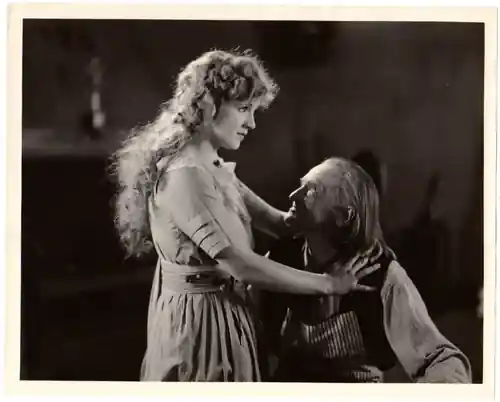
The disruption of her romance is orchestrated by her lover's parents, a formidable force of social convention and class consciousness. Their influence is not merely an inconvenience; it is a crushing blow that shatters Jenny's world. This parental interference, a common trope in early cinema, is handled here with a degree of psychological weight. It’s not just about disapproving elders; it’s about the insidious way societal expectations can erode personal happiness and dictate individual destinies. Fred R. Stanton and Grace Pike, though perhaps in supporting roles, likely embody this societal rigidity with stern countenances and dismissive gestures, their silent performances speaking volumes about the barriers Jenny faces. The film, through these characters, subtly critiques the restrictive nature of early 20th-century social structures, where love was often secondary to status and family approval. This theme of external forces dictating personal lives finds echoes in other films of the era, such as The Ordeal of Elizabeth, which similarly explores the tribulations faced by women navigating restrictive social landscapes.
With her heart broken and her romantic future seemingly in ruins, Jenny retreats into the only solace she knows: her art. The violin, initially a passion, transforms into a lifeline, a medium through which she processes her grief and rebuilds her shattered sense of self. This pivot from romantic entanglement to artistic devotion is where the film truly shines, exploring the redemptive power of creative expression. The silent medium, paradoxically, enhances this aspect; though we cannot hear the music, Minter's performance must convey the emotional depth and technical prowess of a virtuoso. The audience is invited to witness her dedication, her solitary practice sessions, and the gradual blossoming of her talent under the crucible of adversity. This transformation is not merely a coping mechanism but a profound act of self-discovery, where Jenny finds her voice and purpose independent of her romantic attachments.
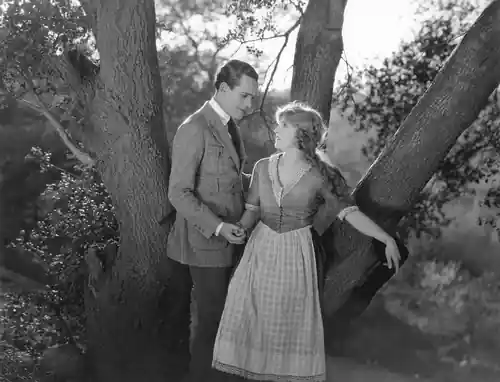
The writers, Wilbur Finley Fauley and Julia Crawford Ivers, skillfully navigate this transition, ensuring that Jenny's artistic journey feels earned and authentic. They avoid the pitfall of making her success seem instantaneous, instead portraying it as the result of relentless dedication and an inherent, almost spiritual, connection to her craft. The film subtly argues that true fulfillment can be found not just in interpersonal relationships, but also in the pursuit of one's innate talents. This theme resonates with the spirit of individual achievement, a concept often explored in narratives concerning pioneering women, albeit in different contexts, such as the biographical drama Florence Nightingale, where a woman dedicates her life to a greater cause. The film’s focus on Jenny’s internal world, expressed through her artistic endeavor, provides a refreshing counterpoint to purely romance-driven narratives.
As Jenny approaches the zenith of her artistic career, poised for her highest triumph – perhaps a pivotal concert, a major competition, or an acclaimed performance – the narrative delivers its most potent dramatic twist. The man she loves, the very one whose absence spurred her artistic ascent, suddenly reappears. This return is not a simple reunion; it is a confrontation, a collision of past desires and present realities. The timing is excruciatingly precise, forcing Jenny to confront the ghost of a love she thought long buried, just as she stands on the precipice of self-actualization. This dramatic tension is expertly crafted, leveraging the audience's investment in Jenny's hard-won independence against the seductive pull of a rekindled romance.
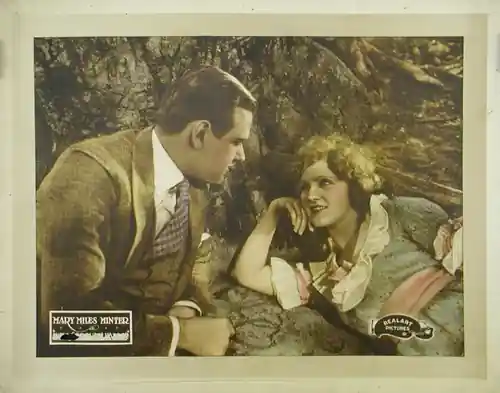
The choice Jenny faces is monumental: will she surrender to the comfort and familiarity of her former love, potentially sacrificing the artistic freedom and identity she has painstakingly built? Or will she reaffirm her commitment to her art, choosing the path of individual triumph over romantic fulfillment? This dilemma is the beating heart of the film’s climax. It's a classic conflict, yet presented with fresh urgency through Minter's nuanced performance. Jay Belasco, as the returning lover, would have had the challenging task of portraying a character who is both desirable and potentially disruptive to Jenny’s newfound equilibrium. His presence must be compelling enough to genuinely tempt Jenny, but also carry the implicit threat of reverting her to a previous, less empowered state. The film, through this central conflict, probes the very definition of happiness and success, asking whether one can truly have it all or if certain paths are mutually exclusive. This kind of pivotal life choice, often fraught with emotional complexity, is a recurring motif in human drama, reminiscent of the difficult decisions faced by characters in films like The Only Son, where familial duty clashes with personal desire.
While Mary Miles Minter's portrayal of Jenny is undoubtedly the film's anchor, the supporting cast plays a crucial role in building the world around her. Sylvia Ashton, Fanny Cossar, Catherine Wallace, Lillian Rambeau, Margaret Shelby, J. Edwin Brown, and Maggie Fisher, though their specific roles might be secondary, contribute to the tapestry of Jenny's life. Ashton and Cossar might have embodied the figures of authority or friendship that either aid or impede Jenny's progress, while others might have populated the artistic world she enters. In silent films, every gesture, every facial expression, every costume choice by these actors was vital in conveying character and advancing the plot without spoken dialogue. Their collective presence creates the social fabric against which Jenny's personal drama unfolds, providing context and reaction to her struggles and triumphs. Even minor characters can significantly influence the audience's perception of the protagonist's journey, adding layers of realism and emotional depth to the narrative. For instance, the disapproving glares of a socialite or the encouraging smiles of a fellow musician can subtly guide the audience’s interpretation of Jenny’s experiences.
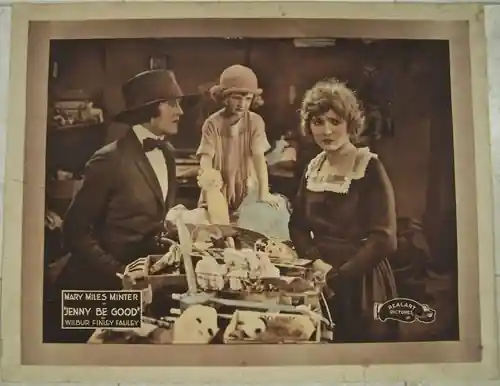
The aesthetic choices in 'Jenny Be Good', characteristic of its era, would have relied heavily on visual storytelling. The cinematography, though perhaps not groundbreaking by today's standards, would have focused on clear compositions, expressive close-ups to capture Minter's nuanced emotions, and careful staging to convey relationships and power dynamics. The use of intertitles, a fundamental element of silent film, would have been pivotal in conveying dialogue, internal monologues, and crucial plot points, guiding the audience through Jenny's emotional landscape. The film's success hinges on its ability to communicate Jenny's internal turmoil and artistic passion without the benefit of sound, a testament to the power of visual language and the actors' ability to project emotion.
Thematic exploration in 'Jenny Be Good' extends beyond the mere romantic triangle. It delves into the societal constraints placed upon women in the early 20th century, particularly the expectation that their ultimate fulfillment lay in marriage and domesticity. Jenny's journey challenges this notion, suggesting that a woman's artistic and professional aspirations hold equal, if not greater, value. Her choice at the climax is not just about a man; it's about defining her own identity and asserting her agency in a world that often sought to dictate it. This quest for autonomy aligns with narratives in other silent-era films that subtly, or sometimes overtly, questioned prevailing social norms, such as The Girl in the Dark, where female protagonists often navigate challenging circumstances to forge their own paths.
Comparing 'Jenny Be Good' to other films of its period offers valuable insight into its place within cinematic history. While not an adventure epic like Kidnapped or a historical drama such as 1810 o Los libertadores de México, its focus on personal struggle and growth finds parallels in more intimate dramas. The theme of a woman overcoming adversity through sheer will and talent, for example, echoes the spirit found in films like Angel Child, where innocence and resolve often triumph over hardship. The romantic dilemma, a staple of popular cinema, can be seen in various forms across the provided list, though few capture the specific nuance of artistic sacrifice as centrally as 'Jenny Be Good'. Even in films like Code of the Yukon or A Knight of the Range, where the setting is vastly different, characters are often confronted with choices that define their moral compass and future trajectory, albeit in a more rugged, action-oriented context.
The enduring appeal of a story like Jenny's lies in its universality. The conflict between personal ambition and romantic love, the pain of heartbreak, and the subsequent journey of self-discovery through creative expression are experiences that transcend time and cultural boundaries. While the silent film format might require a different kind of engagement from modern audiences, the emotional core of 'Jenny Be Good' remains potent. It serves as a reminder of the rich storytelling traditions of early cinema and the profound impact that dedicated performers like Mary Miles Minter could have with just their expressions and gestures. The film, in its quiet power, asks us to consider what truly defines a life well-lived: the love we give and receive, or the unique contributions we make to the world through our individual talents. It is a question that continues to resonate, making 'Jenny Be Good' more than just a historical artifact, but a timeless exploration of the human heart.
The collective efforts of Wilbur Finley Fauley and Julia Crawford Ivers in crafting such a nuanced screenplay, coupled with the evocative direction that would have been necessary to guide these silent performances, solidify 'Jenny Be Good' as a significant work. It’s a testament to the collaborative art form of cinema, where every department, from writing to acting to production design, contributes to the final emotional impact. The film, in its quiet contemplation of personal agency versus external pressures, stands as a valuable document of its time, reflecting societal attitudes while simultaneously offering a narrative that transcends them. It’s a film that encourages introspection, urging viewers to consider their own priorities and the sacrifices they might be willing to make for love or for art.
In an era when many films focused on more sensationalist plots or broad comedies, 'Jenny Be Good' offered a character study of considerable depth. It highlighted the inner life of a woman, a theme that, while present in various forms (e.g., the earnest efforts of characters in He Who Hesitates or the cunning of Smashing the Plot), rarely delved so intimately into the intersection of personal tragedy and artistic triumph. The film’s lasting power lies not just in its historical significance but in its timeless narrative, a story of resilience, passion, and the complex choices that shape a life. It reminds us that even without spoken words, the human experience can be conveyed with profound eloquence, proving that true artistry transcends temporal and technological limitations. For those willing to engage with the unique language of silent cinema, 'Jenny Be Good' offers a deeply rewarding and emotionally resonant experience.
IMDb —
1916
Community
Log in to comment.