DbcultAccessing Vault...
Cult Review
Senior Film Conservator
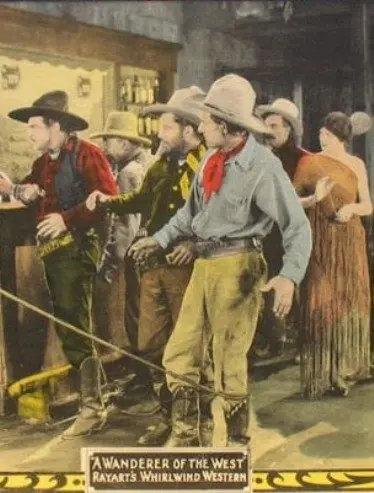
Is 'A Wanderer of the West' worth watching today? Short answer: yes, but with significant caveats. This film is a fascinating historical artifact for Western aficionados and silent film scholars, yet it will likely test the patience of casual viewers accustomed to modern cinematic storytelling.
This film works because of its foundational narrative elements that would become Western staples, its glimpse into early filmmaking techniques, and the earnest, if often broad, performances from its cast. This film fails because of its simplistic characterizations, often sluggish pacing by contemporary standards, and a reliance on tropes that feel underdeveloped rather than archetypal without the benefit of sound and more complex direction. You should watch it if you have a deep appreciation for silent cinema, are studying the evolution of the Western genre, or simply enjoy seeing the raw beginnings of Hollywood's most enduring myths unfold.
Stepping back into the early 20th century of cinema often feels like archaeology. You’re not just watching a story; you're excavating the very foundations of film language. 'A Wanderer of the West' (1925), from writers Victor Rousseau, W. Ray Johnston, and Arthur Hoerl, is precisely one such relic. It’s a silent Western, a genre that, even in its infancy, captured the American imagination with tales of rugged individualism, vast landscapes, and the eternal struggle between good and evil. But does this particular wanderer still hold a compelling journey for a modern audience, or has its trail grown too faint?
On its surface, the narrative is as straightforward as a dusty frontier road. A villainous rancher, driven by the era's most potent currency—water rights—kidnaps the daughter of the Lazy Y ranch owner. His goal is simple: leverage her life for control of the land and its precious resources. Enter the stoic ranch foreman, the archetypal hero who must outwit the antagonist, rescue the damsel, and restore justice to the Wild West. It’s a blueprint that would be endlessly replicated, refined, and occasionally subverted over the next century of filmmaking. Here, however, it’s presented in its purest, most unadorned form.
The film’s plot, for all its simplicity, carries a surprising thematic weight that remains relevant even today. The struggle for water rights, the ruthless pursuit of resources, and the vulnerability of the innocent are not just historical curiosities; they are issues that persist globally. 'A Wanderer of the West' distills these complex ideas into a digestible, melodramatic package. The villain isn't just a bad guy; he's an embodiment of unchecked greed. The foreman isn't just a hero; he's the embodiment of frontier justice, a man who acts when institutions fail.
The narrative unfolds with a deliberate pace, characteristic of silent cinema. There are no rapid-fire edits or complex subplots to distract from the core conflict. Instead, the story relies on clear visual cues and intertitles to convey information. This approach demands a different kind of engagement from the viewer, one that requires patience and a willingness to interpret gestures and expressions over spoken dialogue. It's a testament to the filmmakers' understanding of visual communication, even in a nascent art form.
The cast of 'A Wanderer of the West' delivers performances that are very much products of their time. Roy Watson, as the heroic foreman, embodies the stoic, rugged ideal of the Western protagonist. His performance is less about nuanced emotional display and more about conveying strength, determination, and moral rectitude through posture and decisive action. There's an undeniable charisma there, a silent authority that makes him believable as the man who will ultimately save the day.
Betty Caldwell, playing the kidnapped daughter, fulfills the role of the damsel in distress with the expected dramatic flair. Her expressions of fear, despair, and eventual relief are broad, designed to be understood without spoken words across a theater. While modern audiences might find these performances somewhat over-the-top, they were essential for conveying emotion in an era without synchronous sound. It’s a fascinating window into how actors communicated an internal world through external, often exaggerated, means.
The villains, including those portrayed by Frank Clark and M.A. Dickinson, are similarly painted with broad strokes. Their sneers, menacing glances, and aggressive body language leave no doubt as to their nefarious intentions. There’s little room for moral ambiguity here; characters are either good or bad, and their performances reflect this clear-cut dichotomy. Kermit Maynard and Allen Rogers round out the cast, each contributing to the ensemble with performances that, while not groundbreaking, solidly support the narrative’s demands.
One could argue that the acting style, while necessary for the medium, occasionally borders on pantomime. Yet, this is not a criticism of the actors themselves, but rather an observation of the craft at a particular evolutionary stage. They were pioneers, developing techniques that would eventually inform the more subtle performances of the sound era. Their earnestness is palpable, and it’s that genuine effort that gives the film much of its charm.
The direction, credited to W. Ray Johnston and Arthur Hoerl, is competent, if not revolutionary. They understood the power of the Western landscape, often employing wide shots to establish the isolation and grandeur of the setting. These expansive vistas not only ground the story geographically but also enhance the sense of peril and the epic scale of the conflict. A particular sequence involving a chase across open plains, for example, effectively uses the vastness to amplify the tension, even without the benefit of a sweeping score.
Cinematography in 1925 was far from the sophisticated art form it is today. Cameras were bulky, lighting was often rudimentary, and color was a distant dream for most productions. Yet, 'A Wanderer of the West' manages to capture some striking images. The black and white palette, rather than feeling limiting, adds a timeless, almost mythic quality to the proceedings. Shadows are deep, sunlight harsh, emphasizing the unforgiving nature of the frontier. The framing is generally straightforward, prioritizing clarity of action and character placement within the scene.
What's perhaps most surprising is how effective the visual storytelling remains despite the technological constraints. The directors rely heavily on composition and the actors' blocking to convey relationships and power dynamics. A shot of the villain towering over the captive daughter, for instance, immediately communicates vulnerability and menace without a single line of dialogue. It's a masterclass in foundational visual grammar, a stark reminder that compelling cinema doesn't always require elaborate special effects or complex camera movements. Sometimes, a well-placed camera and clear intent are enough.
The pacing of 'A Wanderer of the West' is, by modern standards, deliberate, even slow. This isn't necessarily a flaw, but it is a significant adjustment for contemporary viewers. The film takes its time to establish characters and situations, allowing scenes to play out without the rapid-fire editing we’ve come to expect. This slower rhythm can feel meditative to some, offering a chance to absorb the visual details and contemplate the unfolding drama. To others, it might feel like a test of endurance.
The tone is consistently adventurous, with strong undertones of melodrama. There are moments of genuine suspense, particularly during the kidnapping and subsequent rescue attempts. However, these are often interspersed with scenes that emphasize the emotional plight of the characters through exaggerated expressions and gestures. The film never strays too far from its core identity as a straightforward Western, balancing moments of action with the emotional beats necessary to keep the audience invested in the outcome. It's a tone that perfectly encapsulates the sensibilities of early Hollywood, where clear moral lines and heightened emotions were the order of the day.
At its heart, 'A Wanderer of the West' is a foundational text for the Western genre, exploring themes that would become its bedrock. The struggle for land and resources, epitomized by the water rights dispute, is a timeless conflict. It highlights the raw, often brutal, nature of frontier expansion and the desperate measures people would take to survive and prosper in an unforgiving environment. This film, in its simple portrayal, taps into a very real historical context, even if its characters are archetypes rather than complex psychological studies.
The film also touches upon the theme of lawlessness and the emergence of personal justice in areas where official institutions are weak or non-existent. The ranch foreman acts as judge, jury, and executioner, not out of malice, but out of a perceived necessity to restore order. This vigilante justice, a recurring motif in Westerns, speaks to a deeply ingrained American mythos of self-reliance and the triumph of good over evil through individual heroism. It’s a romanticized view, certainly, but one that continues to resonate.
Perhaps the most surprising observation is how little the core conflict of resource scarcity has changed. While the setting is the Old West, the fight over water is a global crisis today. This makes the film, in an odd way, more relevant than its age might suggest. It’s a simple story, yes, but its underlying concerns are profoundly human and enduring. This early Western isn’t just about cowboys and bad guys; it’s about the fundamental human drive for survival and control, a drive that often leads to conflict.
For those with a genuine interest in the history of cinema, particularly the silent era and the evolution of the Western genre, 'A Wanderer of the West' is absolutely worth watching. It provides invaluable insight into early filmmaking techniques, acting styles, and narrative conventions. It’s a window into a bygone era of storytelling. However, if you're seeking fast-paced action, intricate plots, or deep character development, this film will likely disappoint. Its value is largely academic and historical, offering a foundational blueprint rather than a fully realized modern cinematic experience. It works. But it’s flawed.
A Wanderer of the West is not a film for everyone, nor does it pretend to be. It is a time capsule, a grainy, silent testament to the birth of one of cinema's most enduring genres. Its true value lies not in its ability to thrill a modern audience with breakneck action or complex morality, but in its historical significance and its raw, unpolished charm. It's a fundamental brick in the edifice of Western cinema, showing us where it all began. For those willing to adjust their expectations and embrace the unique rhythm of silent film, it offers a surprisingly resonant experience. It’s a film to be studied, appreciated, and perhaps, occasionally, enjoyed for its sheer earnestness. Don't expect a thrilling ride like The Place Beyond the Winds, but rather a quiet, reflective journey into the past. It’s an acquired taste, but one that rewards the patient palate.
IMDb 5.8
1932
Community
Log in to comment.