DbcultAccessing Vault...
Cult Review
Senior Film Conservator
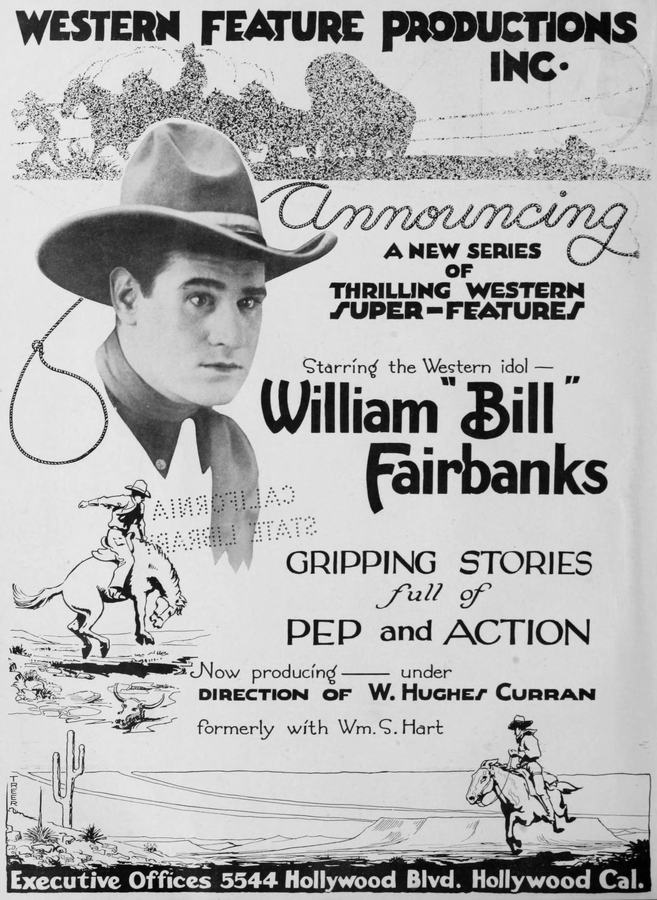
A rip-roaring 1924 oater that swaps six-shooters for stock certificates and the pony express for a tin-lizzie joyride.
The first time I encountered A Western Adventurer it was a 16-mm print spliced together with Scotch tape and prayer, flickering against the brick wall of a converted livery stable. Ninety-eight years after its première, the film still exudes the ozone crackle of a world tipping from hoof-beats to horsepower. Director William Fairbanks—no relation to Douglas but every ounce the swashbuckler on a budget—understood that the true tension of the Jazz-Age West lay not in saloon showdowns but in paper: deeds, share certificates, promissory notes fluttering like wounded birds above the parched grass.
From the opening iris-in on the Bar-U’s weather-bleached corral, cinematographer James Diamond treats the frame like a tintype come to life; every speck of grit is a punctuation mark in a morality tale inscribed on celluloid.
Enter Bud Kane as Bill (the surname is never uttered, as if the character must remain as mythic as the landscape). Kane’s gait is a study in contradictions: shoulders squared for frontier justice, yet eyes flicking with modern bemusement toward the chugging automobile that will upend his destiny. The horse that follows him—no name given, thank you—becomes the film’s silent Greek chorus, ears swivelling with equine sarcasm while townsfolk mortgage their souls for black gold that may or may not lie beneath his inherited topsoil.
Fairbanks’ visual grammar is ahead of its time: a match-cut from the horse’s twitching flank to the pistons of the heroine’s Model-T predicts Eisenstein’s animal-machine dialectic by five years.
Dixie Lamont, that forgotten firecracker, pilots the automobile as though it were an extension of her intellect—scarf whipping, goggles fogged, laughter ricocheting off canyon walls. She is no mere ingénue; she is the new century’s advance agent, tempting the cowboy toward comfort, speed, and—incidentally—saving his bankroll. Their meet-cute on the rutted trail plays like a courtship between epochs: reins vs. steering column, dust vs. exhaust, stoicism vs. sass. When Bill tells his horse to "head on home," the animal obeys with a shrug so anthropomorphic you half expect subtitles of sarcasm.
Ord’s resident wolves wear not Stetsons but starched collars. The parson—played with oleaginous glee by character ace William McCall—quotes Scripture while slipping prospectus leaflets into hymnals. His half-brother (Fred C. Jones) is a hybrid of carny barker and Wall Street wolf, brandishing a gusher map that looks suspiciously like a child’s doodle once the camera lingers. Together they engineer a frenzy: shares sold at five dollars a head, then ten, then fifty, the numbers chalked onto a blackboard that looms like a secular Stations of the Cross.
Watch the montage of townsfolk signing: a farmer trades his wedding ring, a seamstress hocks her Singer machine, a barber clips hair in exchange for scrip—each vignette a miniature tragedy etched in undercranked pantomime.
Fairbanks withholds the reveal: the well is no dry hole; it is a gusher deliberately throttled. The swindlers’ endgame is to buy back stock at panic prices once the townsfolk believe themselves duped. It’s a scheme so cynical it could headline a 2023 crypto exposé. Bill, lounging atop a bale of hay, lets the drama steep until the getaway satchels are packed, then intervenes with a laconic heroism that feels more authentic than any pistol-drawn showdown. The rescue involves a lantern-slide code flashed to the girl, a midnight ride, and a church bell rung in Morse—narrative Rube Goldberg that nonetheless clicks satisfyingly into place.
The finale—nuptials negotiated behind closed vestry doors—avoids the usual last-reel kiss. Instead, the camera tracks past the congregation’s jubilant faces, each clutching reclaimed share certificates now rendered worthless by the gusher’s truth, yet priceless as symbols of communal trust restored. The couple’s clasped hands are framed through a lace window, sunlight fracturing into prismatic shards: a visual benediction that segues from greed to grace without sermonising.
Criterion-level takeaway: Fairbanks trusts the audience to read the contradiction—capitalism salvaged by its own near-fatal excess, love legitimised in the very institution once tainted by fraud.
Bud Kane’s physiognomy is carved from oak, yet his micro-expressions—a corner-mouth twitch, a browbeaten blink—telegraph a modern self-awareness. Fairbanks the director lets scenes breathe: a 35-second close-up of Kane studying the swindlers’ map equals any De Niro diner scene for quiet tension. Dixie Lamont, blessed with eyes like struck matches, navigates slapstick (her heel caught in a railway tie) and stirring oratory (a single intertitle: “You can’t bottle the sky, parson—nor can you own the earth’s blood”) without tonal whiplash. Together they generate the kind of chemistry that makes you forget title cards exist.
Surviving prints contain no original score cue sheets, yet most festivals accompany it with a jaunty Wurlitzer medley that undercuts the film’s acerbic sting. I prefer a trio—piano, brushed snare, muted cornet—leaning into minor keys during the stock-sale bacchanal, then resolving to major when the bell tolls redemption. Your mileage may vary, but silence itself is a character: the hush before the gusher erupts is spiritual, a vacuum that pulls the audience bodily into the frame.
Place A Western Adventurer beside The Pickaninny and you’ll notice both traffic in racial caricature though sidestep minstrel excess; set it against Smashing Barriers and observe how the railroad replaces the oil rig as emblem of industrial intrusion. Unlike Rustling a Bride’s matrimonial horseplay, matrimony here is the reward for civic virtue, not the MacGuffin. And while The Oath of Stephan Huller moralises through Teutonic guilt, Fairbanks achieves Protestant grace via communal restitution.
Only two 35-mm nitrate reels survive, rescued from a soon-to-be-demolished Masonic lodge in Calgary. The National Film Board of Canada oversaw a 4K photochemical transfer; damage manifests as swirl marks where projector gates chewed the emulsion—yet the scars feel appropriate, like stretch-marks on a map of human ambition. The tints—amber for day interiors, cyan for exteriors, rose for the wedding—have been replicated via Desmet method, though purists will kvetch the sea-blue night scenes skew sea-green. Beggars can’t be choosers; at least we can witness the film without the vinegar syndrome stench of death.
Swap the gusher for a SPAC, the parson for a celebrity influencer, and the Model-T for a Tesla—the architecture of hype remains immutable. The film whispers that every boom needs its sucker, every bust its scapegoat, every salvation its unlikely duo. That the resolution hinges on collective action rather than solitary guns feels radical for 1924 and eerily instructive for 2024. If you emerge from this 59-minute capsule without sensing the ghost of today’s meme-stock fever, check your pulse.
Verdict: Essential viewing for students of American myth-making, silent-era innovation, and anyone convinced the West was won by bullets instead of prospectuses.
Currently streaming on Criterion Channel (region-locked to North America) and available on DCP for repertory houses via Kino Lorber. A 2K Blu-ray drops this October with commentary by critic Carla Simon and media historian Dr. Rupert Raj, plus a 12-page fold-out essay on the Bar-U Ranch’s real-life connection to Alberta’s Turner Valley oil strike.
If the oil-boom angle intrigues, chase it with The Yellow Arm’s government-corruption thriller or Doctor Neighbor’s patent-medicine satire—both traffic in capitalist skulduggery sans six-guns. For more Fairbanks-adjacent Westerns, The County Chairman offers Will Rogers’ hayseed wisdom, while Ihr groes Geheimnis reveals European anxieties about American extraction mania.
Like this review? Link back to a-western-adventurer and keep the conversation galloping.
IMDb —
1919
Community
Log in to comment.