DbcultAccessing Vault...
Cult Review
Senior Film Conservator
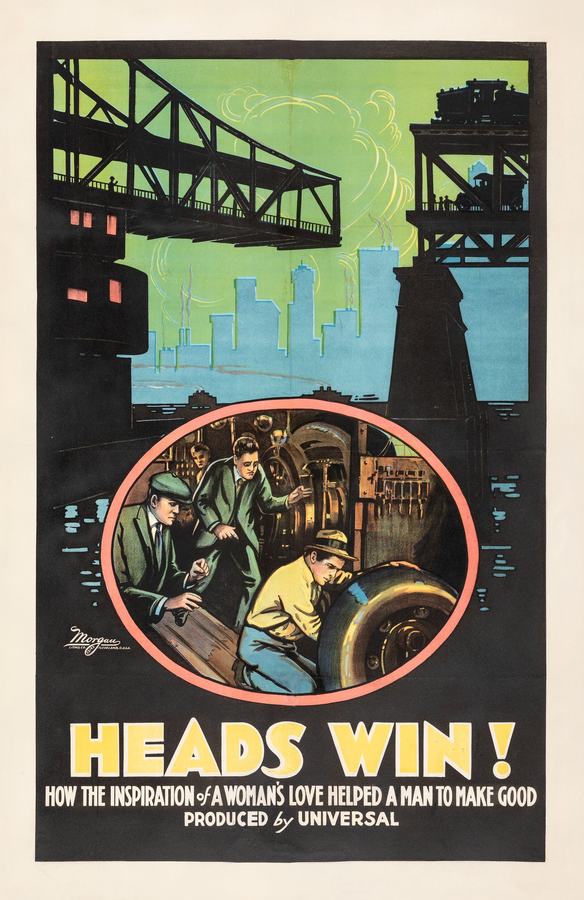
In the annals of cinematic storytelling, certain narratives resonate with a timeless universality, reflecting fundamental human struggles and aspirations. E. Lynn Summers' "Heads Win" emerges as precisely such a piece, a compelling industrial drama that transcends its era to deliver a potent message on self-actualization and the transformative power of perseverance. While perhaps not as widely known as the sprawling epics or the star-studded melodramas of its contemporary period, this film, featuring the earnest performances of Roy Adams as Jim Godfrey, Eva Gordon, and the charming Baby Ivy Ward, crafts an intricate tapestry of ambition, rejection, and ultimate triumph. It’s a story not merely about climbing the corporate ladder, but about building that ladder oneself, rung by painstaking rung, through sheer force of will and intellectual dedication. The film’s narrative core, centered on the journey of a man who refuses to be defined by his initial limitations, offers a poignant and perpetually relevant commentary on the dignity of labor, the societal value of specialized knowledge, and the profound impact of spousal encouragement on personal growth. It invites us to ponder the very essence of opportunity: is it something granted, or something forged? "Heads Win" unequivocally argues for the latter, presenting a protagonist whose destiny is not predetermined by birth or circumstance, but meticulously carved out through diligent study and courageous action. This is a tale that speaks directly to the soul of anyone who has ever faced an insurmountable obstacle, reminding us that the greatest victories are often those won against the self, against doubt, and against the prevailing skepticism of a world quick to judge based on superficial qualifications. The film’s understated brilliance lies in its ability to elevate a seemingly mundane industrial setting into a crucible for profound personal development, making Jim Godfrey's struggle and success feel both intimately personal and broadly aspirational.
At the heart of "Heads Win" lies Jim Godfrey, portrayed with a compelling blend of vulnerability and burgeoning resolve by Roy Adams. Initially, Godfrey is presented as an archetypal figure of the early industrial age: a diligent but ultimately undifferentiated cog in the vast machinery of the Goliath Electric Company. His initial ambition – a modest desire for an assistant foreman-ship – is not born of hubris but of a natural human yearning for advancement, for recognition beyond the anonymity of his humble station. The crushing rejection he faces, however, is a pivotal moment, not just for his character but for the film's thematic trajectory. It's a stark, almost brutal, reminder that sheer effort, without accompanying specialized skill, often hits an impenetrable ceiling. His subsequent dismissal and the frustrating circuit of closed doors he encounters paint a vivid picture of the harsh realities faced by the unskilled laborer in an increasingly specialized economy. This sequence, devoid of melodrama, powerfully conveys the systemic barriers that can entrap individuals, mirroring perhaps the struggles depicted in films that explore societal constraints, though "Heads Win" maintains a more optimistic, solution-oriented focus unlike the more fatalistic tones of some social dramas. Adams imbues Godfrey with a quiet dignity, even in his despair, making his eventual decision to pursue an education not a desperate last resort, but a considered, empowering choice. His transformation isn't instantaneous or miraculous; it's a gradual, painstaking process, beautifully articulated through his diligent study and the visible growth in his professional competence. This character arc serves as a powerful validation of the adage that knowledge truly is power, demonstrating its capacity to not only open doors but to forge entirely new pathways. The film carefully avoids portraying Godfrey as a genius; instead, he is a testament to consistent application and the reward of sustained intellectual effort, making his journey relatable and profoundly inspiring to the everyman.
While Jim Godfrey's individual resolve is central, "Heads Win" skillfully underscores the crucial role of external support, particularly that of his perceptive wife, played with understated strength by Eva Gordon. It is her insight, her unwavering belief in his potential beyond his current limitations, that steers Godfrey towards the path of self-improvement. She isn't merely a passive supporter; she is the active catalyst, the discerning mind that identifies the solution to his professional stagnation. This portrayal of marital partnership is refreshingly progressive for its time, eschewing traditional damsel-in-distress tropes for a depiction of intellectual and emotional collaboration. Her encouragement to enroll in the I.C.S. Electrical Engineering course isn't just a plot device; it's a profound statement on the value of education as a liberator from professional inertia. The International Correspondence Schools, a real-world institution, symbolized accessible learning for countless individuals seeking to better themselves, and its inclusion here grounds the narrative in a tangible, aspirational reality. The film meticulously illustrates the rigor of Godfrey's studies, emphasizing that his eventual success is not serendipitous but the direct consequence of dedicated intellectual labor. This focus on practical, vocational education as a pathway to upward mobility distinguishes "Heads Win" from more abstract tales of ambition. It suggests that true advancement often requires a deliberate investment in oneself, a commitment to acquiring specific, marketable skills. The narrative here aligns thematically with films like Help Wanted or A Man's Fight, both of which also explore individuals grappling with economic hardship and striving for betterment, though "Heads Win" offers a more direct, almost instructional, blueprint for success through formalized learning. The film champions the idea that knowledge, meticulously acquired and diligently applied, is the most potent tool for personal and professional transformation, a truth that remains as pertinent today as it was in the era of its creation.
The narrative of "Heads Win" builds steadily towards a climactic moment of crisis, a meticulously constructed scenario designed to showcase the culmination of Godfrey's newfound expertise. The malfunction of the great drawbridge, electrically controlled, serves as a magnificent narrative device, transforming an engineering failure into a stage for heroic action. This isn't a battle fought with fists or firearms, but with intellect and technical acumen. The urgency of the situation—the need for immediate service—underscores the real-world implications of Godfrey's specialized knowledge. It’s a compelling dramatization of how critical infrastructure relies on skilled individuals, a theme that resonates even with modern audiences acutely aware of technological dependencies. In this moment, Godfrey is no longer the humble, unskilled laborer; he is the indispensable expert, the calm and capable mind amidst chaos. His ability to swiftly diagnose and rectify the complex electrical problem is not merely a plot resolution; it is the ultimate vindication of his arduous studies and his wife's foresight. This sequence highlights the film’s subtle but powerful commentary on the intrinsic value of practical engineering and problem-solving skills, particularly within the burgeoning industrial landscape of the early 20th century. One might draw a parallel to the intricate, almost puzzle-like challenges faced by protagonists in films like Public Be Damned, where the stakes often involve large-scale infrastructure or public welfare, though "Heads Win" keeps its focus tightly on the individual's role in resolving such crises. The resolution isn't about brute force, but about the elegant application of learned principles, demonstrating that true power often resides in the quiet confidence of expertise. This pivotal event not only secures Godfrey's immediate promotion to assistant superintendency but also cements his legacy within the Goliath Electric Company, a testament to the idea that true merit, when given the opportunity to shine, will inevitably command recognition and reward.
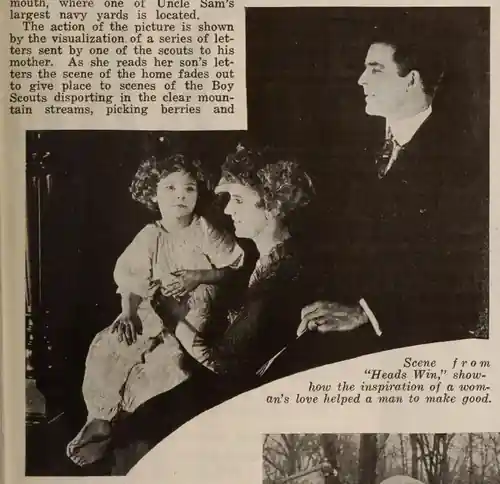
The efficacy of "Heads Win" relies heavily on the nuanced performances of its primary cast, particularly Roy Adams as Jim Godfrey and Eva Gordon as his wife. Adams delivers a portrayal that is both understated and deeply affecting. His initial frustration and despair are palpable, making his subsequent dedication to study and his eventual quiet confidence all the more convincing. He embodies the journey from diffidence to capability with a commendable lack of theatricality, allowing the audience to truly connect with Godfrey's earnest transformation. Eva Gordon, as the supportive and sagacious wife, is equally pivotal. Her character is far from a mere domestic accessory; she is the intellectual and emotional anchor for Jim, the wellspring of his renewed ambition. Gordon imbues her role with a quiet strength and an intelligent resolve that elevates the character beyond a simple helpmate, making her an active participant in Godfrey's success. The film's depiction of their marital dynamic is one of mutual respect and shared purpose, a refreshing departure from some of the more conventional gender roles often seen in cinema of the period. Even the inclusion of Baby Ivy Ward, though likely in a more peripheral role given the plot summary, hints at the domestic stakes involved, underscoring the family's shared investment in Jim's advancement. E. Lynn Summers' writing, while perhaps not aiming for the intricate psychological depth of a "Hamlet, Prince of Denmark" or the sprawling romanticism of Sir Arne's Treasure, is remarkably effective in its clarity and thematic focus. The dialogue, presumably, serves to advance the plot and illuminate character motivations without unnecessary embellishment, maintaining a directness that suits the film's earnest tone. The narrative structure is linear and purposeful, ensuring that every plot point contributes to Godfrey's arc of self-improvement and eventual triumph. This straightforward yet impactful storytelling allows the powerful central message to shine through unencumbered by excessive subplots or convoluted characterizations. The strength of the performances, combined with Summers' focused screenplay, ensures that "Heads Win" remains a compelling and emotionally resonant experience, even for contemporary viewers.
"Heads Win" stands as a powerful cinematic artifact, not just for its historical context but for the enduring relevance of its core themes. It is a film that champions the underdog, celebrates intellectual curiosity, and profoundly illustrates the adage that one's circumstances need not dictate one's destiny. The journey of Jim Godfrey from an overlooked, unskilled laborer to an indispensable assistant superintendent is a testament to the universal human capacity for growth and adaptation. In an era where discussions about skill gaps, vocational training, and lifelong learning are more pertinent than ever, "Heads Win" serves as a prescient reminder of the fundamental truths governing personal and professional advancement. It subtly argues that true competence often outweighs inherited status or initial opportunities. The film’s message transcends the specific industrial setting of the Goliath Electric Company, offering a blueprint for anyone seeking to overcome professional stagnation or societal barriers through dedicated self-improvement. While it might not possess the dramatic flair or grandiosity of a The Lion Man or the intricate character studies found in Men, Women, and Money, its strength lies in its grounded, relatable portrayal of a very human ambition. The film's quiet optimism and its belief in the individual's power to shape their own future make it a consistently inspiring watch. It’s a narrative that encourages introspection, prompting viewers to consider their own intellectual pursuits and the avenues available for personal and professional growth. The film does not shy away from depicting the initial hardships and frustrations, making Godfrey's eventual success feel genuinely earned and deeply satisfying. This is not a story of a sudden windfall or a lucky break; it is a meticulous chronicle of cultivated merit, proving that sometimes, the most profound victories are the result of quiet, persistent dedication. The film’s lasting legacy is its unequivocal endorsement of education as the ultimate equalizer and empowerment tool, a message that remains as vital and resonant today as it was when "Heads Win" first graced the silver screen.
Beyond the personal journey of Jim Godfrey, "Heads Win" implicitly paints a vivid picture of the industrial landscape of its time, where massive corporations like the Goliath Electric Company dominated the economic horizon. This setting is not merely a backdrop; it functions almost as a character itself, representing both the daunting scale of modern enterprise and the inherent opportunities and challenges it presented to the workforce. The initial rejection of Godfrey for an assistant foreman-ship due to his "lack of knowledge of any useful occupation" speaks volumes about the shifting demands of industry. The era was moving beyond brute strength and general labor towards a need for specialized skills, particularly in emerging fields like electrical engineering. The film, therefore, acts as a historical document, capturing this transition and advocating for the proactive adaptation required of individuals to thrive within it. The drawbridge incident, in particular, is a microcosm of this industrial complexity, showcasing how critical infrastructure relied on intricate electrical systems and, by extension, on the highly trained individuals capable of maintaining and repairing them. It underscores the fragility of these colossal systems and the immense responsibility placed upon those with the technical know-how. This portrayal of industrial might and its inherent vulnerabilities offers a fascinating contrast to films that might romanticize or demonize industry, such as perhaps the more overtly critical Bull Arizona, which might focus on different aspects of industrial struggle. Instead, "Heads Win" presents the Goliath works as a neutral, almost Darwinian environment where only the fittest, the most knowledgeable, survive and ascend. The film's depiction of Godfrey's return to his old position, but with newfound efficiency and respect, illustrates the profound impact of upskilling on an individual’s standing within a large organization. It suggests that even within seemingly rigid hierarchies, meritocratic principles can prevail when an individual actively cultivates the expertise demanded by the system. The assistant superintendency, then, is not just a personal achievement but a symbolic recognition of the indispensable value of specialized technical knowledge in the modern industrial age, a testament to the film's forward-thinking perspective on the evolving world of work and the critical role of the expert.
While the full directorial credits and production details might elude a contemporary audience for "Heads Win," the narrative structure and thematic coherence point to a clear artistic vision, undoubtedly shaped by writer E. Lynn Summers. The screenplay, as evidenced by the plot, is a masterclass in focused storytelling, eschewing tangential subplots to meticulously chart Jim Godfrey's journey. Summers crafts a narrative that is both relatable in its depiction of struggle and aspirational in its portrayal of triumph. The pacing, from Godfrey's initial setbacks to his diligent studies and the climactic drawbridge crisis, feels deliberately constructed to maximize emotional impact and highlight the causal links between effort and reward. There's a certain elegance in the simplicity of the premise, allowing the profound message of self-improvement to resonate without being overshadowed by overly intricate plot mechanics. Summers' writing avoids the pitfalls of saccharine sentimentality, instead grounding Godfrey's success in tangible, hard-earned knowledge. This pragmatic approach lends the film a sense of authenticity and weight. The characters, even with limited descriptive detail, emerge as archetypes that embody universal human experiences: the striving worker, the supportive partner, the unforgiving system, and the opportunity that awaits the prepared mind. Compared to films that might revel in complex moral ambiguities or psychological labyrinths, "Heads Win" offers a straightforward, yet deeply satisfying, moral compass. It's a narrative that implicitly trusts its audience to appreciate the value of diligence and intelligence, presenting a world where merit, when cultivated, ultimately finds its reward. The film's ability to transform a potentially dry subject—electrical engineering—into a dramatic vehicle for personal growth is a testament to Summers' skill as a storyteller. It's not just a story about engineering; it's a story enabled by engineering, demonstrating how specialized knowledge can be the key to unlocking one's full potential and, in doing so, serving the greater good. This thoughtful construction ensures that "Heads Win" remains more than just a period piece; it is a timeless parable on the power of the human spirit to overcome adversity through intellectual fortitude and unwavering determination, a narrative crafted with purpose and delivered with conviction.
In sum, "Heads Win" emerges as a quietly powerful cinematic statement, a testament to the enduring human spirit and the transformative potential of dedicated self-improvement. It is a film that, through the compelling journey of Jim Godfrey, articulates a profound truth: that true advancement often stems not from inherent talent alone, but from the relentless pursuit of knowledge and the courage to apply it when opportunity inevitably knocks. The film’s brilliance lies in its ability to elevate a seemingly ordinary tale of career progression into a universal narrative about resilience, intellectual growth, and the crucial role of support systems. Roy Adams’ earnest portrayal of Godfrey, coupled with Eva Gordon’s intelligent and supportive wife, anchors the film with genuine human emotion, making their shared triumph feel deeply earned and profoundly satisfying. E. Lynn Summers’ focused screenplay ensures that every beat of the story serves to reinforce the central theme, creating a cohesive and impactful viewing experience. While it may lack the grand spectacle of some of its contemporaries, "Heads Win" compensates with an authenticity and a message that resonates across generations. It reminds us that the path to success is often paved with rejected applications and arduous study, but that the rewards—not just of professional advancement, but of self-mastery—are immeasurable. This is a film that champions the quiet hero, the diligent student, and the unwavering partner, proving that sometimes, the most significant victories are won not on battlefields, but within the pages of a textbook and in the steadfast resolve of a determined heart. Its legacy is not one of flamboyant spectacle, but of profound, understated inspiration, a timeless reminder that with grit, grace, and a good course in electrical engineering, one can indeed turn rejection into triumph, and an initial loss into a resounding win. The film's enduring message is a beacon for anyone navigating the complexities of their own professional and personal development, affirming that the investment in oneself is always the most valuable bet one can place.

IMDb 7
1919
Community
Log in to comment.