DbcultAccessing Vault...
Cult Review
Senior Film Conservator
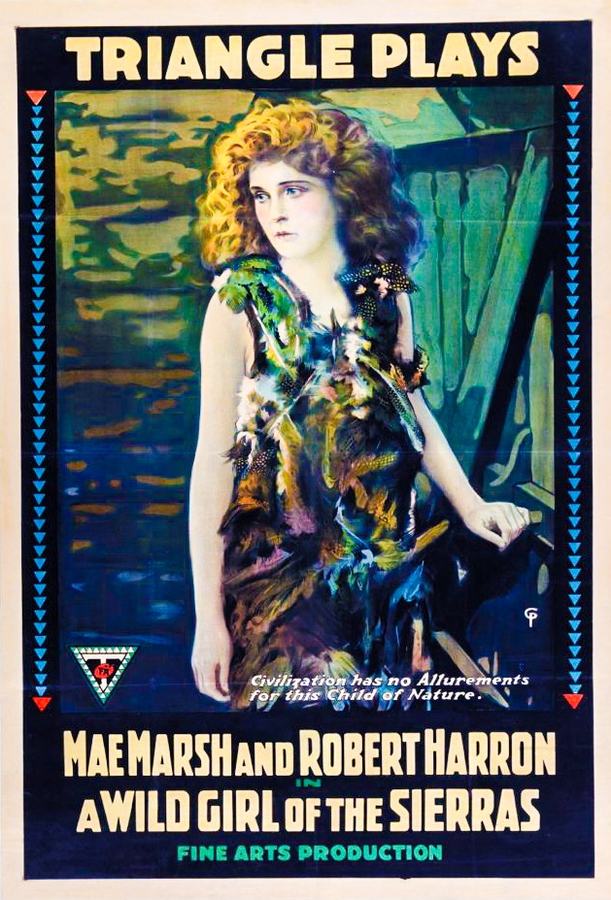
Step into the nascent days of cinematic storytelling, a time when the silver screen was a canvas for grand gestures and evocative imagery, and you might stumble upon a curious artifact like A Wild Girl of the Sierras. Released in 1916, this film, penned by the inimitable Anita Loos and F.M. Pierson, is a fascinating glimpse into an era grappling with the very definition of humanity, civilization, and the untamed spirit. It’s a narrative that, even today, resonates with a certain primal allure, much like the wild landscapes it portrays. What truly elevates this silent-era offering beyond a mere historical curiosity is the central performance by Mae Marsh, an actress whose expressive capabilities were nothing short of legendary in her time. She embodies the titular 'wild girl' with a raw authenticity that transcends the limitations of a non-speaking role, conveying a spectrum of emotions from feral innocence to profound devotion, all through the sheer power of her physicality and the soulful depths of her gaze.
The film introduces us to a world far removed from the burgeoning metropolises of the early 20th century. Here, amidst the rugged grandeur of the California Sierras, lives a teenage girl whose upbringing is as unconventional as it is captivating. She shares a cave with two grizzly bears, her companions in a life unburdened by societal constructs. Her days are a ballet of nature: playing with rabbits, communing with birds, her attire a testament to her environment – leaves and feathers. This idyllic, almost mythical existence is the film’s boldest stroke, immediately setting a tone that is both fantastical and deeply human. It asks us to suspend disbelief and embrace the notion of a 'noble savage' archetype, a theme explored in various forms throughout literature and art. The girl's primal innocence becomes the narrative's fulcrum, around which the complexities of human greed and societal artifice will inevitably collide.
The intrusion of civilization comes in the form of Jim Hamilton, a gambler whose moral compass is decidedly skewed, and his equally unscrupulous mistress. Their target is the wealthy Bob Jordan, whom they aim to fleece through the sale of a desolate, abandoned mine. This setup immediately establishes a stark contrast: the purity of the wilderness versus the calculating machinations of human avarice. Jordan’s initial encounter with the wild girl is pivotal and tragically ironic. Mistaking her leaf-and-feather garb for that of an animal, he shoots her, a moment that symbolizes civilization's often destructive and uncomprehending interaction with nature. This incident, however, becomes the unlikely catalyst for a profound connection. Jordan, driven by remorse, nurses the girl back to health. Her response is a silent, unyielding devotion, a bond forged not through words, but through the primal language of care and dependency. This silent exchange forms the emotional core of the film, showcasing the transformative power of compassion even in the most unexpected circumstances.
Mae Marsh, a luminary of early cinema, delivers a performance in A Wild Girl of the Sierras that is nothing short of captivating. Her ability to convey complex emotions without the aid of spoken dialogue is a testament to her extraordinary talent. As the wild girl, Marsh utilizes her entire being: her lithe movements, her wide, questioning eyes, the subtle shifts in her facial expressions, and her almost animalistic grace. She doesn't just play a character; she inhabits a state of being, a creature caught between two worlds. Her portrayal of a non-verbal individual is particularly challenging, yet Marsh executes it with an astonishing degree of nuance. We understand her fear, her curiosity, her burgeoning affection, and her ultimate loyalty through her every gesture. It’s a performance that stands shoulder to shoulder with other iconic silent film portrayals of innocence and vulnerability, drawing parallels to the pathos found in films like The Climbers in its exploration of character struggle, albeit in a dramatically different context.
Marsh’s wild girl is not merely a plot device; she is the film’s beating heart, its moral compass, and its most compelling mystery. Her initial devotion to Jordan, almost slave-like in its intensity, speaks volumes about her innate capacity for attachment and gratitude, uncorrupted by societal expectations. This raw, unfiltered emotion is something that modern audiences, accustomed to more verbose characterizations, might find profoundly moving. It reminds us of a time when cinema relied on the universal language of human expression to tell its stories, and Marsh was a master of that language. Her transformation throughout the film, from a purely instinctual being to one capable of deeper emotional connection and even mischievous pranks, is subtly yet powerfully rendered. It’s a performance that underscores the potential for profound character development even within the constraints of early filmmaking techniques.
Beyond the captivating central performance, A Wild Girl of the Sierras delves into profound thematic territory. At its core, it's a story about lost identity and the slow, often painful, process of memory retrieval. The revelation that the wild girl is, in fact, Jim Hamilton's daughter, separated from him fifteen years earlier during a devastating Indian raid, is a narrative bombshell. This plot twist elevates the film from a simple tale of wilderness survival to a poignant drama about family, loss, and the enduring scars of trauma. Hamilton's own fragmented memories, triggered by his return to the mine—the site of his family's destruction—mirror the girl's nascent recollections of fleeing into the woods. This parallel journey of memory, though experienced from vastly different perspectives, binds their fates irrevocably.
The film also sharply contrasts the purity of nature with the corrupting influence of civilization. Hamilton and his mistress embody the worst aspects of human society: greed, deception, and moral bankruptcy. Their attempt to swindle Bob Jordan highlights the pervasive nature of avarice, a stark counterpoint to the wild girl's unblemished innocence. Jordan himself occupies a middle ground, initially making a grave error through ignorance, but then demonstrating compassion and a capacity for genuine connection. This interplay between characters underscores the film's exploration of human nature, questioning whether civilization truly elevates or diminishes the human spirit. The wilderness, in this context, is not just a setting; it's a sanctuary, a place where the wild girl's true self is preserved, untainted by the moral ambiguities of the outside world. It offers a fascinating comparison point to the more direct societal critiques found in films like The Social Buccaneer, though with a distinct emphasis on primal innocence over deliberate social maneuvering.
The plot thickens with the introduction of Hamilton's mistress, whose attempts to seduce Jordan are a predictable, yet effective, demonstration of her character's mercenary nature. Jordan's refusal to be swayed by her charms not only solidifies his moral standing but also sets the stage for Hamilton's desperate measures. The gambler's subsequent attempt to rob Jordan at gunpoint is a classic dramatic confrontation, heightened by the unexpected intervention of the wild girl. Her act of burying Jordan's money belt, initially a playful prank born of her untamed nature, becomes a crucial plot point, inadvertently foiling Hamilton's nefarious scheme. This moment is a brilliant example of how the girl's unique perspective and actions, often misunderstood, ultimately serve a greater, albeit unintended, purpose.
Jordan’s anger at the perceived loss of his money, however, is a momentary lapse in his understanding of the girl. It's a poignant scene, highlighting the communication barrier and the fragility of their nascent bond. Her retreat back to the familiar solace of her cave is a powerful visual metaphor for the trauma of rejection and the instinct to return to what is known and safe. Yet, the narrative doesn't leave us in despair. The subsequent reconciliation between Jordan and the wild girl, culminating in the return of the money belt, is a testament to forgiveness and the deepening of their connection. It signifies a mutual understanding that transcends words, a bond built on shared experience and burgeoning affection. This arc, from misunderstanding to renewed trust, is a hallmark of compelling silent cinema, where emotions are writ large and character development is often conveyed through gesture and reaction.
The success of A Wild Girl of the Sierras is not solely attributable to Mae Marsh's performance; it's also a testament to the astute screenwriting of Anita Loos and F.M. Pierson. Loos, in particular, was a pioneering figure in Hollywood, known for her sharp wit and her ability to craft engaging narratives. Her influence is palpable in the film's nuanced characterizations and its surprisingly sophisticated plot twists for the era. The way the mystery of the girl's identity unfolds, interwoven with Hamilton's own past, showcases a narrative craftsmanship that was ahead of its time. The writers deftly balance the film's melodramatic elements with moments of genuine human insight, ensuring that the story remains compelling despite its fantastical premise. Their work here can be seen as an early example of the intricate plotting that would become more commonplace in later thrillers such as The Broken Coin, albeit with a focus on character discovery rather than pure suspense.
The supporting cast, while perhaps overshadowed by Marsh's central role, nonetheless contributes significantly to the film's texture. James O'Shea as Jim Hamilton embodies the conniving gambler with a believable degree of menace and desperation. Olga Grey, as his mistress, provides the necessary foil, her seductive machinations contrasting sharply with the wild girl's innocence. Robert Harron, a frequent collaborator with Marsh, brings a sympathetic earnestness to the character of Bob Jordan, making his journey from unwitting assailant to devoted protector believable. Wilfred Lucas, though not explicitly detailed in the plot summary, likely provided a grounding presence in his role. Each actor, within the stylistic conventions of silent film, contributes to the overall dramatic impact, ensuring that the narrative's emotional beats land with clarity and force. The film's ability to maintain its dramatic tension and character development across its runtime is a credit to the combined talents of its cast and crew, navigating the technical and narrative challenges inherent in early filmmaking.
The resolution of A Wild Girl of the Sierras is both satisfying and tinged with a delicate ambiguity. With Hamilton’s mistress departing with another man and Hamilton himself retreating to the city, the corrupting influences recede. Jordan, now free from the immediate threats and having forged an undeniable bond with the wild girl, begins his journey back, with her following faithfully at his heels. This ending suggests not a return to conventional civilization for the girl, but rather a new kind of partnership, one rooted in their unique shared history and mutual affection. It leaves the audience contemplating the future of this unusual pair, hinting at a life lived on their own terms, perhaps bridging the gap between the wild and the civilized.
In an era where cinema was still finding its voice, A Wild Girl of the Sierras stands out as a testament to the power of original storytelling and the magnetic presence of its star. It explores timeless themes of identity, belonging, and the clash between natural innocence and human corruption, all wrapped in a compelling narrative that keeps the audience engaged. For those interested in the evolution of film, the captivating performances of silent screen legends like Mae Marsh, or simply a unique story that transcends its historical context, this film is an absolute must-see. It’s a powerful reminder that even in the earliest days of the moving picture, filmmakers were crafting intricate, emotionally resonant tales that continue to speak to us today, much like the enduring spirit of the wild girl herself, forever etched into the cinematic landscape.
The film's exploration of primal instincts and the human capacity for both cruelty and compassion offers a compelling counterpoint to more straightforward narratives of detection or adventure, such as Sherlock Holmes or The Scarlet Runner. While those films revel in the intricacies of plot and action, A Wild Girl of the Sierras finds its strength in the raw emotional journey of its central character. It's a film that asks us to look beyond the superficial, to understand the unspoken, and to appreciate the profound connections that can form in the most unlikely of circumstances. It’s a true gem from the silent era, a narrative that, despite its age, feels remarkably fresh and relevant in its exploration of what it means to be human, to be wild, and to find one's place in a world that often struggles to understand the untamed heart.
IMDb 7
1917
Community
Log in to comment.