DbcultAccessing Vault...
Cult Review
Senior Film Conservator
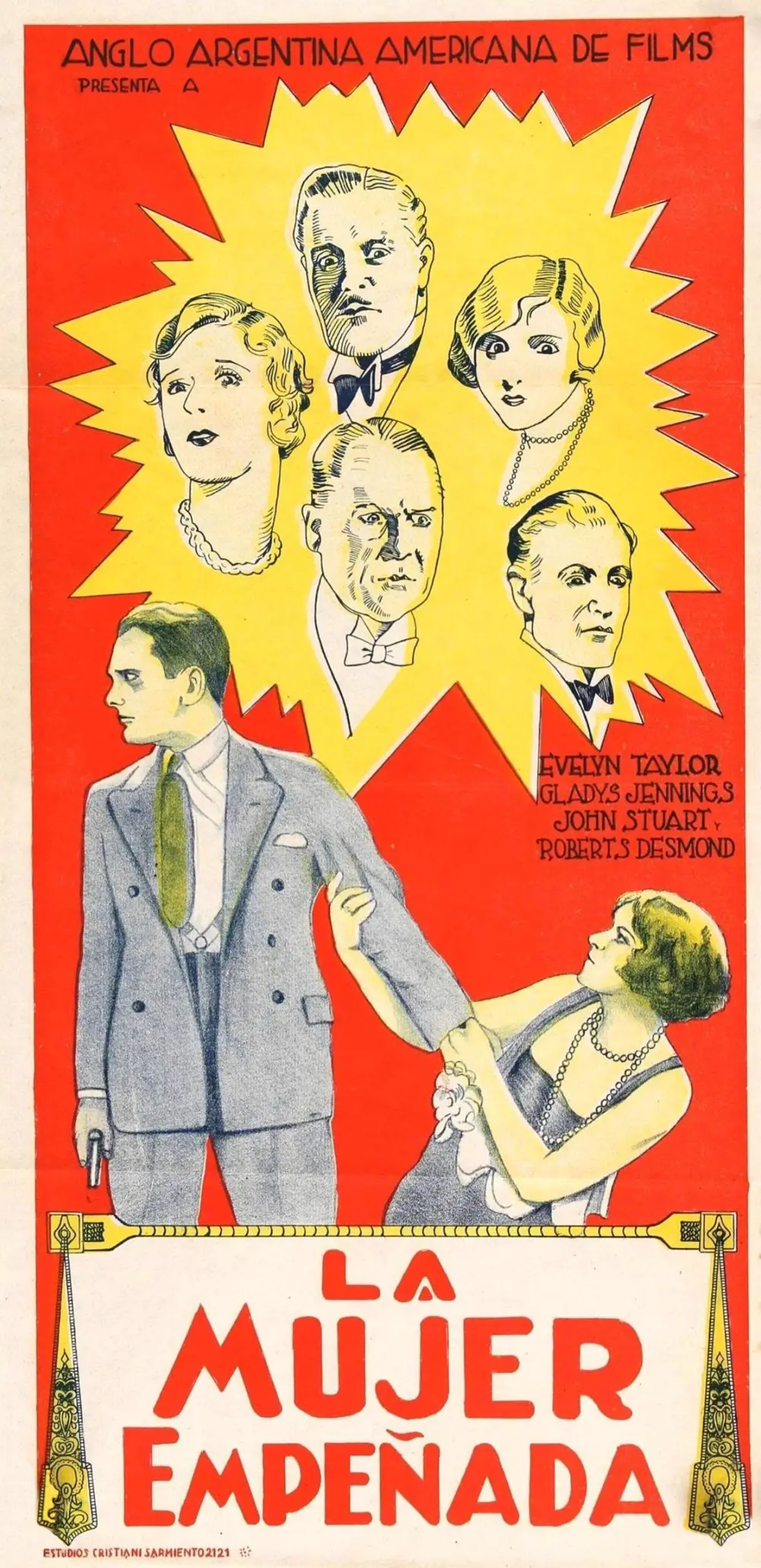
Is A Woman in Pawn a film that demands your attention in the bustling landscape of modern cinema? Short answer: yes, but with significant caveats that place it firmly in the niche of historical melodrama. This film is an absolute must-see for ardent aficionados of early 20th-century cinema, particularly those fascinated by the nascent stages of psychological drama and the evolution of screen acting, but it will undoubtedly test the patience of viewers accustomed to contemporary pacing and narrative complexity.
It's a testament to the raw power of silent film storytelling, a genre often unfairly dismissed as quaint. For those who can attune themselves to its unique rhythm and visual language, there’s a compelling, if occasionally overwrought, drama to be found. However, if your cinematic palate leans exclusively towards fast-paced thrillers or dialogue-heavy character studies, this journey back to the 1920s might prove challenging. It works. But it’s flawed.
This film works because it captures the raw, unpolished emotional intensity characteristic of its era, driven by powerful, albeit broad, performances from its leads. The sheer conviction in the actors' expressions, unburdened by dialogue, is often breathtaking.
This film fails because its narrative relies heavily on melodramatic contrivance and a predictable resolution, lacking the nuanced character development that would elevate it beyond its genre trappings. The plot, while engaging, sacrifices subtlety for dramatic impact, which can feel a little heavy-handed to a modern sensibility.
You should watch it if you appreciate silent film acting, early cinematic explorations of moral quandaries, and stories of justice sought against overwhelming odds. It's a window into a different era of filmmaking, offering valuable insights into the foundations of cinematic narrative.
At its core, A Woman in Pawn is a quintessential melodrama, one that leverages high-stakes personal tragedy against a backdrop of financial intrigue. Frank Stayton’s script, while lean in its exposition, is remarkably effective in establishing the precipice upon which Arthur Grenville’s life teeters. We are introduced to Grenville not as a villain, but as a man undone, a victim of the ruthless machinations of Silas Blackwood, a character whose very name drips with villainy.
The film’s central conflict is twofold: Grenville’s financial ruin and the subsequent betrayal of his marriage by Blackwood. This dual assault on his standing and his personal life is the powder keg. The narrative expertly, if somewhat broadly, illustrates the corrosive power of greed and illicit desire, setting the stage for an inevitable, violent confrontation. The death of Blackwood isn't a surprise; it's a narrative inevitability, given the established tension.
What follows is a classic 'wrong man' scenario. Grenville, with motive aplenty and a public history of animosity towards Blackwood, becomes the convenient scapegoat. The script doesn't waste time on ambiguous clues; it pushes Grenville into a corner, relying on the audience's understanding of his plight to generate sympathy. This directness is both a strength and a weakness. It creates immediate engagement but leaves little room for investigative intrigue, preferring instead to focus on the emotional fallout and the fight for justice.
The pacing of this setup is surprisingly brisk for a film of its era. There’s no meandering; the plot points are delivered with a stark efficiency that propels the story forward. The rapid descent of Grenville, from respected broker to accused murderer, is handled with a blunt force that ensures emotional impact, even if some of the finer details are left to the audience's imagination. It's a narrative built on broad strokes, designed for maximum emotional resonance in a visual medium that was still finding its voice beyond theatrical staging.
The power of A Woman in Pawn lies undeniably in its performances. In a silent film, every gesture, every facial contortion, every tilt of the head must carry the weight of a thousand words. The cast, particularly Chili Bouchier and John Stuart, rise to this formidable challenge with an intensity that is both captivating and, at times, profoundly moving.
John Stuart, as the beleaguered Arthur Grenville, delivers a performance that oscillates between proud defiance and crushing despair. His portrayal of a man stripped of everything is visceral. Consider the scene where he receives news of his financial collapse: Stuart doesn't just look sad; his entire posture collapses, his hands clench into fists of impotent rage, and his eyes, wide with disbelief, convey a world shattering around him. It’s a masterclass in silent anguish, a stark contrast to the more theatrical performances often seen in contemporaries like Hearts or Diamonds?.
Chili Bouchier, as Eleanor Grenville, navigates the complex role of the wife caught between loyalty and temptation. Her initial interactions with Silas Blackwood (Lauderdale Maitland) are subtly played, a delicate dance of unease and burgeoning fascination. Bouchier’s ability to convey Eleanor’s internal conflict, particularly in moments where she grapples with her husband’s ruin and Blackwood’s seductive promises, is remarkable. Her silent tears in the courtroom, for instance, are not merely a display of sorrow but a complex expression of guilt, fear, and lingering affection for Arthur.
Lauderdale Maitland's Silas Blackwood is the embodiment of suave villainy. He is not a mustache-twirling caricature but a dangerously charming predator. Maitland uses subtle shifts in his gaze and a predatory smile to convey Blackwood's manipulative nature, making his allure to Eleanor understandable, if regrettable. His performance provides a necessary foil, a tangible representation of the corruption that permeates the film’s world. It’s a compelling portrayal of a man who believes himself untouchable, a stark contrast to the more overt villainy in something like Holy Smoke.
Gladys Jennings, in a supporting role, adds another layer to the ensemble, her presence often underscoring the societal judgment and moral decay that Grenville battles against. While her screen time is less extensive, her reactions and expressions contribute significantly to the film’s tone, often reflecting the audience’s own judgments and sympathies.
The direction, while uncredited, demonstrates a keen understanding of silent cinema's visual language. The film relies heavily on stark contrasts and carefully composed shots to convey emotion and narrative progression. The cinematography, though rudimentary by today's standards, is effective in creating mood and emphasizing character states.
Consider the use of lighting: scenes depicting Grenville's despair are often bathed in low, chiaroscuro lighting, casting long shadows that mirror his mental state. Conversely, Blackwood's opulent office is often brightly lit, almost glaringly so, suggesting a false sense of security and power. This visual dichotomy is not groundbreaking, but it is applied with a deliberate hand, ensuring the audience instinctively grasps the moral alignment of the characters.
The camera work, while mostly static, occasionally employs dramatic close-ups to highlight key emotional beats. A tight shot on Eleanor's hand clenching a letter, or Grenville’s anguished face as he reads a damning accusation, are moments where the film truly shines. These close-ups serve as the 'dialogue' of silent cinema, delivering crucial information and emotional resonance without the need for intertitles.
The set design, though minimal, effectively establishes the period and social stratification. The opulent, if somewhat gaudy, decor of Blackwood's world stands in sharp contrast to the more modest, yet dignified, Grenville household before its ruin. This visual storytelling, a hallmark of early cinema, allows the audience to quickly grasp the characters' circumstances and the stakes involved. The visual grammar here feels more refined than some of its contemporaries, avoiding the overtly theatrical staging often seen in films like A Question of Right.
The pacing of A Woman in Pawn is a fascinating study in early cinematic rhythm. It oscillates between moments of intense, rapid-fire emotional delivery and more deliberate, observational sequences. The initial setup of Grenville's downfall and Blackwood's manipulation moves with a surprising urgency, drawing the viewer into the escalating crisis.
However, once the central crime occurs and Grenville is accused, the film adopts a more measured pace, allowing the audience to absorb the gravity of his situation. The courtroom scenes, for instance, are not about fast-paced legal theatrics but about the slow, crushing weight of accusation and the protagonist's silent agony. This shift in tempo effectively builds tension, making Grenville’s struggle feel more protracted and desperate.
The tone is overwhelmingly melodramatic, as expected for a film of this genre and era. There's a pervasive sense of injustice and moral indignation that drives the narrative. While some modern viewers might find this emotional intensity bordering on excessive, it is entirely consistent with the storytelling conventions of the time. The film never shies away from grand gestures or overt displays of emotion, embracing its melodramatic identity fully.
There’s an almost operatic quality to the emotional highs and lows. The film understands the power of a single, drawn-out close-up to convey despair or defiance. This tonal consistency, while potentially alienating to some, is precisely what gives the film its unique character and charm. It commits to its emotional landscape without apology, a refreshing stance compared to the self-conscious irony often found in contemporary dramas.
Yes, A Woman in Pawn is worth watching today, especially for specific audiences. It offers a valuable glimpse into the silent film era.
The film's strengths lie in its powerful performances and its commitment to emotionally resonant storytelling. It's a foundational piece for understanding cinematic drama.
However, its melodramatic excesses and slower pacing might deter those accustomed to modern film conventions. Patience is required to appreciate its unique rhythm.
For film historians, students of early cinema, or anyone interested in the evolution of acting, it’s an essential viewing experience. For a casual viewer, it might be a challenging, but rewarding, exercise in expanding their cinematic horizons.
"The silent era truly demanded a different kind of actor, one who could embody a character's entire inner world through sheer physicality and facial expression alone. A Woman in Pawn showcases this artistry beautifully, making it a compelling, if emotionally exhausting, watch."
A Woman in Pawn is more than just a relic; it’s a vibrant, if sometimes over-the-top, piece of silent cinema that effectively demonstrates the power of visual storytelling and raw human emotion. While its melodramatic heart beats loudly and its pacing demands a different kind of engagement, the film offers a compelling narrative of injustice, betrayal, and the fight for redemption.
The performances, particularly from John Stuart and Chili Bouchier, are truly the film’s anchor, elevating the simple plot into something genuinely affecting. They remind us that powerful acting doesn’t require dialogue to resonate deeply. For anyone willing to immerse themselves in the unique rhythms and expressive artistry of the silent era, this film is an enriching experience.
It may not be for everyone, and it certainly won't convert skeptics of silent film. But for those with an appreciation for cinema's foundational years, or a curiosity about how compelling stories were told before sound, A Woman in Pawn is a worthy watch. It’s a testament to the enduring power of classic melodrama and a reminder that true cinematic impact often lies in the unspoken.
IMDb 6
1930
Community
Log in to comment.