DbcultAccessing Vault...
5.4/10
Senior Film Conservator
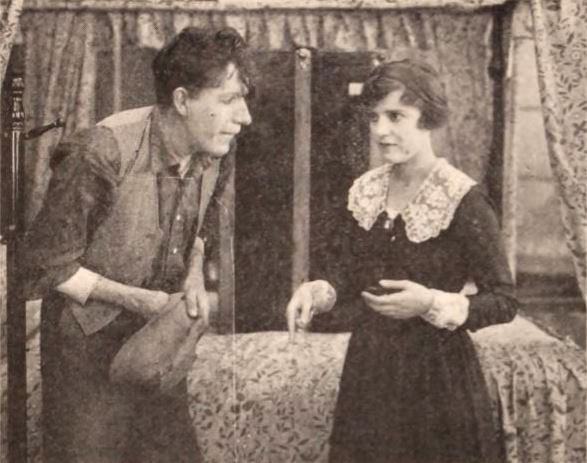
A definitive 5.4/10 rating for a film that redefined the boundaries of cult cinema. Oh Mary Be Careful remains a cornerstone of transgressive art.
Oh Mary Be Careful, a 1921 silent comedy directed by George J. Forth and penned by Rupert Hughes, is a beguiling interplay of social satire and romantic farce. The film’s core premise—a young woman’s struggle to reconcile familial expectations with personal desire—resonates as both a period piece and a timeless exploration of autonomy. With Madge Kennedy in her prime as Mary Meacham, the film radiates a buoyant energy, her physical expressiveness and emotive subtlety anchoring the narrative in humanity. The story’s backdrop, a provincial home under the watchful eye of Aunt Myra (a stern yet amusing May Rogers), serves as a stage for testing the mettle of suitors through contrived trials, a framework that doubles as a critique of Victorian-era gender dynamics.
Aunt Myra’s theories—presented as a blend of moral philosophy and performative theater—are less about genuine assessment and more about upholding a patriarchal hierarchy. Her disdain for men, rooted in past betrayal, manifests in elaborate "qualifier" tests for male visitors, including intellectual quizzes and situational scenarios designed to provoke emotional vulnerability. These sequences, while comically rigid, underscore the absurdity of reducing human connection to a checklist. Mary, in contrast, embodies spontaneity; her decision to flood the house with potential suitors during Myra’s absence—a move both rebellious and naive—exposes the fragility of the aunt’s systems. The arrival of the tree surgeon, portrayed with disarming charm by George J. Forth, becomes the catalyst for chaos, as his grounded authenticity disrupts the calculated artificiality of the aunt’s experiments.
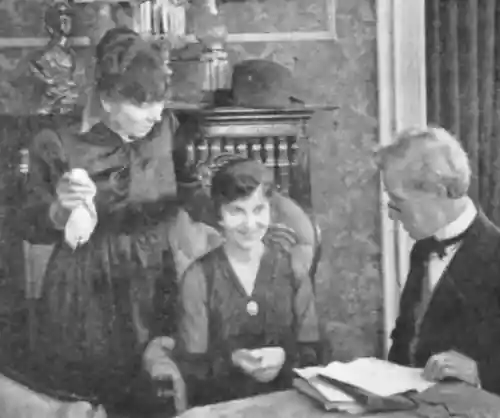
The film’s visual grammar—starkly contrasting shadow and light, a hallmark of 1920s cinematography—is used to heighten emotional stakes. A standout sequence occurs in the tree surgeon’s workshop, where the interplay of natural sunlight and the cluttered, earthy environment symbolizes his connection to organic, untamed life. This contrasts sharply with Aunt Myra’s dimly lit study, a space cluttered with books and moral tomes. Such visual metaphors are not just aesthetic flourishes but narrative tools, reinforcing the thematic push-pull between nature and nurture, intuition and dogma. The use of intertitles, while minimal, is precise; their terse phrasing often mirrors the characters’ internal conflicts, adding layers of subtext to the physical comedy.
The ensemble cast, though constrained by the limitations of silent film acting techniques, delivers performances that are both broadly comedic and subtly nuanced. Harry Frazer’s portrayal of the hapless brother-in-law, for instance, oscillates between slapstick buffoonery and moments of genuine pathos, a duality that prevents the character from becoming a caricature. Similarly, Bernard Thornton’s suitors—each representing a different archetype of male ambition—serve as foils to the tree surgeon’s quiet integrity. The ensemble’s chemistry is particularly evident in the chaotic dinner party scene, a sequence that parodies the performative nature of social gatherings while showcasing the cast’s physical dexterity.
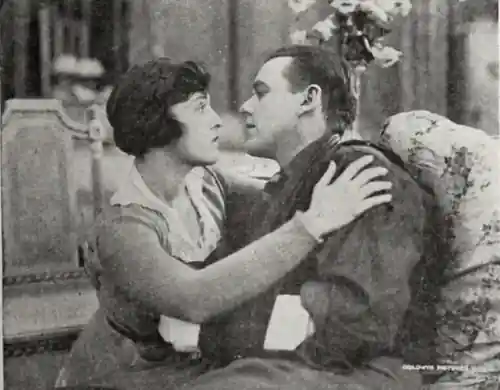
Forth’s direction—though undeniably product of its era—demonstrates a keen understanding of spatial storytelling. The film’s pacing, brisk and unapologetic, ensures that the narrative never lingers in one emotional register for too long. This is perhaps most evident in the transition from the aunt’s return to the resolution of Mary’s romantic entanglement. The latter half of the film accelerates into a series of rapid misunderstandings and revelations, a narrative crescendo that, while occasionally contrived, serves to emphasize the inevitability of Mary’s self-realization. The final act, in which Mary deftly navigates her aunt’s re-imposed tests, is a masterclass in visual storytelling, with Kennedy’s facial expressions conveying a spectrum of defiance, longing, and resolve.
Thematically, Oh Mary Be Careful engages with the fraught intersection of gender roles and agency. Aunt Myra’s theories, while presented as humorous, are a lens through which to view the systemic control women exerted over male behavior in a patriarchal society. Mary’s rebellion is not just personal but symbolic, a challenge to the notion that women’s roles are confined to gatekeeping or passive victimhood. The film’s resolution—Mary choosing love on her own terms—subverts the typical silent film trope of the "fallen woman" narrative, offering instead a proto-feminist assertion of autonomy.
In the broader context of early cinema, Oh Mary Be Careful shares DNA with other 1920s comedies like The Dawn Maker and The Fortune of Christina McNab, which similarly juxtapose social critique with lighthearted farce. However, it diverges in its focus on intra-generational conflict rather than class struggle, a choice that sharpens its commentary on evolving gender norms. The film’s humor, while rooted in the slapstick traditions of María, elevates itself through its character-driven narrative, avoiding the slapstick excesses that often characterize the genre.
The film’s enduring relevance lies in its exploration of the tension between tradition and individuality. Aunt Myra’s rigid adherence to her theories mirrors contemporary debates about algorithmic decision-making, where systems are designed to "optimize" outcomes yet often fail to account for human unpredictability. Mary’s journey—navigating a world governed by arbitrary rules to forge a genuine connection—resonates with modern audiences grappling with similar societal pressures. This duality is perhaps best encapsulated in the scene where Mary and the tree surgeon share a quiet moment under the stars, their unspoken dialogue a testament to the film’s faith in the power of emotional truth over institutional dogma.
Technically, the film’s strengths lie in its innovative use of sound effects (for a silent film)—though the absence of dialogue is compensated by a vibrant score and exaggerated physical comedy. The set designs, particularly the aunt’s study and the tree surgeon’s workshop, are rich with symbolic detail, from the overhanging clock (a motif of time’s relentless march) to the potted plants in the workshop (a nod to growth and renewal). These elements, while subtle, enrich the viewing experience, offering layers of meaning that reward attentive audiences.
Critics of the era, including Moving Picture World, lauded the film for its "uncompromising wit and visual flair," though some dismissed its "flippant approach to serious themes." Modern reassessments, however, have recontextualized the work as a proto-feminist text, with scholars drawing parallels to the gender politics in Out of the Night and El Escándalo. The film’s legacy is further cemented by its influence on later comedies, particularly those by Oh, Baby!, which inherited its blend of social critique and romantic whimsy.
In conclusion, Oh Mary Be Careful is more than a relic of early cinema; it is a deftly crafted narrative that balances humor with insight. Its exploration of gendered power dynamics, while filtered through the comedic lens of its time, remains strikingly pertinent. The film’s charm lies in its ability to entertain while provoking thought, a rare feat that cements its place in the pantheon of silent film classics. For contemporary viewers, it offers both a window into early 20th-century social mores and a timeless reminder of the human capacity for growth, connection, and rebellion.
IMDb —
1926
Community
Log in to comment.