DbcultAccessing Vault...
6.4/10
Senior Film Conservator
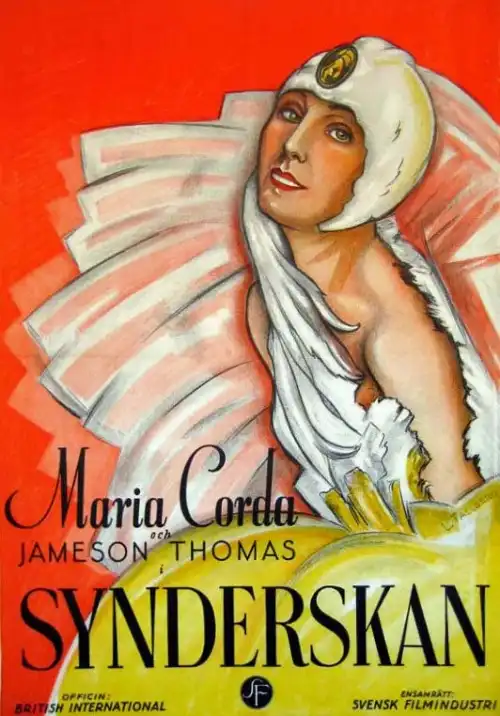
A definitive 6.4/10 rating for a film that redefined the boundaries of cult cinema. A Woman in the Night remains a cornerstone of transgressive art.
If you’re looking for a breezy evening, stay away from A Woman in the Night. It’s one of those late-silent era dramas that feels heavy from the first frame, mostly because it’s trying so hard to handle the 'shell-shock' angle without really knowing how to talk about it. It’s worth a look if you’re into Victor Saville’s early stuff or if you just want to see María Corda emote through about six layers of stage makeup, but for anyone else, the pacing might feel like a slow crawl through a very dark, very damp house.
There’s a moment early on where Corda is performing. She’s a ballerina, but the way she’s filmed makes it feel less like a dance and more like a series of frantic, panicked gestures. The camera stays a bit too far back, then cuts to a close-up that’s so tight you can see the beads of sweat on her forehead. It’s effective, actually. It makes the 'glamour' of her stage life feel exhausting before the plot even kicks in. You get the sense that she’s not dancing for art; she’s dancing because she doesn't know what else to do with her hands.
The husband, played by Clifford Heatherley, does this thing with his hands whenever he’s meant to be experiencing 'nerves.' It’s that classic silent-film shorthand for trauma—clutching the arm of a chair until his knuckles turn white or staring at a wall for three seconds too long. It’s a bit much, but then you look at his eyes and there’s this genuine blankness that’s actually pretty unsettling. He looks like a man who left his soul in a trench somewhere and just brought back the body. It makes their marriage feel less like a romance and more like a long-term hospital visit.
Then there’s Jameson Thomas. He turns up and the movie suddenly remembers it’s supposed to be a romance. The chemistry between him and Corda is... fine? It’s more about the way they look at each other across dinner tables. There’s a scene in a garden where the lighting is so dim you can barely see their faces, just the white of his shirt and the pale blur of her dress. It’s one of the few times the movie feels genuinely atmospheric rather than just gloomy. The way he touches her shoulder—it’s hesitant, almost like he’s afraid she’ll break. It’s better than any of the big dramatic speeches they try to convey through the title cards.
The child plotline feels like it belongs in a different movie. It’s handled with this weird, hushed reverence that slows the middle section down to a standstill. You find yourself waiting for someone to just say what they’re thinking, but instead, we get long shots of people staring at cribs or looking out of rain-streaked windows. It reminds me a bit of the heavy-handedness in The Great Impersonation, where the atmosphere starts to swallow the actual story until you're just looking at shadows.
I noticed a weird edit during the big confrontation scene. It cuts from a wide shot of the room to a medium shot of Corda, but her hand position completely changes between frames. It’s a tiny thing, but in a movie this quiet, those little jumps stand out. It breaks the spell of the misery for a second and reminds you that you're watching people on a set in 1928 trying to figure out how to make a 'serious' film.
The costumes are worth mentioning, specifically the contrast between her stage outfits and her home life. On stage, she’s covered in sequins that catch every bit of light the studio could throw at her. At home, she wears these high-collared, stiff dresses that look like they’re choking her. It’s not subtle—Saville wasn't really a subtle director at this stage—but it works. You can feel the physical weight of her domestic life every time she sits down.
There are long stretches where nothing happens. People walk into rooms, look sad, and walk out. If you aren't in the right mood, it’s infuriating. But if you’re leaning into the melodrama, there’s something hypnotizing about it. It’s like watching a car crash in extreme slow motion, where the cars are made of velvet and everyone is wearing too much eyeliner.
The ending doesn't wrap everything up in a neat bow, which I actually appreciated. It leaves you with the image of a woman who has made too many sacrifices for people who didn't really know how to keep her. It’s bleak, it’s a bit messy, and it’s definitely not for everyone. If you liked the slow-burn tension of something like Mürebbiye, you might find something to hold onto here. Otherwise, it might just feel like a very long night.
IMDb 5.9
1931
Community
Log in to comment.