DbcultAccessing Vault...
Cult Review
Senior Film Conservator
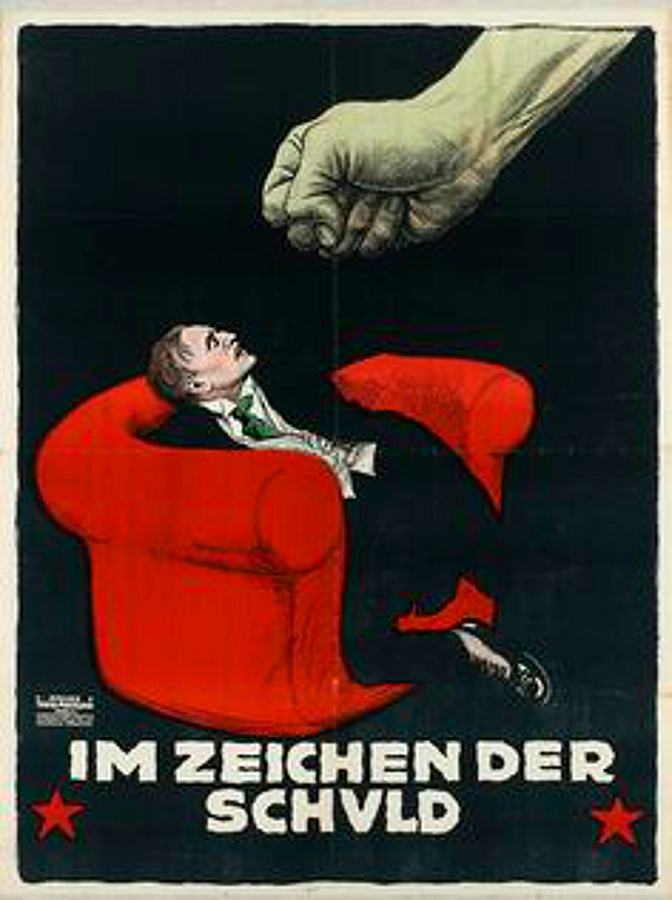
There are films that merely tell a story, and then there are those that etch themselves onto the very fabric of your being, whispering forgotten truths long after the final frame flickers into darkness. Arthur Teuber's 'Im Zeichen der Schuld', a profound cinematic artifact from the nascent years of German silent film, belongs unequivocally to the latter category. This is not merely a melodrama; it is a meticulously crafted psychological excavation into the crushing weight of a past transgression, a silent symphony of moral dilemma played out against the stark, often unforgiving canvas of post-war European society. The film’s power lies not just in its narrative tension, but in its profound exploration of human vulnerability and the relentless pursuit of an often-elusive redemption. It challenges the viewer to ponder the true cost of secrecy and the societal structures that both create and condemn guilt.
From its opening moments, the film establishes an atmosphere heavy with portent, a sense of an impending reckoning that hangs like an unseen fog over the characters. We are introduced to Helene, brought to life with an arresting blend of innocence and profound sorrow by the incandescent Helga Molander. Molander, a luminary of the era, delivers a performance that transcends the limitations of silent cinema, conveying a vast spectrum of emotion through subtle gestures, expressive eyes, and a palpable aura of inner turmoil. Her Helene is not simply a victim; she is a woman of quiet fortitude, whose past act, born of desperation rather than malice, has branded her soul with an invisible, yet crushing, burden. Her portrayal is a masterclass in the art of suggestion, allowing the audience to intuit the depths of her suffering without the need for verbose intertitles. This nuanced approach to character development is one of the film's most enduring strengths, setting it apart from more conventional melodramas of the period.
The narrative, deftly penned by Arthur Teuber, unravels with a deliberate, almost agonizing pace, slowly revealing the layers of Helene's predicament. Her seemingly tranquil life as a governess is a carefully constructed edifice, designed to shield her from the prying eyes of a judgmental world. Yet, as the title ominously suggests, the 'sign of guilt' cannot be truly erased. It manifests in the form of Herr von Kessel, portrayed with an oily menace by Guido Herzfeld. Herzfeld’s Kessel is not a cartoonish villain; he is a chillingly realistic opportunist, a man who thrives on the vulnerabilities of others, turning their past mistakes into instruments of his own gain. His presence injects a visceral sense of dread into every scene he inhabits, his silent threats more potent than any spoken word. The tension between Molander's fragile Helene and Herzfeld's predatory Kessel forms the pulsating heart of the film, a relentless cat-and-mouse game where the stakes are nothing less than Helene's future and her very soul.
The supporting ensemble cast further enriches this intricate tapestry of human drama. Rudolf Essek, as the earnest Dr. Werner, represents the promise of a future untainted by Helene's past, his genuine affection serving as both a beacon of hope and a cruel reminder of what she stands to lose. His performance exudes a gentle sincerity, making his character a sympathetic figure whose eventual disillusionment would be all the more tragic. Other notable performances include Aenderly Lebius and Emil Rameau, whose contributions, though perhaps smaller in screen time, add crucial texture to the societal backdrop against which Helene's struggles unfold. The film excels at populating its world with individuals who, in their own ways, reflect the moral ambiguities and social stratification of the period. Kurt Halden and Leontine Kühnberg, alongside Martin Lübbert, Clementine Plessner, Bruno Decarli, and Alfred Dennert, each contribute to the film’s rich character mosaic, creating a believable world where secrets fester and reputations are fragile. Their collective presence helps to build the societal pressure cooker that Helene finds herself trapped within, highlighting the judgmental gaze of the community.
Visually, 'Im Zeichen der Schuld' employs a cinematographic style characteristic of early German cinema, albeit with a nascent hint of the expressionistic tendencies that would soon define the era. The use of light and shadow is particularly effective, often mirroring Helene’s internal state. Dimly lit interiors and stark contrasts underscore her isolation and the lurking danger, while brief moments of natural light hint at fleeting hope. The set designs, though perhaps modest by later standards, are meticulously detailed, grounding the narrative in a tangible reality that makes Helene's plight all the more resonant. The filmmakers understand the power of visual storytelling, using every element on screen to convey meaning and emotion without the crutch of dialogue. This visual eloquence draws parallels with films like The Case of Becky, which similarly relied on visual cues and powerful performances to delve into complex psychological states.
Thematically, the film delves into profound questions of morality, justice, and the societal construction of guilt. Is Helene's youthful act, committed out of desperation to save her dying mother, truly a crime worthy of perpetual condemnation? Or is the true villain the blackmailer, Kessel, who exploits human weakness for personal gain? Teuber's screenplay masterfully navigates these moral ambiguities, refusing to offer simplistic answers. The film forces the audience to confront their own preconceptions about right and wrong, challenging the black-and-white morality often presented in popular cinema. This nuanced approach to ethical quandaries elevates 'Im Zeichen der Schuld' beyond mere entertainment, transforming it into a thought-provoking meditation on the human condition. Its thematic depth can be compared to the moral complexities explored in films such as The Christian, which also grappled with themes of sin, repentance, and societal judgment.
The film's exploration of societal pressures is particularly striking. In an era where reputation was paramount, a single misstep could irrevocably tarnish an individual's standing. Helene's desperate attempts to maintain her façade speak volumes about the unforgiving nature of society, a theme echoed in films like A Woman's Fight, which often depicted protagonists battling against restrictive social norms. The fear of exposure, the constant anxiety of her secret being unveiled, forms a suffocating psychological prison for Helene. This internal struggle is externalized through Kessel's relentless pursuit, making him less of a singular antagonist and more of a personification of the societal judgment that Helene dreads. The film masterfully illustrates how the weight of perceived guilt can be just as destructive as the guilt itself, leading individuals down paths of further deception and despair.
While 'Im Zeichen der Schuld' may not possess the overt fantastical elements of some of its more famous expressionist contemporaries, it certainly shares their fascination with the darker recesses of the human psyche. The film creates a palpable sense of unease, a feeling that something is perpetually amiss, much like the unsettling atmosphere in films such as The Crimson Stain Mystery. The tension is built not through jump scares or overt violence, but through the slow, insidious erosion of Helene's peace of mind. Every close-up of Molander's anguished face, every lingering shot on a meaningful object, serves to amplify the psychological torment she endures. The narrative’s careful construction ensures that the audience is fully invested in Helene’s fate, feeling every pang of her anxiety and every flicker of her hope.
The film's climax is a breathtaking exercise in silent dramatic intensity. As Helene is pushed to her breaking point, the threads of her past and present converge in a confrontation that is both cathartic and profoundly tragic. The resolution, while offering a semblance of closure, is far from simplistic, leaving the audience to ponder the true meaning of forgiveness and the possibility of genuine absolution. It avoids the saccharine endings often characteristic of the era, opting instead for a more complex and emotionally resonant conclusion. This refusal to tie everything up neatly is a testament to Teuber's vision and the filmmakers' commitment to a more realistic portrayal of human struggle. The film's ending resonates with the complex moral quandaries found in A Man's Man, where characters often face difficult choices with far-reaching consequences.
In terms of its place within cinematic history, 'Im Zeichen der Schuld' stands as a compelling example of early German narrative filmmaking. It showcases the emerging sophistication of storytelling techniques, the power of ensemble acting, and the profound impact that a well-crafted screenplay could have even without the aid of spoken dialogue. It's a testament to the fact that compelling human drama transcends technological limitations. While perhaps not as widely known as some of the grander spectacles of its time, its artistic merit and emotional resonance are undeniable. Its thematic resonance regarding the inescapable nature of past actions and the struggle for personal freedom can be compared to the oppressive forces depicted in Tyrannenherrschaft, though on a much more intimate, psychological scale.
The performances, particularly that of Helga Molander, are the film’s undeniable anchor. Her ability to convey such profound inner conflict with minimal externalization is a masterclass in silent screen acting. She embodies the universal struggle against one's own past, making Helene's plight deeply relatable. The subtle interplay between her character and Guido Herzfeld's menacing presence creates a dynamic tension that propels the narrative forward with relentless force. Their scenes together are particularly potent, fraught with unspoken threats and desperate pleas. The film’s power lies in its ability to make the audience feel the weight of Helene's secret, to empathize with her impossible situation, and to hope for her eventual liberation. It is this profound emotional connection that cements 'Im Zeichen der Schuld' as a truly memorable cinematic experience.
Ultimately, 'Im Zeichen der Schuld' is more than just a historical curiosity; it is a timeless exploration of guilt, redemption, and the enduring human spirit. It reminds us that the past, no matter how deeply buried, often finds a way to resurface, and that true freedom lies not in concealing our mistakes, but in confronting them with courage and integrity. For enthusiasts of silent cinema, or indeed anyone with an appreciation for profound storytelling, this film offers a rich and rewarding experience. Its sophisticated narrative, compelling performances, and evocative visual style make it a hidden gem deserving of renewed attention and critical appreciation. It stands proudly alongside other intricate silent narratives like The Cloven Tongue and A Bit of Kindling, showcasing the era's capacity for complex character studies. The film does not shy away from the darker aspects of human nature, but it also offers a glimmer of hope, a suggestion that even under the heaviest burden of guilt, the potential for grace and understanding remains. Its legacy is a testament to the power of silent film to convey intricate psychological dramas with unparalleled emotional depth and artistic vision.

IMDb 6.3
1935
Community
Log in to comment.