DbcultAccessing Vault...
Cult Review
Senior Film Conservator
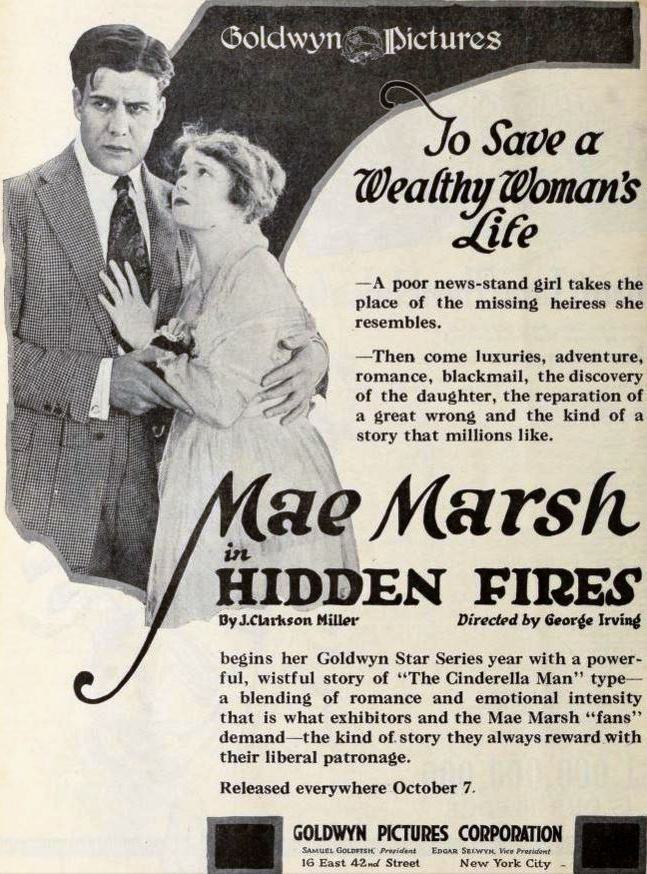
The year 1918 remains a crucible of cinematic experimentation, a time when the grammar of film was still being etched into the celluloid by pioneers who understood the visceral power of the close-up. In Hidden Fires, directed with a keen eye for social friction, we witness a narrative that transcends the simple 'lookalike' trope. It is a haunting meditation on the fragility of the human psyche and the performative nature of class. Mae Marsh, an actress of unparalleled emotional transparency, delivers a dual performance that anchors the film's more melodramatic tendencies, providing a bridge between the theatricality of the past and the burgeoning naturalism of the 1920s.
The narrative engine of Hidden Fires is greased by the oil of desperation. When Mrs. Treadway Parke, played with a brittle intensity by Florida Kingsley, faces the existential dread of losing her daughter to the Atlantic, the film pivots from a romance into a psychological thriller of sorts. Dr. Granville’s decision to replace the lost daughter with a newsstand girl is not merely a plot device; it is a profound commentary on the fungibility of the individual. If a girl from the streets can inhabit the boudoir of the elite without detection, what then remains of the inherent 'nobility' of the upper class? This theme echoes the social subversions found in The Countess Charming, where the mask becomes the person.
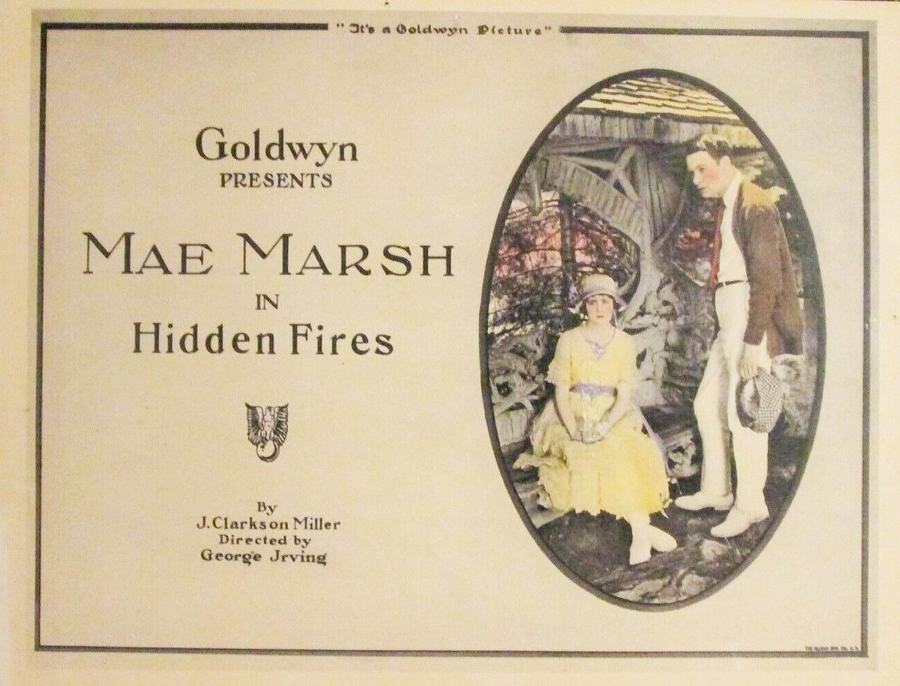
Peggy Murray is not just a replacement; she is a tabula rasa upon which the grief of a mother and the expectations of a suitor are projected. The cinematography utilizes soft lighting to blur the edges of Peggy’s rougher origins, effectively gaslighting the audience alongside the characters. The tension is palpable, not from the threat of violence, but from the threat of exposure. Every gesture Peggy makes—the way she holds a teacup, the tilt of her head—is a high-stakes gamble against the discovery of her true station. This nuanced portrayal of identity as performance is far more sophisticated than the contemporary spectacles like Cleopatra, which relied on grandiosity rather than psychological intimacy.
The wartime context of the film provides a grim backdrop that justifies the extreme measures taken by Dr. Granville. The specter of the torpedoed ship is a recurring motif in the cinema of this era, reflecting a collective anxiety about the suddenness of loss. Unlike the historical rigidity of The Independence of Romania, Hidden Fires uses the war as a personal tragedy rather than a political statement. It is the catalyst that allows for the 'hidden fires' of the title to ignite—the suppressed desires of a working-class girl to be loved for more than her labor, and the smoldering grief of a mother who cannot face reality.
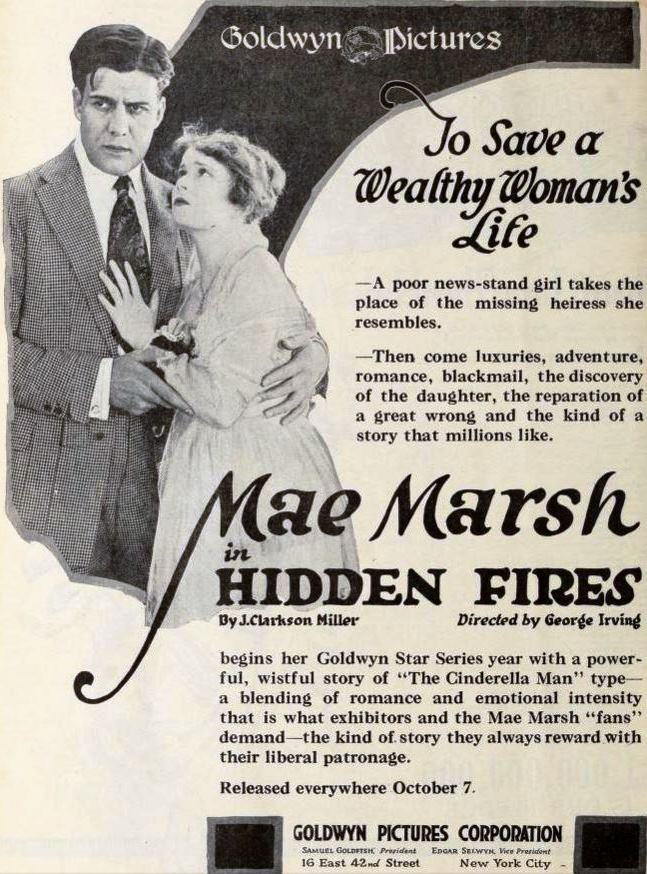
J. Clarkson Miller’s script avoids the easy path of villainizing the impostor. Peggy is portrayed with a profound empathy, making her eventual quiet withdrawal from the Parke household a moment of genuine pathos. When the real Louise returns, the film does not explode in a confrontation of anger; instead, it settles into a melancholic acceptance. The masquerade was a temporary balm, a necessary fiction that allowed life to continue. This delicacy of touch is reminiscent of the character depth in M'Liss, where the protagonist's internal world is as vital as the external plot.
The second act transition to the department store is a masterstroke of setting. Rod La Rocque’s George Landis finds Peggy not in a ballroom, but in the gears of the capitalist machine. The department store serves as a neutral ground where their love can be re-contextualized outside of the Parke family’s deception. It is here that the film sheds its darker, more manipulative skin and embraces a more traditional, yet no less compelling, romance. The chemistry between Marsh and La Rocque is undeniable, characterized by a series of lingering shots that capture the unspoken recognition between two souls who have seen through each other's disguises.
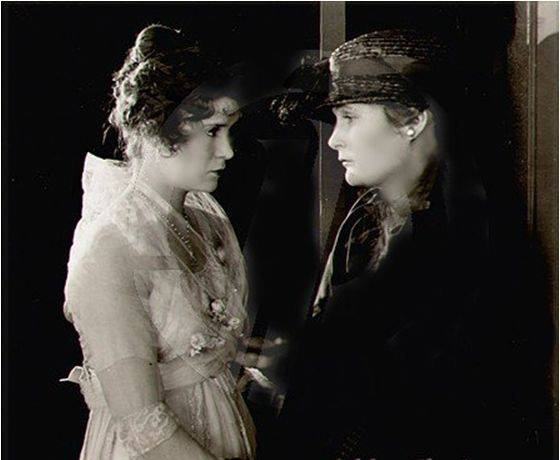
The thematic weight of the 'self-made' identity is explored through George’s proposal. He chooses Peggy not because she resembles Louise, but because of the inherent character she displayed during the masquerade and the dignity she maintains in her poverty. This elevates the film above the standard melodrama, aligning it with works like The Man Who Could Not Lose, where meritocracy and luck intertwine to dictate the protagonist's fate. The narrative suggests that while social standing can be faked, the 'hidden fires' of the heart are immutable.
The finale of Hidden Fires is a dizzying display of narrative symmetry. The cruise ship, once a symbol of death and separation, becomes a vessel of renewal and union. The encounter between the three couples—Peggy and George, Louise and Stephen, and Mrs. Parke and Dr. Granville—is a daring piece of writing that could easily have felt contrived. However, within the logic of the film’s universe, it feels like a cosmic balancing of the scales. The physician who orchestrated the lie finds his own truth with the woman he sought to protect, and the daughter who fled finds her way back to the fold on her own terms.
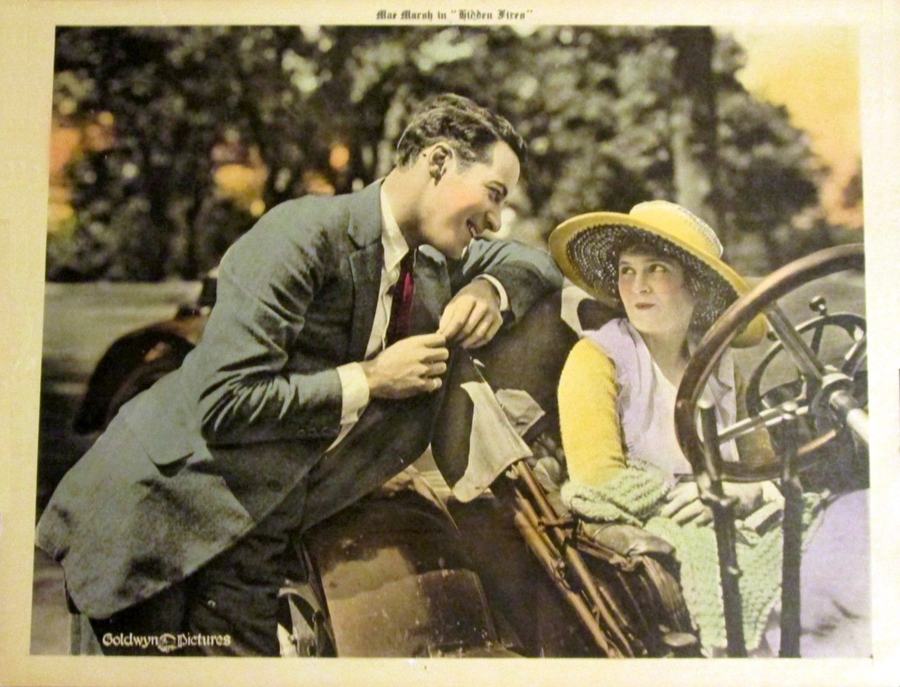
This resolution offers a fascinating contrast to the darker psychological explorations of The Suspect. Where that film lingers in the shadows of guilt, Hidden Fires chooses the light. It posits that deception, when born of a desire to heal, can lead to a greater truth. The film’s final images are ones of serenity, a stark departure from the turbulent waters of the opening act. It is a testament to the era's belief in the restorative power of love and the possibility of reinvention.
From a technical standpoint, the film excels in its use of iris shots and masking to focus the viewer’s attention on the minute emotional shifts in Mae Marsh’s face. The editing by the Goldwyn Pictures team ensures that the parallel storylines of the two women never feel disjointed, maintaining a rhythmic heartbeat throughout the ninety-minute runtime. The set design of the Parke estate, with its oppressive luxury, contrasts sharply with the airy, bustling energy of the department store, visually articulating the film’s class-based thesis.
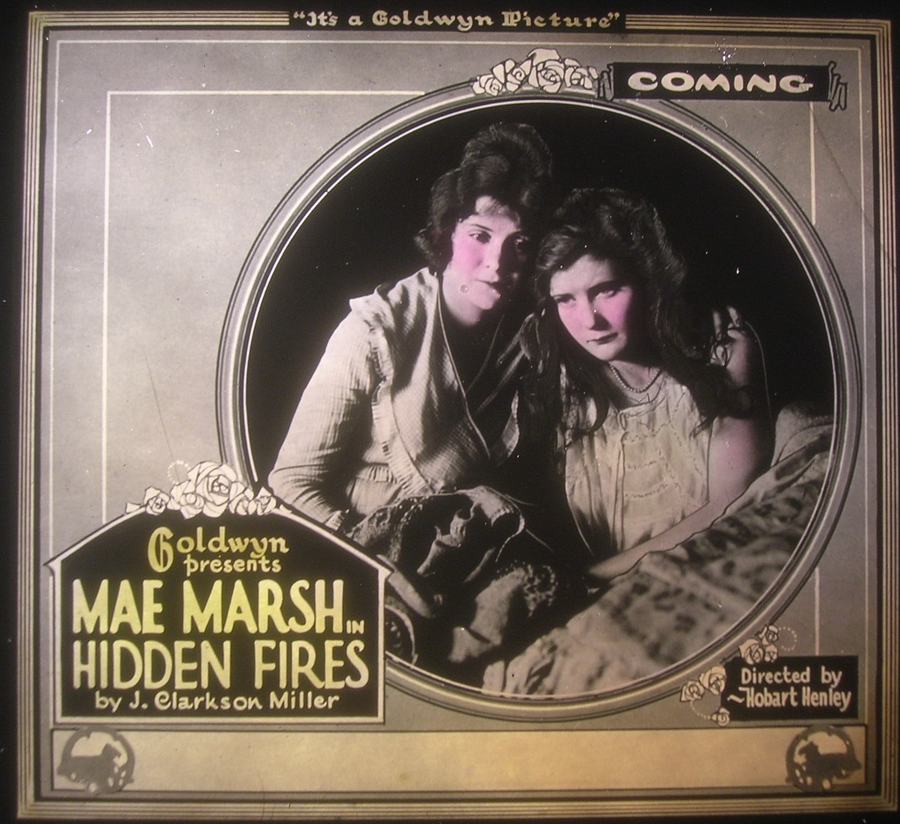
While many silent films of 1918 have faded into the mists of history, Hidden Fires deserves a place in the pantheon for its sophisticated handling of identity. It avoids the heavy-handed moralizing found in The Weakness of Man, opting instead for a nuanced exploration of human fallibility. The performances of Alec B. Francis and Jere Austin provide a solid framework for Marsh’s pyrotechnics, creating a cohesive ensemble that breathes life into J. Clarkson Miller’s intricate plotting. In the end, the film is a reminder that the fires we hide are often the very things that light our way home.
The legacy of Hidden Fires can be seen in later 'double' narratives, but few possess its specific blend of wartime anxiety and romantic optimism. It is a film that understands the masks we wear—not just to deceive others, but to protect ourselves. Whether it is the newsstand girl pretending to be an heiress or a doctor pretending to be a savior, the film suggests that our roles do not define us; our capacity for empathy does. As the three couples sail into their respective futures, the audience is left with a sense of profound satisfaction, having witnessed a story that is as much about the resilience of the human spirit as it is about the coincidences of the heart.
IMDb 6
1931
Community
Log in to comment.