DbcultAccessing Vault...
6.5/10
Senior Film Conservator
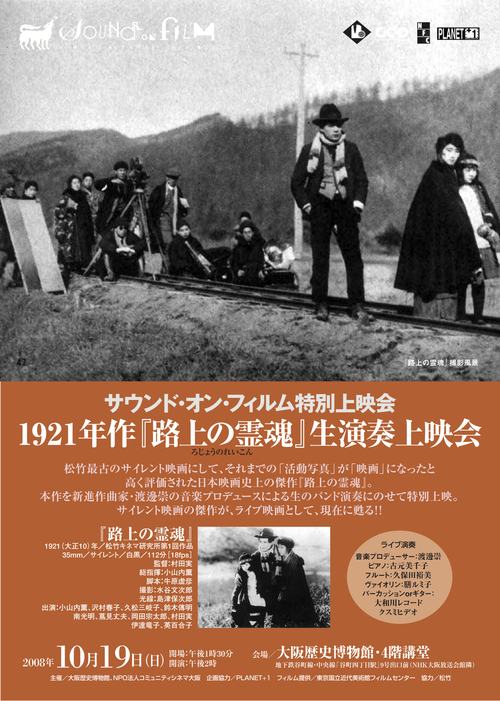
A definitive 6.5/10 rating for a film that redefined the boundaries of cult cinema. Souls on the Road remains a cornerstone of transgressive art.
Minoru Murata’s 1921 opus, Souls on the Road (Rojō no Reiku), stands as a definitive demarcation point in the evolution of Japanese cinema. Before this watershed moment, the medium was largely a captive of the stage, shackled by the stylistic conventions of Kabuki and the declamatory presence of the benshi. Murata, alongside writer Kiyohiko Ushihara, sought to dismantle this theatrical hegemony. They envisioned a cinema that breathed through its own unique grammar—a language of images, rhythm, and montage rather than mere documentation of performance. In doing so, they birthed the Jun'eiga (Pure Film) movement, a radical departure that prioritized visual storytelling over the artifice of the 19th-century stage.
The film’s narrative structure is remarkably sophisticated for its era, utilizing a dual-narrative framework that was far more complex than the linear moralities found in contemporary Western productions like The Gates of Eden. While Hollywood was often preoccupied with sentimental domesticity, Murata delved into the psychological subterranean, weaving together the disparate lives of an aspiring violinist and two escaped prisoners. This contrapuntal arrangement allows the film to explore the breadth of the human condition—from the ethereal heights of artistic ambition to the mud-caked desperation of the marginalized.
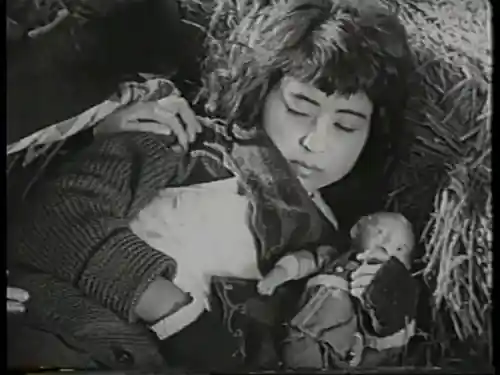
The brilliance of Souls on the Road lies in its refusal to offer easy consolations. The young boy’s journey with his fiddle is not a simple rags-to-riches allegory; it is a meditation on the isolation of the artist. His music, intended to bridge the gap between his soul and the world, often highlights the vast, silent spaces between people. In contrast, the escaped convicts represent the 'lower depths' of society—a direct nod to Maxim Gorky. Their flight through the woods is captured with a gritty verisimilitude that mirrors the expressionistic tension found in Der Weg des Todes, though Murata imbues his landscapes with a specifically Japanese sense of mono no aware—the pathos of things.
The cross-cutting technique employed by Murata was nothing short of revolutionary in 1921. By oscillating between the boy’s pastoral world and the convicts' rugged survivalism, the film creates a rhythmic tension that builds toward an inevitable, haunting intersection. This wasn't merely a technical exercise; it was a philosophical statement. It suggested that the 'souls' of the title were all traveling the same metaphorical road, regardless of their social standing or moral history. The film challenges the viewer to find the common thread of humanity in the criminal and the prodigy alike, a theme that resonates with the social consciousness seen in Poor Relations.
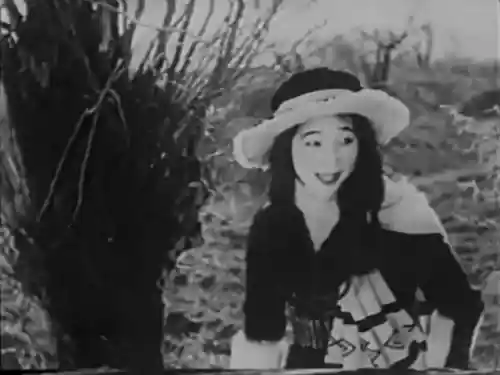
Visually, the film is a masterclass in chiaroscuro and atmospheric depth. The cinematography by Bunjiro Momota (and the uncredited contributions of the cast) utilizes natural light to create a sense of tangible reality. The forest scenes are particularly striking; the dappled sunlight filtering through the canopy acts as a visual metaphor for the fleeting moments of hope available to the fugitives. Unlike the static framing of The Royal Pauper, Murata’s camera is dynamic, moving with a purpose that underscores the physical and emotional exhaustion of his characters.
The performances, too, signaled a shift away from the exaggerated gestures of the Shinpa style. Shigeru Tsutamura and Kumahiko Mohara deliver grounded, nuanced portrayals that rely on internal emotional states rather than histrionics. This restraint allows the audience to project their own anxieties and aspirations onto the characters, creating a more intimate and immersive experience. The absence of onnagata (male actors playing female roles) further solidified the film’s commitment to realism, a move that was controversial at the time but essential for the maturation of the medium.
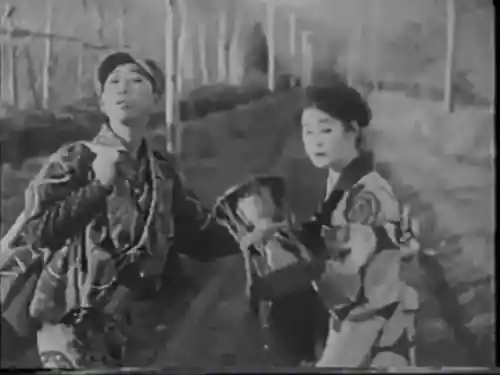
The shadow of Maxim Gorky looms large over this production. The writers, including the legendary Kaoru Osanai, were deeply invested in bringing the sensibilities of European naturalism to the Japanese screen. This wasn't just about aesthetic preference; it was a political act. By focusing on the disenfranchised—the convicts, the struggling artist, the rural poor—the film forced the audience to confront the inequities of the Taisho era. It lacks the sanitized optimism of Kennedy Square, opting instead for a stark, often uncomfortable gaze at the mechanisms of social exclusion.
The 'road' in the title serves as a liminal space where the traditional hierarchies of Japanese society begin to dissolve. On the road, the fugitive and the musician are both wanderers, both subject to the whims of nature and the cruelty of man. This existential leveling is a recurring motif in global cinema, yet Murata gives it a uniquely somber texture. The film’s pacing is deliberate, allowing the weight of the characters' circumstances to settle upon the viewer like a thick autumnal mist. It shares a certain thematic DNA with The Man from Bitter Roots, particularly in its exploration of how the past haunts the present.
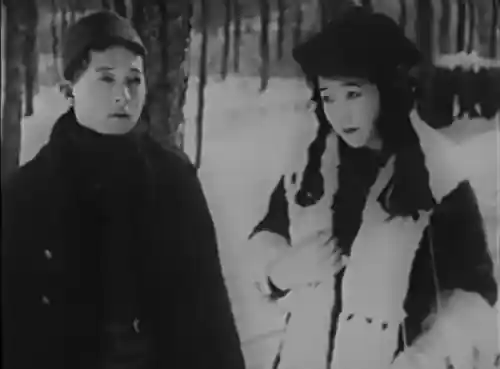
To watch Souls on the Road today is to witness the birth of the modern Japanese filmic vocabulary. One can see the precursors to the works of Kenji Mizoguchi and Yasujirō Ozu in Murata’s sensitive handling of space and his empathy for the downtrodden. The film’s influence extends beyond Japan, echoing the silent-era experimentation found in Der Meisterschuß or the atmospheric dread of At Bay. It is a work that demands patience but rewards the viewer with a profound sense of catharsis.
The film also navigates the complex waters of morality with a sophistication that belies its age. It does not condemn the convicts for their escape, nor does it lionize the boy for his ambition. Instead, it presents their struggles as inevitable consequences of a rigid societal structure. This moral ambiguity is far more compelling than the black-and-white ethics of Tainted Money or the sentimentalism of God's Crucible. Murata understands that in the real world, redemption is often messy and incomplete.
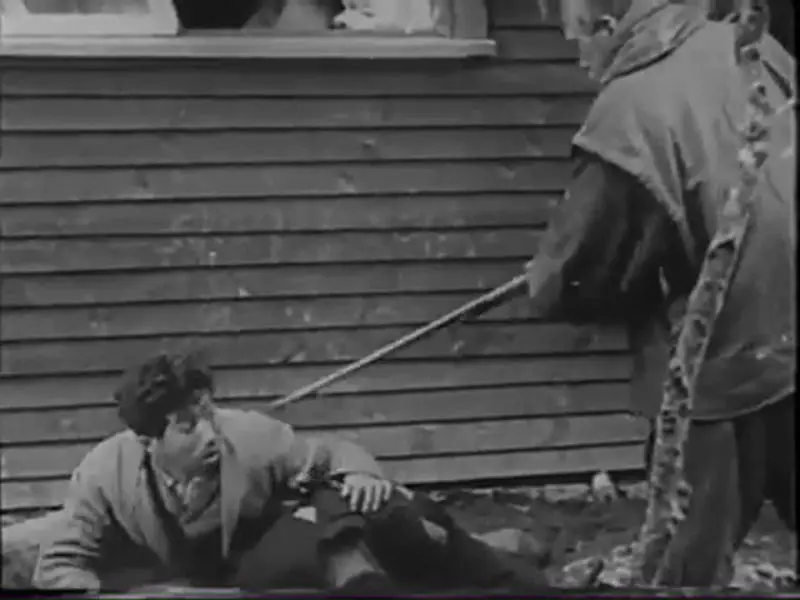
The editing of Souls on the Road is perhaps its most enduring legacy. The way Murata cuts between the violin bow moving across the strings and the convicts' feet moving through the brush creates a sensory experience that transcends the limitations of silent film. The rhythm of the edit becomes the film’s soundtrack, a silent symphony that resonates with the viewer’s own heartbeat. This level of technical sophistication was rare in 1921 and remains impressive even by modern standards. It lacks the erratic energy of Three Hours Late, preferring a more controlled, architectural approach to its narrative construction.
Furthermore, the film’s use of deep focus and layered compositions allows for multiple narrative beats to occur within a single frame. This technique, which would later be perfected by directors like Orson Welles, is used here to emphasize the interconnectedness of the characters and their environment. Whether it is the boy practicing in a dimly lit room or the prisoners huddling for warmth in a cavern, every frame is meticulously composed to maximize emotional impact. It avoids the flat, stage-like compositions seen in Marriage or the simplistic visual cues of My Wife, the Movie Star.
Ultimately, Souls on the Road is a film about the search for home—not as a physical location, but as a state of spiritual equilibrium. For the boy, home is the elusive perfection of a melody; for the convicts, it is a place where they are no longer hunted. The tragedy of the film is that this home remains perpetually out of reach, shimmering on the horizon like a mirage. It is a hauntingly beautiful vision that captures the melancholy of the human journey with more honesty than almost any other film of its period.
The collaborative effort of the cast—including Yuriko Hanabusa, Kômei Minami, and the director himself in a dual role—creates a rich tapestry of human experience. They bring to life a world that feels lived-in and authentic, a far cry from the stylized fantasies of Mikor a szölö érik. Murata’s masterpiece remains a vital piece of cinematic history, a reminder that the power of film lies not in its ability to replicate reality, but in its capacity to illuminate the hidden corners of the human soul. It is a journey well worth taking, even a century after it was first captured on celluloid. Its resonance with the themes of The One Woman regarding sacrifice and the social order only reinforces its status as a foundational pillar of world cinema.
In the silence of the film, we hear the loudest truths about our own existence. The road goes on, the fiddle continues its mournful song, and the souls continue their eternal trek toward a light they may never reach. Minoru Murata didn't just make a movie; he captured the very essence of the human struggle, turning the 'road' into a universal symbol of our shared, fragile destiny.

IMDb —
1927
Community
Log in to comment.