DbcultAccessing Vault...
Cult Review
Senior Film Conservator

The silent era of cinema frequently grappled with the gargantuan themes of theological erosion and the reclamation of the soul, yet few films approach these motifs with the jagged, unwashed intensity found in A Woman's Faith (1925). This is not merely a melodrama of the North; it is a cinematic hagiography of the disillusioned. Directed with an eye for both the monumental and the minute, the film serves as a visceral exploration of what happens when the moral compass of a man is not just broken, but intentionally discarded in the face of betrayal.
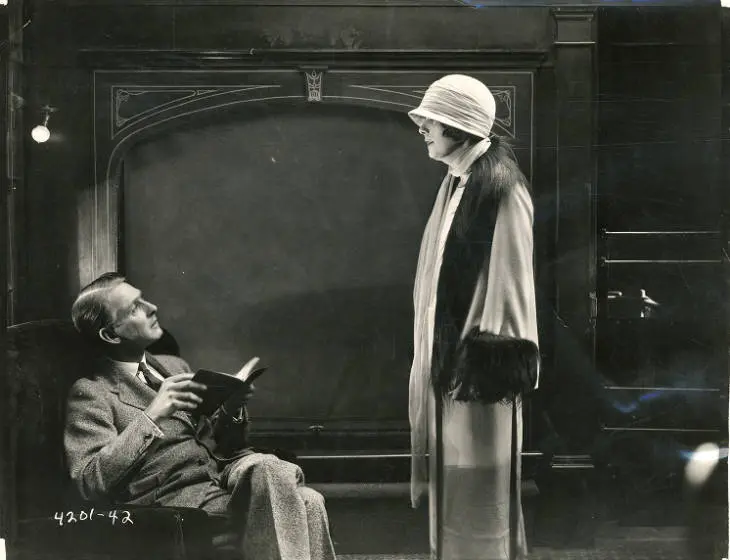
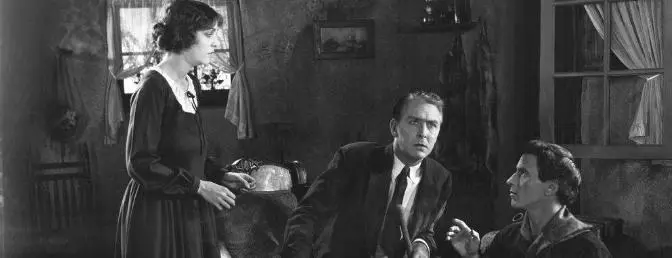
Percy Marmont delivers a performance of remarkable psychological density as Donovan Steele. In the opening sequences, we see a man brimming with a quintessential, perhaps even naive, optimism. His return to Quebec is framed as a homecoming to both his love and his Creator. However, the revelation of his fiancée’s infidelity acts as a spiritual lobotomy. Marmont’s transition from a man of faith to 'the man who denies God' is handled with a brooding, sardonic grace that avoids the histrionics common to the period. He retreats to the wilderness, not as a hermit seeking enlightenment, but as a fugitive from a universe he now deems indifferent or even hostile.
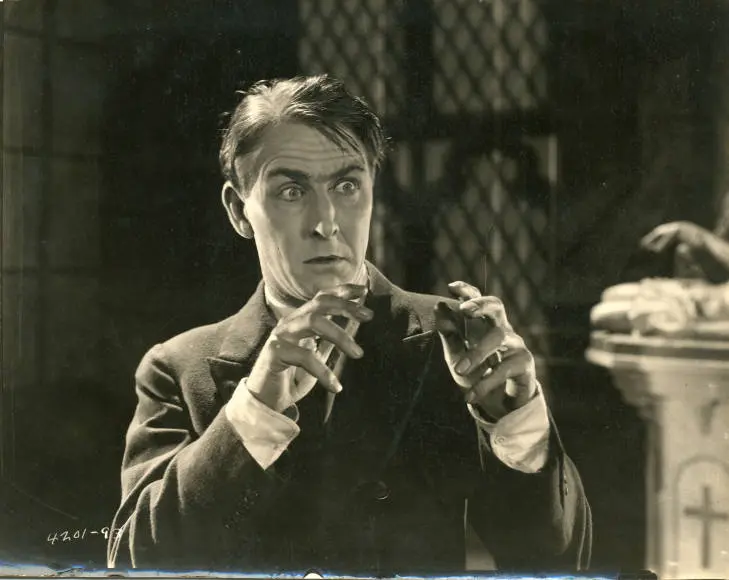
This rejection of the divine is contrasted sharply with the character of Nerée Caron, portrayed by the luminous Alma Rubens. If Steele represents the active rejection of God, Nerée embodies the passive, suffering endurance of the faithful. Falsely accused of her brother’s murder, she is a pariah, yet her internal light remains unextinguished. Rubens, who brought a similar ethereal vulnerability to films like The Unholy Three, provides the perfect foil for Marmont’s jagged edges. Their meeting in the wilderness is a collision of two different types of isolation: one chosen out of spite, the other forced by injustice.
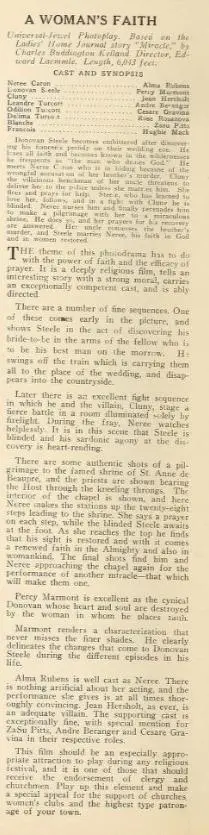
Every great spiritual epic requires a grounded antagonist, and Jean Hersholt’s Cluny is a masterclass in sinister pragmatism. Unlike the grand, operatic villains of contemporary spectacles, Cluny is a secretary—a man of ledgers and leverage. He represents the corruption that can exist even within the shadow of the church. His pursuit of Nerée is not driven by a desire for justice, but by a predatory need for control. Hersholt’s performance is chillingly precise, a precursor to the nuanced villainy he would perfect in later years. He acts as the catalyst that forces Steele out of his nihilistic stupor, proving that even a man who denies God cannot ignore the blatant cruelty of man.
The narrative architecture, crafted by writers Clarence Budington Kelland and Edward T. Lowe Jr., avoids the simplistic moral binaries of earlier silent films like Always in the Way. Instead, it constructs a world where faith is a precarious achievement, constantly threatened by the visceral realities of human malice. The pacing reflects this, moving from the claustrophobic tension of the small town to the expansive, almost terrifying silence of the Canadian woods.

The film’s climax at the shrine of St. Anne de Beaupré is a triumph of location shooting and thematic synthesis. The Sacred Stairway becomes a literal and metaphorical ascent. As Nerée climbs on her knees, the physical toll of her devotion is etched into Rubens’ face. It is a sequence that rivals the emotional gravity of The Italian in its depiction of the immigrant and the marginalized seeking solace in an unforgiving world. The cinematography captures the interplay of light and shadow within the chapel, suggesting a divine presence that Steele has spent years trying to ignore.
The resolution—the uncle’s confession—is not merely a convenient plot device but a manifestation of the film’s central thesis: that truth has a way of surfacing when the soul is pushed to its absolute limit. When Steele and Nerée are finally wed in the chapel, it doesn't feel like a standard Hollywood ending. It feels like a hard-won armistice between a man and his Creator, mediated by the unwavering strength of a woman’s conviction.
In the broader landscape of 1925 cinema, A Woman's Faith stands as a sophisticated outlier. While films like Black Oxen were exploring the artifice of youth and social standing, this film delved into the marrow of the human condition. It shares a certain DNA with the atmospheric dread found in Gefangene Seele, yet it remains distinctly North American in its rugged individualism and its focus on the redemptive power of the frontier.
The supporting cast, including the reliably brilliant Cesare Gravina and George Beranger, helps to populate this world with a sense of lived-in authenticity. Every character, from the smallest townsperson to the most central figure, feels burdened by their own histories. This is a film where the past is never truly past; it is a weight that must be carried until it is either transformed by grace or crushed by despair.
To watch A Woman's Faith today is to witness the power of silent cinema to communicate complex theological and psychological states without the crutch of dialogue. The visual storytelling is so potent that the intertitles often feel like mere echoes of what the actors have already conveyed through a flicker of the eye or a tightening of the jaw. It is a film that demands much from its audience—patience, empathy, and a willingness to confront the darkness of the human heart—but the rewards are profound.
Ultimately, the film asks a question that remains relevant: can faith survive the total destruction of one's personal world? Through the journey of Donovan Steele and Nerée Caron, the answer is a resounding, albeit battered, yes. It suggests that while God may be denied in the heat of anger, He is often found again in the shared silence of two people who have nothing left but each other. This is cinema as a spiritual exercise, a beautifully shot, expertly acted testament to the endurance of the human spirit. It is a forgotten gem that deserves a place alongside the more celebrated works of its era, offering a poignant reminder that even in the deepest wilderness, one is never truly alone.

IMDb 5.2
1928
Community
Log in to comment.