DbcultAccessing Vault...
3.9/10
Senior Film Conservator
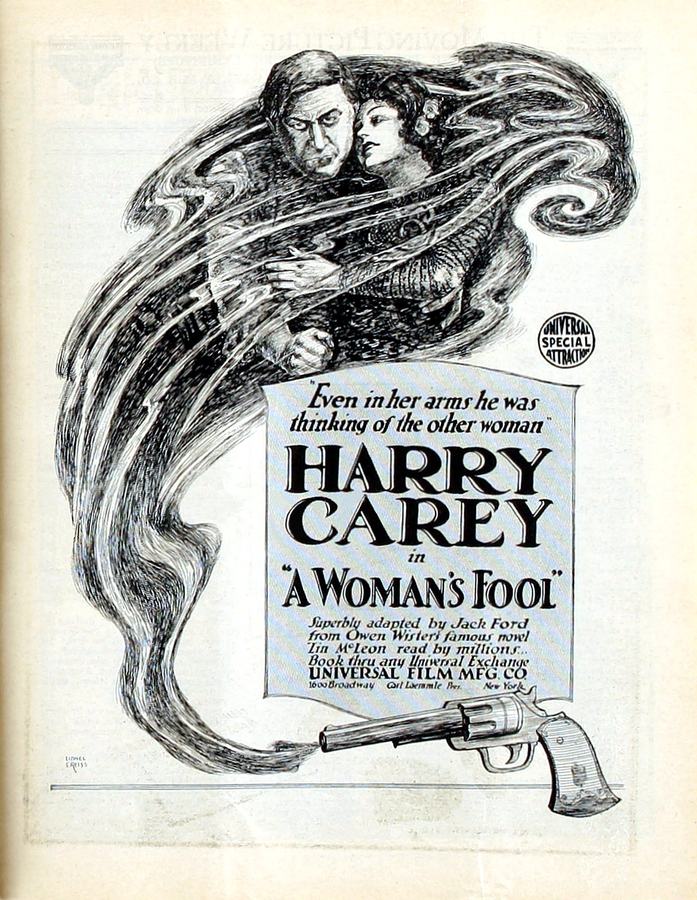
A definitive 3.9/10 rating for a film that redefined the boundaries of cult cinema. A Woman's Fool remains a cornerstone of transgressive art.
There's a certain ephemeral magic to silent cinema, a language spoken through gesture, expression, and the rhythmic cadence of intertitles that often transcends the limitations of spoken dialogue. In 1918's A Woman's Fool, we are presented with a narrative that, on its surface, appears deceptively simple: a cowboy's journey from the untamed wilderness to the civilizing influence of urban romance. Yet, beneath this veneer lies a profound exploration of human restlessness, the intoxicating power of nascent affection, and the seismic shifts occurring within the American psyche during a pivotal era. Directed with a keen eye for both expansive landscapes and intimate human drama, this film, based on Owen Wister's compelling narrative and adapted for the screen by George Hively, offers a fascinating glimpse into the nascent stages of cinematic storytelling.
At its core, A Woman's Fool orbits the magnetic presence of Lin McLean, portrayed with a captivating blend of rugged stoicism and underlying vulnerability by the inimitable Harry Carey. Carey, a stalwart of early Westerns, brings an authenticity to the character that few actors of his generation could muster. His Lin McLean is not merely a caricature of the cowboy archetype; he is a man burdened by an internal wanderlust, a spirit perpetually yearning for something beyond the horizon. This isn't the romanticized, uncomplicated freedom often depicted in Westerns; rather, it's a profound, almost melancholic yearning that hints at a deeper dissatisfaction. One can draw parallels to the existential angst found in later, more introspective Westerns, but Carey imbues Lin with a raw, unarticulated longing that is entirely his own. His performance here solidifies his reputation as a master of nuanced, non-verbal communication, a skill absolutely essential for the silent screen.
Lin's journey from the desolate plains to the bustling streets of Denver marks a significant thematic pivot. This geographical transition is not just a change of scenery; it represents a profound shift in his personal landscape. The city, with its cacophony of sounds (implied, of course, through visual cues and the viewer's imagination) and its dense concentration of humanity, stands in stark contrast to the solitary existence he has known. It's a world where the rules are different, where the wild, untamed spirit of the West must contend with the rigid structures of urban society. This tension is palpable throughout the film, as Lin navigates this unfamiliar terrain, his cowboy sensibilities often clashing with city norms. It's a classic fish-out-of-water scenario, yet rendered with a delicate touch that avoids broad caricature.
It is within this urban crucible that Lin encounters Katie, the waitress who becomes the unexpected epicenter of his newfound world. Molly Malone, as Katie, delivers a performance that is understated yet powerfully resonant. She embodies a quiet strength, a gentle resilience that is utterly captivating to Lin. Katie is not a damsel in distress, nor is she a femme fatale; she is an ordinary woman leading an ordinary life, yet through Lin's eyes, and through Malone's portrayal, she becomes extraordinary. Her appeal lies in her normalcy, her groundedness, which offers a stark contrast to Lin's rootless existence. The chemistry between Carey and Malone, while subtle, is undeniably present, conveying a sense of genuine connection that blossoms organically on screen. Their interactions are a masterclass in silent film romance, relying on lingering glances, hesitant gestures, and the unspoken language of burgeoning affection.
While Carey and Malone anchor the film, the supporting cast provides a rich tapestry of characters that add depth and texture to the narrative. Millard K. Wilson, Vester Pegg, Ed Jones, William A. Carroll, Roy Clark, Betty Schade, and Sam De Grasse each contribute to the film's immersive atmosphere, creating a believable world around Lin and Katie. These actors, though perhaps less celebrated than Carey, were vital cogs in the silent film machine, often playing myriad roles across countless productions. Their ability to convey character and emotion without dialogue, relying solely on physical presence and facial expression, is a testament to the unique demands and artistry of the era. One can see echoes of similar ensemble dynamics in other films of the period, where the collective performance elevates the central narrative, much like the intricate character work in a film such as Intolerance, though on a far more intimate scale. Even a smaller role, such as those played by Ed Jones or Roy Clark, can subtly shift the emotional landscape of a scene, providing necessary friction or camaraderie.
The writing by Owen Wister and George Hively is particularly noteworthy for its ability to distill complex emotional arcs into a streamlined, visually driven narrative. Wister, a pioneer of Western fiction, brings an inherent understanding of the genre's landscape and its archetypes, while Hively's adaptation ensures that the story translates effectively to the screen. The intertitles, rather than simply narrating events, often serve to enhance character insight or provide poetic commentary, a hallmark of well-crafted silent film screenplays. They are not merely functional but contribute to the film's overall aesthetic and emotional resonance. This careful balance between visual storytelling and textual augmentation is crucial in a medium that relies so heavily on suggestion and implication.
The cinematography, though perhaps rudimentary by today's standards, effectively captures both the vastness of the Western landscape and the intimacy of urban interiors. The framing often emphasizes Lin's solitary figure against sweeping vistas, visually reinforcing his initial isolation, before transitioning to tighter shots that highlight the growing connection between him and Katie. The use of natural light and practical sets further grounds the film in a tangible reality, lending an air of authenticity to the proceedings. The director understands the power of the frame to tell a story, to convey emotion, and to establish mood, a skill evident in many silent-era masters, from Griffith's epic visions in Life of Christ to the more intimate character studies of other contemporary dramas like My Old Dutch.
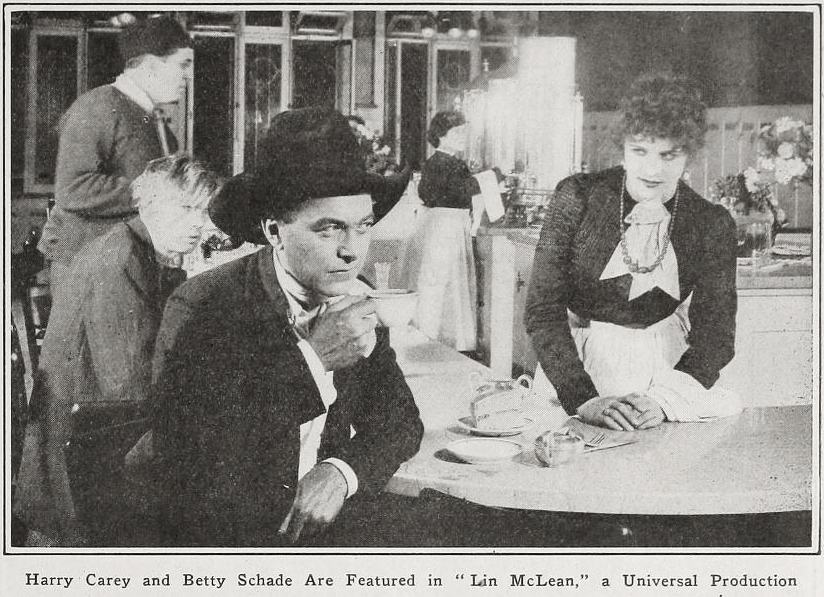
Thematically, A Woman's Fool delves into universal human experiences: the search for belonging, the transformative power of love, and the inevitable clash between freedom and commitment. Lin's restlessness is not just a plot device; it's a profound character trait that he must confront and ultimately reconcile. Katie represents the possibility of a settled life, a haven from his perpetual wandering. The film subtly explores whether such a man, forged in the crucible of the open range, can ever truly find peace within the confines of domesticity. This internal conflict is what elevates the film beyond a simple romance or a straightforward Western. It’s a psychological drama cloaked in the familiar trappings of the genre, much like the internal struggles depicted in The Dupe, though with a distinct Western flavor.
Released in 1918, A Woman's Fool emerged during a period of immense change, both globally and within the nascent film industry. World War I was raging, and societal norms were in flux. Cinema was rapidly evolving, moving beyond mere curiosities to embrace more complex narratives and character development. This film stands as a testament to that evolution, demonstrating a growing sophistication in storytelling and emotional depth. It's a valuable historical document, offering insight into the types of stories that resonated with audiences of the time, and how those stories were told without the aid of synchronous sound.
Comparing it to other films of the era, one can appreciate its unique blend of genres. While it shares the Western setting with films like A Knight of the Range, its focus on the internal journey and the transformative power of a romantic encounter gives it a different flavor, leaning more towards a romantic drama within a Western backdrop. It avoids the overt melodrama sometimes found in films such as Forbidden Paths, opting instead for a more grounded, character-driven approach. The depiction of a woman's influence over a man, as suggested by the title, is also a fascinating aspect, reflecting contemporary ideas about gender roles and the perceived 'civilizing' power of women, a theme explored in various ways in films like The Woman God Forgot, though with different cultural contexts.
The film's pacing, while deliberate, allows for moments of quiet introspection and emotional weight to fully land. This measured rhythm, characteristic of many silent films, invites the audience to engage more actively with the visual narrative, to fill in the gaps with their own imagination and interpretation. It's a different kind of immersion than modern cinema provides, one that demands a certain patience and attentiveness, but rewards it with a rich, evocative experience. The subtle shifts in mood, the unspoken tensions, and the tender moments of connection are all expertly orchestrated, making the most of the medium's inherent strengths.
Indeed, the film serves as an excellent case study in the art of silent storytelling. Every gesture, every prop, every change in lighting or camera angle had to convey meaning. The actors, particularly Harry Carey, were masters of this craft, using their bodies and faces as finely tuned instruments of expression. Their performances are often larger than life, yet simultaneously deeply human, allowing audiences to connect with their emotional journeys without the aid of dialogue. This unique form of performance, which can sometimes feel alien to modern viewers, is precisely what gives silent films their enduring appeal and artistic merit.
The film’s title, A Woman's Fool, itself invites contemplation. Is Lin a 'fool' for succumbing to love, for abandoning his solitary existence? Or is the 'foolishness' a testament to the irresistible, transformative power of genuine affection, a force that can compel even the most hardened individual to re-evaluate their entire life? The film doesn't offer simplistic answers, but rather allows the viewer to ponder these questions alongside Lin. It's this ambiguity, this invitation to delve into the complexities of human motivation, that elevates the film beyond mere entertainment. This kind of nuanced character exploration, though often subtle in silent films, is a thread that runs through many compelling narratives, from the grand spectacles to the more intimate human dramas. The impact of a woman on a man's destiny is a theme as old as storytelling itself, and A Woman's Fool renders it with a particular grace and conviction.
In conclusion, A Woman's Fool is far more than a historical curiosity; it is a compelling piece of silent cinema that resonates with timeless themes and features powerhouse performances, especially from Harry Carey. It’s a film that speaks to the enduring human desire for connection, the struggle between freedom and commitment, and the profound impact one individual can have on another's destiny. For enthusiasts of early Westerns, silent film aficionados, or anyone interested in the evolution of cinematic storytelling, this picture offers a rich and rewarding viewing experience. Its quiet artistry and emotional depth ensure its place as a significant, if often overlooked, contribution to the canon of American cinema. It reminds us that even without spoken words, the screen can convey the deepest human truths with remarkable clarity and poignant beauty.
IMDb —
1921
Community
Log in to comment.