DbcultAccessing Vault...
Cult Review
Senior Film Conservator
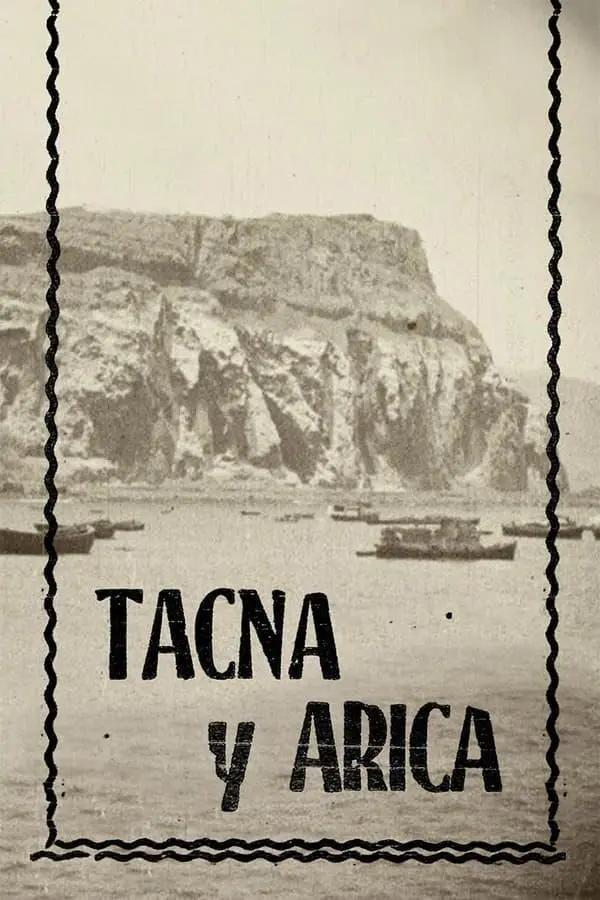
Is Tacna y Arica worth your time in the modern era? Short answer: yes, but only if you approach it as a historical artifact rather than a piece of entertainment.
This film is for historians, students of early South American cinema, and those fascinated by how governments weaponize the camera. It is absolutely NOT for anyone looking for a traditional narrative, character arcs, or the escapism found in films like The Dream Cheater.
1) This film works because it provides an unfiltered (yet biased) look at a region at a pivotal moment of transition, using high-contrast photography to make a political claim.
2) This film fails because it lacks a cohesive emotional core, often feeling like a dry slideshow of state-sponsored achievements.
3) You should watch it if you want to see how Renée Oro pioneered the documentary format in South America long before it was a recognized genre.
Renée Oro was a woman operating in a space that didn't exist for her. In the 1920s, while the world was distracted by the glitz of The Gilded Youth, Oro was trekking through the Atacama desert. She wasn't interested in the melodrama of The Eternal Magdalene. She was interested in power.
Her direction in Tacna y Arica is remarkably disciplined. She avoids the flowery, excessive intertitles common in films like Evangeline. Instead, she lets the camera linger on the infrastructure. When she films the port of Arica, she isn't just showing a harbor; she is showing a gateway to the world that Chile intended to keep. It is a cold, calculated style of filmmaking.
One specific scene involving the Morro de Arica stands out. The camera tilts upward, emphasizing the height and the military dominance of the cliffside. It’s a simple shot, but it communicates more about national pride than a thousand pages of text. Oro understood that the camera creates its own reality. She was a master of the 'truthful lie.'
The cinematography in Tacna y Arica is a battle against the elements. Filming in the high-contrast environment of Northern Chile is a nightmare for silent-era film stock. Yet, Oro manages to capture a range of textures that give the film a tactile quality.
The shadows are deep and unforgiving. The highlights on the white-washed buildings of Tacna are nearly blown out, creating a dreamlike, almost ethereal atmosphere. It’s a stark contrast to the controlled studio lighting seen in A Small Town Idol. Here, the sun is the primary light source, and it is brutal. This naturalism adds a layer of authenticity to the propaganda.
The pacing is, admittedly, glacial. There are long sequences of military parades that would test the patience of any modern viewer. If you are used to the frantic energy of Henpecked and Pecked Hens, you will find this agonizing. But there is a rhythm to the boredom. It forces you to look at the faces of the people in the background—the true subjects who are often ignored by the intertitles.
Does Tacna y Arica hold up as a movie? No. It holds up as a ghost. It is a visual record of a dispute that shaped a continent. To watch it is to witness the birth of a national identity through the lens of a woman who refused to be sidelined.
If you enjoy the historical weight of If the Huns Came to Melbourne, you will find parallels here. Both films use the medium to instill a sense of urgency and belonging. However, Oro’s work is more sophisticated. She doesn't need a villain; she only needs a landscape.
The film is dry. It is occasionally repetitive. But it is essential. It represents a rare moment where South American cinema wasn't trying to copy Hollywood or Europe. It was trying to speak for itself, even if the voice was that of the state.
Pros:
- Rare footage of 1920s Northern Chile and Southern Peru.
- A unique example of early female-directed documentary work.
- High historical value regarding South American border disputes.
Cons:
- Extremely slow pacing.
- Overtly nationalistic and biased perspective.
- Lack of a narrative 'hook' for general audiences.
Here is the truth: Tacna y Arica is more interesting to talk about than it is to actually watch. The most fascinating part isn't what is on the screen, but what Oro leaves out. You see the gleaming new schools, but you don't see the indigenous displacement. You see the orderly soldiers, but you don't see the tension in the streets. It is a film about what the director wants you to believe, not what was actually there. In that sense, it is the most honest film of its era.
Compared to something like Das Eskimobaby, which relies on cultural stereotypes for humor, Tacna y Arica uses cultural erasure for politics. It’s a different kind of manipulation, and frankly, a more dangerous one.
Tacna y Arica is a difficult sit. It lacks the charm of My Dog, Pal or the sweeping drama of Sans famille. It is a work of stone and dust. But it is also a testament to the power of the image. Renée Oro was a pioneer who understood that to control the camera is to control history. It works. But it’s flawed. It is a necessary piece of the puzzle for anyone trying to understand the evolution of the South American gaze. Watch it with a history book in your lap.
IMDb —
1919
Community
Log in to comment.