DbcultAccessing Vault...
Cult Review
Senior Film Conservator
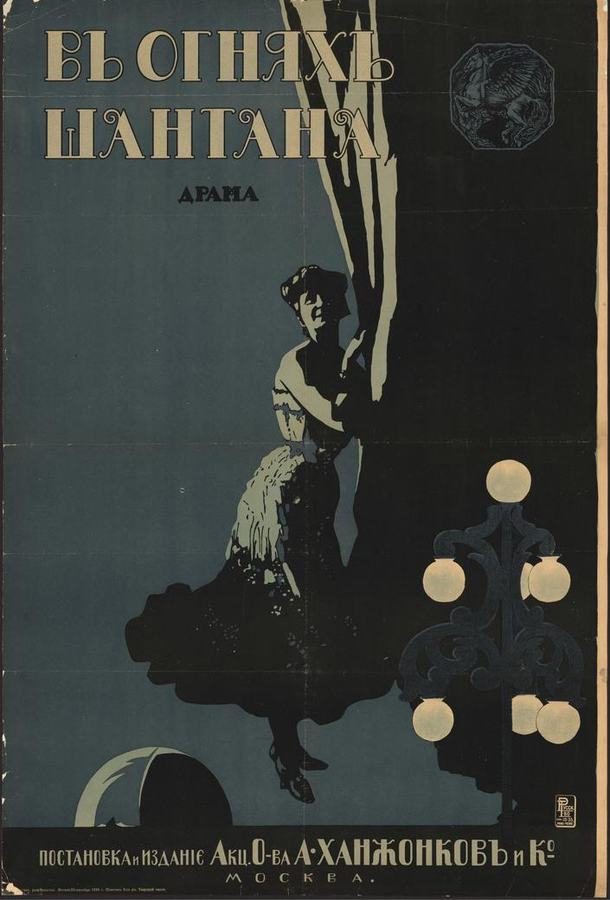
There are films that merely tell a story, and then there are those that excavate the very soul of an era, laying bare its anxieties, its moral quandaries, and its hidden scars. 'V ognyakh shantazha' is undeniably one of the latter. This isn't just a cinematic experience; it's a visceral journey into the psychological crucible of early Soviet society, where the past was a weapon and integrity often a luxury. From its opening frames, the film grips you with an almost suffocating intensity, a testament to writer V. Yazvitsky’s profound understanding of human frailty under systemic pressure. This is a narrative that refuses easy answers, instead plunging its audience into the murky waters of compromise and consequence.
The film's central figure, Professor Viktor Volkov, portrayed with a masterful blend of intellectual gravitas and tormented vulnerability by M. Smelyakov, is a character etched in the mind long after the credits roll. Volkov is not presented as a villain, but as a man caught in a web of his own making, a past transgression resurrected by an unseen, malevolent force. The genius of Yazvitsky’s script lies in making this transgression not an act of malice, but one born of desperate love – a financial impropriety committed to save his sister. This immediately complicates our judgment, forcing us to grapple with the agonizing choices one might make when faced with an impossible dilemma. Smelyakov embodies this internal conflict with an astonishing depth, his eyes a window to a soul slowly being devoured by fear and guilt. His performance elevates the film from a mere drama to a profound character study, reminiscent of the morally compromised figures in Leah Kleschna, where societal expectations and personal integrity are in constant, brutal conflict.
The antagonist, 'The Collector' – a title that evokes both a chilling detachment and a predatory precision – remains largely off-screen, a spectral presence whose influence is felt in every tightening knot of Volkov’s predicament. This choice by the filmmakers to keep the blackmailer anonymous enhances the pervasive sense of dread, making the threat feel omnipresent and inescapable. The machinations of The Collector are not merely about personal gain; they are about control, about demonstrating the fragility of reputation and the ease with which even the most respected individuals can be bent to illicit wills. The unfolding of the blackmail scheme, from the subtle hints and veiled threats to the explicit demands, is meticulously paced, building an almost unbearable tension. One cannot help but draw parallels to the intricate web of deceit and hidden agendas that permeate films like The Sex Lure, though 'V ognyakh shantazha' exchanges the melodrama for a stark, unflinching realism that is far more unsettling.
The film's visual language, while perhaps constrained by the technological limitations of its era, is remarkably effective in conveying its thematic weight. The use of stark contrasts, the oppressive shadows that cling to Volkov’s study, and the sterile, unforgiving light of official spaces all contribute to an atmosphere of psychological entrapment. One can almost feel the walls closing in on Volkov as he makes increasingly agonizing decisions. The direction, though uncredited in the provided details, deftly navigates the emotional landscape of the narrative, ensuring that every glance, every hesitant word, carries significant weight. It’s a masterclass in building tension through implication rather than overt spectacle.
The supporting cast, too, delivers performances that are both nuanced and powerful. Gavriil Terekhov, as the initially idealistic but increasingly disillusioned security agent Comrade Rykov, provides a crucial counterpoint to Volkov’s despair. Terekhov’s portrayal of a man grappling with the moral ambiguities of his own system is particularly compelling. His journey from zealous enforcer to reluctant investigator, driven by a burgeoning sense of justice, adds another layer of complexity to the narrative. D. Dmitriev, T. Borman, and E. Bozhevskaya, though their specific roles are not detailed, contribute significantly to the film’s rich tapestry of characters, each embodying different facets of a society in flux – from the unyielding ideologue to the innocent bystander caught in the crossfire. The portrayal of Anya, the young, idealistic student who inadvertently uncovers the truth, is particularly poignant, representing the fragile hope for integrity in a world seemingly devoid of it. Her naive courage, juxtaposed with Volkov's weary cynicism, creates a powerful dramatic tension.
Thematically, 'V ognyakh shantazha' is incredibly rich. It explores the insidious nature of power, not just in its overt forms, but in the subtle ways it can corrupt and coerce. It delves into the concept of reputation – how easily it can be built and how devastatingly quickly it can be dismantled. The film’s unflinching gaze at the mechanisms of power and the vulnerability of the individual within a rigid system offers a perspective distinct from, yet thematically resonant with, the social critiques found in The Social Buccaneer, swapping swashbuckling adventure for psychological warfare. It asks profound questions about the price of survival, the burden of secrets, and whether redemption is truly possible once one has crossed certain moral lines. The relentless pressure on the protagonist recalls the moral quandaries faced in films like The Straight Way, where societal expectations clash with personal integrity in a struggle for moral survival.
One of the film's most striking achievements is its ability to transcend its specific historical context and speak to universal human experiences. While set against the backdrop of early Soviet Russia, the themes of blackmail, moral compromise, and the erosion of personal freedom are timeless. It’s a potent reminder that the tools of coercion can manifest in any society, under any ideology. The film’s exploration of hidden secrets and their corrosive effect on the human psyche finds echoes in the intricate web of deceit woven in The Green Swamp, though with a distinct Soviet realism that grounds the psychological horror in a tangible, socio-political landscape.
The narrative’s climax, a desperate attempt by Anya and Rykov to expose The Collector, is fraught with tension and a sense of impending doom. It’s a testament to the film’s nuanced writing that even in this pursuit of justice, there are no guarantees of a clean victory. The ending, without giving anything away, is profoundly impactful, leaving the audience with a lingering sense of unease and a deep appreciation for the fragility of truth in a world where shadows hold sway. The moral ambiguity of the characters, caught between self-preservation and justice, mirrors the complex ethical landscapes explored in The Scarlet Road, where every choice carries a heavy burden and the path to redemption is often obscured by the very system one inhabits.
Even the seemingly minor details contribute to the film's immersive quality. The dialogue, credited to V. Yazvitsky, is sharp and purposeful, each line carefully crafted to reveal character or advance the plot. There's an economy of language that speaks volumes, avoiding unnecessary exposition in favor of subtle implications and charged silences. This meticulous approach to scripting ensures that the audience is constantly engaged, piecing together the puzzle alongside the characters. The psychological depth achieved through this understated yet powerful dialogue is truly remarkable, allowing the audience to feel the weight of every difficult decision and every whispered threat.
In an era where many films relied on overt melodrama, 'V ognyakh shantazha' stands out for its sophisticated psychological realism. It doesn't shy away from depicting the ugliness of human nature, but it also champions the flicker of hope found in those who dare to resist, however futile their efforts may seem. The film serves as a powerful cautionary tale, not just about the dangers of blackmail, but about the insidious ways in which fear can dismantle personal integrity and societal trust. The stark portrayal of desperation and the lengths to which individuals will go to protect their reputation brings to mind the grim realities depicted in From the Valley of the Missing, albeit with a focus on psychological rather than physical entrapment, highlighting the universal struggle against forces that seek to control and destroy. Its profound exploration of the human condition under duress ensures its lasting relevance.
For fans of intense character dramas and historical thrillers, 'V ognyakh shantazha' is an essential viewing. It’s a film that demands your attention, rewards your patience, and leaves an indelible mark on your consciousness. It reminds us that the greatest battles are often fought not on grand stages, but within the confines of the human heart and mind, against the unseen forces that seek to exploit our vulnerabilities. This cinematic gem, though perhaps less widely known than some of its contemporaries, deserves to be rediscovered and celebrated for its artistic merit, its intellectual rigor, and its enduring message about the cost of freedom and the resilience of the human spirit. It is a work that challenges, provokes, and ultimately, illuminates the darker corners of our shared human experience, much like the enduring power of Jealousy, which similarly delves into the destructive forces of human emotion and societal pressure. The film’s ability to weave such a complex narrative with such profound emotional impact makes it a truly compelling piece of cinema, a testament to the power of storytelling to reflect and critique the world around us.
The legacy of 'V ognyakh shantazha' lies not just in its compelling plot or exceptional performances, but in its audacious willingness to confront uncomfortable truths about power, morality, and individual agency within a rapidly changing world. It's a film that resonates deeply, urging us to consider the ethical compromises we might make and the true cost of silence. It stands as a powerful testament to the enduring human struggle for dignity and truth, even in the face of overwhelming odds. A true masterpiece of its time, its themes remain as relevant and impactful today as they were upon its initial release, cementing its place as a significant contribution to cinematic history.
IMDb 6.1
1930
Community
Log in to comment.