DbcultAccessing Vault...
Cult Review
Senior Film Conservator
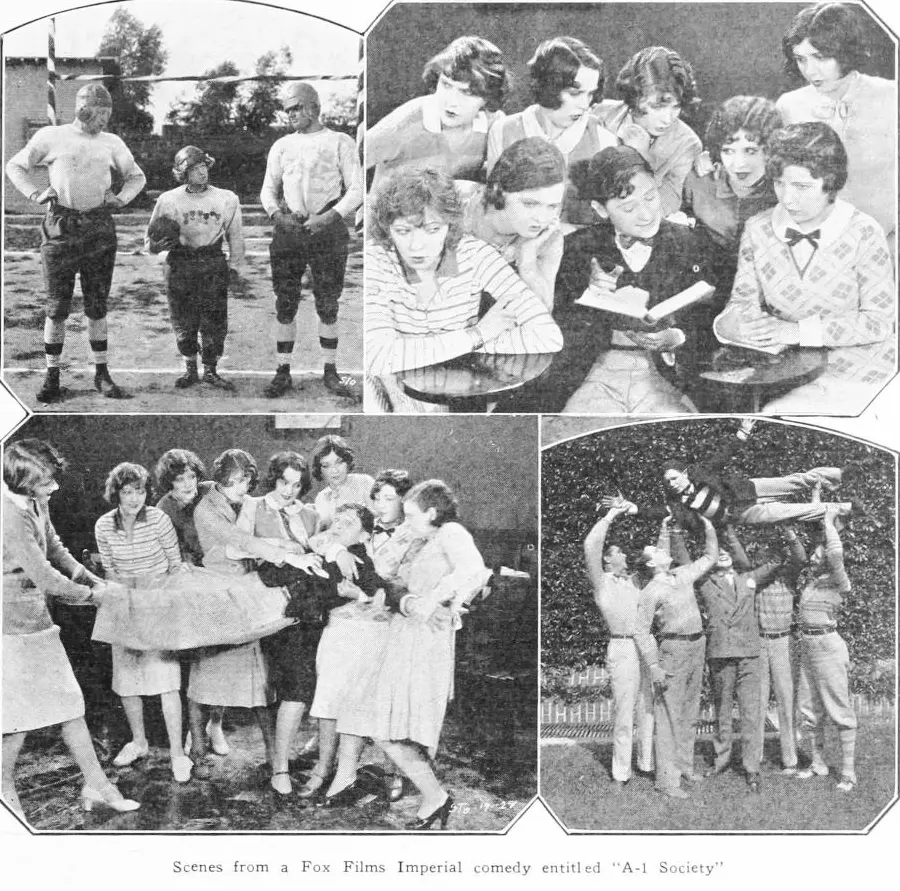
Is 'A1 Society' worth watching today? Short answer: yes, but with significant caveats that demand a particular kind of viewer. This largely forgotten silent-era collegiate comedy is a delightful curiosity for film historians and enthusiasts of early cinema, but it will likely test the patience of those accustomed to modern narrative pacing and sophisticated humor.
This film is undeniably for anyone with a deep appreciation for the silent era, who enjoys observing the foundational elements of cinematic storytelling and comedy as they were being forged. However, it is decidedly NOT for audiences seeking rapid-fire gags, complex character development, or high-stakes drama. If you need sound, a brisk plot, or a narrative that subverts expectations, look elsewhere.
This film works because of its earnest charm and the genuine, if simplistic, comedic timing of its lead, William Begg. Its unpretentious nature offers a quaint window into a bygone era of entertainment.
This film fails because of its narrative predictability and the broad, often unsophisticated humor that hasn't aged gracefully. The stakes feel low, even for a silent comedy.
You should watch it if you have a deep appreciation for silent film, enjoy exploring the roots of cinematic comedy, or are curious about early collegiate sports narratives and the social mores of the 1920s.
'A1 Society' unfurls the tale of Abie, an everyman character thrust into an extraordinary situation. His journey begins not with ambition or talent, but with pure, unadulterated happenstance. He finds himself at college, a fish out of water, and through a series of comedic missteps and fortunate accidents, lands a spot on the football team.
The narrative arc is classically simple: the underdog's rise. Abie's performance in the climactic game is a fascinating study in comedic duality. He is simultaneously a bumbling fool and an unwitting genius, his plays a haphazard blend of pure luck and accidental brilliance. This culminates in a victory that, while predictable, delivers the expected feel-good payoff, complete with the charming college belle's affection.
As a critic, I find this particular plot structure, though rudimentary, oddly compelling in its simplicity. It’s a foundational blueprint for countless underdog stories that would follow, making it historically significant even if narratively unoriginal. The film doesn't aim for complexity; it aims for a smile, and in its own quaint way, largely succeeds.
The 1920s saw a burgeoning fascination with collegiate life on screen, often portraying it as a world of youthful exuberance, athletic glory, and romantic pursuits. 'A1 Society' is a prime example of this genre, offering a stylized, albeit idealized, vision of college campuses.
The film captures a certain innocent energy, a period when the cinematic portrayal of youth culture was still finding its footing. It’s less about gritty realism and more about establishing a charming, aspirational fantasy. The campus itself, though likely a set or a carefully chosen location, feels like a character, embodying the spirit of the era.
Comparing it to more ambitious silent comedies of the time, such as those starring Harold Lloyd, 'A1 Society' feels less polished in its comedic set pieces but makes up for it in sheer earnestness. It's a snapshot, a time capsule of what audiences enjoyed in a simpler era of storytelling. It reflects a cultural moment where the 'college experience' was a novel and exciting subject for mass entertainment, a precursor to the teen movies of later decades.
Silent film acting is a unique art form, demanding a physicality and expressiveness that often appears exaggerated to modern eyes. In 'A1 Society,' the cast navigates this challenge with varying degrees of success, largely adhering to the conventions of the period.
William Begg as Abie is the undeniable heart of the film. His performance is a masterclass in silent-era comedic physicality. He contorts his body, widens his eyes, and uses every muscle to convey Abie's bewilderment, accidental triumphs, and earnest desire to fit in. A particularly memorable moment is during the football game, where his movements oscillate between genuine clumsiness and unexpected, almost balletic, athletic grace. It’s a performance that doesn’t rely on subtle nuances but rather on broad, understandable reactions that transcend the lack of dialogue.
Barbara Luddy, as the college belle, embodies the archetypal romantic interest. While undeniably a presence, her role is largely reactive and decorative, a common pitfall of the era that feels particularly egregious even for 1926. Her expressions of delight or concern are clear, but the character itself is given little depth beyond being the prize for the hero's triumph. This is a missed opportunity, as a stronger female lead could have elevated the film beyond its simplistic romantic subplot.
The supporting cast, including George Harris, Orfa Casanova, Ben Bard, and Billy Engle, fill their roles with the expected archetypes of the era: the stern coach, the rival, the friends. Their performances are competent, serving the plot's needs by providing reactions and furthering the comedic situations. There's a particular charm in observing the ensemble's synchronized reactions to Abie's antics, a testament to the directorial guidance in choreographing visual comedy.
It's crucial to remember that silent acting was about conveying emotion and intent without words. Begg, in particular, achieves this, making Abie instantly understandable and likable. His earnestness is palpable, and it’s this quality that makes the film's simple jokes land even a century later. Without his committed, albeit broad, performance, the film would lose much of its already limited appeal. He carries the comedic weight, and he does so admirably.
With three credited writers—Zion Myers, Sidney Lanfield, and J. Walter Ruben—one might expect a more complex narrative tapestry. Instead, 'A1 Society' maintains a straightforward, almost episodic flow, characteristic of many silent comedies. The direction, too, reflects the prevalent styles of the mid-1920s, favoring clear compositions and functional storytelling over stylistic flourishes.
The directors, likely working collaboratively or in distinct segments, prioritize clarity in visual storytelling. Gags are set up and paid off with minimal fuss. For example, Abie's accidental entry onto the team is handled with a series of simple, cause-and-effect shots that ensure the audience understands the comedic premise without needing intricate explanations.
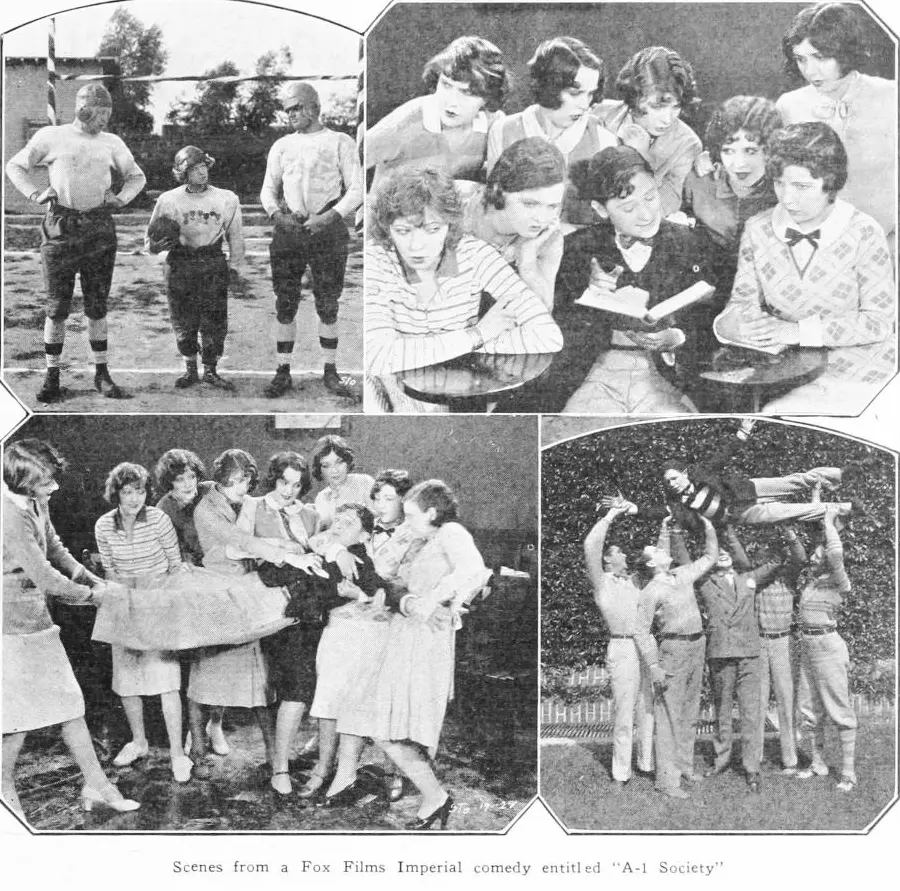
Pacing, as we’ll discuss, is deliberate. The comedic beats are allowed to breathe, sometimes to the point of feeling drawn out by modern standards. However, within the context of silent film, this often allowed audiences more time to absorb the visual information and react to the physical comedy. The football game sequence, in particular, demonstrates a commendable effort to build excitement through cross-cutting and close-ups, even if the action itself is somewhat rudimentary.
There's an undeniable simplicity to the filmmaking, which can be seen as both a strength and a weakness. It's a strength in its accessibility, making the narrative easy to follow. It's a weakness in that it rarely pushes cinematic boundaries. The directors weren't aiming for artistic innovation; they were aiming for mass entertainment, and for its time, it likely hit that mark effectively.
The cinematography of 'A1 Society' is largely functional, adhering to the visual grammar common in 1920s silent cinema. The camera is often static, establishing shots are clear, and close-ups are employed primarily to emphasize character reactions or crucial plot points. There's a distinct lack of the dynamic camera movement or experimental angles that some of the more avant-garde films of the era might have employed.
Lighting is straightforward, aiming for visibility and mood where necessary, but rarely drawing attention to itself as an artistic element. The outdoor scenes, particularly those on the football field, benefit from natural light, giving them an authentic, if somewhat flat, appearance. Indoor scenes are adequately lit to highlight the actors and their actions, but without the dramatic chiaroscuro effects seen in German Expressionist films or the intricate lighting designs of Hollywood's later golden age.
The visual gags, which form the backbone of the film's humor, are designed for maximum clarity. Abie's fumbles and accidental successes are presented in wide shots that allow the audience to take in the full scope of his comedic predicament. While not groundbreaking, the visual storytelling is effective in conveying the narrative without the need for intertitles at every turn, a sign of capable, if not revolutionary, filmmaking.
The pacing of 'A1 Society' is distinctly of its era. Silent films, without the benefit of spoken dialogue to propel the narrative, often relied on a more deliberate, almost languid, rhythm. Scenes are held longer, and comedic setups are given ample time to unfold. For modern audiences, this can feel undeniably slow.
There are moments where a contemporary viewer might wish for a quicker cut, a snappier transition, or a more accelerated comedic beat. However, understanding this as a convention of silent cinema is key to appreciating the film. The slower pace allowed for a different kind of engagement, where audiences could absorb the visual information, the exaggerated expressions, and the physical comedy at a more relaxed tempo.
The tone is consistently lighthearted and comedic. There's no real threat or deep emotional conflict; it's pure escapism. Even the football game, while presenting a clear goal, never feels genuinely tense. The humor is broad, leaning heavily on slapstick and situational irony, rather than witty dialogue or subtle character interactions. It’s a film designed to elicit chuckles, not uproarious laughter, and certainly not profound contemplation. It works. But it’s flawed.
Yes, 'A1 Society' is worth watching, but with a specific mindset. It offers a valuable historical perspective on early American comedy and collegiate film. For film students and silent cinema enthusiasts, it’s a charming, if minor, entry in the genre.
However, for general audiences accustomed to modern film, its dated humor and deliberate pacing may prove challenging. It’s best approached as an anthropological artifact of early cinema rather than a laugh-out-loud comedy for contemporary tastes. Manage your expectations, and you might find its quaint charm surprisingly endearing.
The enduring appeal of 'A1 Society' lies primarily in its historical significance rather than its standalone artistic merit. It's a stepping stone, a fascinating example of the kind of popular entertainment that filled cinemas a century ago. It demonstrates the nascent stages of comedic tropes that would later become staples of Hollywood storytelling.
For those who delight in tracing the lineage of cinematic genres, 'A1 Society' offers a clear, if unsophisticated, link to the college comedies and underdog sports narratives that continue to thrive today. It’s a testament to the timeless appeal of a simple hero overcoming odds, even if those odds feel decidedly low-stakes.
However, for audiences without a specific interest in film history, the film offers little that hasn't been done better and with more sophistication in subsequent decades. Its humor is largely predictable, its characters archetypal to a fault, and its visual ambition limited. It's a pleasant diversion, but not a film that demands rediscovery for its artistic innovation. It exists, it entertains simply, and then it fades.
'A1 Society' is a film that exists more as a historical curio than a compelling piece of modern entertainment. Its accidental hero, Abie, played with earnest charm by William Begg, carries what is otherwise a rather simplistic and predictable plot. While it provides a fascinating window into the collegiate comedies of the 1920s, its dated humor and deliberate pacing mean it struggles to resonate with contemporary audiences beyond a niche appreciation.
For silent film enthusiasts, it’s a pleasant, if unremarkable, watch. For everyone else, it’s unlikely to leave a lasting impression, serving more as a footnote in cinematic history than a forgotten gem. It’s a film that perfectly encapsulates its time, for better or worse. If you're looking for a truly groundbreaking silent comedy, perhaps re-examine The Knockout or other works from the era. 'A1 Society' is a charming diversion, but not a revelation.
IMDb 5.8
1935
Community
Log in to comment.