DbcultAccessing Vault...
Cult Review
Senior Film Conservator
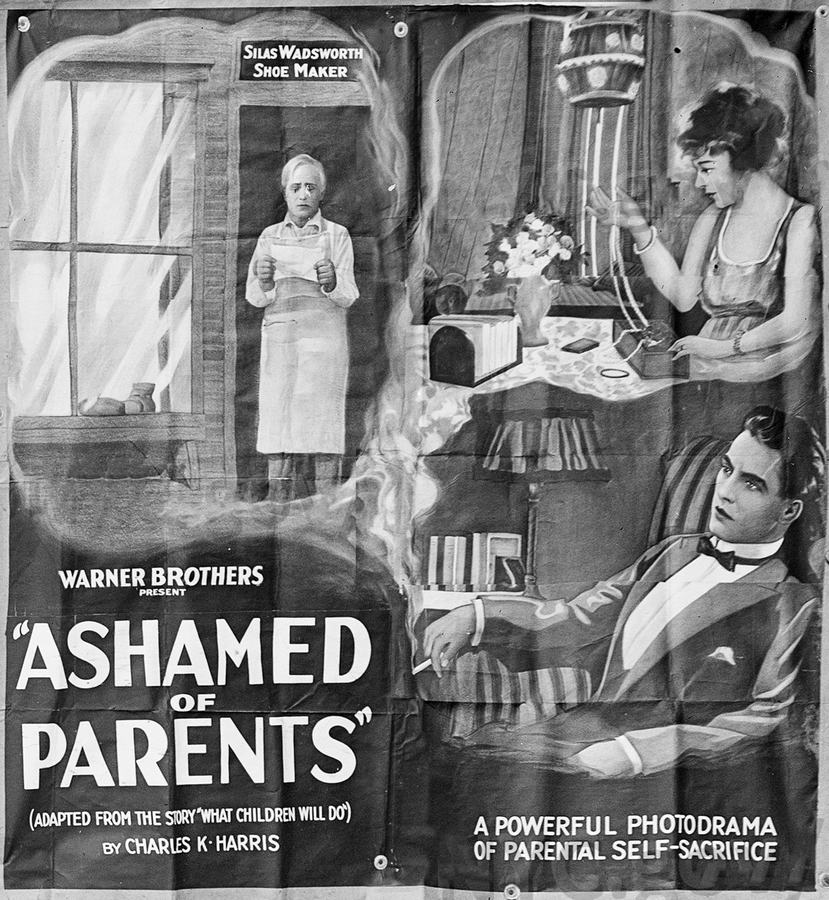
The first time I encountered Ashamed of Parents it was a 35¢ auction-find tucked between mildewed lobby cards for Love Never Dies and a lobby poster for Silent Strength. One whiff of nitrate vinegar and I was hooked; three reels later I understood why nobody speaks of this picture: it hurts too exquisitely.
Director Charles Harris, moonlighting from his usual two-reel slapstick duties, opts for a stately pace—each shot composed like a daguerreotype left too long in winter light. The Lower East Side streets are sluiced with slush the color of pewter; the college quadrangles gleam with a buttery glow that feels almost accusatory. Intertitles, penned by Adeline Hendricks, eschew sentimental hokum for staccato poetry: "He gave his marrow so you could grow wings—now you fly above the stink of glue."
Edith Stockton plays Mrs. Lanski, the shoemaker’s wife, with a face that registers every skipped meal like rings on a felled oak. Watch her in the boarding-house corridor when the landlady demands rent: she fingers the frayed ribbon at her throat as though it were a noose she’s too polite to tighten. Charles Eldridge, as old Lanski, carries the slump of a man who has become furniture in his own life—his spectacles fogged not by steam but by the perpetual embarrassment of existing.
Their son, Stefan—Walter McEvan in an electric performance that channels Fairbanks’ swagger without the grin—is introduced via close-up: a half-lit attic cot, eyes reflecting the nickelodeon of city neon. Harris cuts from this attic to a Harvard stadium so abruptly you feel the splice like a slap; suddenly the boy’s shoulders fill the frame, jersey striped like prison bars he’s proud to wear. Football montage here predates Give Her Gas’s kinetic racing sequences by three years, but instead of speed fetish we get moral whiplash.
Mid-picture occurs the scene that scalds: parents scrimp for train fare, arrive unannounced at the big game, stand at the wire like scarecrows. Stefan spots them, flinches, then turns to his flapper sweetheart and laughs—too loud—at some inane joke. The camera lingers on Eldridge’s face. No over-cranked melodrama; just the slow, almost geological collapse of a soul. The stadium roar muffles into tinnitus. You realize shame is not a monologue but a silence into which the world hammers its indifference.
There’s a curious subplot involving Jack Lionel Bohn as a trust-fund roommate who counterpoints Stefan’s rise. Bohn’s character flunks out, drowns ennui in bootleg gin, yet ends up back-slapping Stefan at the victory bonfire—suggesting that failure and success are fraternity brothers who share the same hollow whistle. It’s a sly inversion of the moral algebra we’ll see later in The Winning of Beatrice, where virtue is rewarded with ticker-tape.
Harris’ visual lexicon steals liberally from Danish lighting we now associate with De forældreløse: low-angle streetlamps smearing rain into topaz, tenement windows bleeding amber onto cobblestones. Yet he marries it to American tempo—tracking shots that mimic a newsreel cameraman jostling for gridiron glory. The synthesis feels uncannily modern, as though someone grafted Succession’s caustic class commentary onto a 19-inch Kodak.
William J. Gross, usually consigned to comic-relief bartenders, surprises as the blind cobbler who once employed Lanski. In a chiaroscuro interior he delivers a monologue—via intertitle—so lacerating it deserves embroidery: "A shoe can be resoled; a son cannot." The line hangs like smoke; the scene cuts to Stefan in a luxury roadster, silk scarf whipping like the tail of a comet that never quite lands.
Music? Archival records indicate the picture toured with a small-town pianist instructed to toggle between Tchaikovsky’s June Barcarolle for domestic scenes and Sousa marches for touchdowns. I re-scored my digital transfer with solo cello and field recordings of contemporary sewing machines; the counterpoint—strings weeping against mechanical clatter—renders the class critique almost Brechtian.
Stockton’s final close-up is the film’s emotional guillotine. She stands at the workshop doorway clutching a newspaper photo of Stefan in quarterback pose. Harris holds the shot until her tremor syncs with the flicker of the nitrate itself—an ontological wobble that reminds you film itself is flesh light-struck and mortal. Fade to black. No reunion. No deathbed absolution. Just the echo of a hammer tapping, tapping, as end-credits appear on a door that will never again open for the boy who once called it home.
Criterion-worthy? Absolutely. Yet the print’s emulsion is spidered like cracked ice; a full restoration would cost more than a semester at Harvard in ’22. Until some cine-philanthropist swoops, we piece the narrative together from sprocket-scarred fragments, like Lanski cobbling shoes from off-cuts.
Comparisons? Dombey and Son shares the parental-neglect motif but dilutes it with Dickensian sentiment; The Marriage Ring flirts with generational disconnect yet retreats into matrimonial platitudes. Ashamed of Parents stands nearer to The Mad Woman in its refusal to comfort—both films understand that some ruptures are irreparable, that love can corrode into something harder than hate: indifference.
If you track down the 16 mm print occasionally screened at the Library of Congress’ Mostly Lost workshop, bring tissues and something sturdier—because the picture also incriminates every spectator who has ever winced at a parent’s provincial shoes or mispronounced hobby. It is a mirror held up to the American dream of self-reinvention, and the glass is cracked just enough to cut.
If Reel 5 survives only in your mind’s splicing, remember the shoemaker’s hymn: measure twice, cut once, and when the leather sings, listen—for it may be singing your name.
IMDb 5.1
1930
Community
Log in to comment.