DbcultAccessing Vault...
Cult Review
Senior Film Conservator
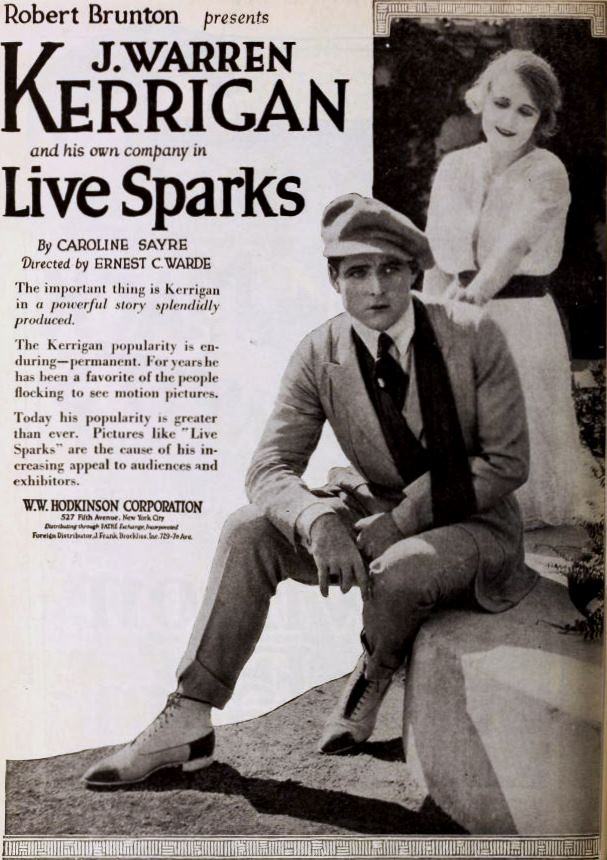
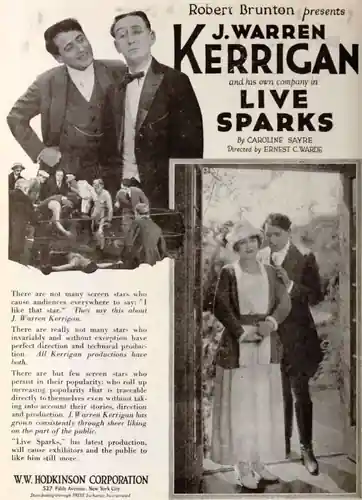
The year 1920 stood as a pivotal threshold in American cinema, a moment where the nascent language of film began to shed its stage-bound origins for something more visceral and expansive. Within this burgeoning landscape, Live Sparks emerges not merely as a relic of the silent era, but as a sophisticated commentary on the intersection of inherited wealth and the rugged demands of the industrial frontier. Directed by Ernest C. Warde and featuring the magnetic J. Warren Kerrigan, the film navigates the treacherous waters of the Texas oil boom with a narrative dexterity that remains surprisingly resonant a century later.
Neil Sparks, portrayed with a languid charm by Kerrigan, begins the film as the quintessential 'wastrel.' His life is a choreographed sequence of leisure, a stark contrast to the gritty mechanisms that fuel his fortune. This portrayal of the idle rich was a common trope of the era, seen in contemporary works like A Rich Man's Plaything, yet Kerrigan imbues the role with a specific brand of vulnerability. His neglect of the Sparks oil business isn't born of malice, but of a profound disconnection from the reality of labor. While he pursues the mercenary Bess Kinloch (played with sharp-edged cynicism by Fritzi Brunette), the foundations of his empire are being eroded by the machinations of Craig and Abbott.
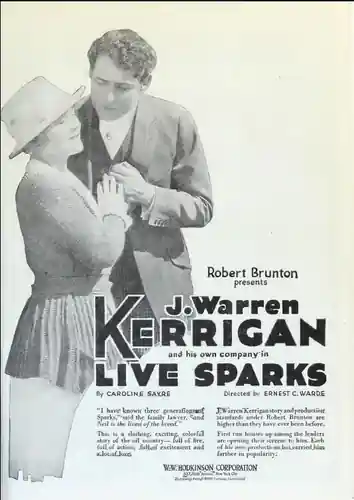
The antagonists, Craig and Abbott, represent the dark underbelly of the American Dream. They are the scavengers of industry, siphoning the lifeblood of the Sparks estate through an illegal pipeline—a plot device that serves as a potent metaphor for the invisible thefts inherent in unregulated capitalism. This theme of industrial espionage provides a gritty counterpoint to the high-society drama, grounding the film in the material realities of the 1920s oil rush. The viewer is invited to witness the slow-motion collapse of an empire, orchestrated by men who understand the value of a barrel of oil far better than the man who owns the well.
The narrative pivot occurs when Neil receives word that his wells are running dry. It is here that the film sheds its drawing-room affectations and adopts the rugged visual language of the West. Neil’s decision to investigate under an assumed name is a classic literary device, reminiscent of the identity shifts found in The Duchess of Doubt, but in the context of Live Sparks, it serves as a spiritual cleansing. Away from the suffocating expectations of his social circle and the predatory gaze of his fiancée, Neil finds a sense of purpose that had long been dormant.
The Texas landscape, though often rendered in the stark blacks and whites of early cinematography, carries an atavistic power. It is a place where identity is forged through action rather than lineage. As Neil uncovers the theft, he isn't just reclaiming his property; he is reclaiming his agency. The introduction of Myrtle Pratt (Zelma Maja) provides the moral anchor for this transformation. Myrtle is more than a damsel in distress; she is the living embodiment of the collateral damage caused by Craig and Abbott’s greed. Her father, swindled and murdered by the duo, represents the human cost of the oil boom—a theme that echoes the somber undertones of The White Scar.
Visually, Live Sparks utilizes the limitations of its era to create a compelling atmosphere. The contrast between the cluttered, ornate interiors of the East and the vast, open horizons of the West serves as a visual shorthand for Neil’s internal journey. The camerawork, while static by modern standards, captures the kinetic energy of the oil fields with a documentary-like intensity. The scenes involving the discovery of the illegal pipeline are particularly well-staged, using shadows and framing to heighten the sense of conspiracy and danger.
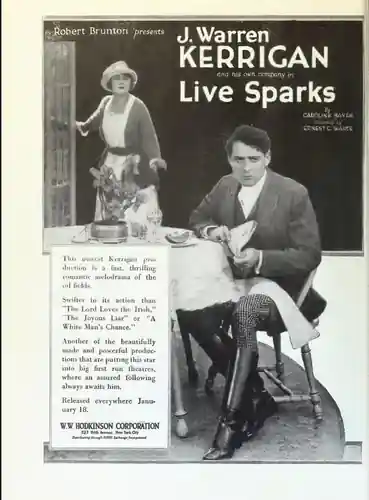
Kerrigan’s performance is a masterclass in silent film acting. He avoids the hyperbolic gesturing that often characterizes the period, opting instead for a more nuanced physicality. His transition from the slumped, bored socialite to the upright, determined investigator is subtle but effective. This restrained approach allows the audience to empathize with his character's growth, making the final act’s comedic subversion all the more satisfying. In many ways, his performance bridges the gap between the melodrama of Trilby and the more naturalistic styles that would emerge in the later 1920s.
The resolution of Live Sparks is where the film truly distinguishes itself. Many films of the era, such as The High Hand, might have ended with a simple romantic union or a legal victory. However, writers Caroline Sayre and Jack Cunningham opt for a more subversive climax. The return of Neil to the East, followed by Myrtle and her five brothers, sets the stage for a social explosion. The engagement party, intended to be the final nail in the coffin of Neil’s freedom, becomes the site of his most brilliant maneuver.
By claiming the five children as his own, Neil deliberately weaponizes the rigid moral codes of his social class against itself. He knows that the mere hint of such a scandal will cause the mercenary Bess to flee, and he is right. It is a moment of profound irony: Neil uses a perceived moral failing to achieve a greater moral good. This tactic of using social 'shame' as a tool for liberation is a sophisticated narrative choice that elevates the film above standard melodrama. It suggests a world where the only way to escape the trap of high-society expectations is to burn one’s reputation to the ground.
When comparing Live Sparks to other films of the time, such as Passing the Buck, one sees a recurring fascination with the ethics of sudden wealth. The oil boom provided a fertile ground for stories about the corrupting influence of money and the redemptive power of the American West. Live Sparks succeeds because it balances these heavy themes with a lightness of touch and a genuine sense of humor. The interaction between Neil and his butler, who becomes his partner in the sting operation, adds a layer of camaraderie that is often missing from more dour dramas.
Furthermore, the film’s treatment of Myrtle and her brothers avoids the saccharine sentimentality that plagued many silent films. While they are the beneficiaries of Neil’s justice, they are also the catalysts for his final transformation. The image of the five brothers arriving at the opulent party is a wonderful disruption of the status quo, a reminder that the 'real' world—the world of family, struggle, and survival—cannot be forever excluded from the gilded cages of the wealthy.
In the grand tapestry of silent cinema, Live Sparks holds a unique position. It is a film that understands the mechanics of both the heart and the oil pump. It critiques the indolence of the rich while acknowledging the necessity of their resources for achieving justice. By the time the final frames roll and Neil and Myrtle are wed, the audience has witnessed more than just a romance; they have seen the birth of a new kind of hero—one who is willing to play the fool to outsmart the villain, and who finds his soul in the very dirt that makes him rich.
As we look back through the lens of modern cinema, the echoes of Live Sparks can be seen in every story of a wealthy protagonist who finds redemption in the 'real' world. It is a testament to the enduring power of this narrative that, despite the technological gulf between 1920 and today, the journey of Neil Sparks remains a compelling and entertaining piece of art. For those looking to understand the evolution of the American character on screen, Live Sparks is an essential, vibrant, and ultimately hopeful spark of cinematic history.
A masterfully paced silent drama that expertly weaves industrial intrigue with social satire. J. Warren Kerrigan delivers a performance of remarkable depth, making Live Sparks a standout example of 1920s storytelling. It is a film that reminds us that sometimes, to find your true self, you have to lose your reputation.
IMDb 6.4
1932
Community
Log in to comment.