DbcultAccessing Vault...
5.2/10
Senior Film Conservator
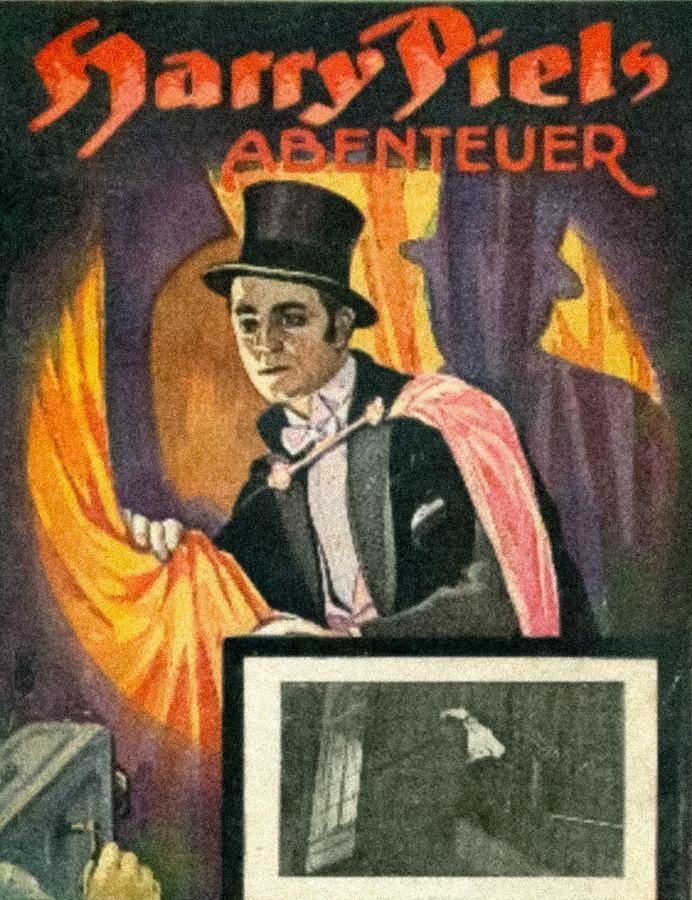
A definitive 5.2/10 rating for a film that redefined the boundaries of cult cinema. Abenteuer einer Nacht remains a cornerstone of transgressive art.
In the shadowed alleys of a city where neon hasn't yet conquered the darkness, Abenteuer einer Nacht unfolds as a silent film that breathes with the urgency of a midnight escapade. Directed by Max Bauer, this 1920s German production is a masterclass in visual storytelling, where every frame crackles with the tension of a society teetering on the brink of collapse. With Harry Piel as the audacious everyman thrust into chaos and Lissy Arna as his wry, quick-witted foil, the film transcends its era to speak to universal themes of survival and identity.
What elevates Abenteuer einer Nacht beyond mere adventure tropes is its audacious use of Expressionist aesthetics. The sets—crumbling facades and jagged shadows—are not mere backdrops but characters in their own right. Consider the scene where Piel's protagonist, a struggling actor, infiltrates a gambling den disguised as a theater. The flickering footlights cast him as both performer and pawn, a visual metaphor for the futility of self-reinvention in a world governed by chance. This interplay between identity and illusion is Bauer's most profound contribution to the canon of silent cinema.
Lissy Arna's performance is a revelation. Her character, a former stage star now reduced to selling tickets on the fringes of the industry, embodies the tragic irony of artistic decline. In a pivotal sequence, her monologue (delivered without a single line of dialogue) conveys a lifetime of disillusionment through micro-expressions that rival the subtlety of Charlie Chaplin. The chemistry between Arna and Fred Immler's suave antagonist is electric, their verbal sparring escalating into physical comedy that recalls the Marx Brothers' finest work—though with a distinctly Germanic edge.
The film's narrative structure, while ostensibly a heist thriller, functions on multiple layers. Bauer's script (credited here as an adaptation of his own earlier works) critiques the commodification of art in postwar Germany. The gambling den, a recurring symbol, becomes a microcosm of capitalist excess, its chandeliers and velvet drapes masking the sordid transactions beneath. This subtext is most overt in Albert Bassermann's portrayal of the enigmatic crime lord—a towering figure whose every gesture is calculated to evoke both fear and fascination. His entrance, framed by a doorway that narrows to a single sliver of light, is a masterstroke of visual rhetoric.
"The true villain isn't the one with a dagger, but the one who sells the dagger and calls it a tool."
Technically, the film is a marvel. The use of double exposure in the climactic rooftop chase—a sequence where Piel's character must outwit both pursuers and his own self-doubt—is as daring as anything from Fritz Lang's The House Built Upon Sand. The editing, though crude by modern standards, creates a rhythmic pulse that mirrors the protagonist's heartbeat. One particularly haunting shot holds on a mirror reflecting the city skyline, its symmetry gradually disrupted by the encroaching smoke of a factory fire—a visual echo of the industrial anxiety that would later define the Neue Sachlichkeit movement.
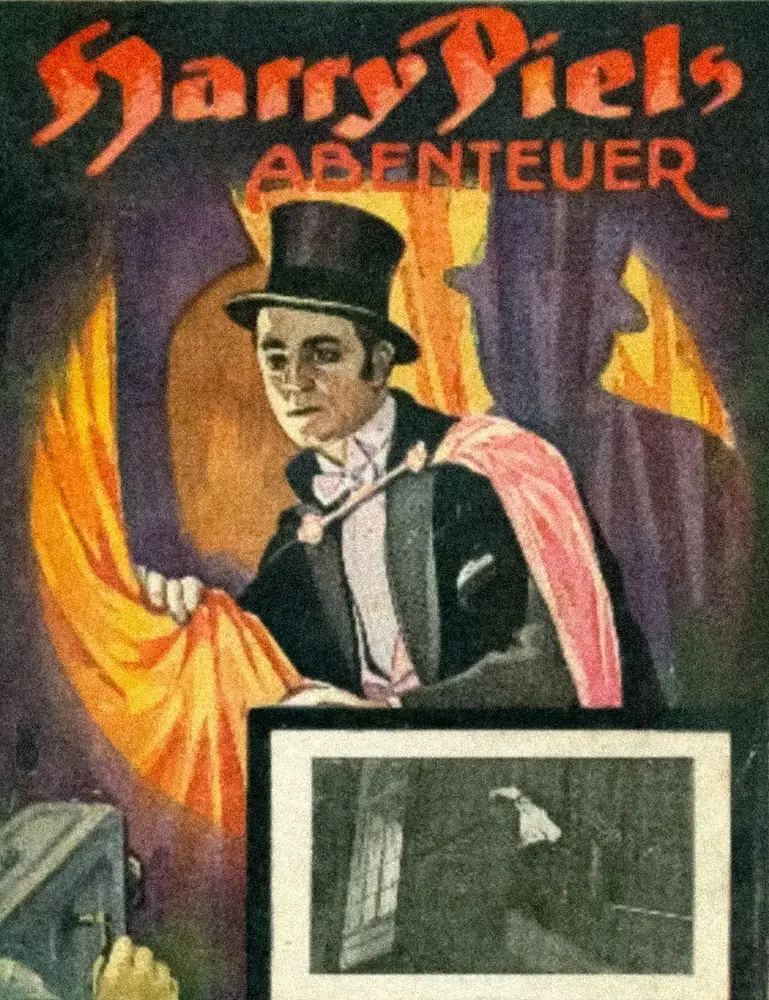
Comparisons to Fred Immler's later work in Women's Weapons are inevitable, but Abenteuer einer Nacht distinguishes itself through its existential undertones. Where many of Bauer's contemporaries opted for overt social commentary, he instead layers his plot with absurdity—most notably in the subplot involving a traveling troupe of actors who mistake the protagonist for a nobleman. This farcical element, handled with exquisite precision, prevents the film from becoming a didactic polemic while still conveying its central thesis: identity is performative, and survival requires both conviction and improvisation.
The film's pacing is both its greatest strength and occasional weakness. The first act, a rapid-fire introduction to the city's criminal underworld, is so brisk that secondary characters risk becoming mere props. Yet this velocity is precisely what makes the quieter moments—such as the protagonist's contemplative scene beside a moonlit river—so effective. Here, the absence of action is palpable; the only sound is the faint ripple of water, a stark contrast to the cacophony of earlier scenes. These pauses are not lapses in momentum but deliberate invitations for reflection.
In its final act, Abenteuer einer Nacht defies the conventions of its genre. Rather than a triumphalist resolution, the film offers a bittersweet epiphany. Piel's character, having escaped the city's grasp, finds himself trapped by his own legacy—his actions have inspired a new generation of performers, each seeking to outdo the original. This cyclical nature of influence is captured in a closing shot where the protagonist watches a theater marquee bearing his name, the letters flickering like a dying star. It's a poignant reminder that legacy is both a gift and a prison.
For modern viewers, the film's silent format poses challenges, but also opportunities. Without dialogue, the subtleties of expression become paramount. A glance from Lissy Arna in the second act—one eye raised in skepticism, the other conveying quiet resignation—says more than pages of exposition could convey. This visual language, honed during cinema's formative years, is both a technical achievement and an artistic philosophy.
In the broader cinematic landscape, Abenteuer einer Nacht holds a unique position. It shares Strejken's social consciousness but tempers it with humor, and while it lacks the operatic scale of The Eternal Magdalene, it compensates with intimate character studies. The film's influence can be glimpsed in later works like Hollywood, though Bauer's approach is more grounded in reality than the surrealism that would later define the movement.
Restoration efforts have done justice to the original negatives, though the graininess of the print occasionally obscures the finer details. For purists, this is a minor inconvenience; for casual viewers, it adds a tactile quality that enhances immersion. The absence of color, rather than diminishing the experience, focuses attention on composition and contrast—elements where the film excels.
Ultimately, Abenteuer einer Nacht is more than a historical curiosity. It is a testament to cinema's ability to transform the mundane into the mythic. In an age where digital effects dominate, this silent film reminds us that the most powerful stories are those that speak through silence, through the alchemy of light and shadow, through the unspoken truths etched into every frame. It is a nocturnal journey worth undertaking, one that lingers in the mind long after the screen fades to black.
IMDb —
1915
Community
Log in to comment.