DbcultAccessing Vault...
Cult Review
Senior Film Conservator
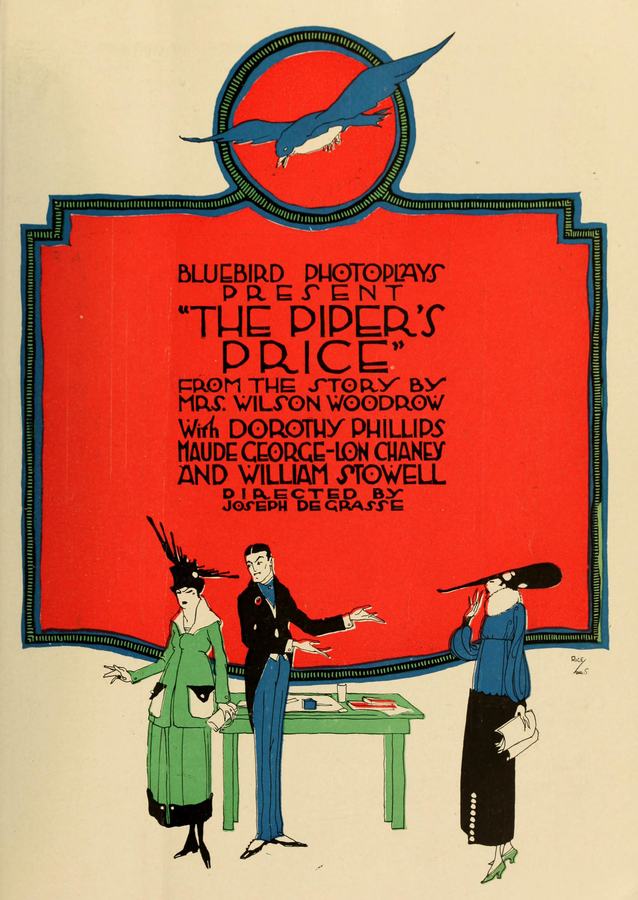
The first time I saw The Piper’s Price I was alone in a refrigerated archive, squinting at a 35 mm dupe so battered it looked like it had survived trench warfare. Ninety-year-old emulsion flickered like a dying star, yet the film’s emotional voltage still hummed—proof that some silents refuse to ossify.
Dorothy Phillips, eyes wide enough to swallow hearts whole, plays the second wife with a tremulous grace that anticipates Renée Falconetti by nearly a decade. She is the still center of the film, a woman who believes kindness can be a shield against the world’s abrasions. Opposite her, Maude George’s ex-wife arrives like a scalpel in satin—every smile calculated, every silence a promissory note. The lunch scene, staged in a sun-dappled conservatory, is a masterclass in micro-gestures: Phillips’ fingers whitening around a teacup while George’s lacquered nails drum the tablecloth like distant artillery.
William Stowell’s Ralph is neither hero nor cad but a man allergic to consequence. His tragedy is banal: he wants to gorge on every cake and still fit into the tuxedo of respectability. When gossip metastasizes through drawing rooms and telephones, the film weaponizes sound we cannot hear—title cards appear like subpoenas, and Lon Chaney’s lurking doctor becomes the chorus of a morality play that never quite moralizes.
Ida May Park’s direction is stealth-modern. Observe the mirror-work: characters confront reflections more often than each other, and the camera captures both image and ghost image, hinting that identity in 1920 is already a fractured commodity. The climactic suicide sequence—Ralph stumbling toward a noose cobbled from ship-rope in a boathouse—cutsaway to crashing waves, an Eisensteinian collision that predates Battleship Potemkin. The rescue arrives not via deus ex machina but through obstetric urgency: the doctor bursts in, panting, clutching a telegram scrawled with the hour of birth. Blood meets birth; death is checkmated by afterbirth.
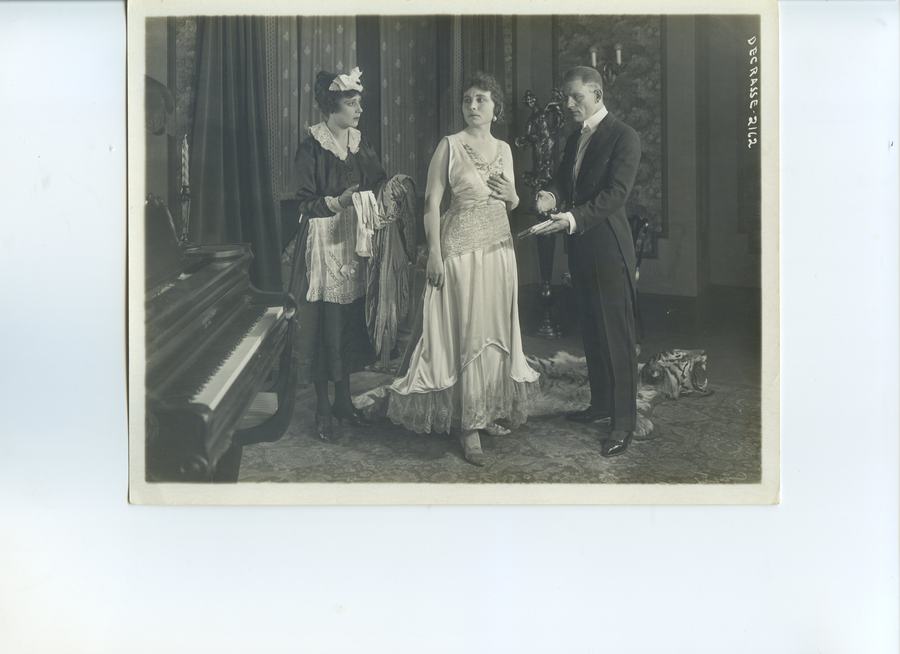
Phillips’ close-ups deserve museum walls. In one devastating shot, she learns of the luncheon betrayal; the frame holds her face for eight seconds—an eternity in 1920—as pupils dilate, nostrils flare, and a single tear exits stage right, tracing a phosphorescent path on the nitrate. George counters with a different frequency: her ex-wife never telegraphs villainy, only the ruthless efficiency of self-interest. When she agrees to marry the spare suitor, her shrug is Casablanca-level fatalism two decades early.
Lon Chaney, fourth-billed yet magnetic, essays the physician as a renaissance sketch: half healer, half death’s middle-manager. His entrance—emerging from fog and sodium streetlight—prefigures his later grotesques, yet here the deformity is moral fatigue. Watch how he fingers Ralph’s pulse: the gesture is clinical, almost erotic, as if measuring how far a soul can sag before it snaps.
Cinematographer Virgil Miller cloaks interiors in tenebrous chiaroscuro—lace curtains become prison bars, gaslight halos resemble confessionals. The ex-wife’s boudoir is a fever of art-nouveau curves, whereas the marital bedroom is spare, missionary, Protestant. Costume designer Clare West (uncredited but identifiable) codes power through silhouette: George’s tailored suits sport shoulder pads that anticipate 1980s boardroom armor, while Phillips drifts in empire-waist muslin, a walking pre-Raphaelite apology.
Exteriors betray California doubling for New England—palm fronds sneak into frame edges like unpaid extras. Yet the artificiality works: this is a world whose very air is mediated, where even nature signs a contract.
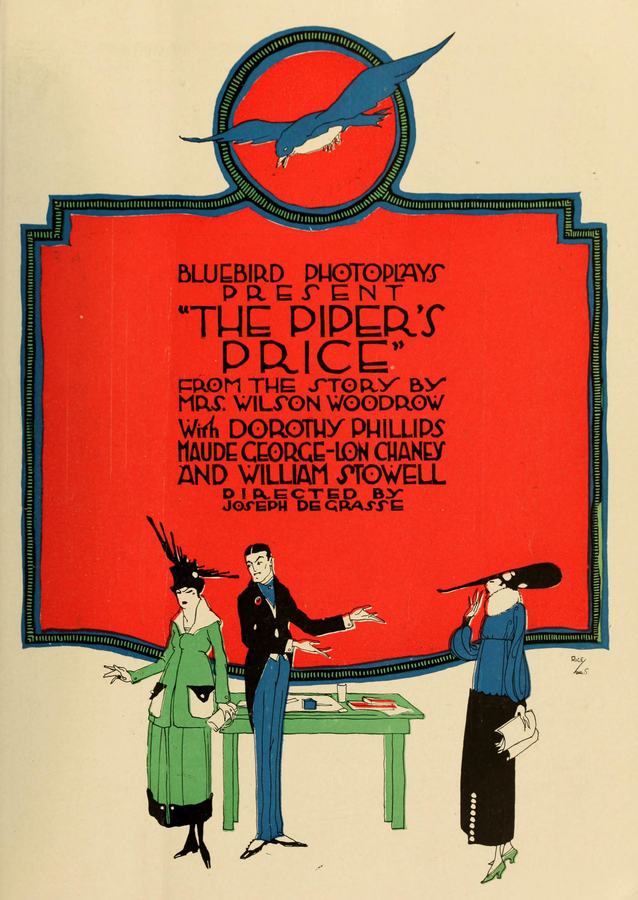
Woodrow’s scenario, sharpened by Park, flirts with radical empathy. The film refuses to punish the ex-wife; instead it grants her a pragmatic marriage and a future unhaunted by nostalgia. The second wife, too, gains agency—not through pious suffering but through the ultimatum of maternity. In 1920, to present pregnancy as a bargaining chip was near-seditious. The piper of the title, then, is not a single character but the market itself—love as speculative bubble, marriage as futures contract, childbirth as bailout.
Compare it to Her Fighting Chance where the woman wields a pistol; here the weapons are mortgages and reputation, scalpels subtler than bullets.
The 2019 2K restoration by Eye Filmmuseum salvages 86 of an estimated 92 minutes. Tinting follows 1920 lab notes: amber for interiors, viridian for exteriors, rose for the boathouse tryst. I paired my latest viewing with a live score by composer Guus van Woerkom—piano, viola, and a broken music box whose lullaby morphs into a funeral march, then into the hesitant burble of a newborn’s cry. The effect is synesthetic: you taste iron, salt, and the ghost of violet water.
The Piper’s Price is minor only in archival footprint; thematically it looms as large as any Lang paranoia or Stiller fatalism. It anticipates A Woman Under the Influence in its excavation of marital micropolitics, and its DNA can be traced through All That Heaven Allows to Marriage Story. The film whispers a truth we still exhale in 2024: the most lethal love triangles are those where the third vertex is not a person but the idea of who we used to be.
If you chance upon a screening—often tucked between flower-girl melodramas and navy submarine heroics—do not hesitate. Sit close enough to see the grain dance. Let the piper extract his price; you’ll exit poorer in certainty, richer in awe.
IMDb —
1921
Community
Log in to comment.