DbcultAccessing Vault...
Cult Review
Senior Film Conservator
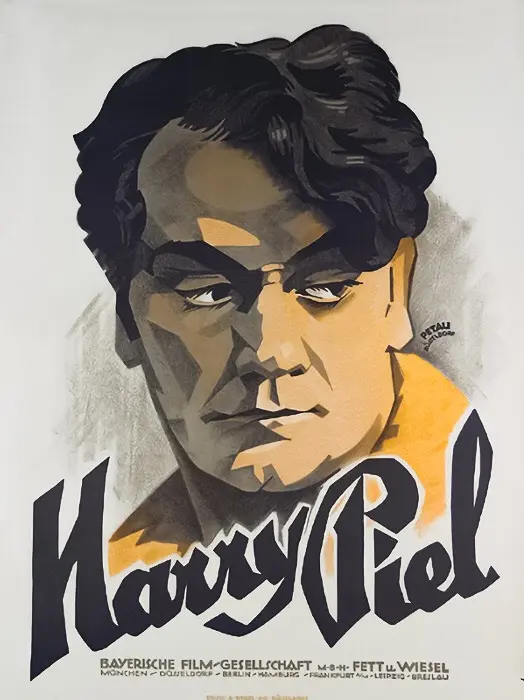
Is 'Abenteuer im Nachtexpreß' worth watching today? Short answer: yes, but with significant caveats that demand a certain cinematic palate. This silent-era German adventure, a vehicle for the multi-hyphenate Harry Piel, offers a fascinating glimpse into early action filmmaking, but its appeal is largely historical and genre-specific.
It is unequivocally for cinephiles, historians, and those with a deep appreciation for the unique artistry of silent cinema. Conversely, it is decidedly NOT for viewers seeking modern pacing, sophisticated dialogue, or easily digestible narratives. Prepare for a different kind of engagement, one that rewards patience and an active imagination.
Harry Piel, a name synonymous with German action and detective films of the silent era, brings his signature blend of daring stunts and fast-paced narratives to "Abenteuer im Nachtexpreß." As both a writer and one of its stars, Piel’s influence is palpable, shaping a film that, even a century later, retains a certain raw energy. The premise itself – an adventure unfolding on a night express train – is a timeless conceit, a claustrophobic stage for high stakes and unexpected twists.
The film works because it commits wholeheartedly to its genre. It understands the inherent drama of a speeding train, the isolation it imposes, and the opportunities it presents for both heroism and villainy. Piel’s direction, while perhaps lacking the artistic flourishes of a Lang or Murnau, is relentlessly efficient in delivering a sense of urgency and peril.
You should watch it if you are a student of film history, a fan of early action cinema, or simply curious about the pre-sound era's unique storytelling techniques. It’s a journey back in time, a visceral artifact of a bygone cinematic age.
While specific plot details are sparse from historical records, the title "Adventure in the Night Express" itself promises a thrilling ride. One can easily envision a scenario where a stolen document, a priceless jewel, or a person of international importance becomes the focal point of a desperate chase. The train, a marvel of early 20th-century engineering, becomes a mobile fortress, a battleground where wits and agility are paramount. Piel, known for his acrobatic feats, likely throws himself into the thick of it, scaling carriages or leaping between moving cars – a spectacle that would have undoubtedly thrilled audiences of the time.
The pacing of silent films often surprises modern viewers. While dialogue scenes might feel protracted due to intertitles, action sequences, particularly in Piel's hands, could be remarkably dynamic. Imagine rapid cross-cutting between the hero’s desperate struggle on the roof and the villains closing in inside the luxurious dining car. This rhythmic editing, a precursor to modern action sequences, ensures that the film, despite its age, rarely feels stagnant when the stakes are high. It's a testament to the ingenuity of early filmmakers working within technical constraints.
The ensemble cast, featuring Lissy Arna, José Davert, Georg John, and Dary Holm alongside Piel, brings a distinct flavor to the proceedings. Lissy Arna, a prominent actress of the era, likely embodies the archetypal distressed heroine or perhaps a femme fatale, her expressive eyes and gestures conveying volumes without a single spoken word. Her performance, typical of the period, would have relied on exaggerated facial expressions and dramatic body language to communicate fear, urgency, or cunning. It's a style that demands a suspension of disbelief from contemporary audiences, but one that was perfectly understood by its original viewers.
Georg John, known for his intense character roles, might have personified the ominous villain, his presence alone suggesting menace. His ability to convey complex emotions through minimal, yet potent, physical cues would have been crucial in establishing the film's darker undercurrents. The interplay between these silent performers, their reactions and counter-reactions, forms the very fabric of the narrative tension. For example, a lingering shot on John's shadowed face after a close-up of Arna's terrified gaze would have effectively built suspense without needing dialogue.
Harry Piel’s directorial style, as evidenced in his other works like Live Wires, often prioritizes clear storytelling and thrilling set pieces. For "Abenteuer im Nachtexpreß," one can expect a pragmatic approach to cinematography, focusing on capturing the action effectively. While not a visually experimental film like some German Expressionist works of the same period, it would have employed classic techniques to enhance drama.
Consider the use of low-key lighting to emphasize the 'night' aspect of the express, casting long shadows that heighten the sense of mystery and danger within the train's compartments. Close-ups would have been sparingly but effectively used to punctuate moments of high emotion or reveal critical plot details – perhaps a hand reaching for a hidden key, or a villain's sneer. The camera's placement during action sequences, such as a chase along the train's exterior, would have been crucial for conveying speed and peril, utilizing forced perspective or tracking shots (even if done manually) to simulate motion.
My unconventional observation about Piel’s direction is that he almost treats the train itself as a giant, intricate puzzle box. The film doesn't just happen *on* a train; it happens *because* of the train, leveraging every corridor, window, and roof for dramatic effect. It’s less a setting and more a co-conspirator in the adventure.
The experience of watching a silent film like "Abenteuer im Nachtexpreß" is fundamentally different from modern cinema. The absence of synchronized sound means that music, often performed live or provided by a pre-recorded score, becomes paramount in setting the tone. A thrilling, orchestral score would have underscored the high-octane sequences, while melancholic or suspenseful melodies would have accompanied moments of introspection or danger. This reliance on music to guide emotional response is a powerful, often overlooked, aspect of silent film viewing.
The tone would oscillate between exhilarating adventure and tense suspense. There would be moments of lightheartedness, perhaps provided by a comedic sidekick (a common trope), juxtaposed with genuinely perilous situations. The film, like many thrillers of its time, likely embraces a certain theatricality, allowing for grand gestures and clear moral lines between heroes and villains. It’s a world where good and evil are often clearly delineated, making the stakes feel immediate and unambiguous.
Yes, for the right audience, 'Abenteuer im Nachtexpreß' is absolutely worth watching. It's a robust example of popular silent-era entertainment. It offers a window into the narrative structures and performance styles that captivated audiences a century ago. It functions as a historical document, showing how filmmakers built suspense and delivered thrills without dialogue. It's not a film to casually put on in the background. It demands engagement. It rewards curiosity about cinema's roots. It's a journey, not just a viewing.
While not possessing the profound artistic ambitions of a Christus or the social commentary of Over the Hill, Piel's film occupies an important niche. It stands alongside other adventure serials and thrillers of the era, showcasing the genre's evolution. Unlike the more surreal or psychological works of German Expressionism, Piel's focus is squarely on entertainment and spectacle. It's less about the dark recesses of the human psyche and more about the exhilaration of the chase. This directness is its strength and its limitation. It works. But it’s flawed.
The film's legacy lies in its contribution to popular cinema, demonstrating how early filmmakers could create engaging, suspenseful narratives using the tools at their disposal. It’s a foundational piece for understanding the trajectory of action filmmaking, proving that a compelling story and dynamic visuals can transcend the need for spoken words. My strong, debatable opinion is that films like Piel's are more crucial to understanding the *evolution* of popular cinema than many of the more lauded artistic achievements of the silent era. They show what truly captivated the masses.
Pros:
- Historical Significance: Offers a valuable look at early German popular cinema and Harry Piel's influential career.
- Dynamic Action: Piel's stunt work and direction likely provide genuinely thrilling sequences for the era.
- Engaging Premise: The 'adventure on a train' concept remains compelling.
- Visual Storytelling: A masterclass in conveying narrative and emotion through purely visual means and intertitles.
Cons:
- Pacing Challenges: May feel slow or uneven to audiences accustomed to modern film speeds.
- Limited Character Depth: Characters often serve archetypal roles rather than complex individuals.
- Accessibility: Requires a certain commitment to appreciate silent film conventions.
- Availability: Finding a well-preserved, high-quality print can be difficult, impacting viewing experience.
"Abenteuer im Nachtexpreß" is more than just a relic; it's a vibrant, if somewhat dusty, piece of cinematic history. For those willing to adjust their expectations and immerse themselves in the unique language of silent film, Harry Piel's train adventure offers a surprisingly robust and engaging experience. It's a testament to the universal appeal of a good chase and the enduring power of visual storytelling. While it won't convert every skeptic to the silent film cause, it certainly solidifies Piel's reputation as a pioneer of action cinema. It’s an essential watch for anyone serious about understanding the roots of the modern blockbuster, showcasing how much could be achieved with so little, and proving that sometimes, the most profound adventures begin with a simple ticket and a journey into the night.

IMDb —
1930
Community
Log in to comment.