DbcultAccessing Vault...
Cult Review
Senior Film Conservator
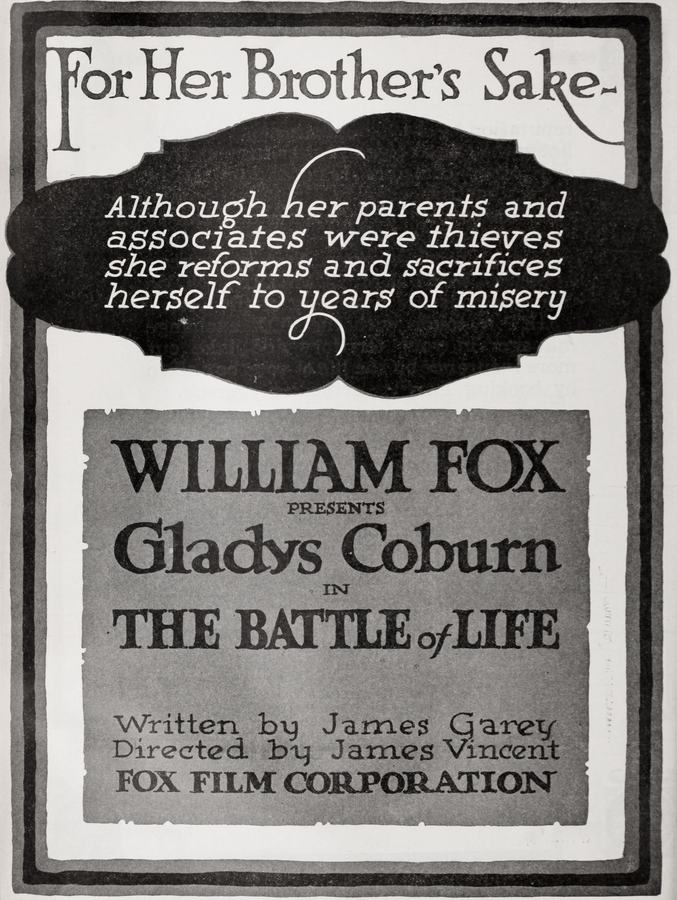
In the annals of early cinema, where narratives often painted in broad strokes explored the nascent complexities of the human condition, certain films emerge as more than mere relics; they are profound explorations of societal friction and individual fortitude. The Battle of Life, a compelling silent drama, stands as one such testament, weaving a story of moral reckoning, the gravitational pull of inherited circumstance, and the arduous, often solitary, quest for personal redemption. It's a film that, even a century after its creation, resonates with an urgent relevance, delving into themes that remain eternally pertinent to the human experience.
At the heart of this poignant narrative is Mary, portrayed with a delicate yet resolute intensity by Gladys Coburn. Her world is one of shadows and illicit dealings, circumscribed by the presence of her father, Tom Boland (Frank Evans), a cracksman by trade, and her paramour, Dave Karns (Richard Neill), a man inextricably linked to this criminal underworld. Mary's awakening, however, is not born of a sudden revelation but a gradual, agonizing realization of the corrosive influence her environment exerts, particularly upon her younger brother, Jimmie. This protective instinct, this profound maternal urge to shield Jimmie from the predetermined path of crime, becomes the catalyst for her audacious decision: to sever all ties with her past, to embark on a perilous journey into the unknown in pursuit of a life unblemished by the transgressions of her lineage.
This initial act of defiance, this self-imposed exile, immediately establishes Mary as a character of formidable will. It’s a choice fraught with immense personal risk, echoing the desperate measures taken by protagonists in other early cinematic explorations of social mobility and moral awakening, such as Salvation Nell, where a woman's struggle against her surroundings for a better life forms the core of the drama. Mary's wanderings in the park, a liminal space between her old life and the uncertain future, lead her to Mrs. Wentworth (Violet De Biccari), a woman of starkly contrasting social standing and moral rectitude. This chance encounter, a staple of melodramatic narrative, serves as the narrative's fulcrum, catapulting Mary into a world of wealth and refinement as a maid within the Wentworth household. It’s a fascinating study in juxtaposition, as Mary, still carrying the ghost of her past, navigates the unfamiliar terrains of bourgeois respectability.
The serenity of Mary's new existence is, predictably, short-lived. The tendrils of her former life, personified by Tom Boland and Dave Karns, reach out to reclaim her. Learning of her advantageous position, they see not her newfound peace, but an opportunity – a means to an end in their perpetual pursuit of ill-gotten gains. Their attempt to coerce Mary into aiding them in robbing Mrs. Wentworth’s home is a brutal confrontation between her desperate aspiration for a clean slate and the insidious pull of familial obligation and past loyalties. Her steadfast refusal, a testament to her unwavering moral compass, sets in motion a tragic chain of events. The duo proceeds with their ill-fated plan, leading to Tom's fatal shooting during the botched robbery. This pivotal moment underscores the film's title, The Battle of Life, highlighting the inherent violence and desperation that define the struggle for survival and moral integrity.
The aftermath of the robbery plunges Mary into a fresh maelstrom of hardship. The police investigation, a relentless and unforgiving force, casts suspicion upon her, leading to her unjust dismissal from Mrs. Wentworth's employ. This sequence of events, depicted with a stark realism characteristic of early social dramas, showcases the precariousness of a woman's position in society, particularly one with a tainted past, however much she strives for rectitude. Mary's subsequent wanderings, her descent into a period of profound privation, resonate with the bleak despair often found in films exploring the harsh realities of urban poverty and social ostracization, much like the somber tones of The Secret Sin, which also delves into the devastating consequences of past misdeeds and their lingering shadows.
The narrative of The Battle of Life is a masterclass in the silent film's capacity for emotional depth and nuanced character development, even without spoken dialogue. Gladys Coburn, as Mary, conveys a remarkable spectrum of emotions – from the quiet determination of her initial departure to the crushing despair of her unemployment, and finally, to the cautious hope of her eventual reunion. Her performance is a testament to the power of expressive gesture and facial nuance that defined the era's acting style. Frank Evans, as Tom Boland, embodies the tragic figure caught in the inexorable grip of his own choices, a man whose fate serves as a stark warning. Richard Neill's portrayal of Dave Karns, particularly his character’s journey from accomplice to a reformed man, is crucial to the film's ultimate message of hope. The transformation of Dave, while perhaps a touch idealistic by modern standards, offers a necessary counterpoint to the pervasive gloom, suggesting that redemption is not solely Mary’s burden, but a possibility for all who genuinely seek it.
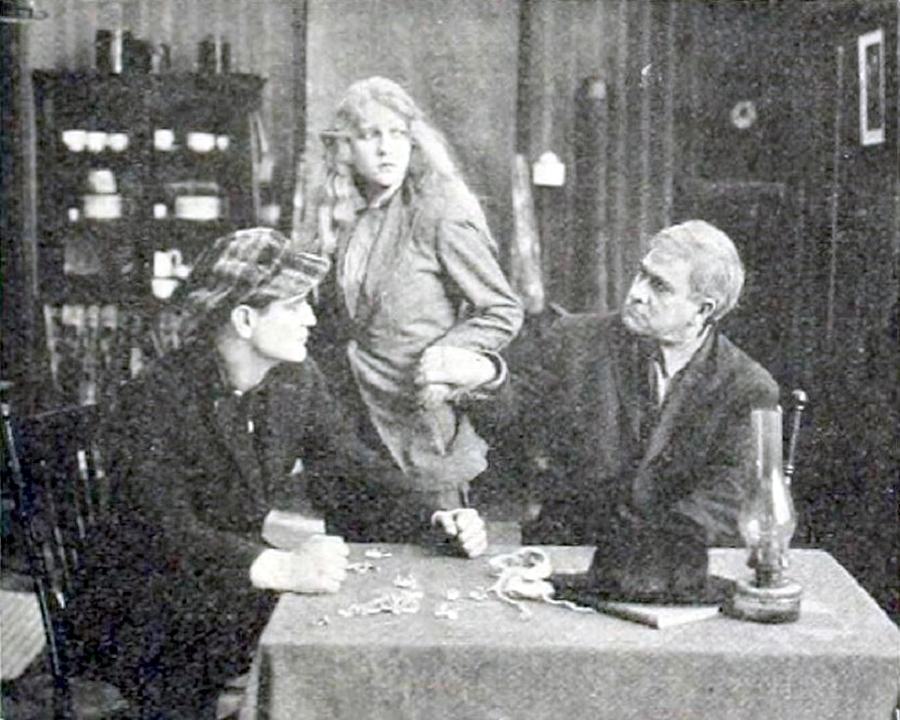
The film's pacing, under the direction inferred from the tight narrative of Adrian Johnson and James R. Garey's writing, is deliberate, allowing the emotional weight of each scene to fully register. The visual storytelling, though limited by the technology of the time, effectively communicates the stark contrast between Mary's two worlds – the grimy, dangerous alleys of her past and the elegant, albeit fleeting, comfort of the Wentworth estate. The use of chase sequences and dramatic confrontations, common in films of this period like The Strangler's Cord, is handled with a restraint that emphasizes the psychological rather than purely physical stakes. Other supporting cast members, including Art Acord, William Sheer, and Alex Shannon, contribute to the tapestry of characters that populate Mary's tumultuous world, each adding a layer of authenticity to the unfolding drama.
After many weeks of profound hardship, a period that tests Mary's resilience to its absolute limits, the narrative culminates in her reunion with Dave. His reformation, a transformation implied through the narrative's progression rather than explicitly detailed, offers a poignant resolution. It suggests that Mary's unwavering belief in a better life, her relentless pursuit of moral purity, has not been in vain. Her love, perhaps, served as the catalyst for Dave's own introspection and change. This optimistic denouement, while characteristic of many early melodramas that sought to offer audiences a sense of moral closure, does not diminish the preceding trials. Instead, it elevates the struggle, imbuing it with purpose and meaning. The film posits that even in the face of overwhelming adversity and the insidious pull of one's past, the human spirit possesses an indomitable capacity for growth, forgiveness, and the forging of a new destiny.
Thematically, The Battle of Life explores the intricate dance between fate and free will. Mary's initial circumstances are not of her choosing, yet her decisions, her refusal to be defined by her environment, are powerful assertions of agency. The film subtly critiques societal structures that trap individuals in cycles of poverty and crime, while simultaneously celebrating the individual's capacity to transcend these limitations. This tension between external pressures and internal strength is a recurring motif in cinema, from the early explorations of social realism to contemporary dramas. Films like Das Gesetz der Mine also grappled with the harsh realities of life and the human struggle within unforgiving conditions, albeit in a different setting, highlighting the universal appeal of such narratives.
As a piece of cinematic history, The Battle of Life (slug: the-battle-of-life) offers invaluable insight into the narrative conventions, moral preoccupations, and performance styles of the silent era. It demonstrates how filmmakers of the time, with relatively nascent tools, could craft emotionally resonant stories that captivated audiences and provoked thought. The enduring power of its narrative lies in its universal themes: the desire for a better life, the struggle against one's origins, the pain of betrayal, and the redemptive power of love and personal transformation. It's a testament to the fact that compelling storytelling transcends technological limitations and speaks directly to the core of the human experience.
The performances, particularly that of Gladys Coburn, anchor the film with a palpable sense of authenticity and emotional vulnerability. Her Mary is not merely a victim of circumstance but an active participant in her own destiny, fighting tooth and nail for her principles. The collaborative efforts of writers Adrian Johnson and James R. Garey manifest in a plot that, while adhering to certain melodramatic tropes, manages to feel urgent and deeply personal. Their narrative choices provide ample opportunity for the actors to convey complex internal states through non-verbal means, a hallmark of excellent silent film writing. The film, in its quiet determination and dramatic intensity, holds its own against other significant dramas of its period, such as the grand historical spectacle of Marc'Antonio e Cleopatra or the more intimate character studies like Champagneruset, proving that simple human stories can be just as impactful as epic sagas.
In conclusion, The Battle of Life is far more than a historical curiosity; it is a potent and enduring drama that speaks to the timeless struggles inherent in the human condition. It reminds us that the path to a meaningful existence is often fraught with peril, demanding courage, sacrifice, and an unwavering belief in the possibility of change. Its characters, though silent, articulate a powerful message through their actions and their suffering, leaving an indelible mark on the viewer's consciousness. For those interested in the foundational narratives of cinema and the enduring power of stories about moral resilience, this film remains an essential viewing, a quiet masterpiece that continues to resonate with profound emotional depth and intellectual weight.
IMDb 5.5
1923
Community
Log in to comment.