DbcultAccessing Vault...
Cult Review
Senior Film Conservator
To embark on a cinematic journey through the life of Abraham Lincoln is to confront the very soul of American history. John Drinkwater’s 'Abraham Lincoln' (1920) is more than just a historical drama; it is a profound artistic statement, a meticulously crafted tableau vivante that attempts to capture the essence of a man whose legacy remains an unshakable cornerstone of the nation’s consciousness. This film, particularly through its central performances and its daring narrative focus, transcends mere historical re-enactment, striving instead for an almost mythic resonance. It invites audiences to not just observe history, but to feel its immense weight and witness its transformative power through the lens of a singular, extraordinary figure.
The true nucleus of 'Abraham Lincoln' resides in the utterly compelling performance delivered by Frank McGlynn Sr. His portrayal is not merely an impersonation; it is an incarnation. McGlynn, with an almost uncanny physical resemblance, delves deep into the psychological landscape of the 16th President. He captures the profound melancholy etched upon Lincoln's face, the stoicism born of immense responsibility, and the unwavering moral compass that guided his every decision during the Civil War. One observes not just a man reciting lines, but a soul burdened by the weight of a fracturing nation, yet simultaneously uplifted by an unshakeable belief in its enduring principles. McGlynn’s Lincoln is a figure of quiet dignity, his eyes conveying a weariness that speaks volumes about the countless sleepless nights spent agonizing over the fate of millions. He doesn't just deliver the famous words; he inhabits the thought process, the deep contemplation that preceded them, making each utterance feel earned, deliberate, and imbued with genuine gravitas. It’s a performance that stands the test of time, a benchmark against which later cinematic Lincolns are often, perhaps unfairly, measured. His command of the screen is absolute, a masterclass in understated power, allowing the audience to perceive the internal struggle and the immense fortitude required to lead a country through its darkest hour. The film wisely understands that its emotional core must be anchored in this central performance, and McGlynn rises to the occasion with breathtaking authenticity.
The film’s narrative architecture deliberately builds towards its climactic centerpiece: the delivery of the Gettysburg Address. This isn't merely a scene; it's a sacred moment, framed with an almost reverential solemnity. Drinkwater’s script, though minimalist in its presentation of biographical detail, understands the monumental significance of these words. The film allows the Address to breathe, to resonate, to stand as a singular beacon of hope and re-dedication amid the recent carnage. As McGlynn delivers the iconic speech, the camera seems to linger, capturing the quiet intensity of his gaze, the deliberate cadence of his voice (or the implied cadence in a silent film context, conveyed through posture and expression), and the profound impact on the assembled multitude. It’s a masterful piece of staging that eschews grand theatrics for genuine emotional impact, emphasizing the power of language to heal, to unite, and to redefine a nation's purpose. The Address, in this cinematic interpretation, becomes more than a historical document; it transforms into a living prayer, a timeless articulation of the American experiment's highest ideals. The quiet power of this sequence is palpable, a testament to the film's understanding that some moments in history are so inherently dramatic that they require little embellishment, only faithful and respectful presentation. It elevates the film from a mere recounting of facts to an exploration of the profound spiritual and philosophical underpinnings of the Civil War. One might consider how other films, like the often-overlooked emotional intensity found in Who Loved Him Best?, similarly rely on a single, powerful emotional core to anchor their narratives, albeit on a vastly different scale.
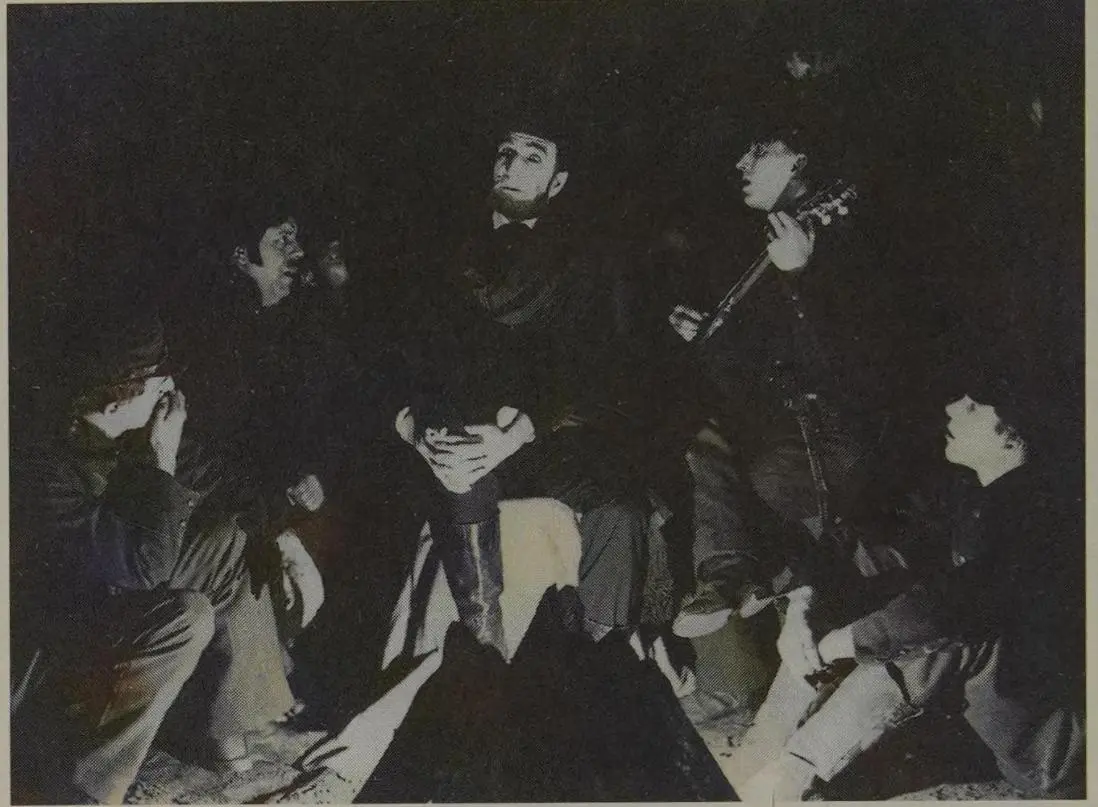
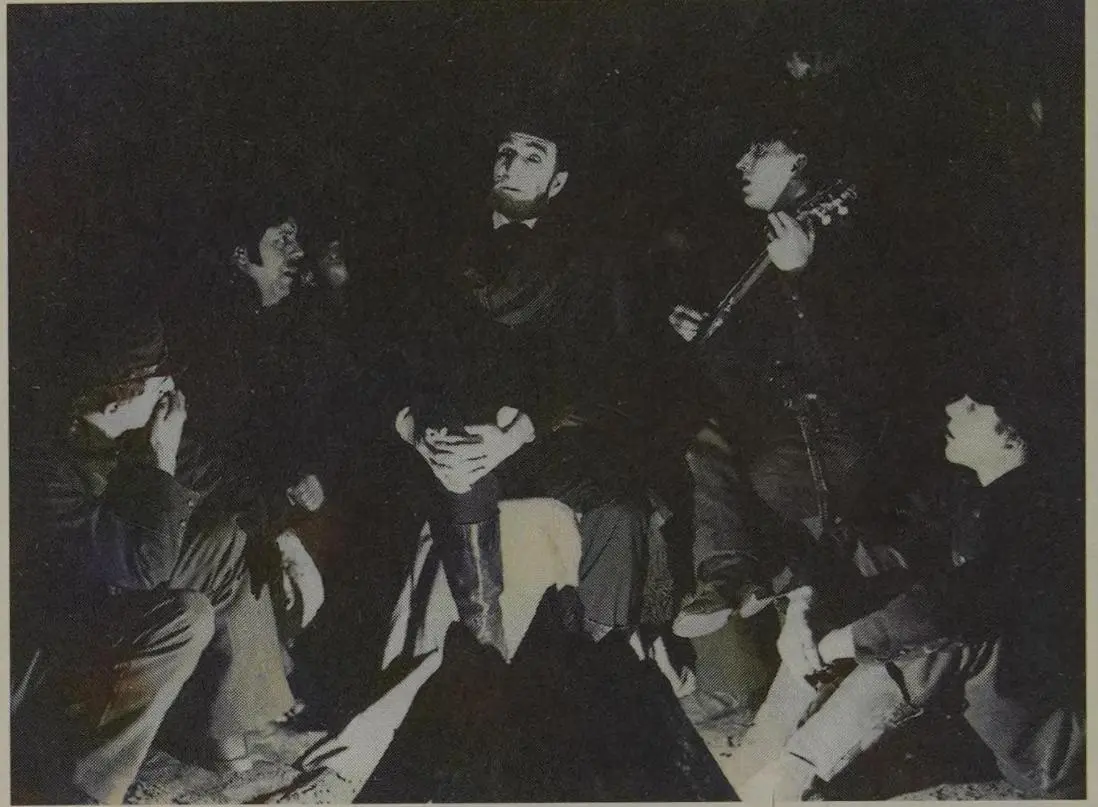
In stark yet beautiful contrast to the grand pronouncements of statecraft and the somber reflections on national unity, the film weaves in the poignant strains of camp-fire songs. These musical interludes are far from incidental; they serve as a vital emotional counterpoint, grounding the monumental struggle in the intimate, shared experiences of the common soldier. Through these simple melodies, the film offers a rare glimpse into the collective soul of the Union army. We see soldiers, weary from battle and longing for home, finding solace and camaraderie in song. These moments are imbued with a melancholic beauty, highlighting the profound human cost of the conflict. The songs speak of longing, of sacrifice, of simple joys amidst unimaginable hardship, and of an enduring hope for peace. They remind the audience that behind every strategic maneuver and every presidential decree were countless individual lives, each brimming with personal stories, fears, and aspirations. This dual focus—the macro historical narrative intertwined with the micro human experience—lends the film a remarkable depth and emotional resonance. It’s a subtle yet powerful technique that prevents the film from becoming a dry historical treatise, instead infusing it with a palpable sense of humanity. The singing around the campfires serves as a stark reminder of the youthful innocence lost to the war, a stark contrast to the weighty pronouncements of the President. Much like the quiet, personal struggles depicted in a film like Nineteen and Phyllis, these moments underscore the resilience of the human spirit in the face of adversity, even when the adversity is on a national, cataclysmic scale.
John Drinkwater, the playwright whose work forms the basis of this film, brought a distinct theatrical sensibility to the cinematic adaptation. His approach was less about exhaustive historical detail and more about capturing the moral and spiritual essence of Lincoln’s presidency. The script, though sparse by modern standards, is remarkably effective in building dramatic tension and highlighting the profound ethical dilemmas faced by Lincoln. Drinkwater understood that the power of Lincoln’s story lay not just in what he did, but in who he was—a man of unwavering principle navigating an unprecedented crisis. The film, released in 1920, arrived at a time when the memories of the Civil War were still relatively fresh in the national consciousness, and the figure of Lincoln continued to hold immense symbolic power. Its production reflects an early cinematic attempt to grapple with foundational American myths, seeking to solidify a national narrative of unity and endurance. The film’s historical accuracy, while generally respected, is always subservient to its thematic ambition, which is to present Lincoln as an almost saintly figure, a national redeemer. This is a common approach in early biopics, which often leaned into hagiography to inspire and educate. The film's strength lies in its conviction, its belief in the enduring power of Lincoln's words and actions to transcend the specific historical moment and speak to universal truths about leadership, sacrifice, and the pursuit of justice. It’s a testament to Drinkwater's literary acumen that he could condense such a monumental life into a compelling dramatic arc suitable for the nascent film medium.
As a film from the early 20th century, 'Abraham Lincoln' operates within the stylistic conventions of its era, yet manages to achieve a timeless quality. The cinematography, though perhaps rudimentary by today's standards, effectively uses light and shadow to evoke mood and emphasize the gravity of the situations. Close-ups on McGlynn's expressive face are particularly effective, allowing the audience to intuit the depth of his character's internal struggles without the need for extensive dialogue or intertitles. The pacing, deliberate and measured, mirrors the weighty decisions being made, allowing scenes to unfold with a solemn grandeur. The film's lasting legacy stems not just from its historical subject matter, but from its pioneering effort to bring such a revered figure to the screen with a degree of seriousness and artistic ambition. It helped establish the biopic as a legitimate and powerful genre, demonstrating that film could tackle complex historical narratives with depth and sensitivity. While films like The Catspaw might explore political intrigue through a more melodramatic lens, 'Abraham Lincoln' chooses a path of dignified reverence, focusing on the moral fortitude required for true leadership. It paved the way for countless subsequent historical dramas, showing that the power of a story, when told with conviction and a strong central performance, can transcend technological limitations. Its influence can be seen in how later filmmakers approached historical figures, often seeking to replicate the blend of authenticity and dramatic impact achieved here. The film’s success underscored the public’s appetite for narratives that explored the foundations of their national identity, providing a cinematic mirror to reflect on their collective past.
At its heart, 'Abraham Lincoln' is a profound exploration of national division and the arduous path towards reconciliation. The film doesn’t shy away from depicting the stark realities of a country torn asunder, presenting the Civil War not as a distant historical event, but as a deeply personal tragedy for Lincoln himself. His leadership is portrayed as a constant balancing act, navigating the fierce partisan divides, the fervent abolitionist cries, and the desperate pleas for peace. The film subtly emphasizes the immense emotional toll this took on him, showcasing a leader who, despite his immense power, was fundamentally a human being wrestling with impossible choices. The Gettysburg Address, in this context, becomes more than a victory speech; it is a plea for understanding, a call to remember the common principles that bind a nation, even in its darkest hour. It’s a vision of a future where the sacrifices made are not in vain, but contribute to a more perfect union. This thematic resonance is particularly powerful, reminding us that the struggle for unity and justice is an ongoing one, echoing down through generations. Much like the complex moral quandaries in The Devil-Stone, which explores the destructive power of greed and obsession, 'Abraham Lincoln' delves into the destructive power of ideological division, but ultimately offers a message of hope through moral leadership. The film posits that true strength lies not in brute force, but in the unwavering commitment to ideals and the courage to articulate them, even when faced with overwhelming opposition. This enduring message of national unity forged through adversity remains as relevant today as it was a century ago when the film first graced the screens.
Central to Drinkwater’s cinematic vision, and brilliantly executed by McGlynn, is the profound emphasis on the power of words. Lincoln, as depicted in the film, is a master orator, but his speeches are not mere rhetorical flourishes; they are carefully considered pronouncements, imbued with a deep moral conviction. The Gettysburg Address is the zenith of this, a concise yet immensely powerful articulation of democratic principles and human equality. The film illustrates how Lincoln’s words served not only to inspire the Union cause but also to shape the very narrative of the nation’s future. Beyond oratory, the film also profoundly explores the weight of leadership. McGlynn’s Lincoln carries the burden of command with a visible weariness, yet an unyielding resolve. Every decision, from military strategy to political appointments, seems to take a personal toll, reinforcing the idea that true leadership demands immense personal sacrifice. He is a man constantly grappling with the immense responsibility placed upon him, a responsibility for the lives of soldiers, the fate of the Union, and the future of an ideal. This portrayal of leadership as a heavy, often solitary burden, resonates deeply. It elevates Lincoln beyond a historical figure to a symbol of courageous governance, reminding us that the greatest leaders are often those most acutely aware of the human consequences of their actions. The film doesn't just show Lincoln leading; it shows him *suffering* for his leadership, thereby humanizing the icon and making his triumphs all the more poignant. This nuanced depiction of a leader under duress finds a thematic echo in other films focused on individuals facing immense pressure, even if in vastly different contexts, such as the character's internal struggle in The Phantom Fortune, where the stakes, though personal, are equally consuming for the protagonist.
In conclusion, 'Abraham Lincoln' stands as a compelling and historically significant piece of early American cinema. It is a film that, despite its age, continues to resonate due to its masterful central performance by Frank McGlynn Sr., its reverential handling of the Gettysburg Address, and its insightful incorporation of the human element through the camp-fire songs. John Drinkwater’s vision, though perhaps simplified for dramatic effect, succeeds in distilling the essence of Lincoln’s character and the monumental challenges he faced. The film is not merely a chronicle of events; it is a meditation on leadership, sacrifice, and the enduring power of ideals in the face of profound adversity. It reminds us that the principles upon which the United States was founded—liberty, equality, and government of the people, by the people, for the people—are not abstract concepts, but living, breathing aspirations that require constant vigilance and unwavering commitment. This cinematic endeavor, therefore, serves as a powerful testament to the man who fought to preserve these ideals, and a timeless reminder of their enduring relevance. It is a film that, while rooted in a specific historical moment, speaks to universal themes of human resilience and the pursuit of a more just world. Viewing 'Abraham Lincoln' today is to engage with a foundational text of American cinema, one that powerfully articulates the enduring spirit of a nation and its most revered leader.
IMDb —
1927
Community
Log in to comment.