DbcultAccessing Vault...
Cult Review
Senior Film Conservator
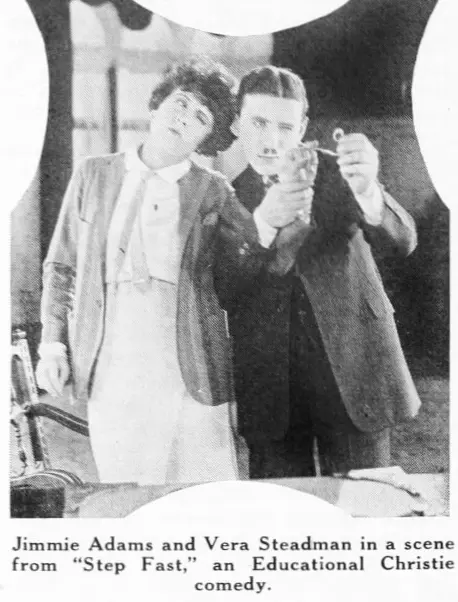
Is Step Fast actually worth watching nearly a century after its release? Short answer: yes, but only if you appreciate the frantic, unpolished machinery of the mid-1920s Christie Comedies. This isn't high art, and it doesn't pretend to be. It is a film for those who find joy in the athletic precision of silent-era stunts and for historians who want to see how the 'inheritance race' trope was perfected before it became a Hollywood cliché. If you are looking for the emotional depth of a Chaplin feature or the surrealism of Keaton, you won't find it here. This is pure, caffeinated movement.
This film works because the central conceit—marry in an hour or lose everything—is the ultimate engine for comedic momentum, leaving no room for the narrative to sag. This film fails because the supporting cast, particularly the relatives, are treated as mere props rather than characters, making their sabotage feel repetitive by the second act. You should watch it if you enjoy short-form slapstick that prioritizes physical geometry and timing over complex storytelling.
In Step Fast, time isn't just a background element; it is the primary villain. While the disgruntled relatives, played with sneering efficiency by the likes of Billy Bletcher and William Irving, provide the physical hurdles, the ticking clock provides the existential dread. Director Frank Roland Conklin understands that for slapstick to work, the stakes must be binary. Jimmie either succeeds and becomes wealthy, or he fails and remains a pauper. There is no middle ground. This binary pressure is what drives the frantic energy of the performance.
Consider the scene where Jimmie first learns of the inheritance. The transition from lethargy to absolute panic is instantaneous. Unlike the more methodical pacing seen in The Vampires: The Poisoner, where tension is built through atmosphere, Step Fast builds tension through sheer velocity. Every second spent arguing with a relative is a second Jimmie doesn't have. The film uses this to justify a series of increasingly improbable physical feats that would feel out of place in a more grounded narrative.
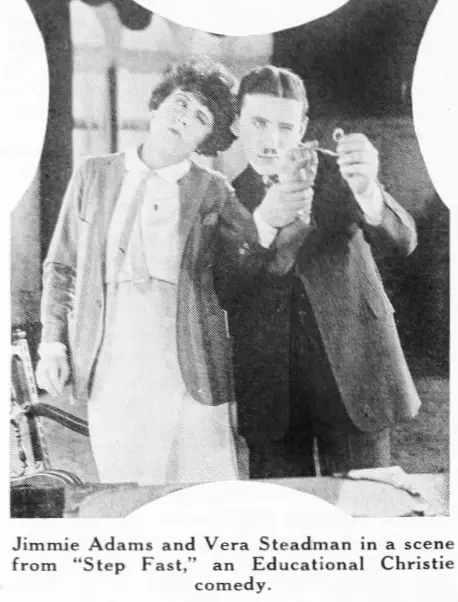
Jimmie Adams is often overshadowed by the 'Big Three' of silent comedy (Chaplin, Keaton, Lloyd), but Step Fast proves he was a master of the 'nervous' style. Adams doesn't have the stoicism of Keaton or the pathos of Chaplin. Instead, he possesses a vibrating, high-strung energy that perfectly suits the Christie Comedy brand. His performance here is a masterclass in kinetic desperation. Every time he thinks he has found a willing bride, the rug is pulled out from under him, literally and figuratively.
The physical comedy is remarkably sharp. There is a specific moment involving a staircase and a poorly timed intervention by Budd Fine that requires the kind of timing modern CGI simply cannot replicate. It’s raw. It’s dangerous. It works. While it lacks the epic scale of Around the World in 80 Days, it shares that same DNA of a man pushed to his absolute limit by the constraints of the world around him. Adams’ face throughout the film is a mask of escalating horror, which serves as a hilarious counterpoint to the mundane nature of his obstacles.
Comparing Step Fast to other films of the era, such as A Poor Fish, reveals a studio system that was obsessed with efficiency. Christie Comedies were the 'fast food' of the silent era—reliable, quick, and satisfying, even if they weren't particularly nutritious. Where a film like Call a Cop might lean into the absurdity of authority, Step Fast leans into the absurdity of family greed. The disgruntled relatives aren't just trying to get the money; they are actively enjoying Jimmie's suffering.
This cynicism gives the film a slightly harder edge than many of its contemporaries. There is a palpable sense of 'man against the world.' Every person Jimmie encounters is either an obstacle or a potential tool to be used. This transactional view of human relationships is a surprising observation for a 1920s short, suggesting a darker undercurrent to the roaring twenties' prosperity. It’s a far cry from the somber tragedy of Rasskaz o semi poveshennykh, but it shares a similar view of a protagonist trapped by external forces.
If you are looking for a quick burst of cinematic history that doesn't require a heavy emotional investment, then Step Fast is absolutely worth twenty minutes of your time. It represents a specific moment in film history when the medium was perfecting the art of the 'gag.' It is a lean, mean, comedy machine that does exactly what it sets out to do: make you wonder how Jimmie is going to get out of this mess.
However, for those who find silent comedy repetitive, this might feel like more of the same. It doesn't break new ground in terms of cinematography or narrative structure. It is a genre piece, executed with high professional standards but little innovation. It is the cinematic equivalent of a perfectly executed sprint. It’s impressive to watch, but it’s over before you can really process the technique behind it.
Pros:
- Incredible pacing that never allows the viewer to get bored.
- Genuine, dangerous-looking stunts performed without the safety nets of modern cinema.
- A clear, easy-to-follow premise that works across all language barriers.
- Excellent use of the 'disgruntled relative' archetype for comedic conflict.
Cons:
- The resolution feels a bit rushed, even for a short film.
- Vera Steadman is somewhat underutilized as the potential bride.
- Some of the gags are recycled from earlier Christie shorts like Grab the Ghost.
Step Fast is a minor gem of the silent era that deserves more recognition for its relentless energy. It is a film that understands its limitations and plays within them perfectly. Jimmie Adams may not be a household name today, but his performance here is a testament to the sheer physical talent required to be a comedy star in the 1920s. It is fast. It is loud. It is over before you can blink. While it lacks the 'soul' of the era's greater masterpieces, it possesses a mechanical perfection that is undeniably entertaining. It’s a frantic dash to the finish line that still manages to raise a sweat nearly a century later. Final Rating: A solid, high-energy 7/10.

IMDb —
1917
Community
Log in to comment.