DbcultAccessing Vault...
Cult Review
Senior Film Conservator
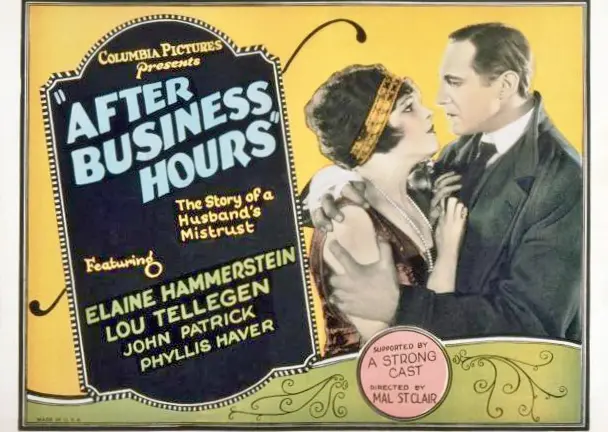
Stepping into the flickering glow of a 1924 silent film, one might anticipate a quaint melodrama, a relic of a bygone cinematic era. Yet, *After Business Hours*, a production that shrewdly navigates the treacherous waters of marital power dynamics and economic subjugation, emerges as a surprisingly potent and resonant narrative. It’s a film that peels back the veneer of societal decorum to expose the raw, often brutal, realities lurking beneath the surface of supposedly idyllic unions. The story, crafted by the perceptive minds of Ethel Watts Mumford, Walter Anthony, and Douglas Z. Doty, is less about the grand gestures of love and more about the insidious creep of control, the suffocating grip of distrust, and the desperate measures born from an absence of agency.
At its core, *After Business Hours* presents us with a protagonist, a young woman (portrayed with compelling vulnerability by Elaine Hammerstein) who enters matrimony with a wealthy young man, only to discover that her new life of affluence is, in fact, a gilded cage. Her husband, a character imbued with a deeply unsettling possessiveness, manifests his control not through overt cruelty but through a more insidious form of deprivation: the complete withholding of financial autonomy. This isn't merely a matter of frugality; it's a deliberate, calculated act of distrust, a refusal to grant his wife any personal funds, effectively rendering her a prisoner within her own home, dependent on his every whim. Such a premise, even a century later, strikes a chord, highlighting the enduring struggle for financial independence, particularly for women, in a world where economic power often equates to personal freedom.
The film masterfully portrays the protagonist's descent, not as a moral failing born of inherent vice, but as a desperate, almost inevitable, consequence of her circumstances. Deprived of any legitimate means to assert herself or even manage her daily needs, she is drawn into the clandestine world of gambling. For her, the roll of the dice, the turn of a card, isn't just about winning money; it's about a fleeting moment of control, a defiant act against the suffocating strictures of her marriage. In the smoky, hushed rooms of illicit games, she finds a perverse kind of freedom, a space where her destiny, however momentarily, rests in her own hands, not in the stingy generosity of her husband. This psychological nuance elevates the film beyond a simple cautionary tale, transforming it into a poignant exploration of human desperation. It reminds one of the moral quandaries faced by characters in films like The Prodigal Liar, where deceit becomes a survival mechanism, blurring the lines between victim and perpetrator.
The initial thrill of potential victory soon gives way to the inevitable downward spiral. Gambling, a false god of instant gratification, demands more than it ever gives, and our protagonist finds herself increasingly entangled in its unforgiving web. The silent film medium, with its reliance on expressive acting and evocative intertitles, proves remarkably adept at conveying the mounting anxiety and desperation. Elaine Hammerstein’s performance here is particularly noteworthy; her expressive eyes and subtle gestures communicate volumes of unspoken anguish and fleeting hope, drawing the audience deep into her predicament.
As her gambling debts mount and her situation becomes increasingly untenable, the protagonist crosses a critical threshold, turning to forgery. This is not a casual transgression but a monumental moral leap, a desperate act born of utter destitution and a crushing lack of alternatives. The film doesn't glamorize this choice; instead, it portrays it as a tragic consequence of her husband’s unyielding control. The act of forging signatures, of manipulating documents, represents her ultimate rebellion, a desperate attempt to reclaim some semblance of financial autonomy, even if it means stepping into the dangerous realm of illegality. The complications that ensue are, as the plot synopsis suggests, manifold and devastating, unraveling the fragile threads of her existence and threatening to expose her to societal ruin.
This shift from gambling to outright crime resonates with the thematic explorations found in other films of the era that delved into the moral compromises forced upon individuals by circumstance. One might draw parallels to the high-stakes deception depicted in Bluff (1924), where characters are pushed to their limits, or even the societal pressures driving characters to illicit activities in films like The Yellow Traffic. The film skillfully builds suspense around her actions, leaving the audience to ponder not just the 'what' but the 'why,' deepening our empathy for her plight.
The ensemble cast of *After Business Hours* delivers performances that, even without spoken dialogue, convey a rich tapestry of human emotion and motivation. Elaine Hammerstein, as the beleaguered wife, anchors the film with a performance of remarkable depth. Her nuanced expressions of despair, fleeting hope, and eventual resignation are truly captivating. She embodies the silent suffering of a woman trapped by societal expectations and marital tyranny. Lou Tellegen, as the controlling husband, perfectly captures the chilling arrogance of wealth combined with a suffocating distrust. He doesn't need to shout to convey his power; his stern gaze and dismissive gestures are enough to establish his dominance.
Supporting players like William Scott, John Patrick, Phyllis Haver, Lee Moran, and Lillian Langdon contribute significantly to the film’s atmosphere and narrative propulsion. Phyllis Haver, often adept at portraying figures of temptation or societal transgression, likely brings a compelling edge to her role, whatever its specific nature within the plot’s unfolding. Each actor, through exaggerated yet precise movements and facial expressions, paints a vivid picture of their character's place in this unfolding domestic tragedy, making the silent narrative feel remarkably articulate. The collective efforts of the cast ensure that the emotional stakes remain palpable throughout, drawing the viewer into the characters' struggles and moral dilemmas.
The direction of *After Business Hours* (though uncredited in the provided details, a common occurrence for some silent films or if the focus is on writers) skillfully utilizes the visual language of the era. Close-ups emphasize emotional turmoil, while wider shots establish the opulent yet confining settings. The pacing, crucial for silent cinema, builds tension effectively, allowing the audience to feel the protagonist's growing desperation. The intertitles, far from being mere plot devices, often serve as internal monologues or societal commentary, enriching the narrative texture.
The screenplay by Ethel Watts Mumford, Walter Anthony, and Douglas Z. Doty is particularly commendable for its unflinching portrayal of a difficult subject. They don't shy away from the darker aspects of human nature or the societal pressures that can push individuals to extremes. The writers craft a narrative arc that feels organic, with each desperate act logically flowing from the previous one, painting a stark picture of cause and effect. This nuanced approach to character motivation and societal critique distinguishes *After Business Hours* from simpler melodramas of its time. One could argue that the film, in its depiction of a woman's struggle for self-determination against oppressive forces, shares a thematic kinship with works like Forbidden Fruit (1921), where women often grapple with moral choices in the face of restrictive societal norms and economic vulnerability.
While not as widely remembered as some of its more lavish contemporaries, *After Business Hours* holds a significant place in the tapestry of silent cinema for its thoughtful exploration of themes that remain strikingly relevant. The film’s examination of financial control within a marriage, the desperation it breeds, and the moral compromises it forces upon individuals, transcends its specific historical context. In an era where discussions around economic abuse and gendered power imbalances continue, the film's central conflict feels eerily contemporary.
Comparing it to other films of its time, *After Business Hours* stands out for its psychological depth. Unlike the more overt social commentary found in films like The Coming of the Law, which might focus on broader justice, this film zeroes in on the personal tragedy born of intimate betrayal. Its portrayal of high society's underbelly and the hidden vices of the affluent could be juxtaposed with the more generalized depiction of wealth in The High Life, offering a darker, more critical perspective. The narrative’s descent into crime, driven by desperation, also finds echoes in the darker crime dramas like The Black Circle or the frontier justice of The Night Riders, albeit transposed to a very different social milieu. The film’s ability to evoke profound empathy for a character who engages in illicit activities speaks to the power of its narrative construction and the performances that bring it to life.
Even when considering films that depict women in challenging circumstances, such as La terre, which focuses on rural hardship, *After Business Hours* provides a distinct, urbanized perspective on the specific vulnerabilities of women within rigid societal structures. It suggests that economic oppression can be just as stifling, if not more so, than physical labor or overt violence. The film’s quiet intensity and its focus on internal struggle set it apart, making it a valuable piece for understanding the evolving complexities of cinematic storytelling in the early 20th century.
Ultimately, *After Business Hours* is more than just a historical curiosity; it is a compelling, if melancholic, exploration of human resilience and vulnerability. It serves as a stark reminder that true freedom often hinges on financial independence, and that the absence of trust can corrode even the most sacred bonds. The film’s ability to evoke such profound themes without a single spoken word is a testament to the artistry of silent cinema and the enduring power of a well-told story. For cinephiles and those interested in the social commentary embedded within early film, *After Business Hours* offers a richly rewarding viewing experience, prompting reflection on the timeless struggle for personal autonomy in the face of overwhelming odds. It reminds us that some struggles, especially those tied to fundamental human rights and dignity, transcend the decades, finding new resonance in every generation.
IMDb —
1929
Community
Log in to comment.