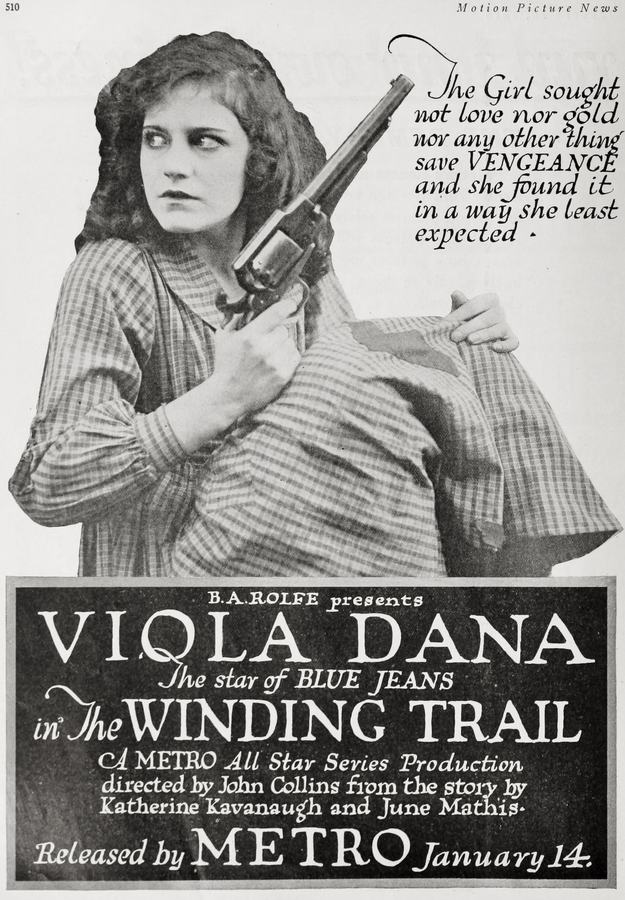
The year 1918, amidst the tumultuous backdrop of a world at war, saw the release of The Winding Trail, a cinematic endeavor that, even a century later, still compels with its intricate narrative and surprisingly nuanced characterizations. This silent Western, penned by the collaborative minds of June Mathis, Katharine Kavanaugh, and H.P. Keeler, transcends the typical genre fare of its era, offering not merely a tale of frontier adventure but a sophisticated exploration of vengeance, deception, and the murky waters of moral compromise. It is a film that demands attention, not just for its historical significance but for its enduring thematic resonance.
A Star's Descent into the Crucible of Vengeance
At its core, The Winding Trail is a study in transformation and resolve, embodied by its protagonist, Audrey Graham. Portrayed with captivating intensity by Viola Dana, Audrey is introduced not as a hardened frontierswoman but as a celebrated theatrical star from the refined stages of New York. Her journey westward is thus a radical departure, a deliberate shedding of her glamorous persona for the harsh realities of the 1870s American frontier. The catalyst for this dramatic shift is a deeply personal wound: the disgrace and subsequent death of her sister, directly attributable to the perfidy of one Alvin Steele. This motivation imbues Audrey’s quest with a potent emotional authenticity, elevating it beyond a simple vendetta to a primal scream for justice.
The narrative quickly plunges Audrey into the perilous heart of the West. Her chosen path—joining a caravan bound for Silver Bar, Steele’s current abode—is fraught with peril. The depiction of the homesteaders' desperate plight, succumbing to thirst and exhaustion on the parched plains, serves as a stark reminder of the unforgiving landscape and the fragility of human existence outside the comforts of civilization. This segment of the film masterfully establishes the high stakes, not just for Audrey's personal mission but for the collective survival of the group, painting a vivid picture of a frontier where life is a constant negotiation with death. It’s a compelling setup that immediately draws the viewer into the narrative’s gravitational pull, echoing the dramatic tension found in other survival-centric narratives of the era, though perhaps with a more pronounced psychological edge than simpler adventure tales like A Romance of the Air.
The Outlaw's Lair: A Twist of Fate and Deception
The introduction of Zachary Wando, a notorious outlaw portrayed by the formidable Clifford Bruce, marks a pivotal turning point. His initial refusal to provide water to the dying caravan immediately establishes him as a figure of hardened ruthlessness, a product of the brutal environment he inhabits. Yet, it is Audrey’s ingenious disguise as a child that serves as the key to unlocking a flicker of compassion within his seemingly impenetrable exterior. This moment of vulnerability, where a hardened criminal is swayed by perceived innocence, is a testament to the script's ability to explore the complexities of human nature. It suggests that even in the most hardened hearts, a seed of empathy might reside, waiting for the right catalyst. This delicate dance of manipulation and nascent humanity is a narrative triumph, setting the stage for the film's deeper moral quandaries.
However, the fragile truce is shattered when Zachary uncovers Audrey's deception. The revelation that the innocent child was, in fact, a cunning woman on a mission, transforms his nascent benevolence into a vengeful fury. This shift is critical; it moves the plot from a simple tale of survival and gratitude to a more intricate web of manipulation and control. Zachary's subsequent demand—that Audrey, now his captive, deliver Alvin Steele into his hands—introduces a new layer of complexity. It is here that the film reveals its masterstroke: Steele is not merely Audrey’s target, but also the illicit lover of Zachary’s wife, Lou. This unexpected intertwining of fates, where Audrey's personal vendetta becomes entangled with Zachary's marital betrayal, elevates The Winding Trail far beyond a straightforward revenge narrative. It transforms it into a multi-layered drama of interconnected desires and betrayals, reminiscent of the intricate plotting found in more European-influenced dramatic works of the period, like perhaps Panthea, which also delves into complex relationships and moral compromises.
The Unholy Trinity: Love, Betrayal, and a Deadly Choice
Audrey, ever the master of performance, embraces this new, dangerous directive. Her beauty, once an asset on the stage, becomes a potent weapon in the untamed West. She locates Steele, portrayed by Hayward Mack with a suitable blend of arrogance and susceptibility, and effortlessly captivates him. The ease with which she lures him to Zachary’s camp underscores her formidable skill in manipulation and her unwavering commitment to her ultimate goal. This phase of the narrative is a tense cat-and-mouse game, with Audrey orchestrating a dangerous rendezvous that will irrevocably alter the lives of all involved.
The climax of The Winding Trail is nothing short of electrifying. Zachary, a man consumed by his own brand of frontier justice, thrusts a gun into the hand of his wife, Lou, compelling her to make an unthinkable choice between Steele, her lover, and himself, her wronged husband. Mabel Van Buren’s portrayal of Lou is particularly impactful here, conveying the agonizing internal struggle of a woman trapped by circumstances and forced into a brutal decision. The tension in this scene, devoid of spoken dialogue, relies entirely on the actors' expressions and the dramatic staging, a hallmark of effective silent film storytelling. Lou’s ultimate act—shooting Steele—is a moment of visceral shock and profound narrative resolution. It is a violent act of self-preservation and a desperate attempt at reconciliation, a testament to the brutal choices demanded by the frontier and the passions it ignited. This kind of raw, uncompromising justice, delivered through personal agency rather than institutional law, is a recurring motif in Westerns, finding parallels in the grim determinations seen in films like A Pardoned Lifer, where moral lines are frequently blurred.
The Architects of Intrigue: Writing and Direction
The strength of The Winding Trail lies significantly in its meticulously crafted screenplay. June Mathis, Katharine Kavanaugh, and H.P. Keeler demonstrate a remarkable aptitude for intricate plotting and character development, especially for a film of its era. They do not shy away from moral ambiguities, presenting characters who are neither wholly good nor entirely evil, but rather products of their desires, circumstances, and the harsh realities of their world. The way Audrey's initial, singular quest for vengeance broadens to encompass Zachary's marital drama is a testament to the writers' ability to weave multiple narrative threads into a cohesive and compelling whole. This sophisticated approach to storytelling sets it apart, offering a depth that many contemporary films often overlooked in favor of simpler action or romance. The character arcs, particularly Audrey's and Zachary's, are complex, showing growth, manipulation, and a twisted form of justice that resonates long after the credits roll.
"The Winding Trail is a testament to the power of silent cinema to convey profound human drama without uttering a single word. Its intricate plot and morally complex characters are a masterclass in early cinematic storytelling."
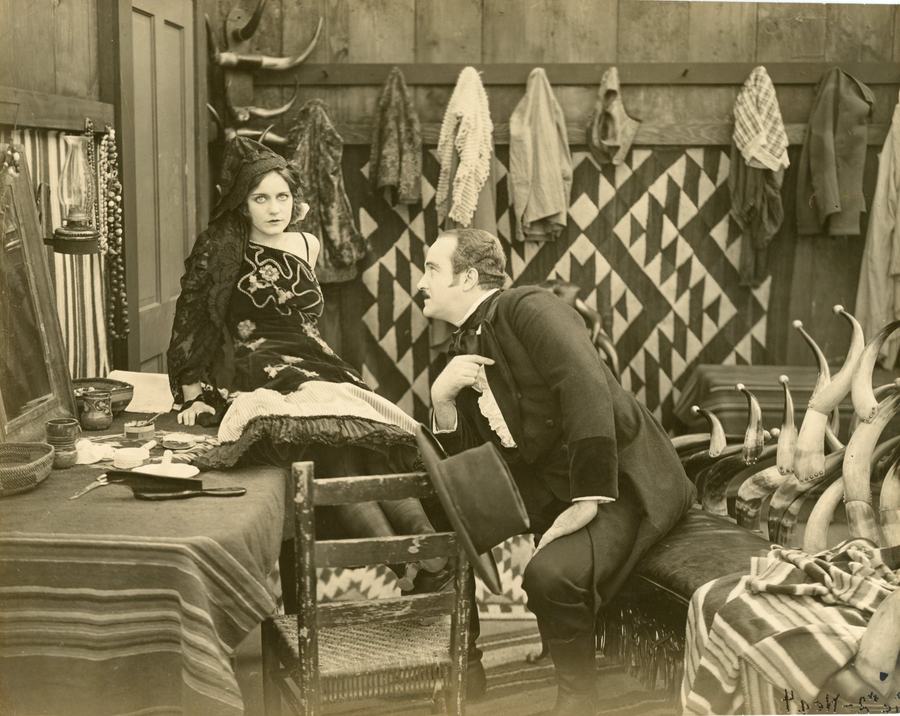
Scene from The Winding Trail
Cinematic perspective: Exploring the visual vocabulary of The Winding Trail (1918) through its definitive frames.
While specific directorial credits for this film are not highlighted in the provided context, the execution of the script suggests a keen understanding of visual storytelling. The use of natural landscapes, the careful framing of emotionally charged close-ups, and the pacing of the narrative all contribute to the film’s effectiveness. The silent era demanded a particular artistry in conveying emotion and plot through gesture, expression, and intertitles, and The Winding Trail excels in this regard. The performances, guided by an unseen hand, manage to communicate the profound internal struggles and external conflicts with remarkable clarity, ensuring that the audience remains deeply invested in the unfolding drama. This visual eloquence draws comparisons to the dramatic intensity found in films like Obryv or Otets Sergiy, which similarly rely on powerful imagery and nuanced acting to convey complex moral and emotional landscapes.
Performances That Speak Volumes
The ensemble cast delivers performances that are both compelling and remarkably expressive. Viola Dana as Audrey Graham is the undeniable anchor of the film. Her ability to transition from the sophisticated New York star to the disguised, determined avenger, and then to the cunning manipulator, is a tour de force of silent acting. She conveys Audrey's emotional depth, her unwavering resolve, and her underlying vulnerability through subtle gestures and piercing gazes. It is a performance that highlights the power of female agency, even within the restrictive societal norms of the period.
Clifford Bruce's portrayal of Zachary Wando is equally memorable. He crafts a character who is initially a ruthless outlaw but reveals layers of complexity, from his momentary softening at Audrey's 'child' guise to his later, vengeful manipulation. Bruce embodies the rugged individualism and often brutal code of the West, yet his character's internal conflict regarding his wife's infidelity adds a human dimension that prevents him from becoming a one-dimensional villain. His performance brings a raw, untamed energy to the screen, embodying the very spirit of the frontier, much like the compelling figures in Love's Lariat or The Bandit of Port Avon.
Mabel Van Buren, as Lou, delivers a poignant performance, particularly in the climax. Her anguish and the impossible choice she faces are communicated with heartbreaking clarity, making her a sympathetic figure despite her transgressions. And Hayward Mack’s Alvin Steele, while the antagonist, is not a caricature. He is charming enough to betray Audrey's sister and seduce Lou, yet arrogant enough to fall victim to Audrey's trap, making his demise feel earned within the narrative's moral framework. The chemistry, or rather the deliberate lack thereof, between Audrey and Steele once her intentions become clear, is deftly handled through their non-verbal exchanges.
Themes of Enduring Relevance
Beyond its thrilling plot, The Winding Trail delves into themes that remain profoundly relevant. The most prominent is, of course, vengeance. Audrey's pursuit is not a mindless rage but a meticulously planned act of justice, driven by a deep sense of familial loyalty. The film asks profound questions about the nature of justice itself: Is personal retribution ever truly satisfying? Does it heal wounds, or merely create new ones? Audrey’s return to New York, her desire for vengeance satisfied, leaves the audience to ponder the true cost of her victory and the lingering echoes of the violence she instigated. This nuanced approach to revenge sets it apart from simpler retributive narratives, offering a more introspective conclusion.
Deception is another central pillar. Audrey's entire journey is predicated on a series of elaborate deceptions, from her disguise as a child to her seduction of Steele. This highlights the power of performance, not just on the stage but in the theater of life, particularly in a lawless environment where appearances can be everything. The film also explores gender roles, presenting Audrey as a strong, intelligent, and proactive female protagonist who defies the passive stereotypes often found in early cinema. She is not merely an object of desire or a damsel in distress; she is the architect of her own destiny, manipulating men and circumstances to achieve her goals. This portrayal of a powerful woman, navigating and often controlling male-dominated spaces, offers an intriguing counterpoint to more traditional depictions of women in Westerns, and can be seen as a precursor to the complex female characters that would emerge in later decades, echoing the strong will seen in films like Gloriana or The Mystery Girl.
The film also touches upon the blurred lines between morality and survival on the frontier. Zachary Wando, though an outlaw, operates under his own code of justice, albeit a brutal one. His decision to force Lou's hand is a cruel act, yet within the context of his world, it represents his attempt to restore order and assert his authority. This moral ambiguity is a distinguishing feature, inviting viewers to grapple with complex ethical dilemmas rather than offering simplistic answers. It’s a thematic depth that resonates with the introspective quality found in literary adaptations of the era, such as La loca del monasterio, which often explored the darker facets of human nature.
A Legacy on the Silent Silver Screen
The Winding Trail, while perhaps not as widely remembered as some of its more colossal contemporaries, stands as a testament to the sophistication and narrative ambition present in early American cinema. It is a film that defies easy categorization, blending elements of the Western, the revenge thriller, and the psychological drama into a cohesive and compelling whole. Its enduring appeal lies in its ability to craft a story that is both thrillingly adventurous and deeply introspective, populated by characters whose motivations and actions resonate with a timeless human complexity.
For modern audiences, it offers a fascinating glimpse into the storytelling techniques of the silent era, demonstrating how powerful narratives could be conveyed without the aid of spoken dialogue. The film’s intricate plot, strong performances, and exploration of complex moral questions ensure its place as a significant, albeit often overlooked, work in the annals of cinematic history. It challenges the notion that early Westerns were simplistic tales of good versus evil, instead presenting a world where justice is often personal, brutal, and profoundly ambiguous. It's a journey worth taking for any cinephile interested in the evolution of narrative filmmaking and the enduring power of a well-told story. The film's ability to maintain suspense and character depth without vocalization is a masterclass, comparable in its silent dramatic impact to works like Inspiration or even the grander scale of The Sign of the Cross, albeit in a different genre. Its nuanced portrayal of human nature, caught between societal expectations and primal desires, solidifies its position as a remarkable achievement of its time.