DbcultAccessing Vault...
4.8/10
Senior Film Conservator
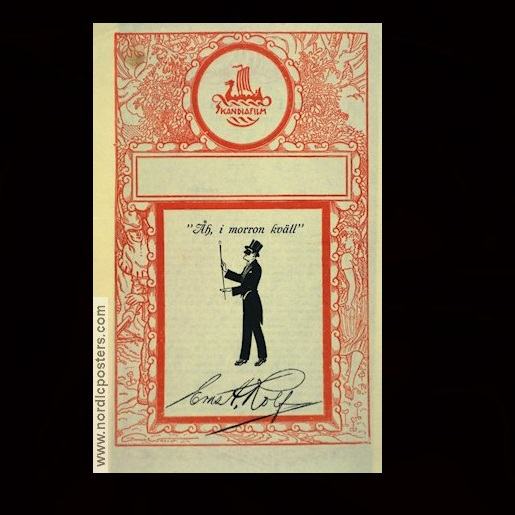
A definitive 4.8/10 rating for a film that redefined the boundaries of cult cinema. Åh, i morron kväll remains a cornerstone of transgressive art.
Step back in time with me, dear readers, to an era of flickering shadows and nascent cinematic storytelling, where a film like "Åh, i morron kväll" dared to peel back the veneer of conventional marriage and expose the simmering discontents beneath. This isn't just a historical artifact; it's a poignant exploration of human frailty, the corrosive effects of disillusionment, and the tantalizing, often dangerous, allure of the road not taken. Directed by John W. Brunius and penned by Sam Ask, this Swedish production, starring the charismatic Ernst Rolf himself alongside Hulda Malmström, delves into a universally resonant predicament that transcends its specific time and place.
At the heart of "Åh, i morron kväll" lies Ernst Rolf, a man whose domestic life has calcified into something far removed from the romantic idyll he once envisioned. His wife, Josefina, portrayed with a compelling, if exasperating, intensity by Hulda Malmström, is no longer the sweet, affectionate partner she once was. Time, perhaps, or the relentless grind of everyday existence, has transformed her into a veritable force of nature: a nag, a shrew, a constant source of grievance. Their home, once presumably a sanctuary, has become a cage of resentment and unmet expectations. This transformation isn't just a plot device; it's a stark commentary on how the mundane can erode the magnificent, how familiarity can breed contempt, and how the absence of genuine connection can leave a gaping void in the human spirit. Ernst's plight resonates deeply; who among us hasn't, at some point, felt the weight of routine or the sting of a relationship's slow decline?
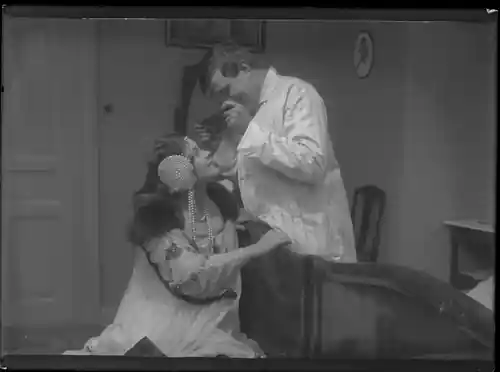
With his reality growing increasingly bleak, Ernst retreats into the vivid theater of his own mind. Here, in the realm of fantasy, he finds solace and a fleeting sense of liberation. Other women, ethereal and enchanting, populate his daydreams, embodying all the charm, understanding, and passion that seem to have vanished from his conjugal life. These aren't just idle thoughts; they are a psychological lifeline, a desperate attempt to maintain a shred of hope and personal agency in an otherwise suffocating existence. The film masterfully portrays this internal struggle, inviting us to empathize with Ernst's yearning for connection and escape, even as we question the moral implications of his mental wanderings. It's a delicate dance between sympathy and judgment, a testament to the nuanced writing of John W. Brunius and Sam Ask.
The allure of the forbidden, the siren song of what could be, is a powerful current running through this narrative. It's a theme explored in various forms across cinematic history, from the domestic struggles depicted in films like Bread, which often highlight the everyday pressures that fray marital bonds, to more overt explorations of temptation and its consequences. Ernst's fantasies are not merely escapism; they are a precursor to a potential reality, a mental rehearsal for a transgression that looms ever larger.

The central question animating "Åh, i morron kväll" is deceptively simple yet profoundly complex: if given a tangible opportunity, will Ernst translate his vivid fantasies into a concrete act of infidelity? This isn't merely about physical betrayal; it's about the shattering of trust, the dissolution of vows, and the irreversible alteration of a life. The film builds considerable tension around this moral dilemma, making us ponder the weight of such a decision. Is a momentary escape worth the potential devastation? Can one truly find happiness by stepping over such a line, or does the guilt and fallout merely exchange one form of misery for another?
This narrative arc places Ernst at a crossroads, a moment of profound personal reckoning. It echoes the core conflict found in many dramas dealing with marital strife and the pull of illicit desire. Consider films like Betrayed (1917), which, despite its earlier release, grapples with similar themes of trust, deception, and the painful unraveling of relationships under the strain of infidelity. The internal and external pressures on Ernst are palpable, and the audience is left to wonder if his yearning for perceived happiness will ultimately lead him down a path of regret.
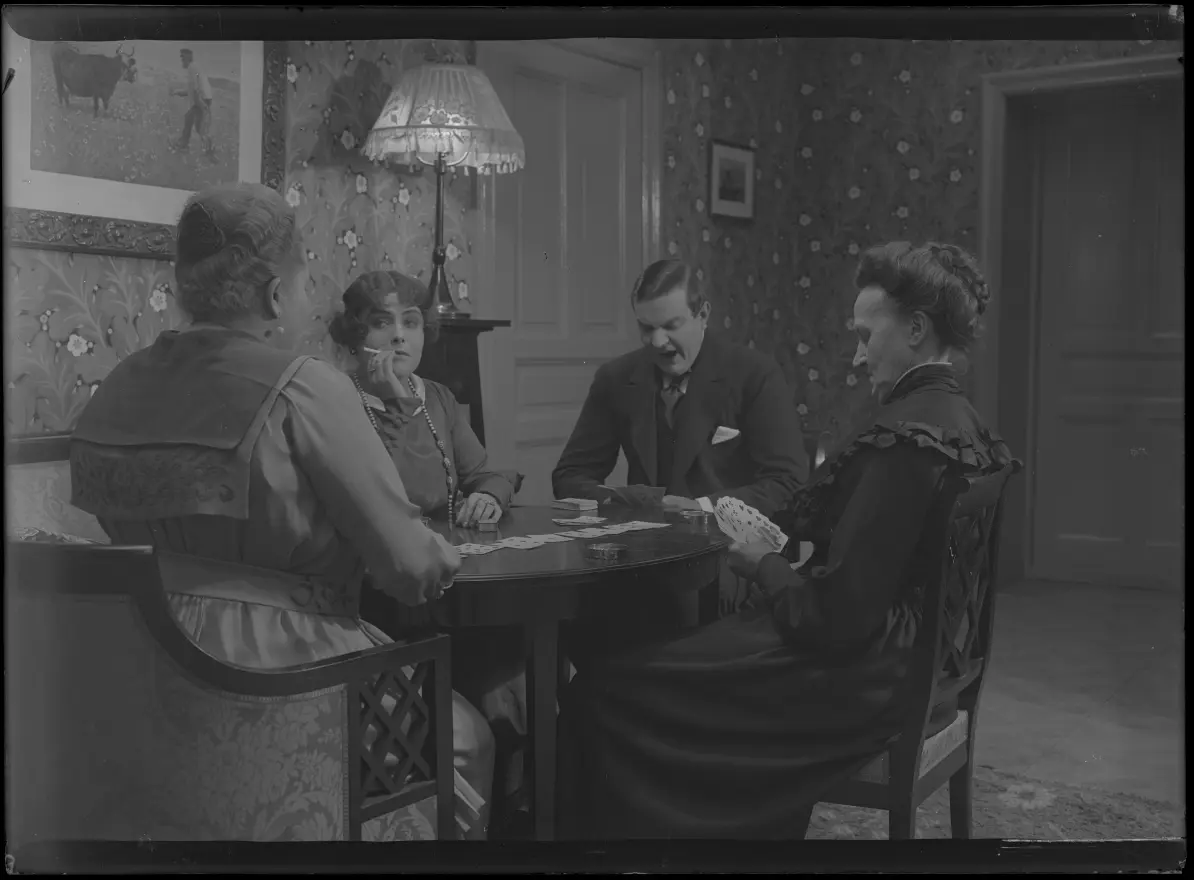
In the realm of silent cinema, the power of performance rests heavily on nuanced facial expressions, body language, and the ability to convey profound emotion without spoken dialogue. Ernst Rolf, a celebrated figure of Swedish entertainment, brings a captivating blend of melancholy and simmering desire to his portrayal of Ernst. His eyes, in particular, convey a world of unspoken longing and frustration, allowing the audience to glimpse the torment beneath his outwardly composed demeanor. He's not just playing a character; he's embodying a universal human struggle.
Hulda Malmström's Josefina is equally compelling, though in a drastically different register. Her transformation from a presumably loving wife to a nagging presence is conveyed with stark effectiveness. While we might find her character grating, Malmström ensures we understand the pathology of her discontent, hinting at her own frustrations and perhaps a sense of neglect that has festered into bitterness. The supporting cast, including Anna Diedrich, Jean Grafström, Eva Eriksson, Mary Gräber, Erik Lindholm, and Gucken Cederborg, contribute to the tapestry of Ernst's world, each playing a role in either fueling his fantasies or grounding him in his stark reality. Their collective performances create a believable, if somber, depiction of early 20th-century Swedish society.
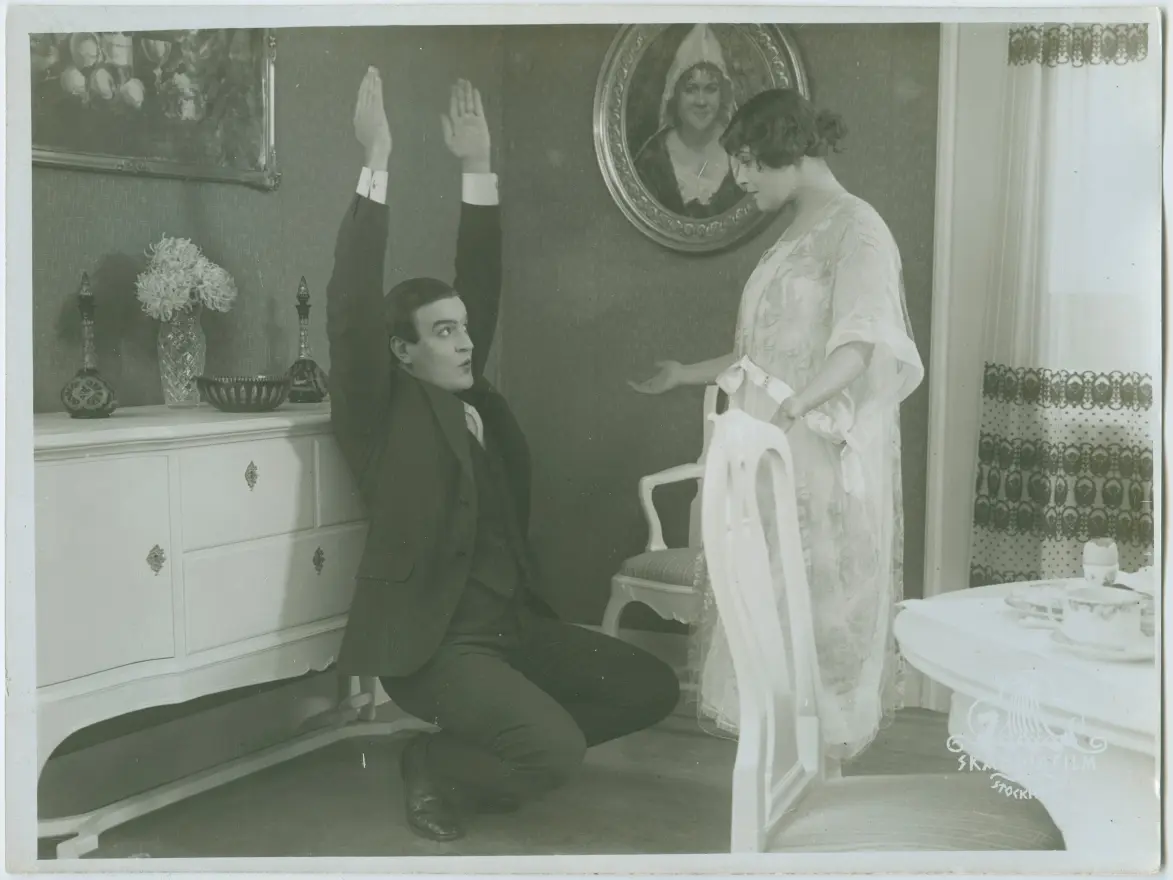
John W. Brunius, as director, and Sam Ask, as co-writer, navigate the sensitive subject matter of marital discord and potential infidelity with a remarkable degree of delicacy and psychological insight. They avoid simplistic moralizing, opting instead for a portrayal that understands the complexities of human emotion. The narrative doesn't condemn Ernst outright for his fantasies, nor does it necessarily excuse Josefina's behavior. Instead, it presents a nuanced picture of two individuals trapped in a deteriorating dynamic, each contributing, perhaps unwittingly, to their shared unhappiness. The pacing, typical of its era, allows for moments of quiet reflection, giving the audience space to absorb the emotional weight of each scene.
Their approach to storytelling, focusing on internal conflict as much as external events, lends the film a psychological depth that was perhaps ahead of its time. It’s not about grand gestures but about the subtle shifts in expression, the lingering gazes, and the unspoken desires that drive the plot. This meticulous attention to character and motivation elevates "Åh, i morron kväll" beyond a mere melodrama, positioning it as a thoughtful character study. The writers, in particular, demonstrate an acute understanding of the human condition, crafting a scenario where the 'villain' isn't a singular entity, but rather the slow decay of affection and communication.
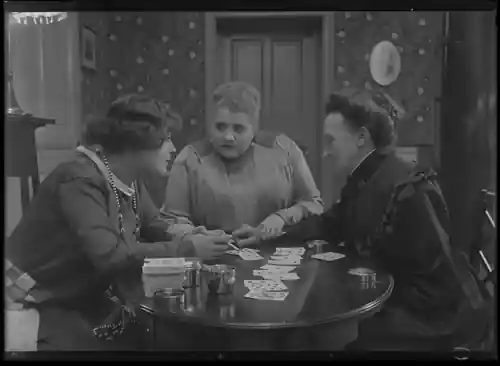
"Åh, i morron kväll" serves as a fascinating window into the societal mores and expectations surrounding marriage in early 20th-century Sweden. While the specifics of domestic life may have changed, the fundamental struggles of commitment, temptation, and the pursuit of personal happiness remain strikingly relevant. The film subtly critiques the often-unspoken pressures on individuals within a marital structure, especially when that structure begins to crumble from within. It invites us to consider the roles men and women were expected to play, and the limited avenues for expressing discontent without societal condemnation.
The exploration of secret desires and the potential consequences of acting upon them is a theme that continues to resonate in contemporary cinema. Films like The Price of Silence, for instance, often delve into the hidden truths and difficult choices that define human relationships, underscoring the enduring power of secrets and their eventual toll. Ernst's struggle is a universal one: the yearning for something more, the conflict between duty and desire, and the eternal question of what constitutes a truly fulfilling life. It’s a powerful reminder that while the external trappings of society evolve, the internal landscapes of human emotion often remain remarkably consistent.
This film also touches upon the idea of personal transformation and the search for identity beyond prescribed roles. Ernst, in his fantasies, is not just seeking other women; he is seeking a different version of himself, one that feels alive and desired. This quest for self-realization, even if misguided or fraught with peril, is a profound aspect of the human experience. It can be compared, in a thematic sense, to narratives where characters are stepping out of their comfort zones or societal expectations to find a truer version of themselves, even if the context and outcomes differ wildly.
While specific details about the cinematography are scarce from this distance, the effectiveness of "Åh, i morron kväll" in conveying its complex emotional landscape through visual storytelling is undeniable. Silent films relied heavily on evocative imagery, carefully composed shots, and the expressive power of their actors to convey narrative and mood. The film's ability to maintain tension around Ernst's internal conflict and the looming possibility of infidelity speaks volumes about its directorial and editing prowess. The use of close-ups to capture the nuances of Rolf's pained expressions or Malmström's sharp glares would have been crucial in drawing the audience into their emotional world.
The film's exploration of moral ambiguities places it alongside other works that challenge simplistic notions of right and wrong. When considering the ethical dilemmas presented, one might draw parallels to films like Saints and Sorrows, which often delve into the profound moral struggles faced by individuals, forcing them to confront their deepest beliefs and desires. Here, Ernst is caught between the 'saintly' ideal of marital fidelity and the 'sorrows' that could arise from succumbing to temptation, or indeed, from remaining in an unfulfilling existence.
Ultimately, "Åh, i morron kväll" is more than just a period piece; it’s a timeless meditation on the fragility of human relationships and the persistent pull of individual desire. It asks us to look beyond the surface of a seemingly ordinary life and consider the tempestuous currents that can rage beneath. Its legacy lies not just in its historical significance within Swedish cinema, but in its enduring capacity to provoke thought and foster empathy for characters grappling with profoundly human dilemmas. It reminds us that temptation is not merely an external force, but often a deeply internal one, born from the very fabric of our unfulfilled longings. The film's power lies in its refusal to offer easy answers, instead leaving us to ponder the intricate dance between choice, consequence, and the relentless pursuit of a happiness that often remains just out of reach.
IMDb —
1918
Community
Log in to comment.