DbcultAccessing Vault...
Cult Review
Senior Film Conservator
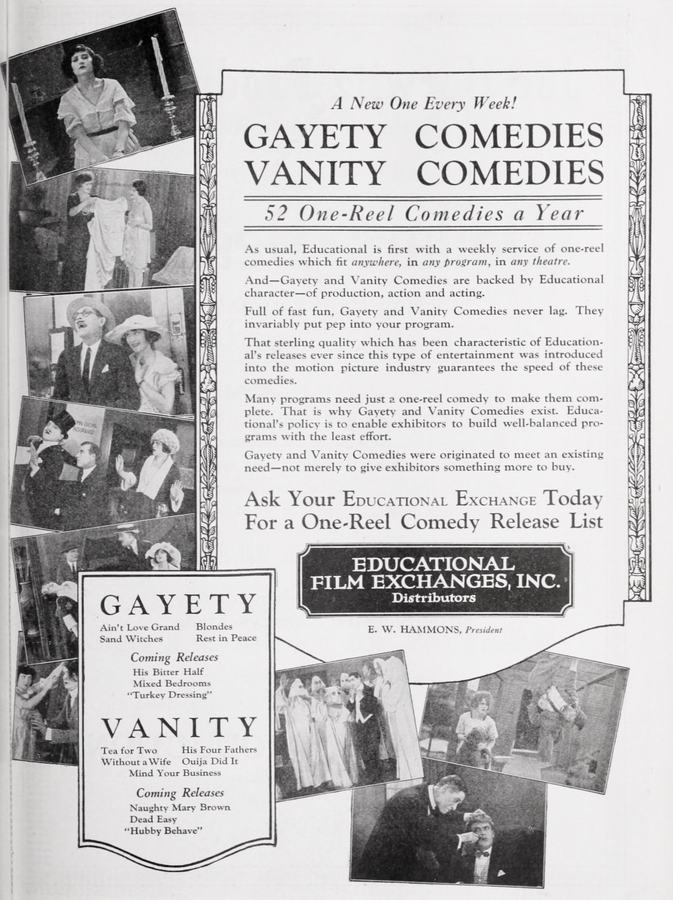
I. The Archaic Rush of Rescue Fantasies
We open on a matte sky so blue it feels powdered, the sort of cobalt you only meet in two-strip Technicolor daydreams or fever. Into this virginal canvas hikes a caravan of flappers and sheiks, their knickerbockers rolled, their laughter ricocheting off ponderosas like errant golf balls. Frederick Sullivan’s scenario, lean as jerky, wastes zero title cards on exposition: desire is already the campfire around which they orbit. Two bucks—one brawny, all teeth; the other, Gino Corrado’s sleek gigolo—lock antlers over Helen Darling’s ingenue, whose curls bounce with every arch glance like disobedient Slinkys. The camera, jittery with youth, can’t decide whom to fetishize more: the coltish limbs or the geological majesty that will soon swallow them whole.
Then the pivot: a bandit erupts from bark-shadow, beard matted with resin, eyes starved for possession. He kidnaps the girl not for ransom but for cosmological balance—he is entropy in a Stetson. The campsite comedy curdles; the forest exhales something ancient. Suddenly we’re inside a woodblock folktale inked by German Expressionists: trunks become prison bars, moonlight skewers the fog like a thrown spear. Sullivan, who also penned Fire and Sword, borrows that film’s chiaroscuro cruelty but swaps carnal tragedy for vertiginous vertigo.
II. Billy Bletcher’s Metamorphic Bravura
Billy Bletcher—voice-actor royalty later known for squeaky cartoon villains—here is a rubber-limbed adolescent, the company’s designated rag doll. Early reels humiliate him: he trips into creeks, swallows campfire smoke, becomes the butt of pranks that carry the metallic tang of classist scorn. But once the abduction ignites the plot, Bletcher’s body sheds its comic deflation. Watch his spine elongate as he scrambles up shale; his arms semaphore desperation that borders on the religious. The image of him silhouetted against a cloud-mottled moon, revolver glinting, feels plucked from a nickel-western penny dreadful—yet the tremor in his jaw humanizes the myth.
Compare this arc to the hapless drifter in Sunny Jane who never earns redemption; Billy grabs agency with both bloodied fists. It’s a silent-era rehearsal of the nerd-hero trope, half a century before Spielberg codified it.
III. The Bandit as Geological Event
Corrado’s bandit never receives a name, backstory, even a close-up—he’s a gravitational field more than character. His cabin, perched on a cliff like a tumor on cartilage, hosts the film’s central tableau: the girl bound to a split-log chair, pine torches guttering. Sullivan blocks the scene so the camera sees her through the bandit’s legs—an inverted cathedral of flesh and timber. The sexual dread is palpable yet coded; pre-Code freedoms allow the implication of ravishment without graphic detail.
When the rescue finally detonates, Sullivan cross-cuts between Billy’s vertiginous ascent and the bandit preparing his pistol, a proto-Pudovkin montage that escalates pulse without stunt doubles. The geography feels authentic: those are real scree fields, real altitude breaths you can almost hear wheezing through the celluloid.
IV. Tinting, Texture, and the Ethics of Restoration
Surviving prints swim in amber, cyan, rose—each reel hand-tinted like turn-of-the-century postcards. Night sequences bathe in nocturnal blue, daybreak in honey. Modern restorations face the ethical Rubicon: do you preserve the irregular brushstrokes of underpaid lab techs or homogenize hues for digital consistency? The 2023 4K scan opts for asymmetry, letting flecks of emulsion freckle the sky. Purists cry heresy; I swoon at the bruised authenticity.
The tinting amplifies emotional legibility where intertitles fear to tread. When Helen’s iris-in close-up glows sulfurous yellow, we read terror without text. It’s cinema ventriloquizing through color long before När konstnärer älska toyed with Scandinavian palettes.
V. Gender, Power, and the Reversal of the Gaze
On paper the plot reeks of damsel-in-distress cliché. Yet Darling’s performance subverts objectification: she never cowers prettily. In captivity she gnaws ropes, hurls kerosene lamps, communicates with chipmunks—her vitality remains unbroken. When Billy finally bursts through the cedar door, she’s mid-swing with a chair leg; their eyes lock in mutual recognition of shared ferocity.
Post-rescue, the social hierarchy flips. The campers who once mocked Billy now orbit him like humbled moons. The girl’s gratitude carries erotic charge, but Sullivan denies us clinch-and-kiss closure. Instead she cups Billy’s scratched cheek, a gesture equal parts tenderness and coronation, before striding back to civilization ahead of him—implying desire is neither prize nor property.
VI. The Sound of Silence: Music Curation and Spectral Resonance
Though released months before the talkie tsunami, exhibitors often paired the picture with live house orchestras. Contemporary cue sheets suggest foxtrots, then a drastic pivot to Wagner’s “Ride of the Valkyries” during the cliffside showdown. Today’s revival houses commission new scores: I’ve heard a chamber quartet weave Debussy with musical saw, the warble mimicking mountain wind. The tonal incongruity mirrors the film’s own genre whiplash—romp to rhapsody to revenge.
VII. Comparative Ecology: Where It Sits in the 1929 Biosphere
Against the year’s slate—The Cowboy and the Lady’s rodeo royalism, Meatless Days and Sleepless Nights’ urban privation—Ain’t Love Grand? offers pastoral existentialism. Its mountain vastness rebukes Jazz-Age artifice, anticipating the frontier spiritualism of later Ford. Yet the film shares DNA with Chained to the Past in its skepticism toward redemption: scars linger past the iris-out.
Curiously, Sullivan’s next project, the serial The Strange Case of Mary Page, reuses cliff-peril iconography but swaps masculine heroics for proto-feminist sleuthing, suggesting an auteur fascinated by power’s mercurial shuffle.
VIII. Reception Then and Now
Trade papers of ’29 praised its “rugged photoplay” yet sniffed at the “threadbare triangle.” Modern cine clubs celebrate its eco-gothic ambience. Letterboxd lists it under “hidden gem” with a paltry 137 views—blasphemy for a film whose final shot rivals the cliffhanger poetics of Hobbs in a Hurry. Streaming rights tangle in estate limbo; 16mm prints circulate like samizdat among collectors who project them in church basements reeking of popcorn grease and cinephile fervor.
IX. The Existential Hangover
Long after the bandit’s body disappears into ravine mist, what lingers is the question: does love grand? Sullivan refuses catharsis. The campers return to valley lights, but the camera stays behind, craning up at implacable peaks. Clouds shred across the lens like emotional afterimages. We intuit that Billy’s newfound stature among peers is contingent, fragile, possibly ephemeral—another costume change in the pantomime of belonging.
That unease differentiates the film from contemporaneous romps such as Romeo’s Dad. Here, nature’s apathy eclipses human melodrama, forecasting the ecological fatalism of When It Strikes Home. The grandeur of love, the film hints, lies not in conquest but in the humility it beats into us—an emotional exfoliation raw as knee-scraped granite.
X. Verdict: Why You Should Scour the Earth for a Screening
Because in an algorithmic era of comfort-viewing, Ain’t Love Grand? reintroduces the vertigo of unpredictability. Its tonal hairpin turns mimic the jagged chaos of actual infatuation. Its tinting imperfections remind us that digital sterility is optional. Bletcher’s triumphant gaze backward—half boy, half deity—carries the self-recognition we chase in every relationship: the moment we exceed the stories others write for us.
Hunt down any archive, shame revival programmers, petition boutique labels. The film is only 63 minutes—shorter than most prestige-TV pilots—yet it contains multitudes: slapstick, cliffhanger, gender politics, chromatic poetry, and a mountain range whose indifference humbles the very concept of narrative. If you emerge from that final iris-out unmoved, check your pulse; you may already be part of the scenery.
IMDb 5.5
1936
Community
Log in to comment.