DbcultAccessing Vault...
Cult Review
Senior Film Conservator
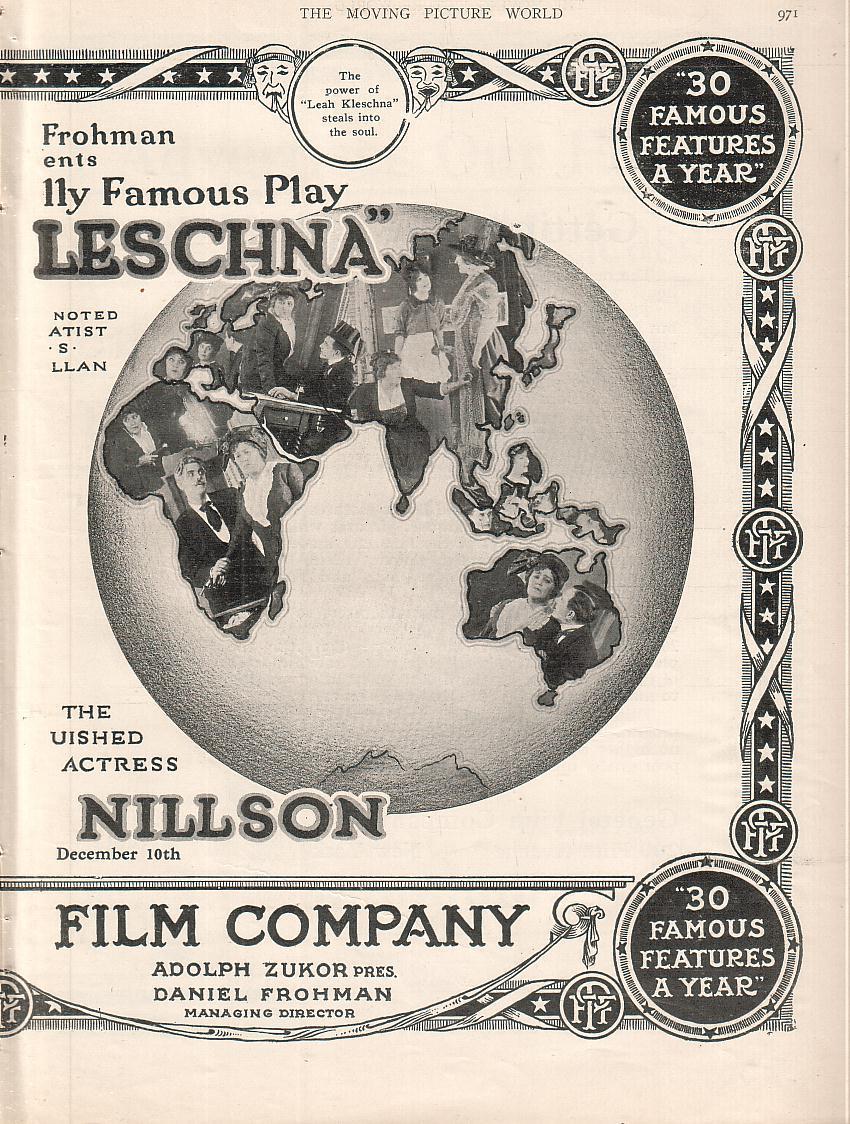
In the burgeoning landscape of 1913 cinema, a year that saw the release of monumental works like Les Misérables and the visually arresting Atlantis, J. Searle Dawley’s adaptation of Leah Kleschna stands as a towering achievement in character-driven melodrama. While many contemporary films were preoccupied with historical spectacle—think of the grandiose The Last Days of Pompeii—this film chooses the intimate confines of the human conscience as its primary battlefield. It is a work that interrogates the deterministic nature of upbringing, asking whether a soul nurtured in the shadows can ever truly bask in the light of virtue.
The film opens with a stark portrayal of familial corruption. Leah, portrayed with a haunting vulnerability by Madlaine Traverse, is not a thief by choice but by pedigree. Her father, a man whose moral compass has been replaced by the cold precision of a lockpick, has spent years eroding her innate sense of right and wrong. This dynamic evokes the darker corners of Oliver Twist, yet Leah is no mere child; she is a woman on the precipice of a spiritual collapse, weary of the weight of her stolen treasures. The cinematography here, though primitive by modern standards, effectively utilizes the chiaroscuro of the silent era to mirror the duality of Leah’s existence—the darkness of her trade versus the flickering candle of her desire for a 'new life.'
The heart of the film beats within the walls of Paul Sylvaine’s study. When Leah is apprehended in the act of burglary, the audience expects the swift hand of justice. Instead, Sylvaine, played with a stoic and radiating warmth by House Peters, offers something far more radical: empathy. This scene is a masterclass in silent performance. Without the benefit of spoken dialogue, the tension shifts from the physical threat of capture to the psychological threat of self-reflection. Sylvaine’s faith in the 'innate goodness of human nature' is not merely a plot device; it is a philosophical challenge to the social Darwinism often depicted in films like Traffic in Souls.
Sylvaine’s refusal to turn Leah over to the police is an act of moral alchemy. He sees through the veneer of the criminal to the victim of circumstance beneath. This 'extraordinary interview' serves as the film’s spiritual center, a moment where the binary of 'hero' and 'villain' is dissolved. It reminds one of the transformative encounters in The Redemption of White Hawk, where the catalyst for change is not punishment, but the recognition of one's inherent worth. Leah’s confession is a visceral shedding of her past, a scene Traverse plays with such raw intensity that the intertitles feel almost redundant.
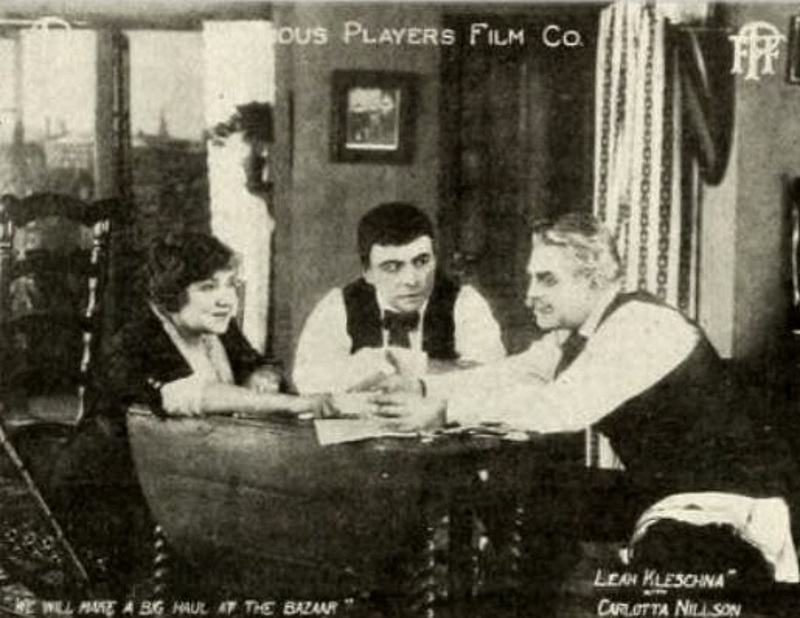
As with all great melodramas of the era, such as The Third Degree, a cruel twist of fate intervenes to test the protagonist’s resolve. The introduction of the dissolute brother of Sylvaine’s fiancée adds a layer of social commentary that remains relevant. While Leah, the low-born thief, is seeking redemption, the high-born scion is succumbing to debauchery. When he steals the very jewels Leah was intended to take, the film cleverly subverts the audience's expectations. Sylvaine’s subsequent belief that Leah has duped him is a heartbreaking moment of disillusionment. It highlights the fragility of trust, especially when it crosses class lines—a theme explored with similar pathos in The Ticket of Leave Man.
The suspense generated by this misunderstanding is palpable. We watch as Leah, having finally found the courage to reform, is cast back into the suspicion of the man who saved her. The narrative structure here is remarkably tight for 1913, avoiding the episodic nature found in some contemporary works like What Happened to Mary. Instead, every action ripples through the characters' lives, leading to a convergence of moral reckoning that is both satisfying and cinematically earned.
The final act of Leah Kleschna takes us away from the claustrophobic, sin-soaked streets of Paris to the verdant, purifying air of the countryside. This transition from urban decay to pastoral purity is a common trope in silent cinema, yet here it feels deeply personal. Leah’s transformation into a 'regenerated woman' is not portrayed as an easy feat. We see the labor, the solitude, and the quiet dignity she has cultivated. When Sylvaine eventually discovers the truth—that the theft was committed by his own social circle—the irony is complete. His subsequent search for Leah is not just a romantic pursuit, but a pilgrimage to atone for his own lapse in faith.
The resolution of the engagement between Sylvaine and his fiancée is handled with a refreshing lack of sentimentality. It acknowledges that a union built on the shaky ground of superficial morality cannot survive the earthquake of true character. When Sylvaine finally finds Leah, the film reaches its emotional zenith. The bestowal of the jewels as a wedding gift is a stroke of narrative genius. Those cold, hard stones, once symbols of Leah’s degradation and Sylvaine’s betrayal, are transformed into tokens of a future built on honesty and mutual respect. It is a far more sophisticated ending than the simple 'happily ever after' found in films like The Springtime of Life.
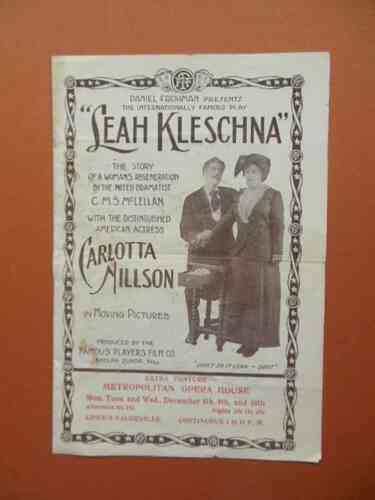
Reflecting on Leah Kleschna in the context of its time, one cannot help but be struck by its psychological depth. In an era where many films were still finding their footing in terms of visual storytelling, Dawley and his cast managed to create a work of profound empathy. The film does not shy away from the harsh realities of criminal life, yet it refuses to condemn its protagonist to a life of perpetual shadow. It stands alongside Ingeborg Holm as a testament to the power of cinema to provoke social and moral reflection.
Madlaine Traverse’s performance remains a highlight of the silent era. Her ability to convey Leah’s internal struggle—the tug-of-war between her ingrained habits and her emergent soul—is nothing short of remarkable. Similarly, House Peters provides the perfect foil, embodying a progressive humanism that must have felt quite revolutionary to 1913 audiences. The film’s pacing, its use of location, and its nuanced handling of complex themes make it a mandatory viewing for anyone interested in the evolution of cinematic narrative.
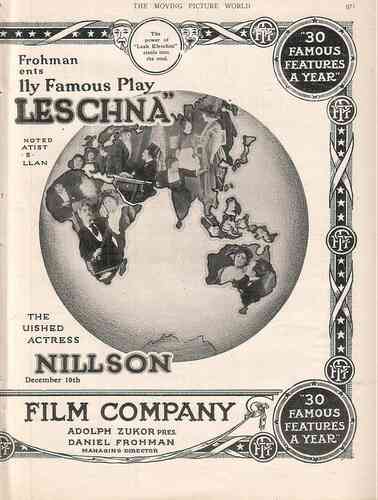
Ultimately, Leah Kleschna is more than just a story of a thief who goes straight. It is an exploration of the ways in which we are all products of our environment, and the Herculean effort required to break those chains. It suggests that while the past may be written in ink, the future is a canvas waiting for the first stroke of a new brush. In the grand gallery of silent cinema, this film remains a vibrant, deeply moving portrait of the human capacity for change. It is a reminder that even in the darkest of times, the light of faith—both in oneself and in others—can lead us home.
Technical Note: The restoration of this film is crucial for modern audiences to appreciate the subtle lighting and set designs that were cutting-edge for the period. Comparing this to the stage-bound feel of Les amours de la reine Élisabeth highlights how quickly the medium was evolving toward a more dynamic, cinematic language.

IMDb —
1930
Community
Log in to comment.