DbcultAccessing Vault...
Cult Review
Senior Film Conservator
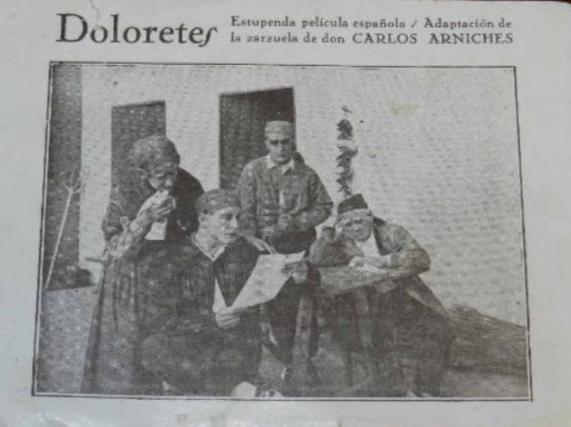
The cinematic landscape of the 1920s was a crucible of national identity, and in Spain, few works capture the friction between burgeoning modernity and the stubborn persistence of tradition quite like Doloretes (1923). Directed by the prolific José Buchs and adapted from the celebrated theatrical works of Carlos Arniches, this film is not merely a celluloid transcription of a stage play; it is an evocative, often visceral exploration of the Iberian soul. While international audiences of the era were consuming the stylized artifice of Hollywood or the jagged geometry of German Expressionism, Buchs was carving out a space for a deeply localized realism that anticipated the neorealist movements of the post-war era.
To understand Doloretes, one must first grapple with the shadow of Carlos Arniches. Arniches was the architect of the 'sainete madrileño' and the rural drama, a writer who possessed an uncanny ear for the vernacular of the working class. Translating this linguistic dexterity into the silent medium was a Herculean task. Buchs succeeds by leaning into the physicality of his actors and the atmospheric density of the Spanish countryside. Unlike the lighthearted whimsy found in A Damsel in Distress, the stakes in Doloretes feel weighted with the heavy soil of the Levant. The film utilizes intertitles not just for dialogue, but to preserve the rhythmic cadence of the source material, ensuring the soul of the play remains intact even in its wordless state.
The cinematography of Doloretes is a revelation of naturalistic lighting. Buchs and his camera operators eschew the theatrical flatness that plagued many early adaptations. Instead, they embrace the harsh, unforgiving sun of the Spanish landscape, creating high-contrast compositions that mirror the moral binaries of the plot. There is a specific scene involving a village festival where the interplay of shadow and movement creates a phantasmagoric effect, reminiscent of the darker undertones in The Clown. However, where the latter leans into the grotesque, Buchs maintains a grounding in the pastoral, similar to the aesthetic choices in Midst Peaceful Scenes, though with a far more cynical edge.
The casting of Júlio Castro 'Castrito' provides the film with its necessary levity, though it is a comedy born of survival rather than slapstick. His presence acts as a foil to the melodramatic intensity of Elisa Ruiz Romero, whose portrayal of the titular character is a masterclass in restrained suffering. Romero avoids the histrionics common in the era's silent divas—think of the heightened performances in The Vamp—and instead opts for a performance rooted in internal monologue. Her eyes convey the claustrophobia of a woman whose every move is scrutinized by a judgmental community. This sense of female entrapment within a domestic or social sphere echoes the themes explored in The Girl in His House, yet Doloretes feels more visceral because the threat is not a single man, but the collective consciousness of the village itself.
At its core, the film is a critique of 'honor'—that nebulous, destructive force that dominated Spanish social structures for centuries. The character of Nelo, played with a brooding intensity by Javier de Rivera, represents the agonizing conflict between personal desire and public face. This thematic preoccupation with reputation and social standing is a universal trope of the 1920s, also seen in the German production Ein Ehrenwort, but Buchs infuses it with a specifically Mediterranean fatalism. The village is depicted as a panopticon where privacy is an impossibility and gossip is a lethal weapon. The film’s exploration of these social dynamics is as sophisticated as the urban critiques found in Prostitution, albeit relocated to the dusty lanes of a rural outpost.
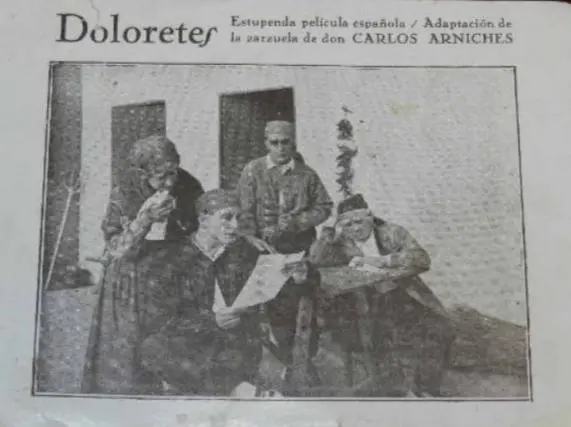
When comparing Doloretes to its international contemporaries, its unique texture becomes even more apparent. While American cinema was experimenting with the high-octane spectacle of Dynamite or the adventurous spirit of A Yankee Go-Getter, Buchs was looking inward. The film shares a certain kinship with The Call of Her People in its depiction of marginalized communities and the clash of cultures, yet it remains distinctly Spanish in its 'costumbrismo'—the literary and visual interpretation of local everyday life. It lacks the whimsical absurdity of The Boxing Kangaroo, choosing instead a path of somber reflection on the human condition.
José Buchs’ direction is characterized by a remarkable fluidity. He utilizes the camera to traverse the spaces of the village, creating a sense of geographic continuity that was often missing in the fragmented editing styles of the early 20s. His work here is far more evolved than the rudimentary staging of Mr. Fatima. Buchs understands the power of the close-up, using it sparingly to punctuate moments of extreme emotional duress. When the camera lingers on María Comendador or Alfonso Aguilar, it is not merely for star power, but to map the psychological topography of their characters. This focus on the internal world of women, in particular, invites comparison to The Young Diana, though Doloretes is far less interested in mystical rejuvenation and more concerned with the grit of survival.
The film’s third act accelerates into a crescendo of dramatic irony and tragic misunderstanding. It is here that the influence of the 'stronger love' trope—a staple of silent era storytelling—is most evident. Much like the emotional scaffolding of The Stronger Love, Doloretes posits that sacrifice is the ultimate validation of character. However, the film avoids a purely saccharine resolution. There is a lingering bitterness, a sense that even if the protagonists find a semblance of peace, the village and its archaic structures remain unchanged. This nuanced ending distinguishes it from the more traditional domestic reconciliations seen in Her Second Husband.
Viewing Doloretes today is also an act of historical archaeology. The 1923 production captures a Spain on the precipice of massive political upheaval. The tranquility of the rural setting is a fragile mask. The film serves as a vital record of the 'sainete' tradition before it was co-opted and sanitized by later regimes. The preservation of such works is essential, as they provide a counter-narrative to the monolithic view of early cinema as a purely Anglo-French-German endeavor. The contributions of actors like Rodolfo Recober, Manuel San Germán, José Montenegro, Amalia Sanz Cruzado, Julia Posada, and Celso Lucio deserve to be recognized within the global pantheon of silent cinema pioneers.
In the final estimation, Doloretes is a triumph of localized storytelling. It manages to be both a specific cultural artifact and a universal tale of human frailty. José Buchs’ ability to weave the comedic threads of Arniches’ writing into a tapestry of dramatic realism is a testament to his versatility as a filmmaker. The film remains a vital touchstone for anyone interested in the evolution of Spanish cinema or the broader history of the silent era. It is a work of profound empathy, capturing the quiet desperation of those who live and love in the margins of history, under the scorching sun of a land that remembers everything and forgives nothing. Its legacy is not just in the frames that remain, but in the path it cleared for future generations of Spanish filmmakers to find poetry in the mundane and the magnificent.

IMDb —
1923
Community
Log in to comment.