DbcultAccessing Vault...
Cult Review
Senior Film Conservator
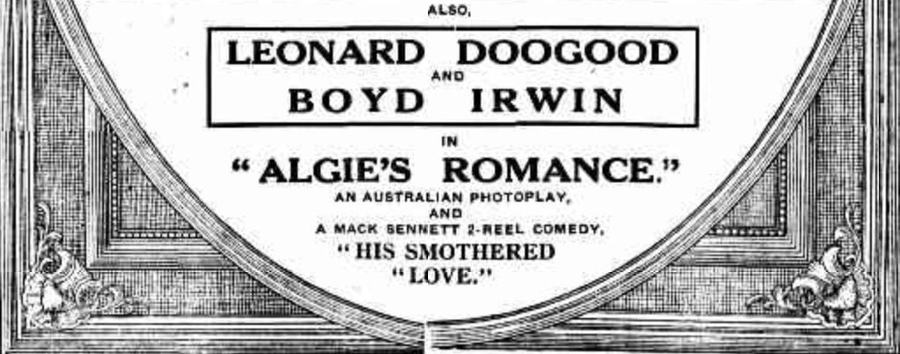
In the nascent years of the twentieth century, the cinematic medium was a wild frontier, and nowhere was this more evident than in the burgeoning industry of Australia. Algie's Romance (1918) stands as a testament to this era of experimentation. Directed and written by the multifaceted Leonard Doogood, the film navigates the precarious waters of national identity through the lens of a romantic comedy. To understand this film is to understand the cultural anxiety of a young nation trying to define its 'manhood' against the backdrop of British colonial heritage.
Unlike the heavy moralizing found in contemporary American works like The Price of a Good Time, Doogood’s work leans into a lighter, albeit culturally significant, narrative structure. It utilizes the 'new chum' motif—a popular literary device of the time—to explore the friction between the refined city dweller and the rugged bushman. The film does not merely present a sequence of events; it presents a ritual of passage.
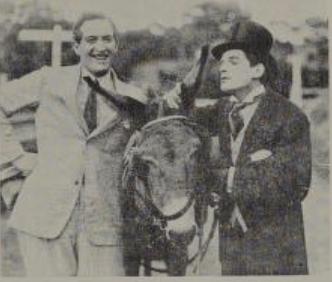
Central to the film's success is the performance of Boyd Irwin. Irwin brings a nuanced physicality to the role of Algie that transcends the typical slapstick of the silent era. In the opening reels, his movements are deliberate, perhaps overly so, signaling a man bound by the constraints of high-society etiquette. As the narrative progresses and Algie is forced into the physical labor of the Australian interior, Irwin’s posture shifts. His shoulders broaden, his gait loses its hesitant bounce, and his gaze becomes fixed with a new-found resolve.
This physical transformation is reminiscent of the character arcs seen in The Come-Back, yet here it is flavored with a distinctly antipodean zest. The chemistry between Irwin and June Henry provides the emotional anchor. Henry, playing the object of his affection, avoids the trap of the passive damsel. Instead, she represents the goal post of a new social order—one where merit and capability outweigh the superficial charms of the urban elite.
The visual grammar of Algie's Romance is surprisingly sophisticated for a production of its vintage. While it may lack the haunting chiaroscuro of European imports like Die Doppelnatur, it makes up for it with an expansive use of natural light. The Australian sun is not just a lighting source; it is a thematic participant. The high-contrast outdoor shots emphasize the harshness of the environment, making Algie’s eventual triumph feel earned rather than scripted.
Doogood employs wide shots to diminish the protagonist against the vastness of the landscape, a technique that highlights the insignificance of Algie's initial pretensions. This visual strategy contrasts sharply with the claustrophobic, stage-bound feel of many melodramas like Under the Gaslight. By placing the actors in the 'real' world, the film achieves a level of authenticity that was rare for 1918. The trees, the dust, and the livestock are not props; they are the crucible in which the character is tested.
When placing Algie's Romance alongside its international peers, one notices a fascinating divergence in tone. While American cinema was often preoccupied with the grandeur of the 'New World' as seen in Miss U.S.A., or the romanticized history of My Lady's Slipper, the Australian output was grounded in a gritty, immediate reality. There is a lack of cynicism in Algie’s journey that contrasts with the somber explorations of human frailty found in The Weakness of Man.
Furthermore, the film avoids the saccharine sentimentality of The Fairy and the Waif. Algie’s romance is not a matter of fate or divine intervention; it is a matter of work. This work ethic is a recurring theme in early Australian cinema, reflecting a society that was still in the process of physically building its infrastructure and its mythos. Even when compared to the comedic beats of Poor Schmaltz, Doogood’s film feels more anchored in a tangible sense of place.
As a writer, Leonard Doogood demonstrates a keen understanding of pacing. The transition from the urban prologue to the rural core is handled with a briskness that prevents the film from becoming a mere travelogue. The stakes are established early: Algie must prove his worth or lose his love. This simple premise allows for a variety of vignettes that showcase the humor and the danger of the bush. Whether it is a comedic mishap with a horse or a serious confrontation with the elements, each scene serves a purpose in the character’s evolution.
The film also touches upon social dynamics that were quite progressive. The interaction between the various classes in the bush suggests a blurring of lines that wasn't as prevalent in the city. In the outback, your value is determined by what you can do, not who your father was. This thematic thread is handled with more subtlety than the overt social critiques in Divorced or the allegorical warnings of A Message from Mars.
The tragedy of Algie's Romance, like so many films of its era, is the fragility of its physical existence. Nitrate film is a volatile medium, and the passage of a century has not been kind to the archives of early Australian cinema. However, the remnants and the records we have of this film reveal a work that was both a product of its time and ahead of its curve. It lacks the overt tragedy of Triste crepúsculo, opting instead for a hopeful, almost boisterous conclusion that celebrated the potential of the individual.
In the broader scope of silent film history, Algie's Romance provides a vital link between the stage-bound comedies of the Victorian era and the more cinematic, location-based storytelling of the 1920s. It shares a certain DNA with Mary's Lamb in its playful spirit, yet it possesses a ruggedness that is uniquely its own. It is a film that demands to be remembered not just as a historical curiosity, but as a vibrant piece of narrative art.
To watch Algie's Romance today—or rather, to reconstruct it in the mind's eye through the surviving fragments and historical accounts—is to witness the birth of a national cinematic voice. It is a film that refuses to be overshadowed by the bigger budgets of Hollywood or the philosophical weight of European cinema. It is as bold as The Woman Who Dared and as charming as The Governor's Daughters, yet it remains firmly rooted in the red soil of its origin.
Leonard Doogood, Boyd Irwin, and June Henry created something that was more than just entertainment; they created a mirror. In Algie, the audience saw their own insecurities about their place in the world, and in his success, they saw the promise of their own future. It is a quintessential piece of Australian history that deserves a place in the global pantheon of silent cinema. Its absence from the mainstream conversation is a void that only further scholarship and restoration can hope to fill.
Critique by the Film Chronologist
IMDb 7.4
1936
Community
Log in to comment.