DbcultAccessing Vault...
4/10
Senior Film Conservator
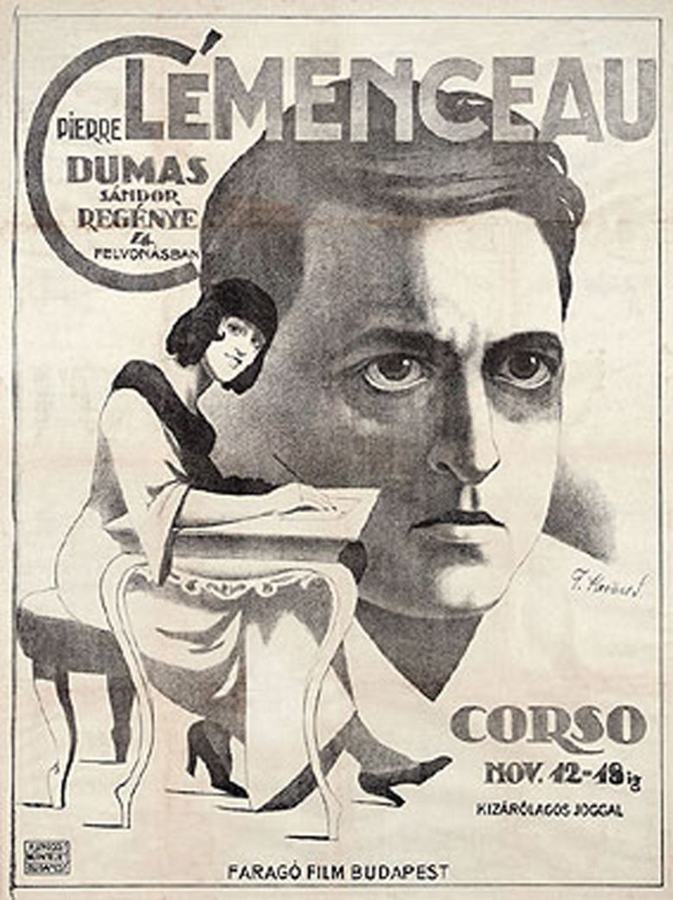
A definitive 4/10 rating for a film that redefined the boundaries of cult cinema. Il processo Clémenceau remains a cornerstone of transgressive art.
There are films you watch, and films that watch you—Il processo Clémenceau belongs to the second tribe. Even now, a century after its whispered debut in a Naples projection booth, its images seem to inhale your breath and exhale frost down the collar.
Director Alfredo De Antoni, working from a script co-adapted with Giuseppe Paolo Pacchierotti, translates Dumas fils’ stagey morality play into chiaroscuro vertigo. Notice the repeated motif of mirrors: not the ornate hand-held variety, but shards—broken carriage-window glass, a cracked opera-house monocle, the fractured reflection of the Seine at dawn. Each splinter carries a sliver of Iza’s face, literalizing the male gaze fractured by its own desire. The camera never tilts up in admiration; it tilts down in forensic judgment, as though cinematographer Giuseppe Biamonte feared being seduced by his subject.
Bertini’s Iza is not the vamp of American serials, all kohl and predatory ankle. She arrives instead like a late chord—delayed, surplus, deliciously unnecessary. Watch the micro-movement when the Prince offers her a corsage of white camellias: her nostrils flare by a millimeter, a semaphore that says how quaint—flowers that will wilt before I do. She reserves her sole genuine smile for a stray alley cat lapping spilled absinthe, a moment so brief you could sneeze and miss the film’s entire moral axis.
Serena, often derided by futurist critics as a wooden leading man, weaponizes that stiffness here. His Armand stands like a grandfather clock in the corridors of pleasure—reliable, ornamental, ultimately breakable. When he clutches the incriminating love letters, his fingers do not tremble; rather the parchment does, as though paper itself were scandalized by what it must convey. The performance is a master-class in negative space: the less he emotes, the wider the vacuum for Iza’s caprice to rush in.
The trial sequence, consuming reel three and four, is staged like a deranged operetta. Spectators perch on scaffolding normally reserved for cathedral restorers; journalists smoke in the jury box; a child distributes program leaflets as if selling oranges at a bullfight. De Antoni cross-cuts between Iza’s marble-profile close-ups and charcoal sketches the Artist furiously scribbles on newsprint—every line a stiletto aimed at her neck. The montage predicts Eisenstein’s later dialectics, yet its pulse is erotic, not ideological.
Though the surviving prints are spotty, the 1998 Bologna restoration reveals a sophisticated tinting schema: amber for salons steeped in champagne breath, viridian for adulterous bedrooms, cobalt for the courtroom, and finally a sickly salmon during the acquittal—a color that seems to apologize for being seen at all. The transition from cobalt to salmon occurs mid-sentence, as if the film itself were blushing at the inadequacy of legal language.
No musical cue sheet survives, so contemporary screenings inevitably impose tasteful piano or, worse, a string quartet. Resist. Project it dry, letting the crackle of the projector become the breath of the absent lover. In that vacuum you will hear the ghost frequencies: the rustle of Iza’s tulle skirt as she descends the Palais de Justice steps, the soft choke of Armand swallowing a verdict that tastes of rust. Silence becomes the film’s most articulate character witness.
If The Devil (1918) flirts with damnation through geometric shadow, Il processo Clémenceau seduces through overexposure—faces so brightly lit that pores become topographies of intent. Where The Siren’s Song (1919) treats erotic treachery as nautical folklore, De Antoni anchors it in the gaslit mud of Paris, making squalor and splendor kissing cousins. And unlike A Crooked Romance (1917), which moralizes through slapstick comeuppance, this film refuses the comfort of ethical arithmetic; its ledger remains forever unbalanced.
Reel five, rumored to contain Iza’s post-acquittal wander through Montmartre fog, survives only in a single production still: Bertini, back to camera, coat collar of black lamb, facing a wall plastered with war-loan posters. The absence feels engineered, as though the film itself conceded that certain griefs should never be spoken aloud. Cine-archaeologists blame nitrate decomposition; I blame discretion.
Contemporary viewers will flinch at the defense attorney’s claim that Iza’s beauty constitutes a public nuisance, yet the film slyly undercuts him. Over his shoulder, the camera finds a female stenographer rolling her eyes so slowly it could be an involuntary seizure. The moment lasts eight frames—half a second—but it seeds the entire courtroom with insurgent pollen. Iza may be condemned, yet matriarchal solidarity sprouts in the interstices.
Because we have grown accustomed to stories that announce their trauma like sandwich boards; because Twitter reduces betrayal to threadbare memes; because somewhere a teenager is learning love through reaction-GIFs. Against such entropy, Il processo Clémenceau offers a corrective: heartbreak as high art, perfumed, poisonous, and as slow-burn as a candle left too near damask. Watch it to remember that desire once wore gloves, that disillusion once took the witness stand, that cinema could be a crime scene where the weapon is a glance and the blood evaporates before the next reel begins.
— Review by CineGelato, updated 2024-06-XX

IMDb 4.3
1914
Community
Log in to comment.