DbcultAccessing Vault...
Cult Review
Senior Film Conservator
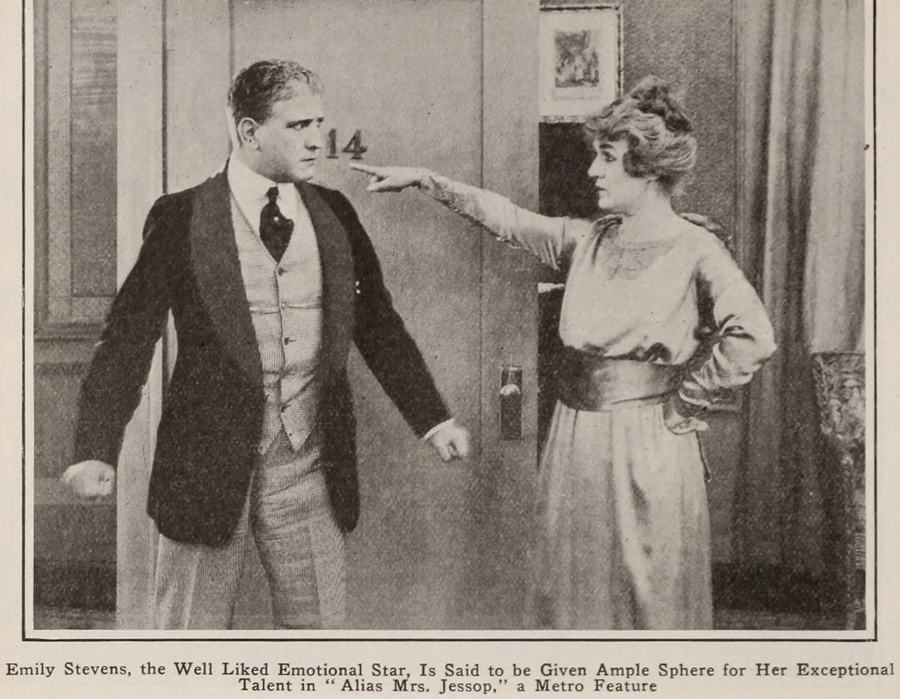
The 1917 cinematic landscape was a period of profound evolution, a transitional epoch where the grammar of visual storytelling was shedding its theatrical infancy for a more nuanced, psychological depth. Within this milieu, Alias Mrs. Jessop emerges not merely as a melodrama of mistaken identities, but as a searing indictment of the socioeconomic structures that dictate the value of a human soul. Directed with a keen eye for the domestic claustrophobia that defined the era, the film utilizes the 'double' trope to explore the inherent duality of the feminine experience in the early 20th century.
The film’s introductory movements establish a stark contrast between Janet and Lillian Ford. While biological reality renders them identical, the social architecture of the Ford household bifurcates their paths. Janet, the penniless orphan, is a ghost in her own home, a recipient of charity that carries the heavy scent of obligation. In contrast to the epic scale of The Birth of a Nation, which sought to define a country through conflict, Alias Mrs. Jessop seeks to define the self through the crucible of the family unit. The mischievous Lillian represents the unchecked ego of the wealthy, a character whose moral compass is perpetually skewed by the lack of consequence.
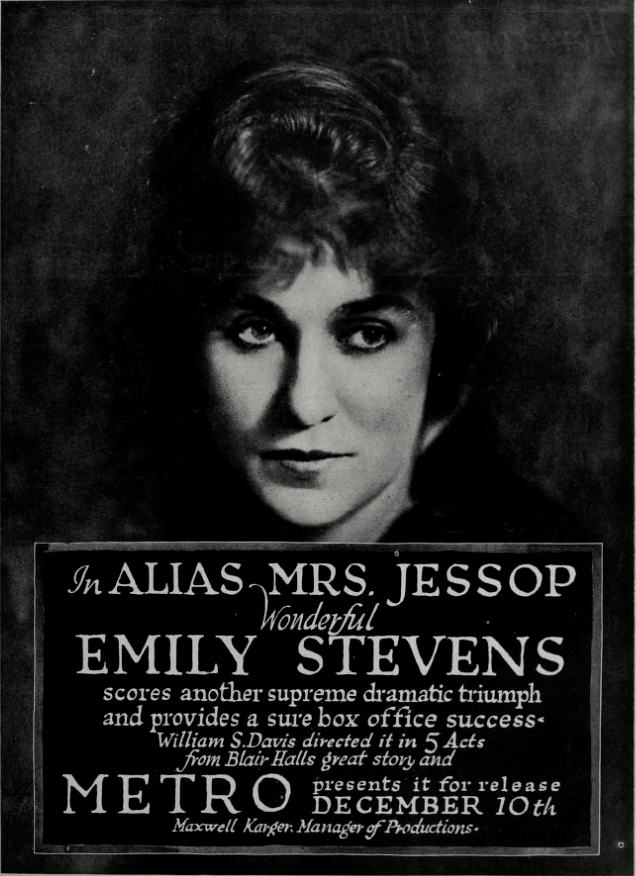
When the gambling raid occurs, the film pivots from domestic drama to a study of martyrdom. Janet’s decision to bear the blame for Lillian is portrayed not as a moment of weakness, but as the only currency she possesses: her reputation. This transactional sacrifice highlights a theme often explored in contemporary works like The Grasp of Greed, where the vulnerability of the dispossessed is exploited by those with the power to rewrite history. Mrs. Ford’s cold expulsion of Janet is a chilling reminder of how easily the 'unwanted' are discarded once their utility as a scapegoat is exhausted.
The narrative shift to England and the introduction of Sir Anthony Jessop provides a fascinating look at the expectations of the landed gentry. Lillian’s marriage is a facade, a performance of domesticity that she fails at every turn. Unlike the pastoral sincerity found in Shore Acres, the Jessop household is a site of emotional attrition. Anthony’s disillusionment is palpable, his only solace found in his son, Bobby. This sets the stage for the film’s most daring gambit: the literal replacement of a wife and mother.
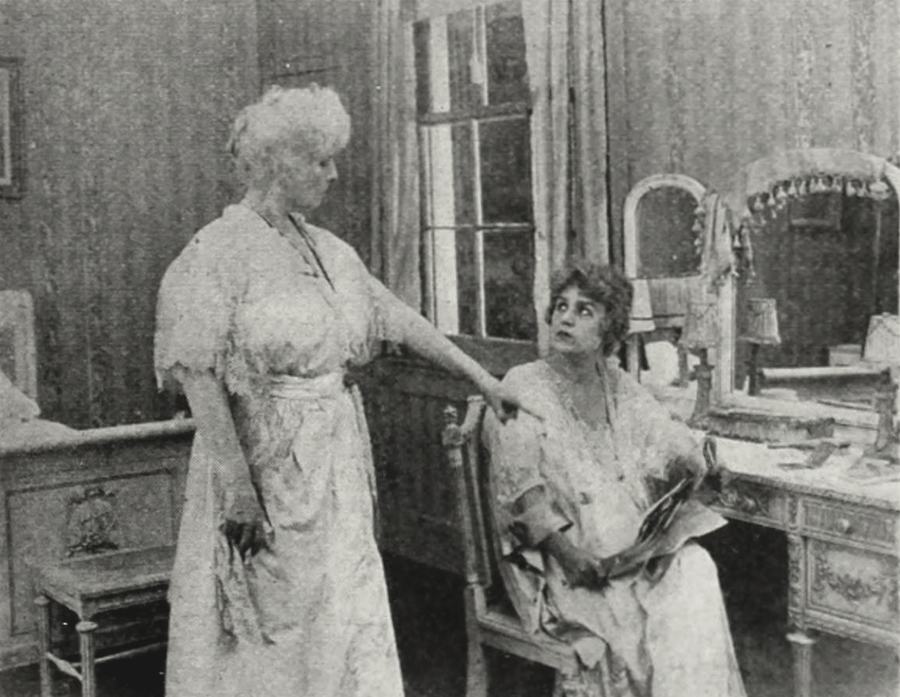
The sequence where Lillian coerces Janet into impersonating her at their father’s deathbed is a masterclass in suspense. Here, the film touches upon the anxieties of the era regarding the stability of identity. If a person can be seamlessly replaced, what remains of the individual? As Janet enters the Jessop sphere, the film adopts a tone reminiscent of The Courage of Silence, emphasizing the internal agony of a woman forced to live a lie for the sake of a child’s well-being. Janet’s arrival in England to care for the injured Bobby is the film’s emotional anchor; her innate maternalism stands in stark contrast to Lillian’s cold abandonment.
One cannot discuss Alias Mrs. Jessop without examining the technical and performative prowess of Emily Stevens. Playing two distinct characters who eventually masquerade as one another requires a level of gestural precision that was rare in 1917. While films like Snow White utilized fantasy to differentiate archetypes, Stevens uses subtle shifts in posture and gaze to delineate Janet from Lillian. When Janet is 'being' Lillian, there is an underlying tremor of anxiety, a softness that the real Lillian never possessed, which ironically makes Anthony fall in love with his 'wife' for the first time.
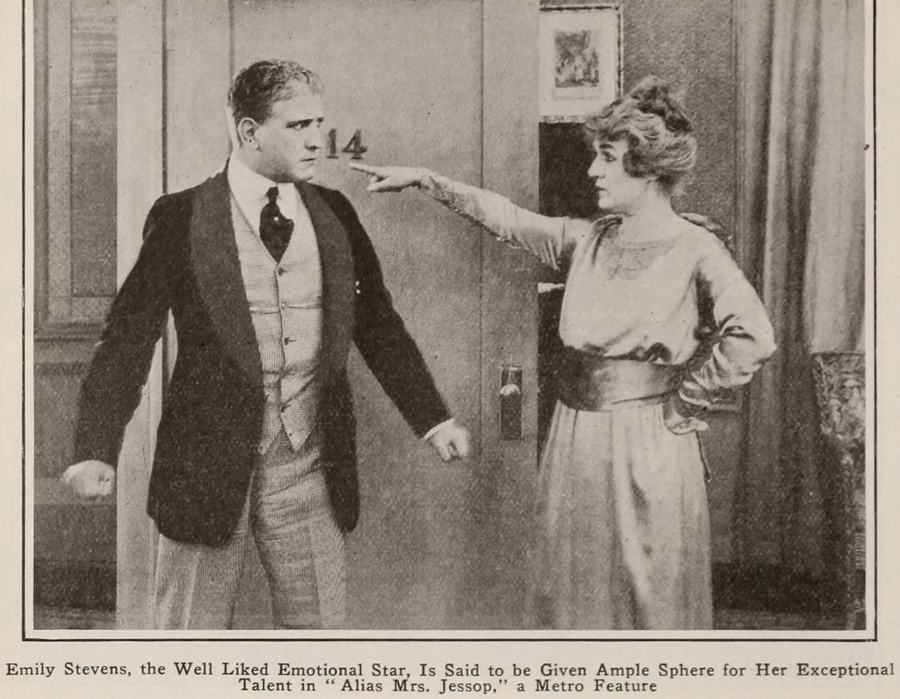
The cinematography aids this deception. The use of lighting to soften Janet’s features while sharpening the edges of Lillian’s world creates a visual shorthand for their moral disparate states. In the scenes where the Earl of Devon (formerly Anthony) returns, the chemistry between him and the 'new' Lillian is charged with a tragic irony. He is falling for the woman she should have been, while Janet is falling for a man she can never truly claim. This romantic tension is far more sophisticated than the broad strokes found in The Small Town Guy or the athletic exuberance of The Baseball Revue of 1917.
The final act of the film descends into a gothic intensity. Lillian’s return, spurred by greed rather than remorse, serves as the ultimate threat to the fragile peace Janet has built. The presence of Raymond Fleury, the spurned lover, adds a layer of fatalism. The climax, involving a shooting and the subsequent death of the 'true' Lillian, functions as a ritualistic purging of the narrative's impurity. In the logic of silent melodrama, the 'bad' twin must perish so the 'good' twin can ascend, a trope also seen in various iterations of David Garrick regarding the performance of the self.
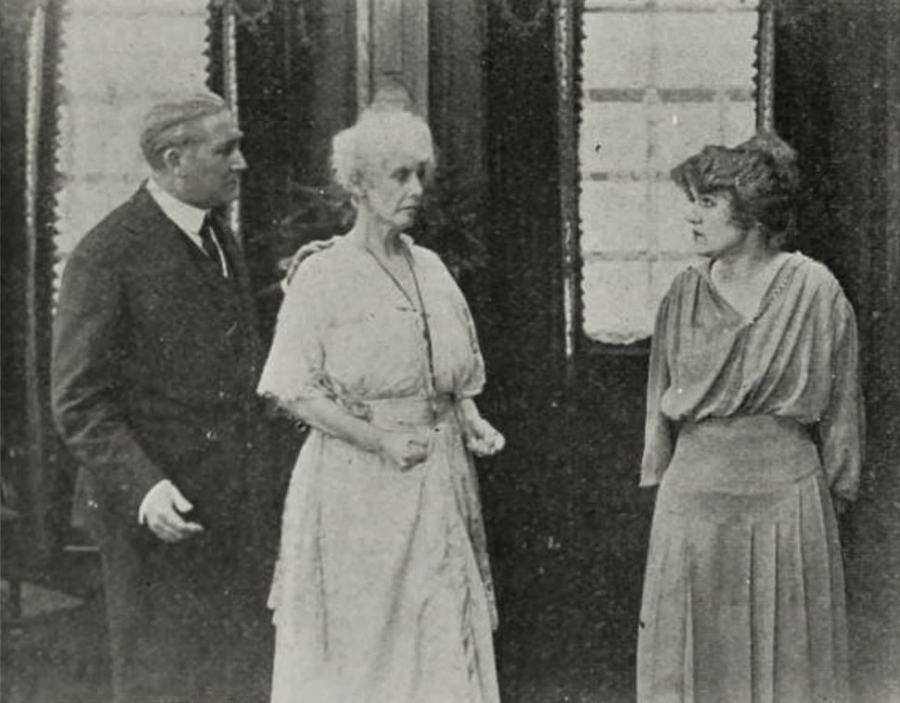
However, the resolution offered by Jessop—that they simply keep the secret and remain married—is surprisingly modern. It acknowledges that the 'truth' of their relationship is found in their shared affection and care for Bobby, rather than in legal or biological definitions. This pragmatic approach to morality deviates from the rigid ethical codes seen in The Christian or the biblical fervor of Judith of Bethulia. It suggests that identity is a construct that can be rewritten through action and devotion.
From a technical standpoint, the film’s editing is remarkably fluid for its time. The cross-cutting between the American and English settings maintains a propulsive energy that avoids the static feel of many contemporary stage-to-screen adaptations. The production design, particularly the Jessop estate, provides a sense of grandeur that contrasts effectively with the bleakness of Janet’s earlier life. While it may not possess the kinetic action of The Bulldogs of the Trail or the serialized intrigue of The Scarlet Runner, it excels in creating an atmosphere of psychological weight.
The screenplay by Hugh McNair Kahler and Albert S. Le Vino avoids the pitfalls of excessive intertitles, allowing the actors' faces to carry the emotional burden. This reliance on visual storytelling places it in the same league as The Dancer's Peril, where movement and expression supersede dialogue. Even the minor characters, such as the various family members and the lover Fleury, are given enough screen time to feel like fully realized threats or allies rather than mere plot devices.
Why does Alias Mrs. Jessop resonate today? It is because the central conflict—the struggle to define oneself against the expectations of a judgmental society—is universal. Janet’s journey from a 'penniless orphan' to a beloved Countess is a proto-feminist triumph, achieved not through magic or luck, but through the endurance of her own character. She navigates a world designed to keep her in the shadows, eventually stepping into the light by assuming a role she was never meant to play, yet was the only one qualified to inhabit.
Compared to the lighthearted charm of The Pinch Hitter or the melodramatic tropes of Do Men Love Women?, this film offers a more somber and intellectually stimulating experience. It challenges the audience to question the nature of truth and the morality of deception when it serves a higher good. The final image of Janet and Anthony, united by a secret that both liberates and binds them, remains one of the most provocative endings of the silent era.
In the final analysis, Alias Mrs. Jessop stands as a testament to the power of early cinema to tackle complex human emotions. It is a film of shadows and light, of doubles and departures, and ultimately, of the enduring power of love to see through the masks we wear. For the modern viewer, it provides a window into a lost world, yet its themes of identity and redemption remain as vibrant and relevant as ever. It is a haunting, beautiful piece of film history that deserves its place among the pantheon of silent masterpieces.
IMDb 5.9
1922
Community
Log in to comment.